Updated March 2, 2026 02:34PM
If you can carve blue runs with confidence but feel like you start to skid as the slope gets steeper, you’re not alone. This is the point at which a lot of skiers hit a wall. As the pitch increases, speed builds faster, turns become harder to hold, and skiing starts to feel like an exercise in managing tension rather than enjoying the fluid fun like you do on gentler slopes.
The good news? It’s an easy wall to break through with the right focus and technique. You’ve already proven you have the necessary confidence—you just need to learn a more specific kind of control for a new kind of terrain. Once you understand a bit more about how your skis work and how they can manage speed as forces increase, carving on steeper terrain becomes predictable again.
With the help of pro skier Reilly McGlashan and Carv, a wearable boot sensor that gives you real-time feedback on your ski runs, we break down a few problems that skiers often face on steeps and provide simple steps and exercises to improve.
Meet Reilly McGlashan
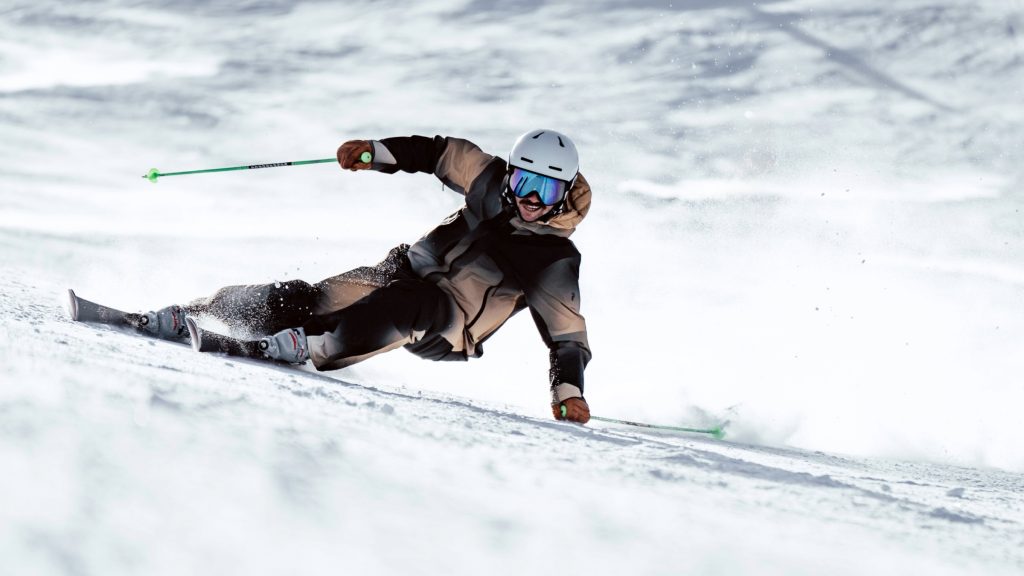
McGlashan has been a ski instructor for more than 20 years. He recently teamed up with Carv in El Colorado, Chile, to show off some tips and exercises for better steep skiing on the slopes of the Andes. Use his tips to help you become a better and more confident skier.
Step One: Understand How Your Skis Are Working
The reason you feel that familiar loss of control when the pitch increases comes down to the way your speed starts to build. As the terrain gets steeper, your turns begin to elongate. You spend more time in the fall line—the most direct path down a mountain—and turn by turn the speed increases until it feels like you’re no longer in control.
To understand how to fix this, we first need to look at how skis actually work. There are two main things that affect the size of your turn:
- The radius of the ski
- How much the ski bends
Every ski has a radius written on it somewhere, usually on the tail. For example, the skis McGlashan rode in the Andes had a 16-meter radius. That means if he put the ski on edge and let it run, it would naturally want to trace a 16-meter arc. But if the ski bends—which it’s designed to do—it can create a much tighter arc than that.
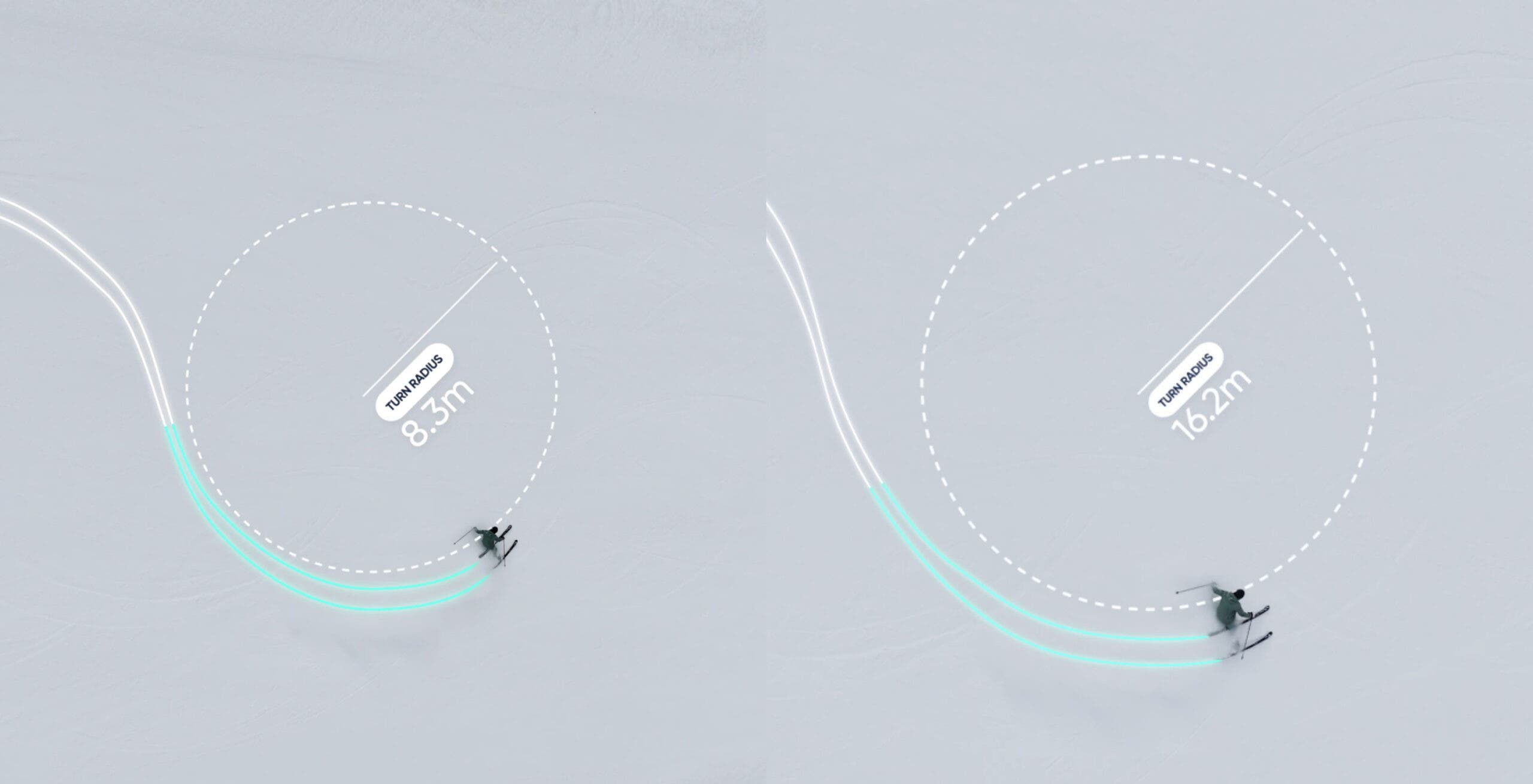
This becomes really important on steeper terrain. To control speed, we need our turn radius to be tighter than the number written on the ski. A tighter turn creates more friction and, just as importantly, keeps us from spending too long in the fall line and picking up that unwanted speed. If we let the ski run straight down the fall line, speed builds very quickly and becomes hard to control. But if the ski hooks up, bends, and comes back across the hill sooner, we’re controlling speed for more of the turn, not being controlled by it.
With Carv, you can actually check your turn radius in the app. If your turn radius is larger than the radius printed on our skis, that means you’re not bending them. If it’s smaller, that’s a good sign. McGlashan says he’s used Carv 145 days this winter, and on steep terrain, his data consistently show turn radii around 7 to 9 meters, much smaller than his skis’ 16-meter radius.
We can’t all be pro skiers (or ski 145 days per winter), but you don’t need either to work on this technique. What’s happening through McGlashan’s turns is simple:
- He tips the skis onto their edges as they enter the turn.
- As force builds, the ski bends and cuts smoothly through the snow.
When a skier isn’t able to do this, they still tip the ski onto edge, but instead of letting the ski bend, they brace against it. The ski starts to wobble as it bends and unbends, and every time it unbends, the turn radius gets bigger. The turn elongates, more time is spent in the fall line, and speed builds.
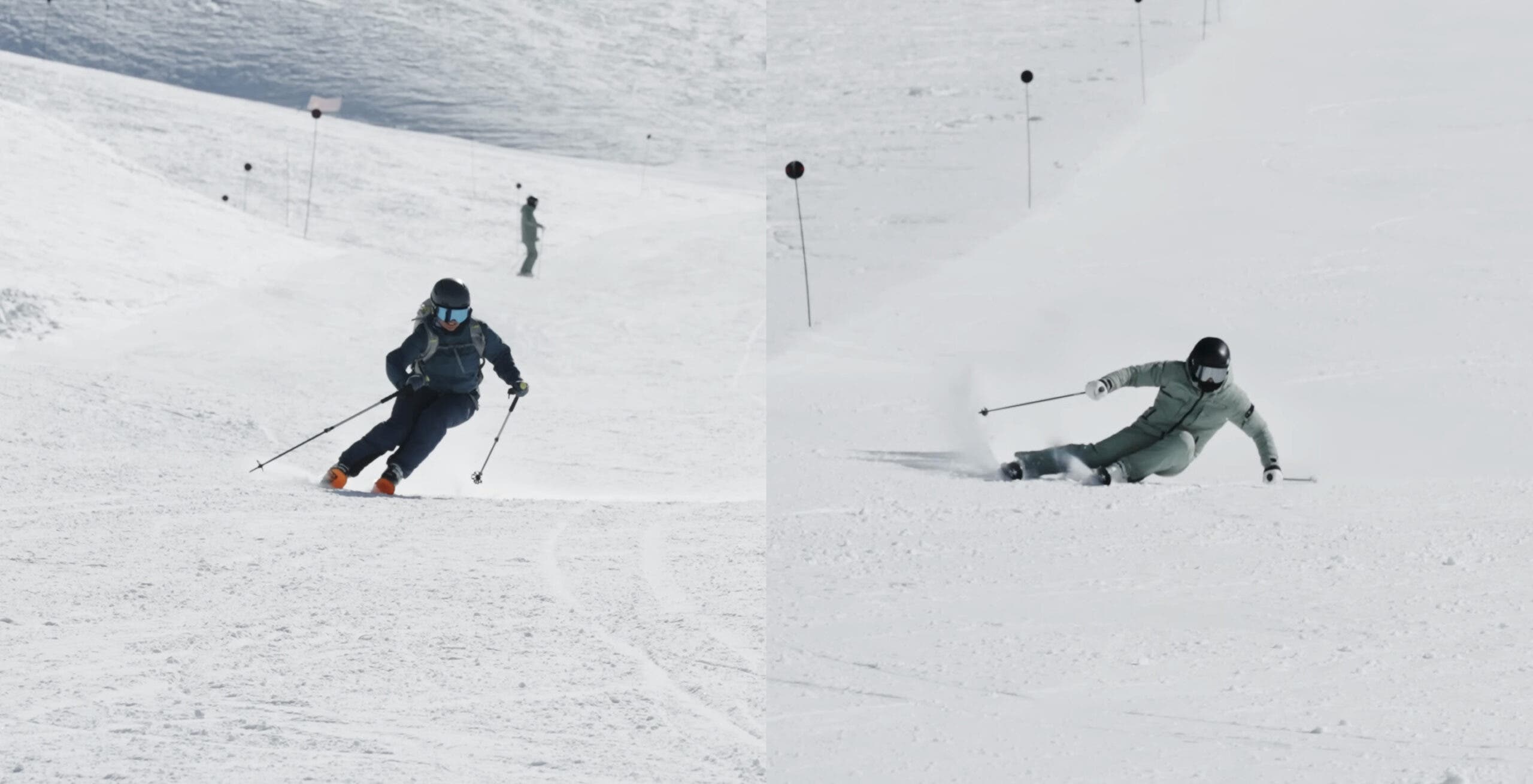
This is often when people think they need a shorter-radius ski. But that can make carving on steep terrain harder—not easier. On a 16-meter ski, Reilly pulls a 7-meter turn. On a 12-meter ski, that same movement could produce a 3- or 4-meter turn. And if you’re not ready for that kind of quick whip, you’ll brace even more, and the wobble comes back. So rather than changing skis, the focus needs to be on learning how to use the skis you already have the way they’re designed to be used.
Step Two: Adopt These Three Exercises to Use Your Skis to Control Speed
These three exercises will help you develop the trust, skills, and mechanics you need to bend your skis and carve on steeper slopes.
Exercise One: Dynamic Edge Roll
A simple exercise designed to give you a clear sensation of how quickly a ski can bend. This is similar to a standard railroad track drill, but with active ankle work. You want to be able to pump with the ankles to manipulate the radius of the ski.
- Start on a flat run. (Because it’s flat, you actually want to pick up a bit of speed first.)
- Once you have enough speed, start thinking about “roll and push.”
- Roll the skis onto edge, then push the sides of your ankles toward the snow.
- Repeat on the other side, making tightly carved turns on a mellow pitch.
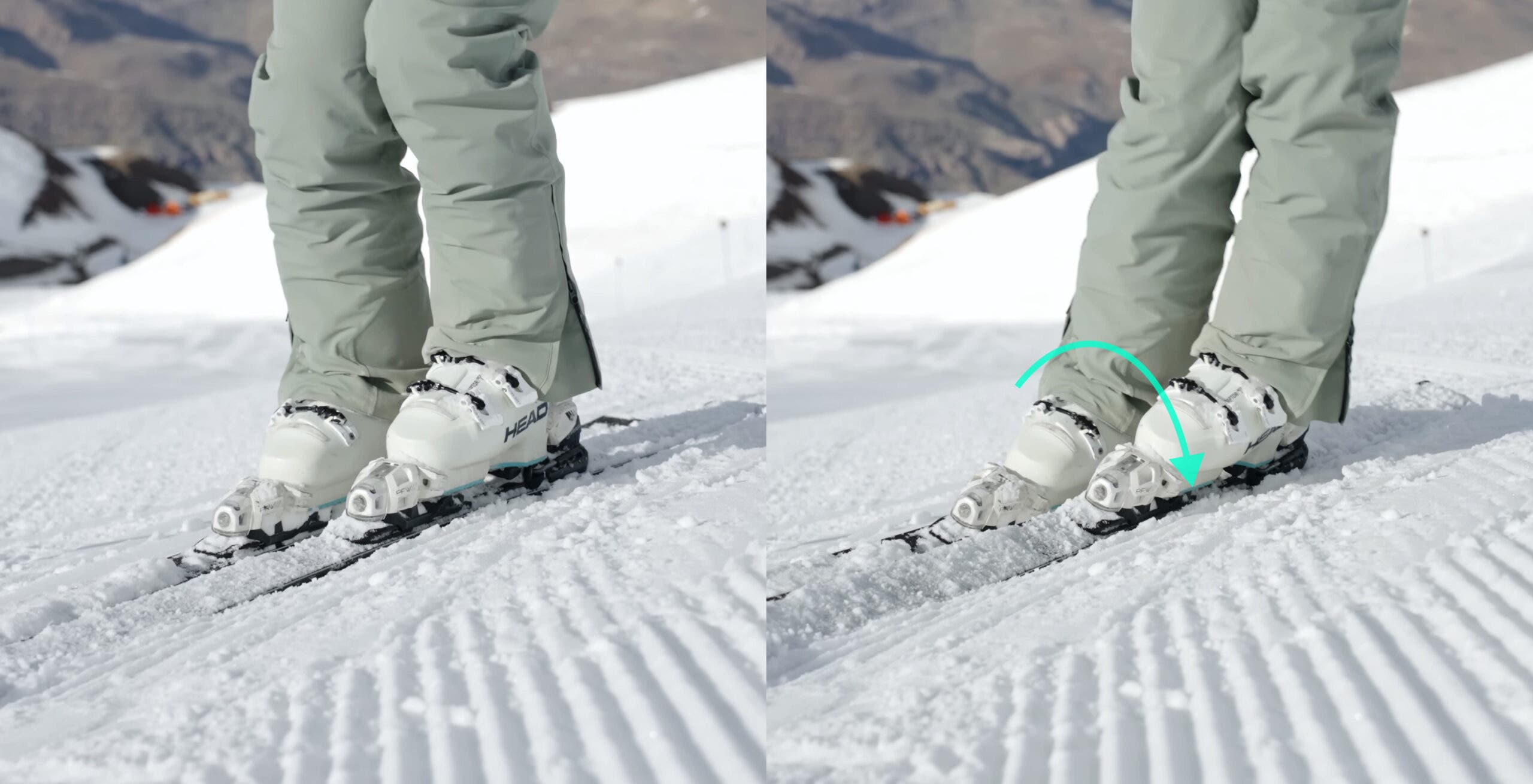
You’ll notice that even with a 16-meter ski, you can create very tight carved turns. This is the same feeling you’ll eventually want to feel in longer turns on steeper terrain—the ski bending and turning quickly instead of running long. A key point here is that you’re not just riding the edge—this is about more than holding an edge from one side to the other. Instead, you’re actively tightening the arc by pumping those ankles. If you’re a Carv user, you can check the success of this drill straight away by looking at whether your turn radius is shorter or longer than the radius of your skis—you’re aiming for shorter.
Exercise 2: Practice the Sidehill J-turn
Unlike a normal J-turn, which starts straight down the hill and finishes by turning uphill, a sidehill J-turn is a little bit different:
- Start from the side of the run. Be sure to watch for uphill skiers.
- Travel diagonally across the hill at about 45 degrees before making your turn. The 45-degree angle and sidehill start are there to make proper technique on a steeper pitch more manageable.
- Make a deep J-turn, trying to get the ski to bend and hook up in the same way as it did in the dynamic edge roll, but now on steeper terrain.
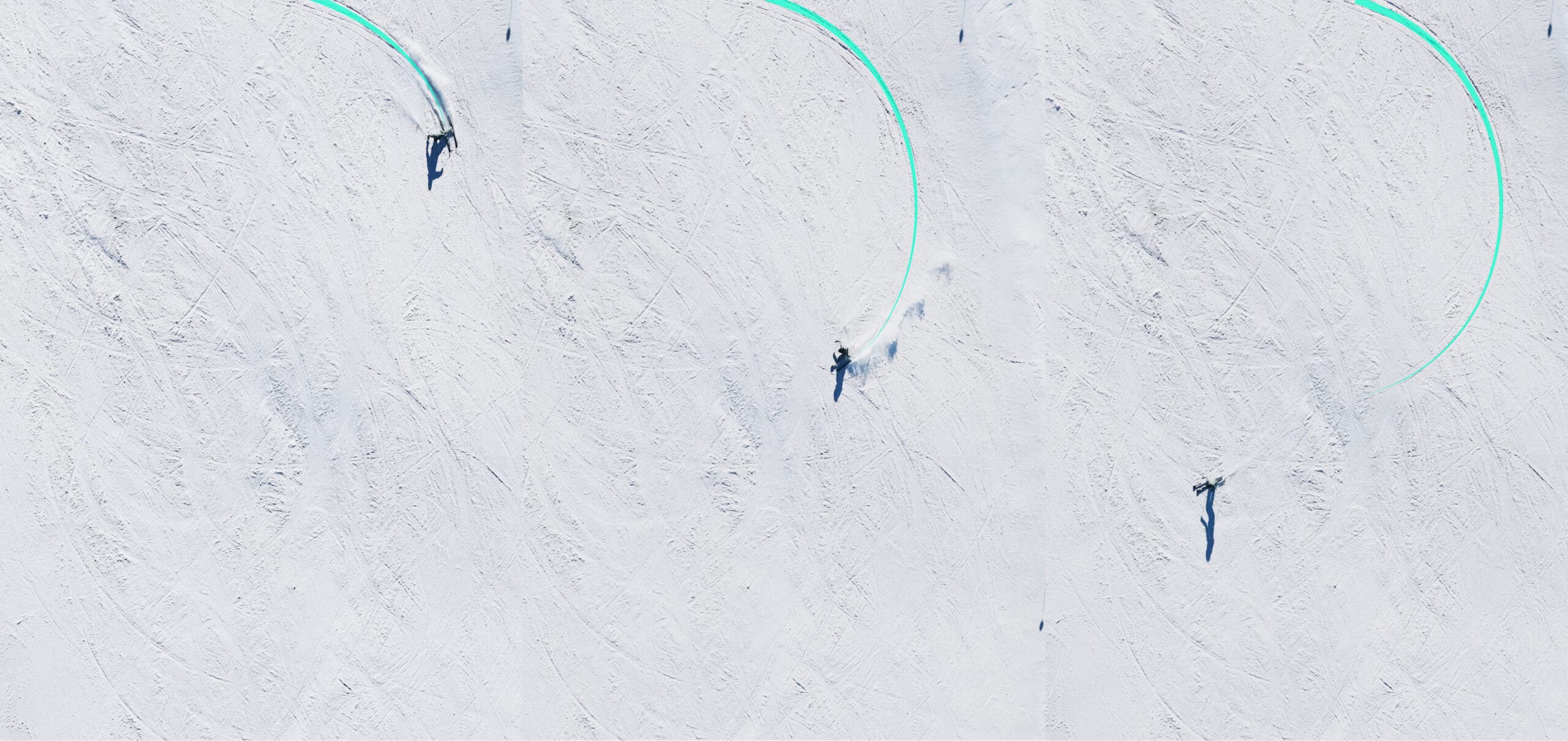
McGlashan gave us some advice for this drill. “Once my ankles are really active,” he said, “I need to lock the outside ankle down into the snow. I want to feel pressure through the outside ski and outside ankle, driving downward. As long as I have that pressure, it gives me a clear sensation of how much I can incline into the turn.”
Exercise 3: Pause Turn
Naturally, the next exercise has to do with connecting these turns. It’s called a pause turn. The pattern is simple: quick turn, pause. Repeat.
- Start by doing a sidehill J-turn as in the last exercise.
- This time, pause for a second as you traverse across the hill, flatten the skis, and re-enter the next turn.
- It may feel like you’re only doing one turn at a time, but in reality, you’re linking turns all the way down the hill.
- As you improve, gradually reduce the length of that slight pause in motion on the traverse until the turns flow naturally into each other.
If you end up feeling long, deep turns where speed builds and the ski starts wobbling, it’s time to revisit the mechanics. The longest part of the turn should be that pause as you gently traverse the hill, followed by another quick bend and turn. Over time, that pause will decrease to the point where you barely notice it flowing into the next turn, even on steep terrain.
The common thread through all of these exercises is the ankle work: driving the ankles forward and inward, pressing the side of the boot, holding the pressure, and feeling the ski rebound back underneath you like a slingshot.
Step Three: Put It Into Practice
Once you’ve practiced these drills and they start to feel solid, you can take them onto steeper and steeper terrain. As you progress, try to resist the urge to control your speed by fighting your skis. Instead, use what you’ve learned in these exercises to let the skis bend, keep the turn radius tight, and shape a nice, round turn.
When you get this right, the tension drops away, and the skis feel predictable again. And the carving you trust on blue runs starts to carry over onto steeper terrain. Not because you’re skiing any harder, but because the skis are finally working for you.
Carv is a digital ski coach built on a simple belief: better skiers have more fun. Most of us rely on mileage, better gear, or trial and error to improve. Carv changes that – turning every run into simple, personalized feedback so you can keep progressing without sacrificing your time on snow.