Published February 23, 2026 05:05PM
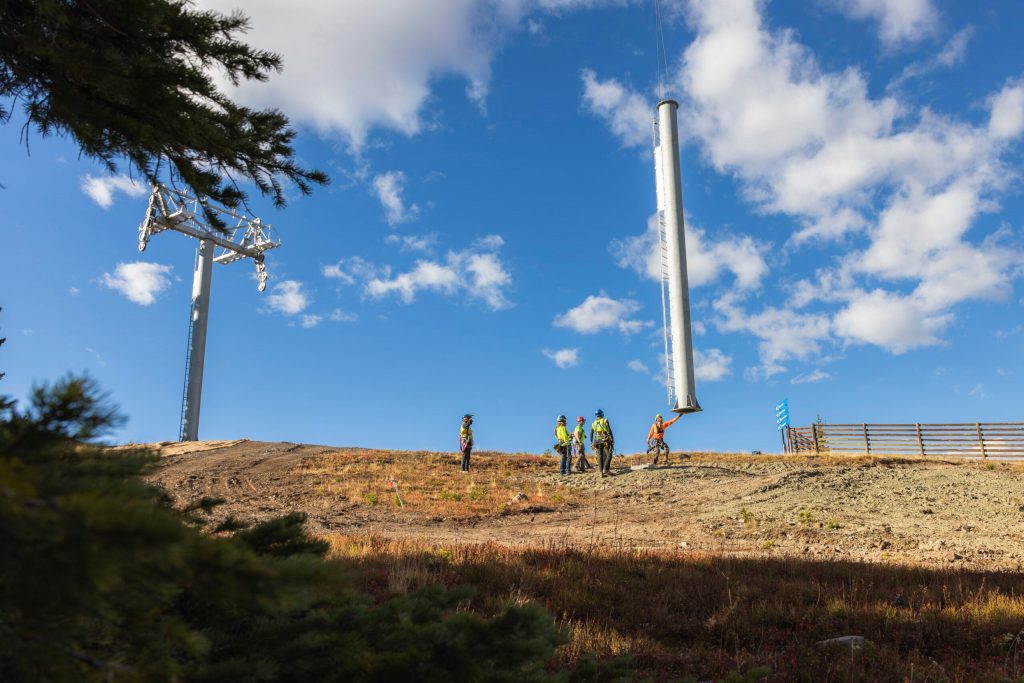
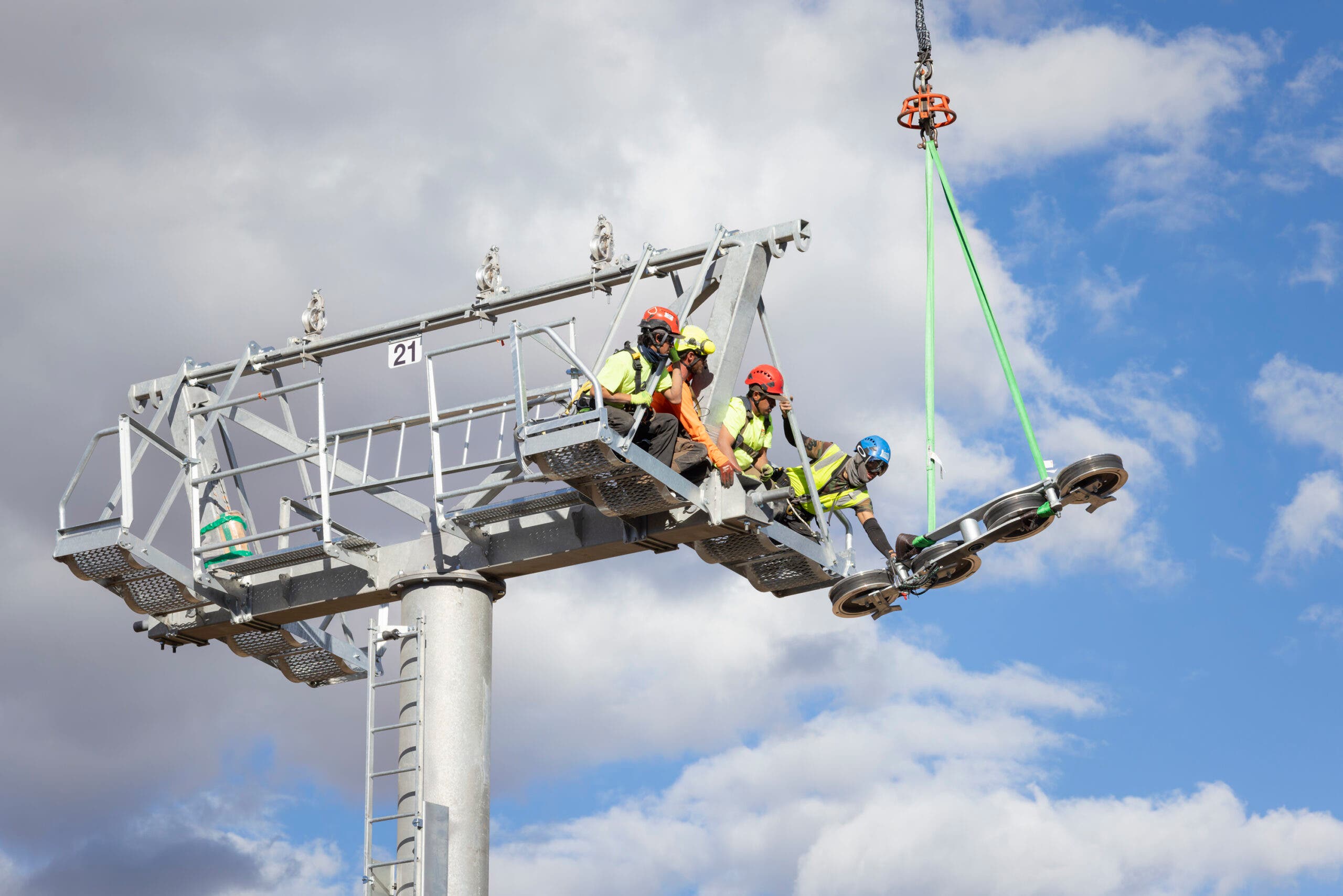
“You need to talk to me in inches out there,” says the Black Hawk helicopter pilot, Adam, standing in a circle of 20 (mostly) men wearing hi-viz jackets and sucking down energy drinks on a bluebird 40-degree morning in September. Minutes later, he’s flying the “bird,” capable of carrying up to 9,000 pounds, for three hours through the sky above Aspen Snowmass to drop 21 chairlift towers, cross-arms, and the wheels, called sheaves, that suspend the cable into place on threaded bolts with almost no tolerance.
“If you’re not between the bird and the rig, it won’t get ya,” project manager Bruce Meinzer cooly warns the group, composed of two “catching teams” that manually guide the massive, 30- to 40-foot towers and parts into place as the helicopter places them.
It’s October, and the lift that’s coming together like a Lego set is the Elk Camp lift, originally built in 1995 but getting updated this season from a quad to a six-pack. It’s just one of roughly 20 installs that Grand Junction, Colo.–based manufacturing and installation company, Leitner-POMA, does every year.
“Most of the work building the lift takes four to five months getting manufactured in our factory in Grand Junction, Colorado, not infield construction,” says John Mauch, sales manager at Leitner-POMA. “The above-ground work happens late in the process and executes fast.”
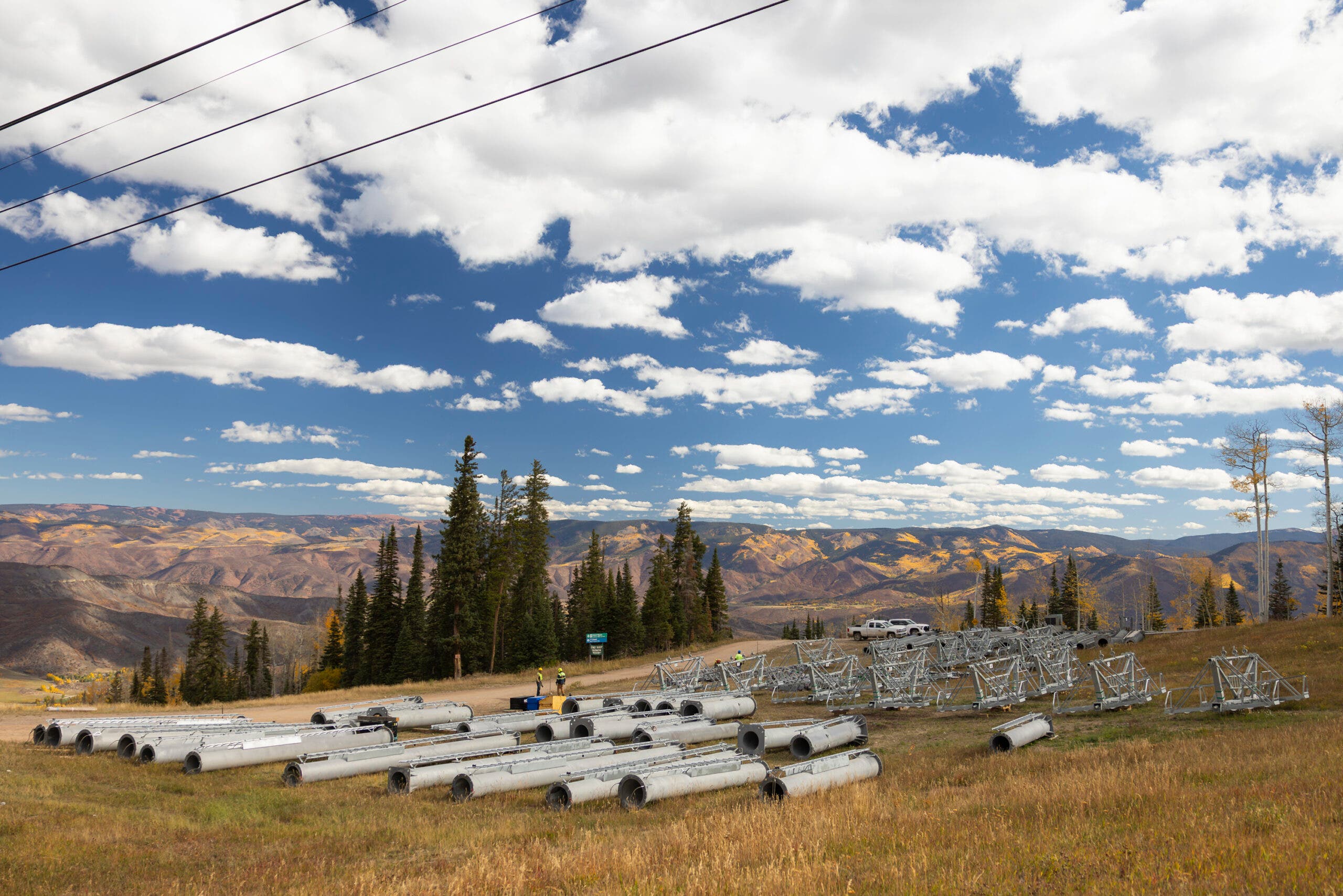
No two chairlifts are the same and the engineering and construction must be adapted to the specific terrain and carrying capacity requirements. Replacement of an existing chairlift is a very different process from installing a new one in a new place. “It’s one of the biggest capital investments a ski area will make,” says Mauch. “More than a restaurant, lodge, parking, snowmaking, and grooming equipment. It’s very permanent and you can’t really move it when it’s in.”
The process of designing and building a ski lift entails a lot more than just clearing some trees and hoisting a few towers into the ground. Many ski areas in the U.S. are built, at least partially, on leased Forest Service land, requiring a master-planning process (which Snowmass initiated in 2019 for the new Elk Camp lift), documentation of consensus (2022), Forest Service acceptance letter (2023), local approval (2024), National Environmental Protection Agency (NEPA) environmental review (2024-2025), followed by some more contract signing before construction begins (April 2025 for Elk Camp).
“From drawing a line on a page to the actual first person riding a chair, that journey was a six-year process,” says Mak Keeling, Vice President of Mountain Planning at Aspen Skiing Company.
Aside from these standard bureaucratic hoops to jump through, United States ski areas have a significantly different business model than European resorts, which often see more futuristic designs and innovation in their ski lift technology and systems.
“In Europe, typically the region or city owns the ski area land,” says Mauch. “Everyone in the city that profits from the ski area is taxed to help improve it. The value-added tax allows them to build a lot bigger, fancier machines, and that’s how they get by with cheaper lift tickets—they make the revenue from businesses that have to contribute and they might have two to three lift companies competing on one resort.”
“In Europe, a 1,000-acre ski resort could be on 20 different owners’ land,” says Aspen Skico CEO Geoff Buchheister. “A short lift on a farmer’s hillside with a cool heated bubble design up a steep cliff that gets him more skier scans generates more revenue, so you’ll see some independent, creative decisions made to appreciate someone’s personal property.” Buchheister sees these lifts as inspirational—awesome to marvel at their outside-the-box thinking and something to emulate over here in the United States.
It’s still a marvel to watch the Elk Camp lift go up in a matter of hours. Adam the pilot sways the towers onto a circular pad of threaded bolts with the help of guiding tubes called “snakes”. He puppeteers the components into place from high in the sky, articulating the bird’s movements like a mechanical marionette. “Keep your fingers on top!” reminds a veteran installer who recently watched someone in Summit County lose a finger tip that “popped like a grape” while catching a tower. The workers hand-tighten the bolts before scrambling up the tower to catch and install the crossbars with pre-rigged hardware minutes later, followed by the sheave parts—a totem pole of dayglow in rotor wash that kicks sand and dirt into their teeth.
“The rule of thumb is generally that a new ski lift is likely usable for around 40 years before it needs to be upgraded,” says Buchheister. Aspen Skico has 40 chairlifts across all four of their mountains, which means they’re looking at a new chairlift project almost every year.
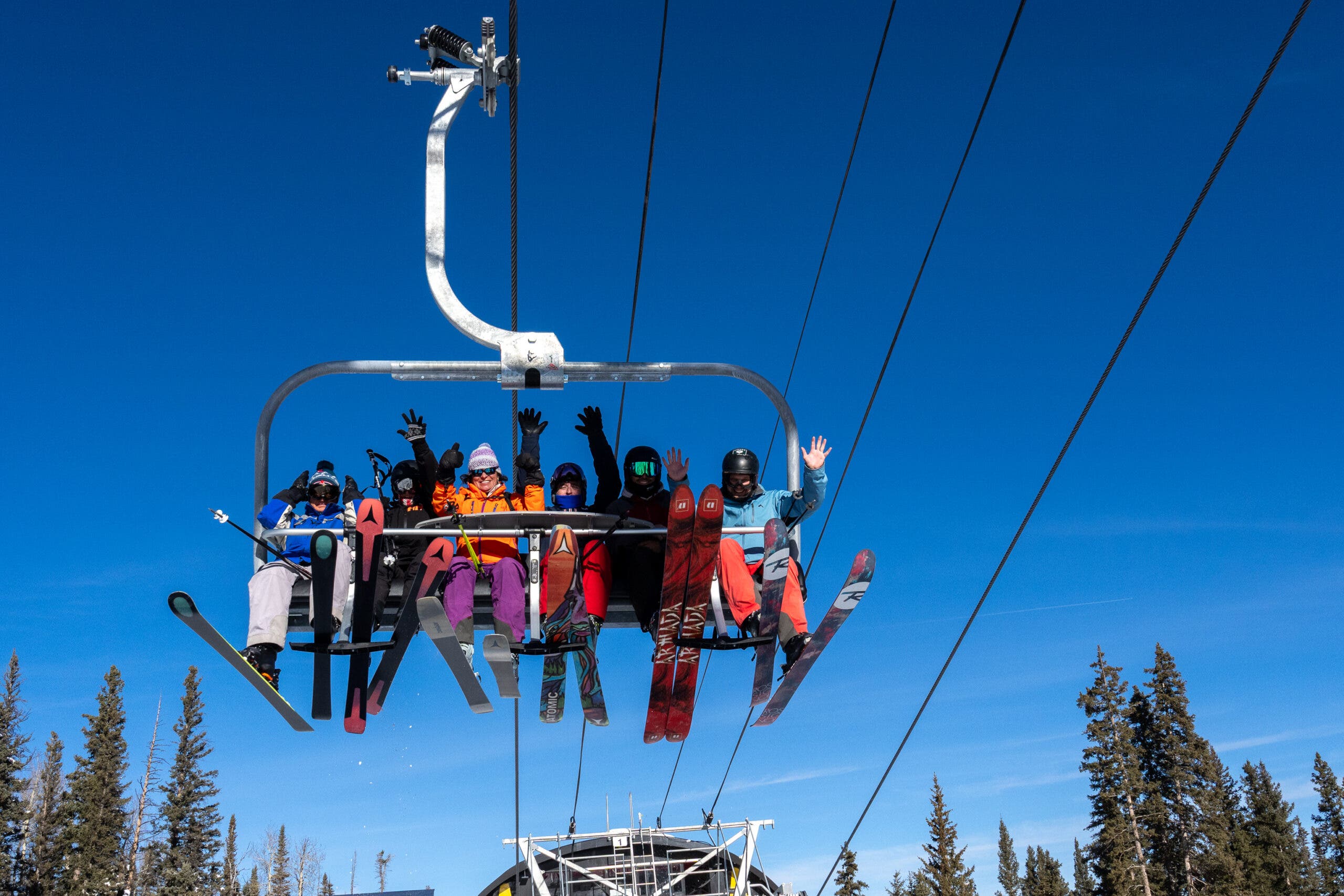
Envisioning what they will all look like can be the most fun part of the job. “One of the best days I’ve had as CEO here was skiing around all four mountains with Mak, white sheeting the whole area and asking each other, ‘what if we did this here or that there?’” Buchheister has fun dreaming big on things like aerial transit to alleviate traffic problems in town, connecting the mountains in creative ways, and getting people up and all over the slopes more efficiently. But even big dreams come down to a 12,000-pound helicopter dropping a giant steel pole on a dime.
It’s a tense scene that October day, but the installers’ moves are smooth. “Building ski lifts is fun!” someone yells. After all the bolts are tightened down with a massive drill bit, six semi trucks of chairs will arrive in the next week to be installed on the cable tensioned on the bull wheel. Engineers then come to test the chair load capacity as the last stop before it’s ready to zip skiers up the mountain.
The final task is the opening day ribbon-cutting—Dec. 12, 2025 for Elk Camp—a day of celebrating the blood, sweat, and tears it takes to get one of these modern marvels into the resort workforce.