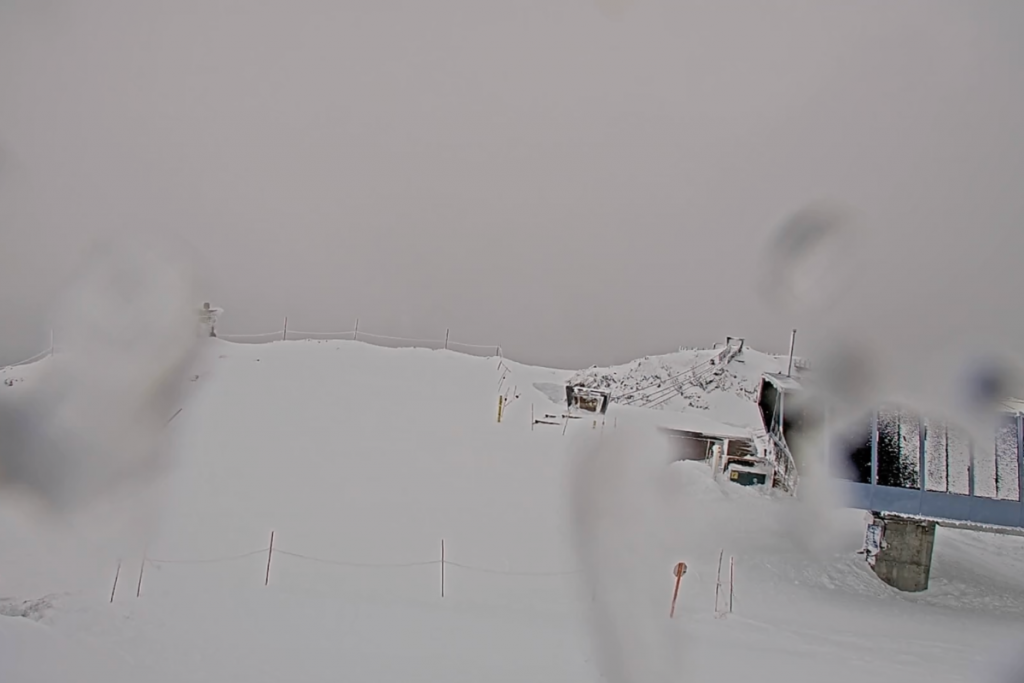
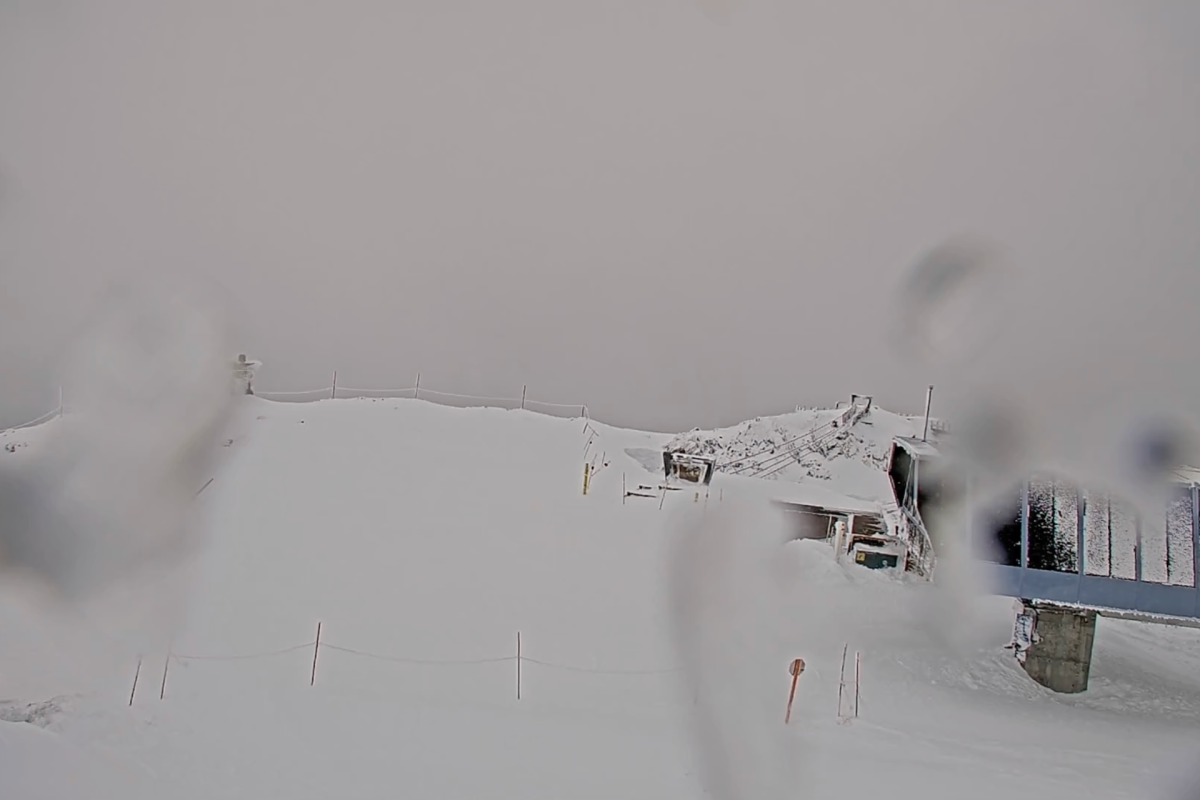
Rockfall occurred at Whistler Blackcomb early Thursday morning, before the mountain had opened, leaving a debris pile in a popular area of North America’s largest ski resort.
The slide took place on Whistler Peak, off the mountain’s Peak Express chair, and spanned roughly 100 meters wide between the West Cirque and Monday’s runs, the CBC reported.
The resort said in a statement that no one was in the area at the time of the rockfall and there were no reported injuries. Both Whistler Peak and the Peak Express Chair will be closed “until further notice while our operations team assesses the situation,” the resort said, noting that no more information was available.
The image below, posted to Reddit, appears to show the extent of the slide. Whistler’s Peak Express chair towers can be seen on the left of the image.
The 2026 POWDER Photo Annual is here! Look for a print copy on a newsstand near you, or click here to have a copy shipped directly to your front door.
While the exact cause of the landslide is unknown, the head geologist at the Sea to Sky Fire & Ice GeoRegion, Steve Quane, gave some insight to local news outlet, Pique News Magazine.
Quane said that the Sea to Sky corridor of British Columbia, where Whistler sits, is one of the most active landscapes in Canada due to the nearby tectonic boundary, which continues to push the mountains upwards.
More landslides and rockfall in places like Joffre Peak have been observed over the last few years, according to Quane.
“Freeze thaw weathering and gravitational instability are what make these jagged, beautiful peaks look the way they do and what happened on Whistler Peak today was a snapshot in geologic time where erosion won the war with uplift!” said Quane’s email to Pique.
The CBC spoke to Geological Survey of Canada research scientist Jeff Crompton about the event.
Crompton said it’s too early to determine what caused the slide, but that similar events in the Coast Mountains have occurred due to climate-change-related warming, which can cause deglaciation and permafrost degradation, the CBC reported.
Crompton also said that recent rain and warmer weather might have added a lot of water to the rock, which would have frozen when temperatures plummeted overnight on Wednesday. Water freezing and expanding can act as a trigger for a rockslide, according to Crompton.
Related: Comp Confirmed: FWT Names Start Date for Haines Alaska Pro