As brands abandon gendered skis, one longtime skier argues that design differences still matter.
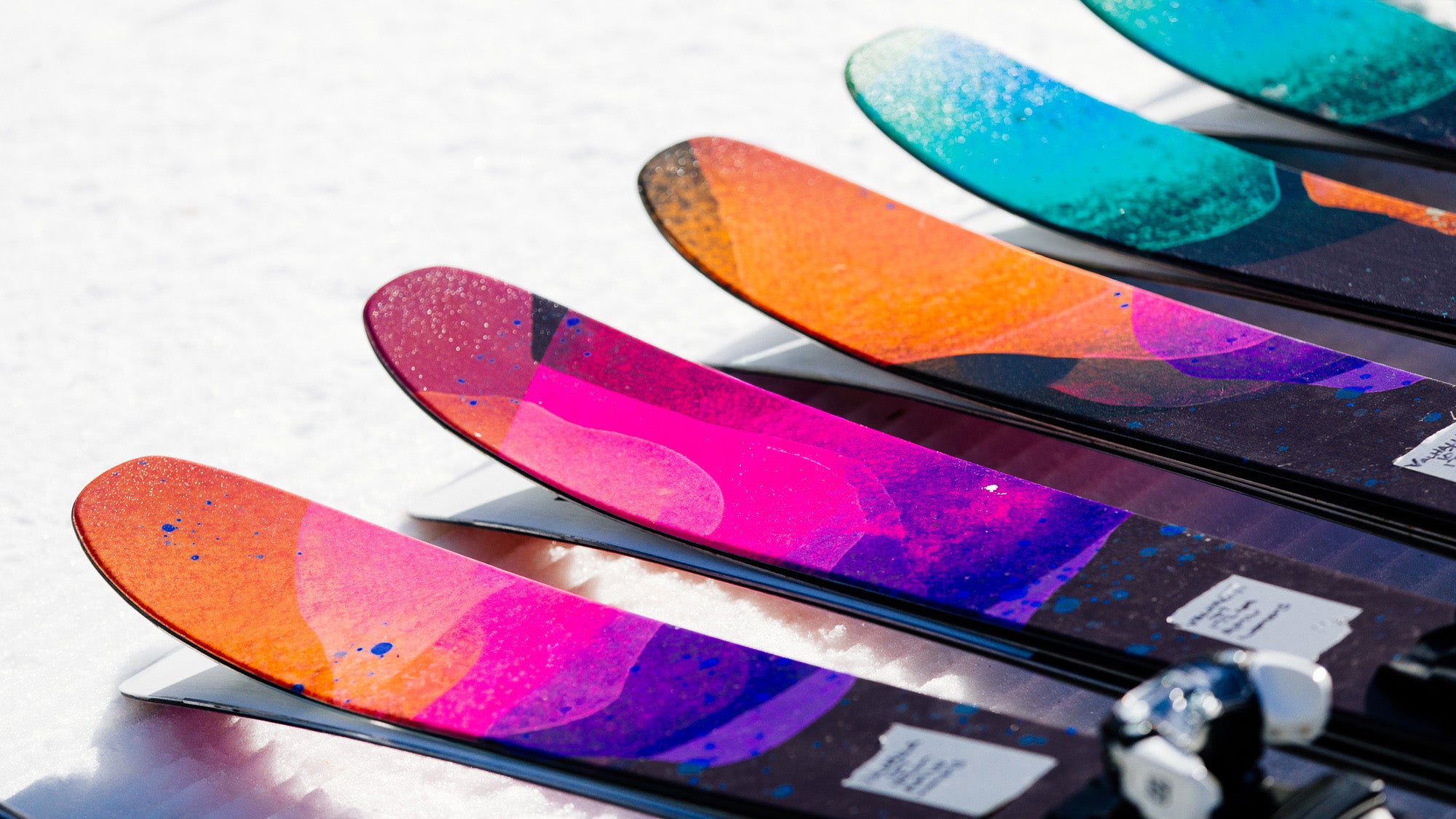
Why ditching women’s skis in the name of inclusivity could leave many skiers with something less fun underfoot. (Photo: Ray J Gadd)
Published March 18, 2026 08:59AM
For years, women’s-specific skis were the ski industry’s attempt to prove it understood female skiers—sometimes thoughtfully engineered, sometimes just smaller and suspiciously pastel. Now, many brands are backing away from the category altogether. With a few notable exceptions, companies are pivoting toward “unisex” skis, arguing that designing around ability, size, and skiing style—not gender—is the more inclusive path forward.
My two cents: Anyone who’s ever argued that a ski doesn’t know your gender is either a dude, a female pro skier who just wants a ski she won’t break, or a female skier who wants you to think she skis like a pro. But for the vast majority of women, women’s skis do make a difference for the singular reason of having more fun, which, last we checked, is the point of this sport.
The reason why has little to do with geometry and everything to do with force. A ski may not know what’s in your pants, but it sure-as-sugar knows your strength, weight, and ability level. A recent study done for the military revealed that women have an average of 26 pounds less skeletal muscle mass than men and an average of 33 percent less lower-body strength. And at the same height, a man’s average weight is anywhere between 26 and 12 pounds heavier than a woman’s, with the difference decreasing as height increases.
So, while women may win the strength-to-weight ratio category (not to mention a zillion others like longevity, endurance, and ability to put the cheese back in the cheese drawer), they’re still lighter and less physically powerful, on average, than their male height counterparts.
Some ski companies argue this can be solved by serving women with a shorter ski. But—when it comes to skis, at least—what we learned from the bathroom stall in third grade turns out to be true: Size matters. Shorter skis are less stable, meaning they get squirrely at speed, balk at push piles, and feel nervous in variable terrain and conditions. Beginner women especially—precisely those who need more confidence—are chronically fed tragically short skis by the shop bros who are, of course, trained by other shop bros. But this is a topic for another rant.
A true woman’s ski (some brands just swap out top sheets and press smaller sizes, so do your research) is built differently than the unisex version, designed more for finesse than brute force. They tend to have less swing weight, metal only where it matters, and more rebound—all of which add up to being easier and more fun, even at longer, saner lengths. It listens to our input, responds accordingly, appreciates our subtleties, and, at the expert level, rips.
Are there times that I’ve enjoyed charging down a steep groomer at eye-watering speeds with a pair of stiff unisex skis on my feet? Certainly. (I also prefer men’s deodorant, but again, that’s another rant.) But when it comes to my daily driver, I prefer to do the driving, thank you very much.