Published March 24, 2026 04:24PM
“It’s mid,” said the local snowboarder. She waved her gloved hand in the freezing air, while her skier boyfriend nodded along.
I was riding a chairlift up an icy ridgeline in Western North Carolina, chatting with a college-aged couple about the 20 or so ski resorts in the Southern Appalachian Mountains. As I rattled off names, my chair-mates echoed the trending slang for mediocre: mid, mid, mid—
“Actually, we haven’t been to all those,” she clarified. “But we’ve heard they’re mid.”
They told me their go-to was this one, Beech Mountain. In recent seasons, it’s become one of my favorites, too. For this region, it’s got the goods in most categories: affordable tickets for fast lifts accessing a variety of terrain with 830’ of vert. Solid snowmaking and the cold temps needed, given it’s the highest ski resort on the entire East Coast. Atop the 5,506’ summit, they dropped a microbrewery, adding to Beech’s fun and youthful vibe.
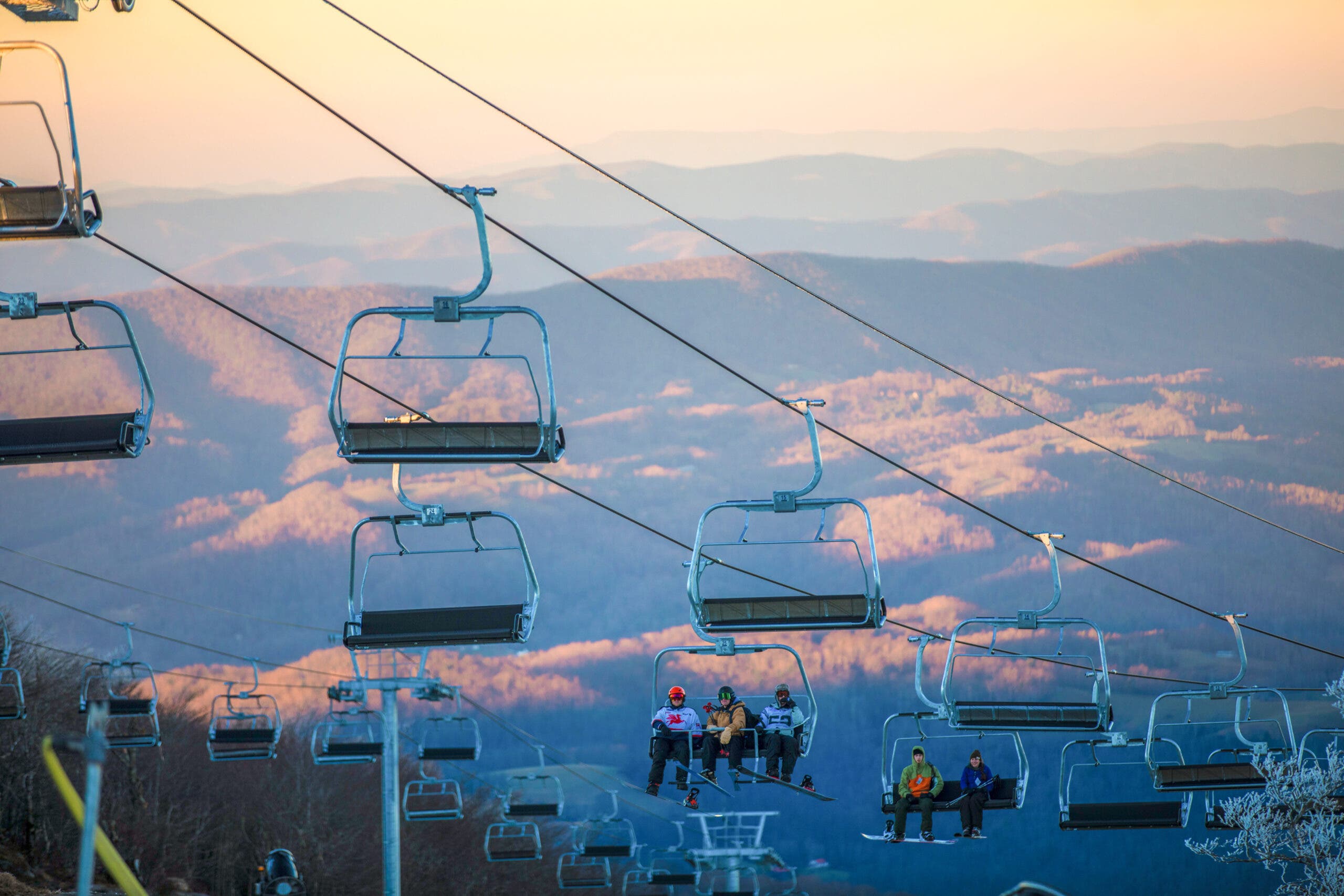
During my friendly “cross-examination,” I learned the couple had been to just a handful of the other resorts, mostly during poor conditions, and never returned. Variations on this take are pretty familiar to me by now. Especially since my wife and I relocated for her professor’s job to the nearby Coastal Plain. We’d been visiting the Southern Appalachians for years, enjoying world-class kayaking and biking, all while encountering low opinions of the winter-sports scene from locals and outsiders alike.
Those first few years after we moved, I avoided skiing here. Instead, I continued making the long commute out West, where I grew up, using the Mountain Collective Pass to chase powder. Eventually, distance, cost, and life got in the way. After reluctantly skipping a few seasons, I decided to resume skiing. But this time I would explore the places closest to home and work outward, hoping to find something, anything worthwhile.
Looking for an underrated ski side quest? Look no further.
During my first season back, I discovered several somethings while exploring the three resorts near Boone, NC. Most importantly, the skiing was better than expected based on what people said. As a result, the hardest part wasn’t negotiating regional quirks, like narrow slopes, shifting conditions, or crashing beginners. The biggest challenge was navigating the stigmatized scene, which came with all kinds of negative assumptions and inaccurate stereotypes.
Not worth it, someone might say, when I asked about other mountains to check out. That place has no snow. That one has no trails. Slow lifts. No trees. Only ice. Only trees.
At busy Sugar Mountain, WNC’s largest resort with 1,200 vertical feet, I started on the fun and steeper north side, where a dude on a high-speed lift said, “Don’t bother with the lame east side, they have slow lifts and no snowmaking over there”. Wait one sec, pal! Just like most regional offerings, this one hovered around 100 acres. From the lift we were riding, I could basically see that other side, and it looked comparable to this side.
Being a naturally defiant skier who’s willing to traverse a hundred yards for a quick take, I bravely ventured over to this mellower but fun southside. There I found fast lifts, a good base of made snow, and was essentially told, “Stay away from that worthless west side. It’s an ice rink, where they pull you uphill on an oxcart”.
Well, something like that.
Clearly, people’s perceptions did not match the reality on the ground. I decided to go see for myself with a winter road trip closer to home. I picked up the affordable Indy Pass, which includes about a dozen resorts in the Southern Appalachians. The arrival of an epic season for my January 2025 departure was just powdered sugar on the cake. I saw multiple days with natural snowfall, in fact. So, I tacked on some non-Indy resorts to what became a whirlwind 17-resort loop through the Southern Appalachians.
More reading: 9 Easy Ski Day Trips From the D.C. Area
The first stop was Cataloochee, where I found an excellent but smaller skier’s mountain, with 740 vert, at the edge of Great Smoky Mountains National Park. Further north, I confirmed that Wintergreen in the Blue Ridge Mountains of Virginia is a completely different resort from Winterplace in the Alleghany Mountains of West Virginia, go figure, despite being told by folks that these are the same. The former has bigger stats and amenities but a warmer climate, making condition-peeping essential. The latter may be smaller, but it’s inland, colder, and less crowded.
My favorite places were mostly in West Virginia. Snowshoe has a big western feel, with 1,500’ vert and corporate ownership by Alterra, to boot. Definitely worth visiting, but it’s not the only game in the state. About two hours north, the Canaan Valley is a snowy gem, with three options offering runner-up stats: the modern Timberline, the old-school bowl of Canaan Valley State Park, and the unique backcountry trails and knobs at White Grass Ski Touring Center.
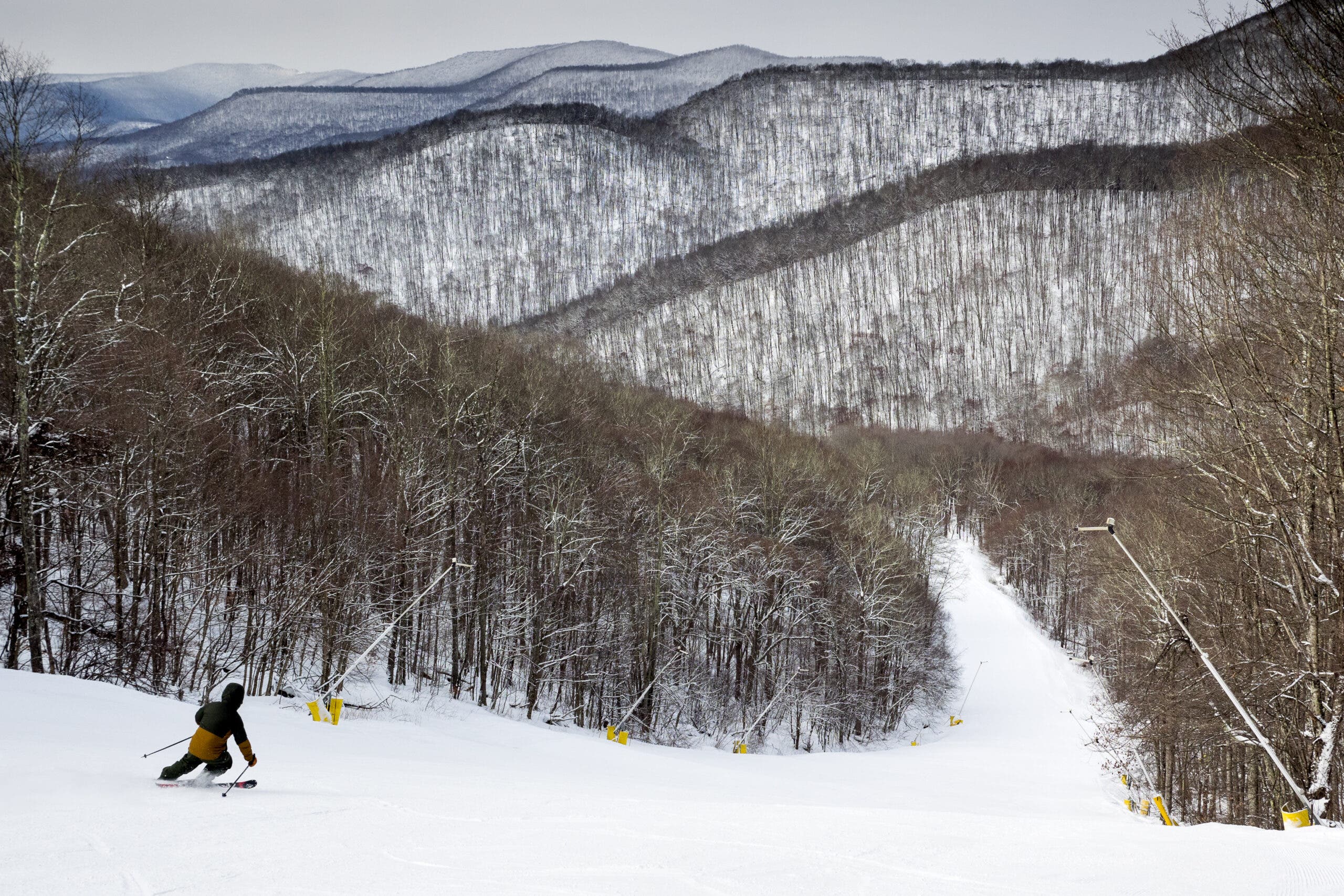
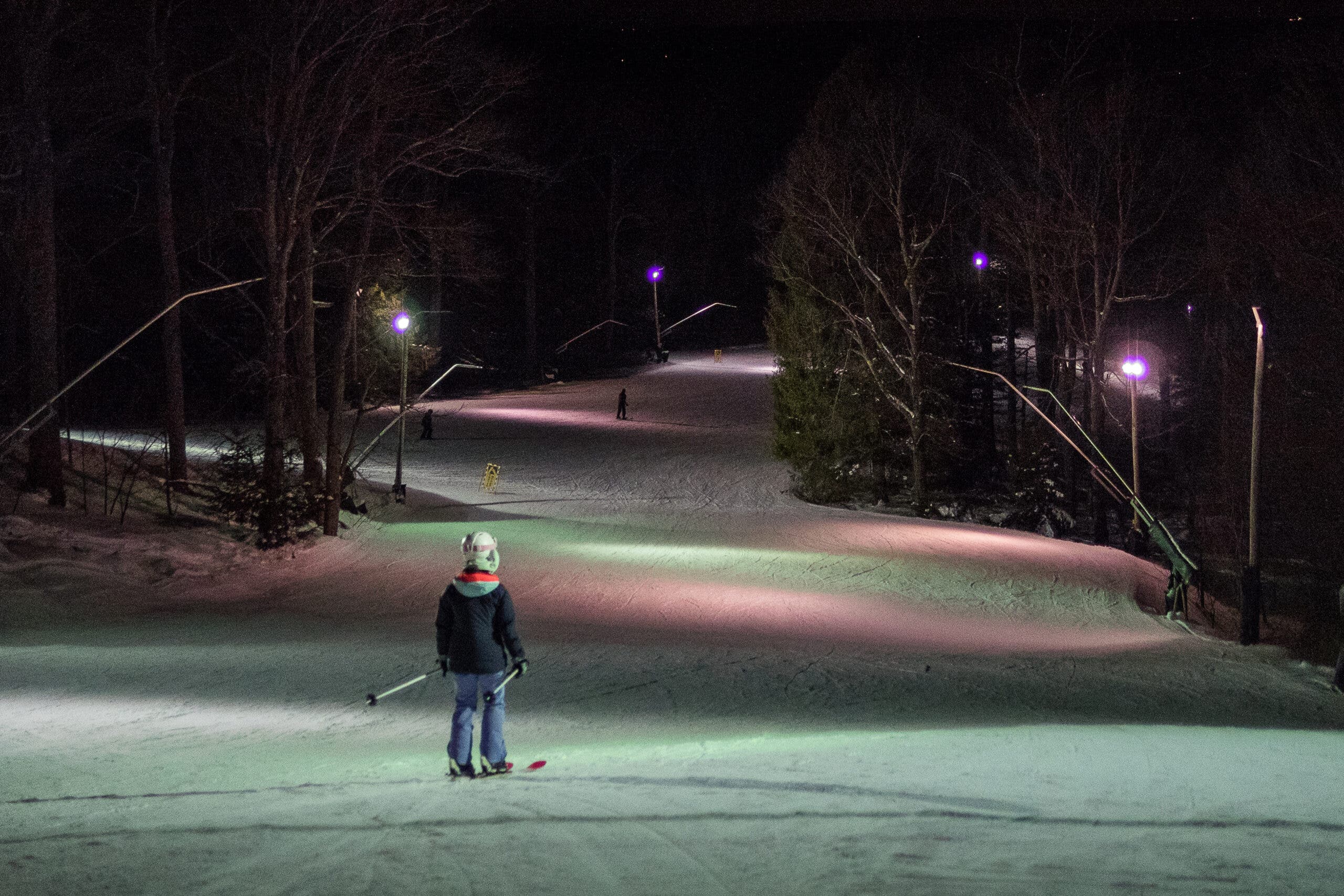
As I moved north, I was learning about an intriguing topographic quirk of the Alleghanies: the summits are rounded, and the slopes steepen toward the bottom, leading to several top-down resorts. One of my favorite examples was Laurel Mountain, just across the Mason-Dixon line in Southwestern Pennsylvania. It had fun ledges, some steeps, and a spooky night-skiing scene involving a lift ride through complete darkness.
Later, I would be told by an older skier that Laurel had shut down. Dude didn’t seem to be listening when I explained that Laurel reopened in 2016 and was eventually acquired by Vail Resorts. Who knew where I’d gone, he continued, but it definitely wasn’t Laurel.
“Yes, it was Laurel,” I replied.
On the home stretch south, I was told at one resort bar to skip my upcoming stop at Massanutten.
“You mean Mass-a-nothing?” joked a smug 30-something Airbnb developer who basically described a children’s farm with a rope tow. My theory is he went as a kid and, like Peter Pan, never fully grew up.
I went anyway, and discovered this Virginia staple, like most regional offerings, has upped its game in recent years: new lifts, more blowers, expanded and harder terrain.
So, what’s the story behind all this mixed messaging? There seem to be a few factors in play. Skiing in the Southern Appalachians started later, ramping up during the 1970s. Almost immediately, the ridicule began, with nationwide critics labeling it the “Banana Belt” of skiing. Banana Belt? We barely even eat those here. Meanwhile, gradual improvements were made each season, which accelerated in recent years, as new snowmaking technologies were developed to overcome warming climates around the world.
Old habits, including negative assumptions, die hard. As it turns out, sliding past the stigma makes finding new ski places even more exciting. Step one, don’t knock ‘em before you ski ‘em. Step two: all you have to do is go.