Updated March 25, 2026 10:56AM
When you check into a hotel where the wifi password is “hangover,” it creates a certain expectation. Sure enough, the party at Fahrenheit Seven in Val Thorens was just starting to go off on the back deck, with a DJ and an electric violinist. Meanwhile, inside at the bar, the person sitting next to me broke their wine glass. It was only 2:30 p.m.—on a Sunday.
Like each of the seven villages that access the massive Les 3 Vallées ski resort in the French Alps, the pedestrian-oriented Val Thorens has its own character, and you can likely guess the type of ski traveler it attracts. But in addition to its notorious après scene, skiers come here for reliable snow coverage—at 7,500 feet, it’s Europe’s highest ski-area base—and a ski season that usually stretches into early May.
At 25,000-some acres, with 161 lifts, and 600 kilometers of trails, Les 3 Vallées is the world’s largest interconnected ski resort. Which means that there’s a gazillion different ways to experience this place, from where you choose to stay to the runs you want to ski. You could visit a dozen different times and never have even remotely the same experience.
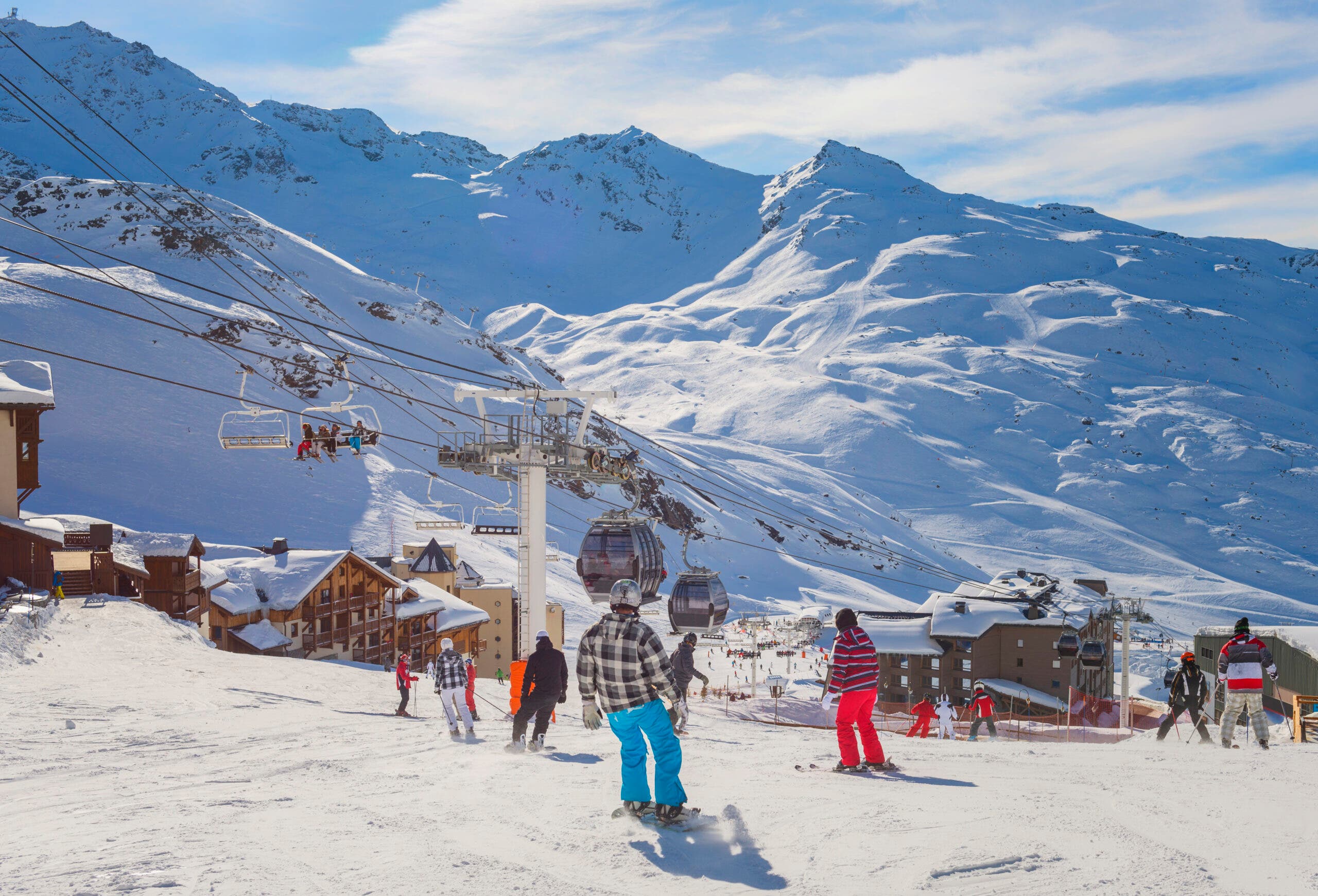
Given its size, Les 3 Vallées presents quite the challenge from a planning perspective, so this is not the place to fly by the seat of your ski pants. Its vastness struck me the first day of a trip in early February, as I viewed a seemingly endless expanse of above-treeline slopes criss-crossed by lifts and gondolas heading in all directions.
To scale the resort down to manageable size, start by homing in on the vibe you want when you’re off the slopes. Here are some things to consider as you start planning a trip to the world’s largest ski resort.
Five Strategies For Planning a Ski Trip to Les 3 Vallées
No. 1: Where to Stay
The resort is spread across three sprawling valleys, with seven distinct villages where skiers can base out of. One of the most famous is the aforementioned Val Thorens, the lively town at the head of the Belleville Valley. Farther down the valley, the more compact Les Menuires caters to families, with most of the lodging in condos or chalets and a couple of designated family ski zones. For a quieter retreat, look into Saint Martin de Belleville, past Les Menuires, where one gondola accesses the rest of Les 3 Vallées.
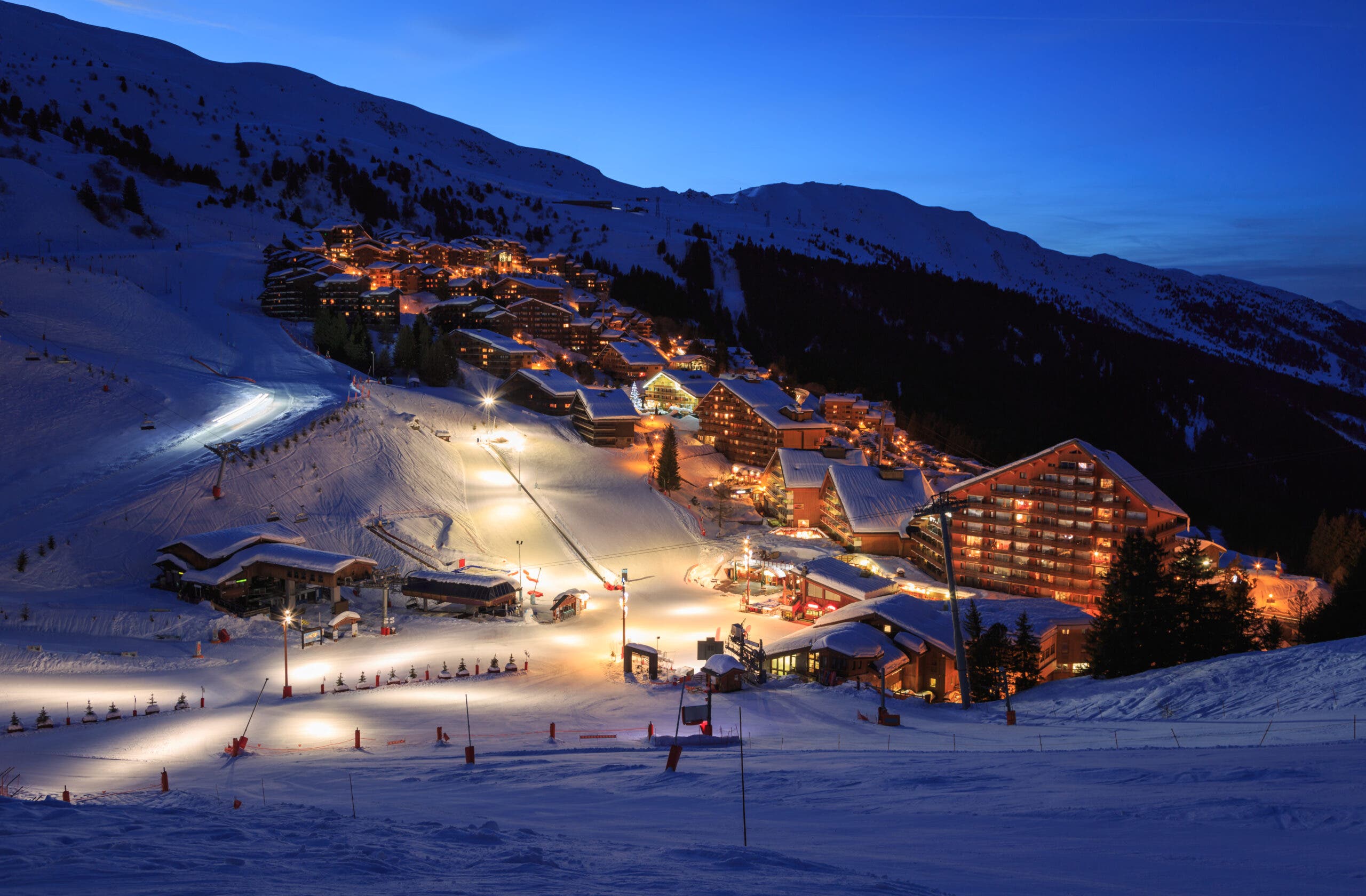
In the neighboring Allues Valley, to the east, Méribel, established in the 1930s, feels like the most traditional Alps village, with chalets spilling across the slopes. Méribel Mottaret, the highest elevation of the town’s five neighborhoods, offers the quickest lift access. For skiers looking to save money, try staying at Brides-les-Bains, lower in the valley and served by one gondola.
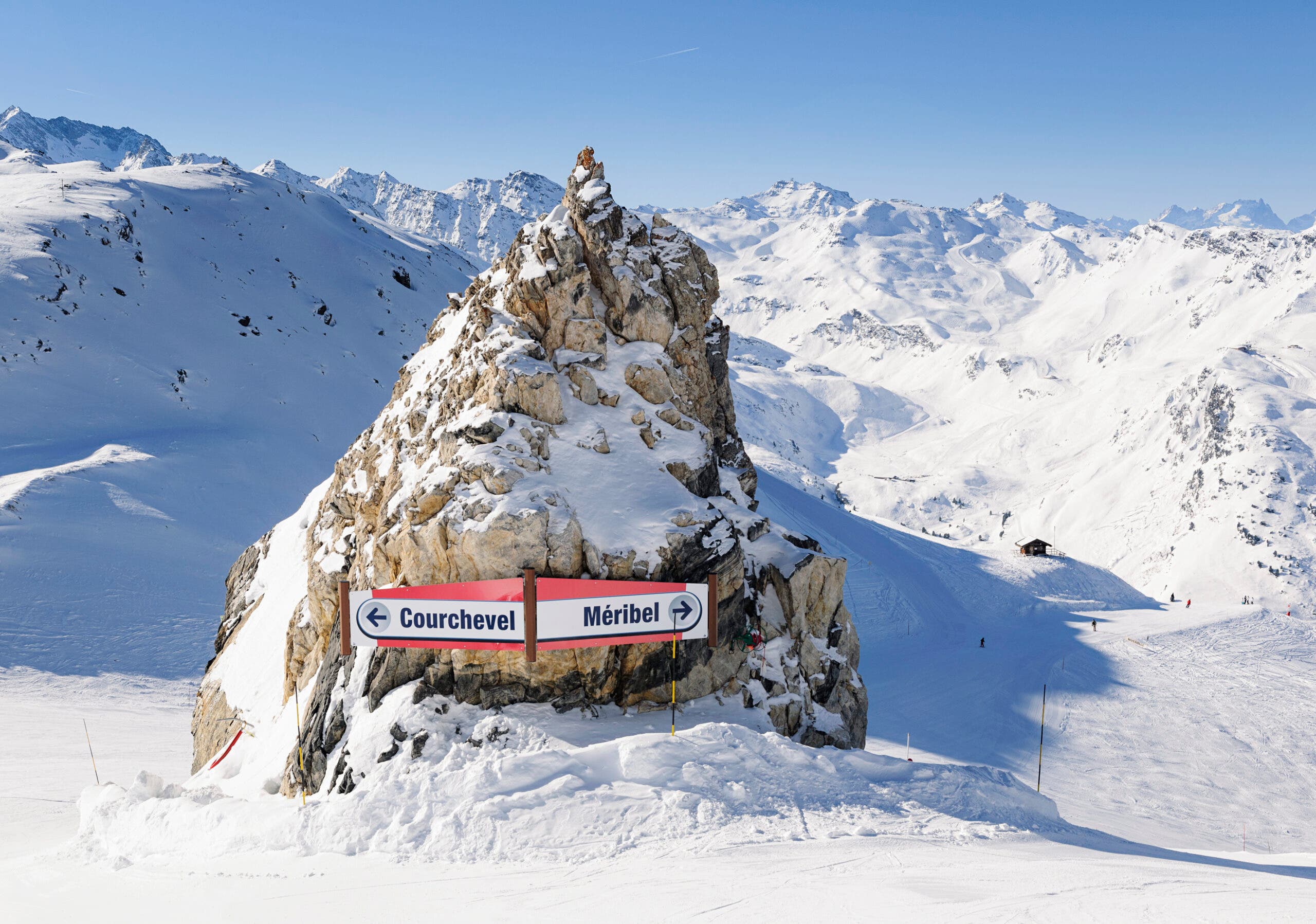
The glam crowd beelines it to Courchevel in the third, easternmost valley, the Saint-Bon. Courchevel 1850, the highest elevation of several smaller villages that comprise Courchevel, offers the largest concentration of luxury hotels and Michelin-starred restaurants.
Then there’s Orelle, the quietest and most off-the-beaten-path village. It has only one hotel and a few restaurants on the resort’s western edge. Technically, it’s in another valley, the Maurienne, but Orelle’s lifts and ski slopes are considered part of Les 3 Vallées.
No. 2: Where to Ski
Those 161 lifts make it easy to get around Les 3 Vallées and cover vast amounts of ground. That said, you’ll want to focus on specific areas so you’re not just riding lifts all day.
For example, ride the Pointe de la Masse gondola from Les Menuires. At the top, before clicking into your skis, visit the huge rooftop deck, where the 360-degree views include Mont Blanc, western Europe’s highest peak. Then spend the morning exploring the terrain around the gondola.
Or head up the Saulire summit from either Courchevel or Méribel to ski the experts-only Grand Couloir, which plunges off the peak toward Courchevel with a max slope angle of 38.6 degrees (its counterpart on the Méribel side is the Couloir Tournier).
On days when the visibility is like looking through the inside of a milk bottle, beeline it to the lower slopes of Méribel or Courchevel, where you’ll find trees.
No. 3: Get Off Piste
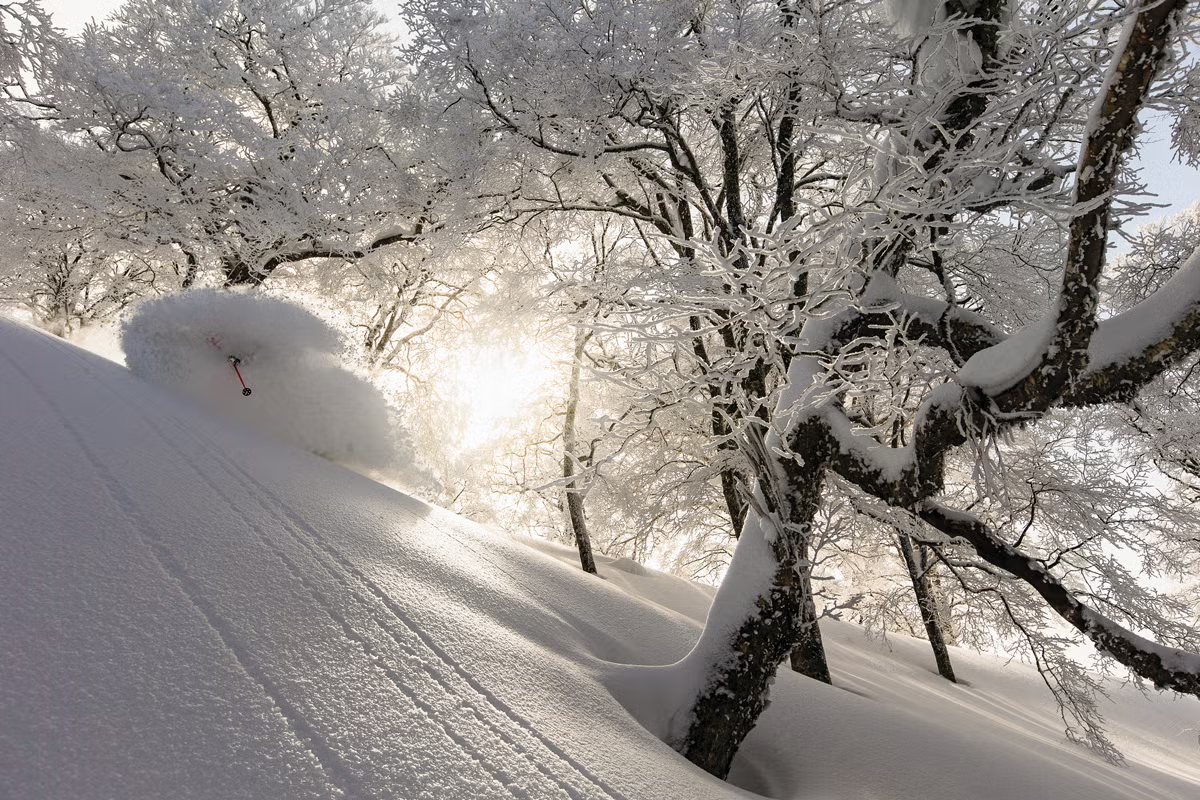
As at most other European ski areas, only the groomed pistes are controlled for avalanches. The vast swaths of terrain between them are not. And you’ll likely want to ski off piste as much as you can, both to up the adventure quotient and avoid crowds.
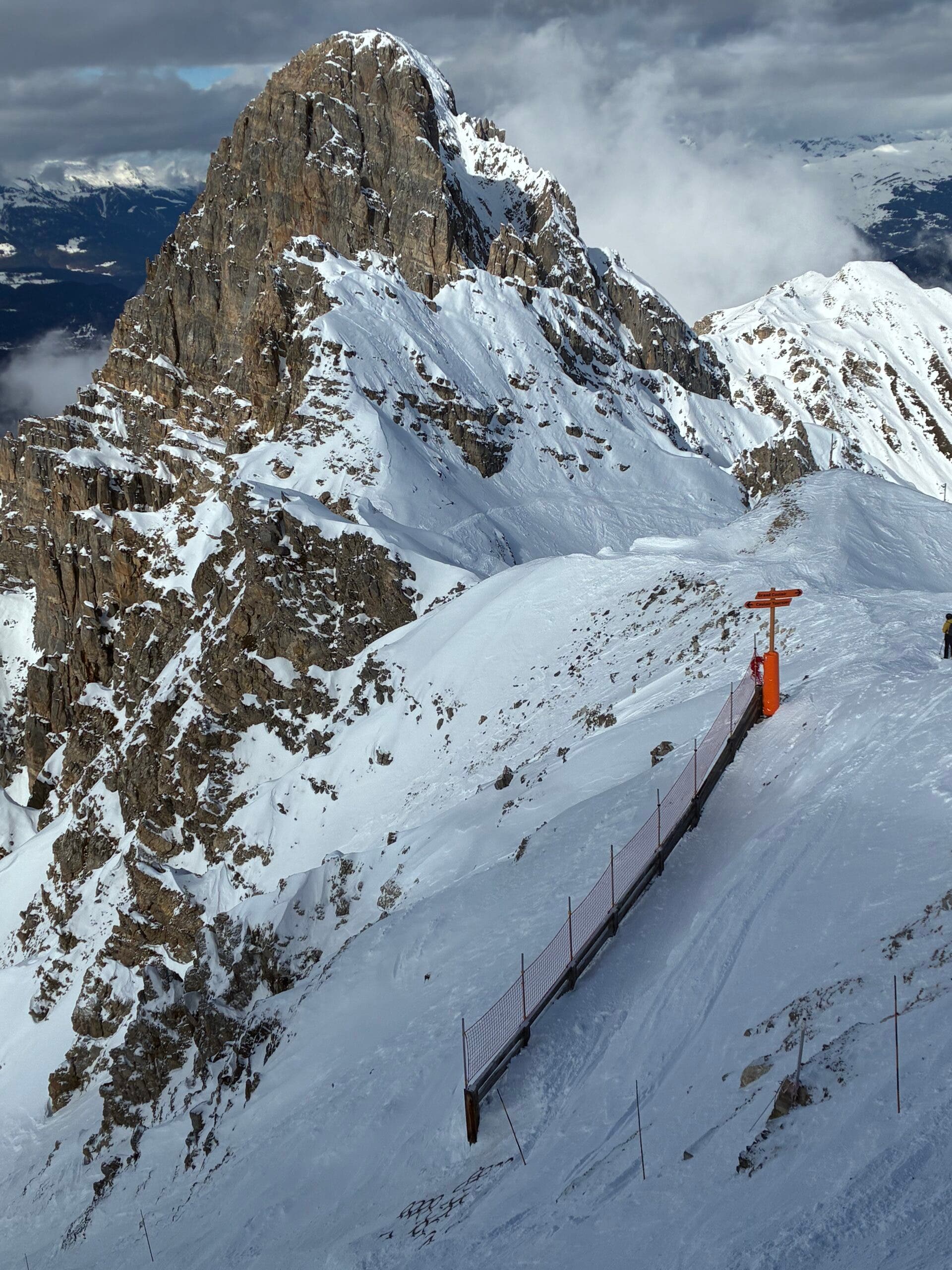
That’s where a guide proves invaluable. Hire one through ESF, the French ski school at the resort, and either bring or rent avalanche safety gear—beacon, shovel, probe.
The guide my group skied with was understandably conservative in his terrain choice; due to recent wind loading, the avalanche danger was considerable—a three out of five, per the European rating scale. Yet we still enjoyed experiences like a 5,000 vertical foot ski through untracked snow down the Vallon du Lou, a small side valley that ended in a lake near Les Menuires. Whereas the groomed pistes that morning had been full of other skiers, we saw no one else on this off-piste run.
No. 4: Bring Ski Touring Gear
Alpine touring gear expands your off-piste potential even more. One morning, our guide led us from Pointe de la Masse down the Encombres and Geffriand valleys. To get from one valley to another, we skinned for maybe 45 minutes, feeling dwarfed by the enormity of the surrounding glaciers and peaks. After a couple of hours, we skied into St. Martin de Belleville, where a gondola took us back to the slopes.
If you forgo a guide, check out the avalanche-controlled “Freeride Lab” atop Courchevel and Méribel, where a 15-minute skin leads to two descent routes.
No. 5: Leave Time for Lunch!
“Eating and skiing are my two favorite things,” said a skier from Boston named Dan whom I met in the hot tub. “Until I came to Europe, I didn’t realize you could do both in one place,” he quipped, lamenting the typical U.S. ski-resort menus and prices.
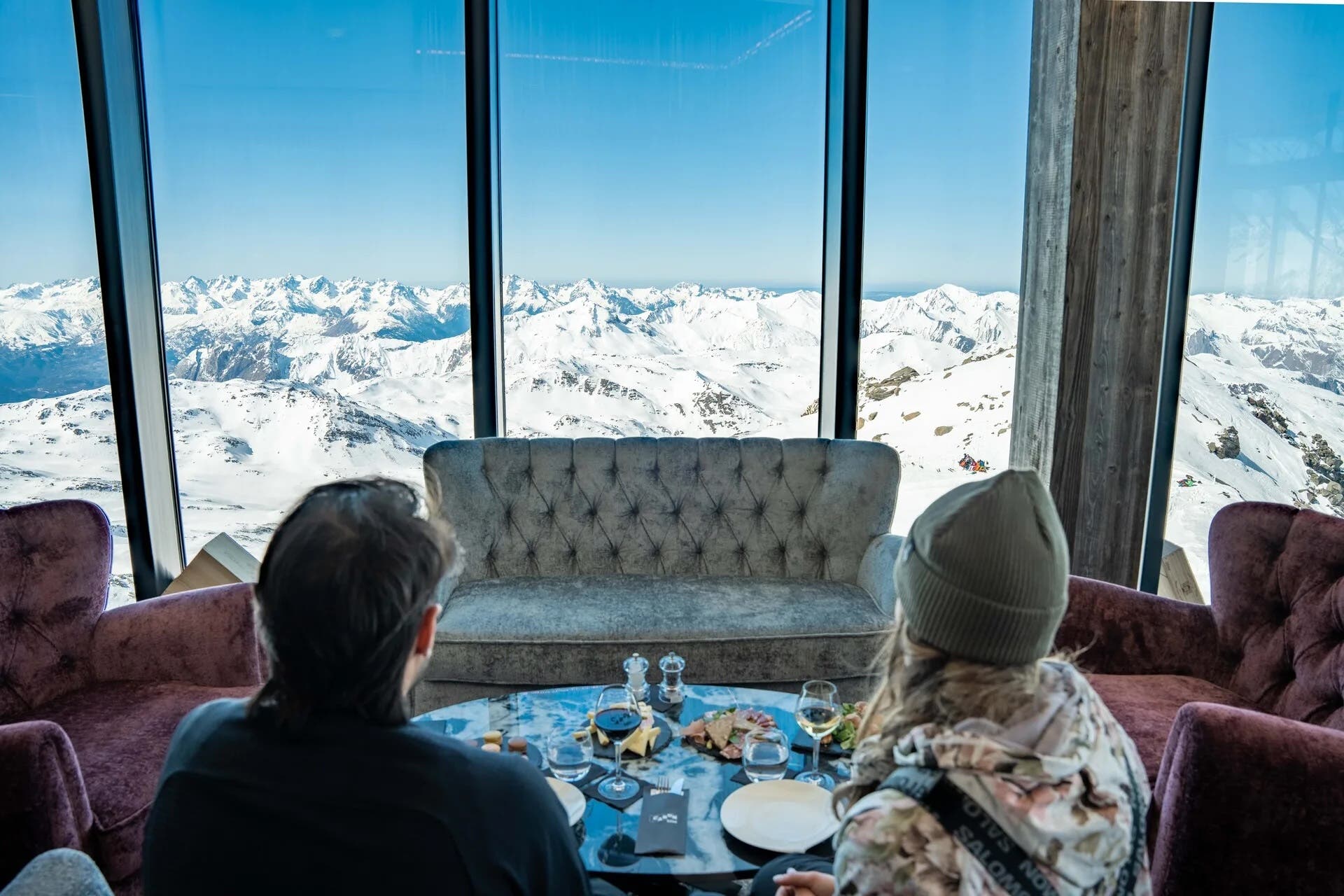
In the Alps, lunch while skiing isn’t just a chance to refuel but an experience to be savored, and Les 3 Vallées has terrific options. Just a few: The wine bar at the impressive new Caron 3200 complex atop Val Thoren’s Cime Caron serves lunch in an elegant, window-lined aerie, along with 45 wines by the glass.
One day our guide led us off piste through the forest near Courchevel to Le Chalet de la Rosière for crepes and cider by the wood stove. Few skiers usually experience the restaurant as it’s accessed by snowshoe trails, but since we had touring gear, we were able to skin back up part of a maintained uphill ski trail afterward to regain the lifts.
On my last day, after lunch at Le Corbeleys, in a century-old chalet reached by gondola from St. Martin de Belleville, we toasted with génépi, the herbal liqueur made in France’s Savoie region—a celebration of good skiing and good food, together.