An inside look at the overnight work, tricky conditions, and surprising realities behind freshly groomed runs.
Published March 27, 2026 05:18PM
Earlier this winter, I was driving a few friends who had never been to Park City home from dinner. “What are all those lights up on the mountain?” they asked.
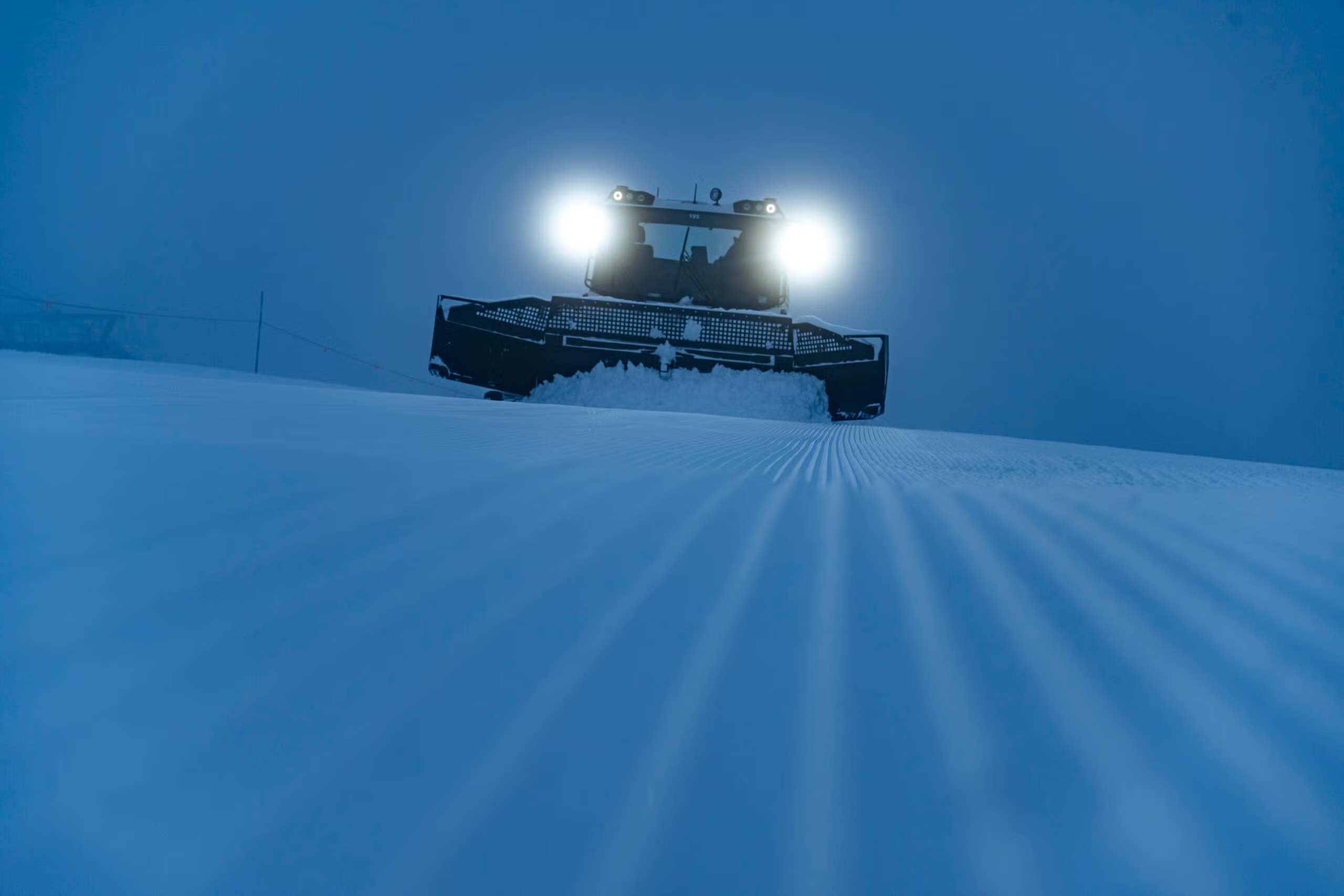
Those, I explained, were snowcats. They groom the mountain pretty much from the moment the lifts stop spinning to when they reopen. We then watched several hours of YouTube videos to get an idea of what it’s really like to drive one.
So when Deer Valley, known for its impeccable grooming, reached out to ask if I’d be interested in joining one of their grooming shifts, I instantly said yes. YouTube can only get you so far. Much to my delight, I was invited to team up with the resort’s assistant manager of slope grooming, Scott Davidson, at the very tame hour of 4 p.m., not the midnight-to-9 a.m. graveyard shift.
I first met Davidson and his team at their briefing meeting, where they reviewed areas of the resort that needed special attention. The evening I joined, lows were in the mid-40s, and Deer Valley hadn’t seen temperatures drop below freezing in several days. Nevertheless, the grooming team was determined to keep as much terrain open as possible.
(Despite the hard work of the groomers and the entire resort staff, this winter has not been kind to much of the West. Deer Valley announced it will close March 29, nearly a month earlier than originally planned.)
Over the next few hours, riding shotgun in the cab, I quickly realized there’s a lot more to grooming than perfect corduroy. Here are a few things I learned.
1. You don’t need a license to drive a snowcat.
I was surprised to learn there’s no DMV for snowcats. While you don’t need any formal licensing to operate one, prior experience with heavy machinery is a plus, Davidson said. For someone without experience, it takes four to six weeks of shadowing drivers and learning all the nuances before operating a cat alone. It takes a few seasons for the joystick, which controls the major functions of the cats, to become muscle memory.
Most operators don’t start in a cat. Instead, they join the grooming team in other roles before getting behind the joystick.
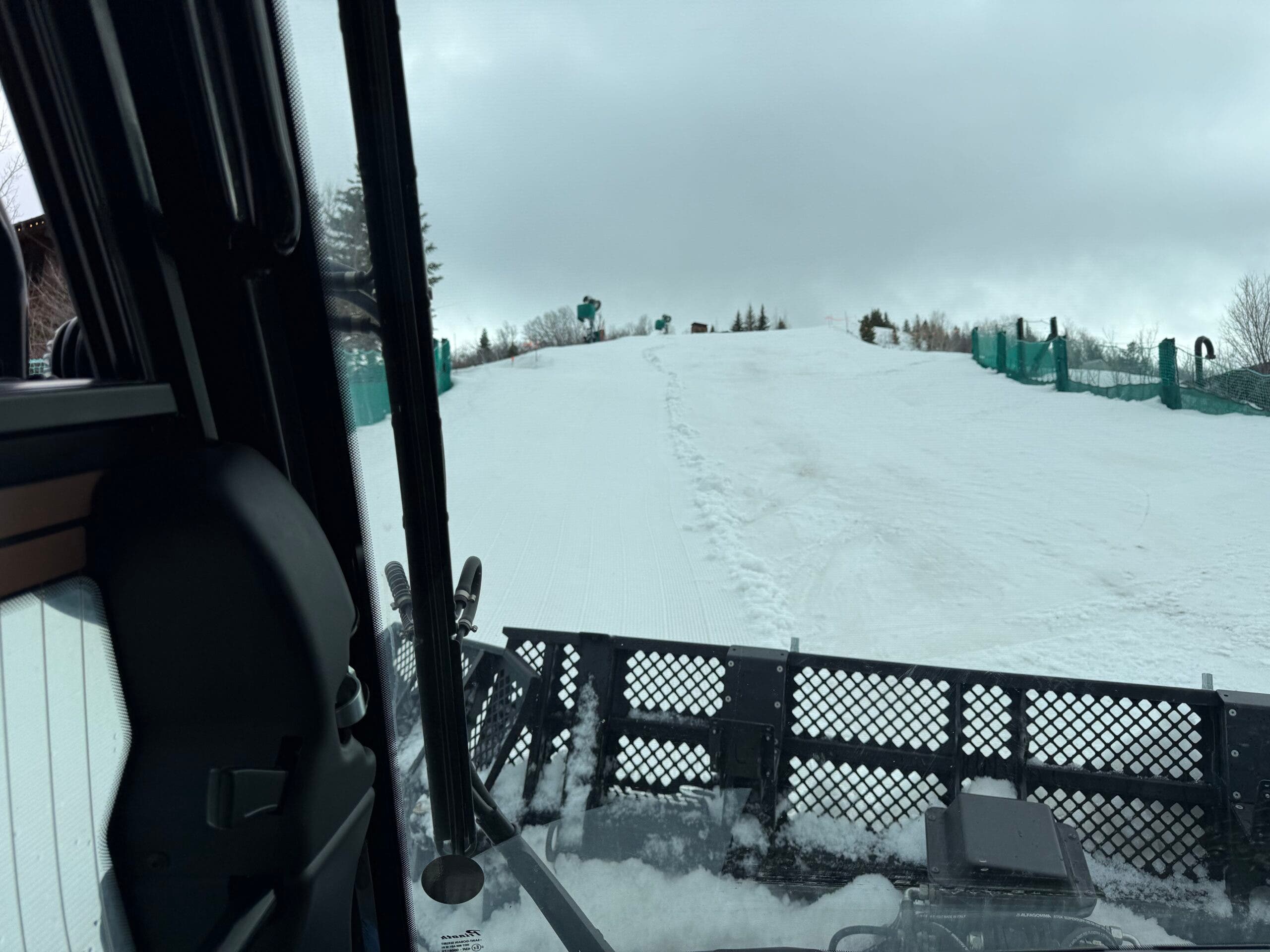
2. The ideal conditions for grooming are a typical winter with normal storm cycles and cold temperatures. The worst conditions are high pressure and spring freeze-thaw cycles.
“It doesn’t really get worse than this,” Davidson said as I closed the door to the cockpit. It was just over 50 degrees at 4:30 p.m., and the forecast didn’t call for a single temperature below freezing for the next 10 days.
Sure, grooming in a blizzard can get gnarly, and Davidson has even experienced bouts of vertigo on especially windy, snowy nights. But when it comes to actually moving and grooming snow, the heavy, sticky conditions of spring are the hardest to work with.
3. The cats move slowly. Like 9 mph max.
I was a little nervous about heading down some of Deer Valley’s steeper double-blue terrain. I’m not a big roller coaster person. But the cat moved so slowly I barely felt the incline, even when we went backward down the hill. When cats are grooming, they usually don’t exceed 6 mph. On transport routes, where they need to get from point A to point B, they bump the speed up to about 9 mph.
4. The biggest misconception is that the job is just “mowing the lawn.”
Most of the work comes from controlling the blade, Davidson explained. The corduroy finish you see is the cherry on top. The vast majority of the job involves angling the giant blade to smooth the snow, move it into low areas, and meticulously flatten the slopes. I watched as we spent about 20 minutes pushing snow back and forth under the Jordanelle gondola before Davidson approved of his work.
Davidson also stressed the importance of teamwork. He praised every member of his crew for being skilled and passionate, and emphasized how much they pride themselves on high standards.
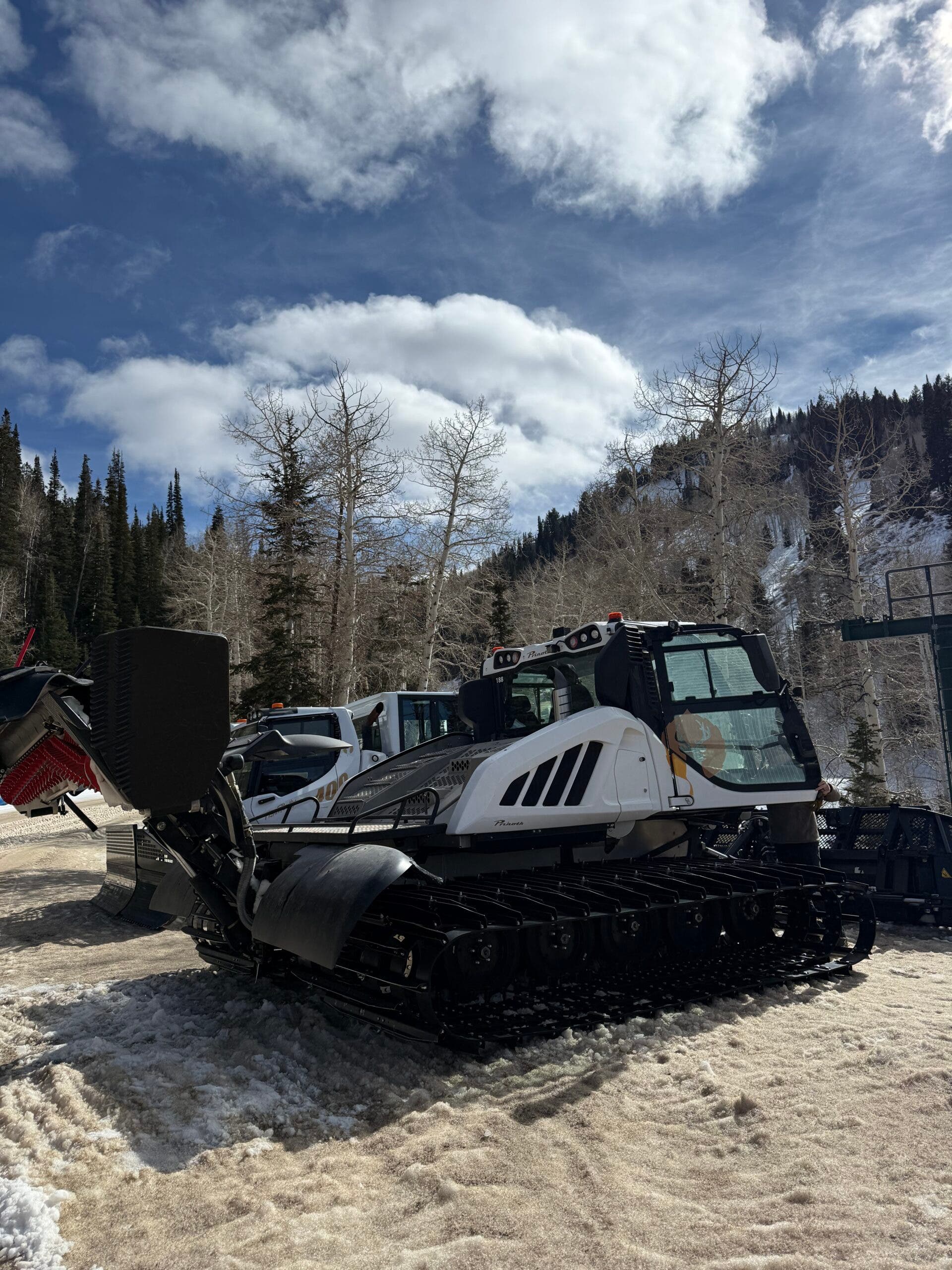
5. Yes, there’s a great Bluetooth speaker in the cockpit.
Although Davidson says he doesn’t use it as often as you might think. He’s usually listening to the radio and making sure everything is running smoothly. But when he does listen to music, he said the speakers in the cockpit are some of the best he’s ever had.