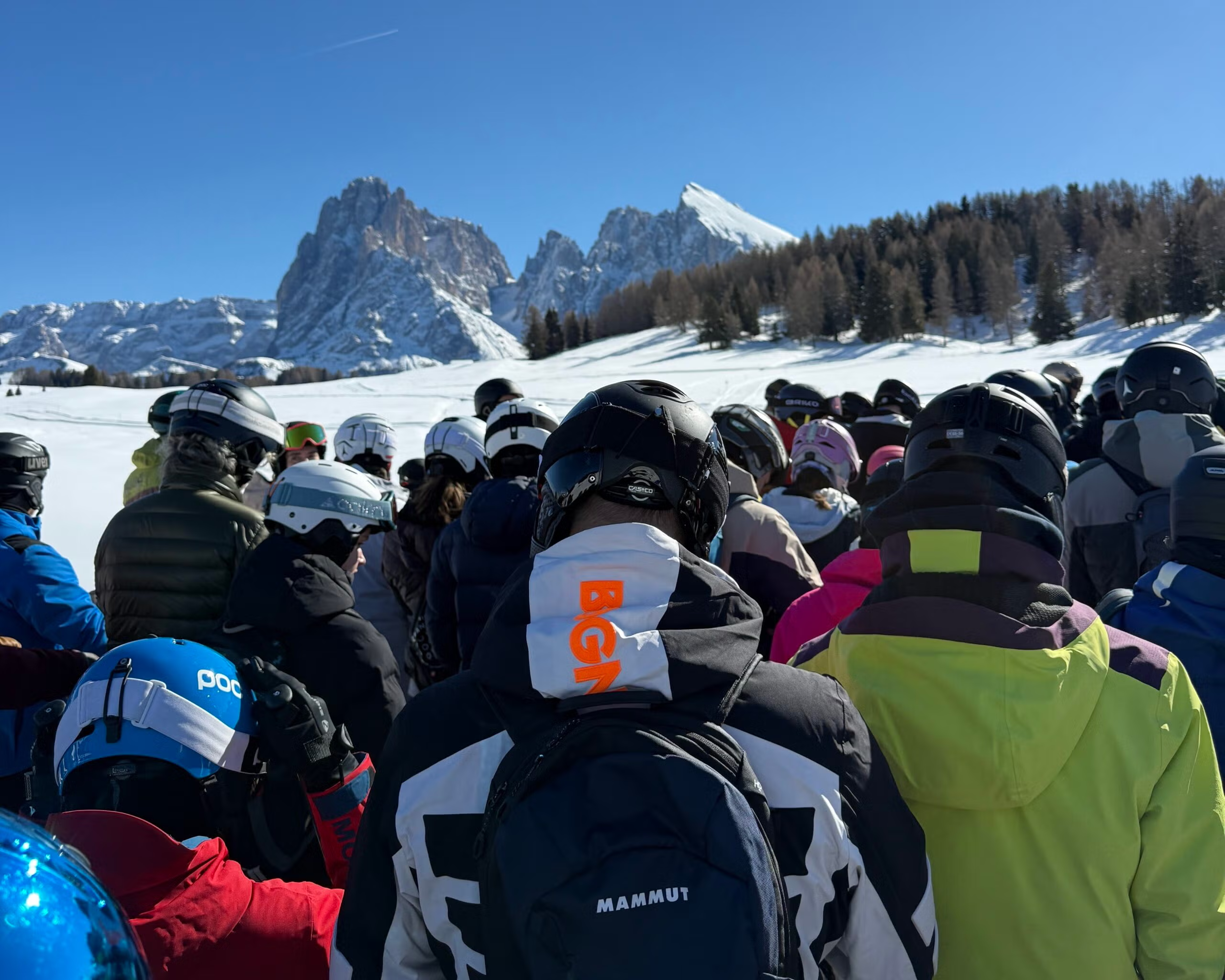
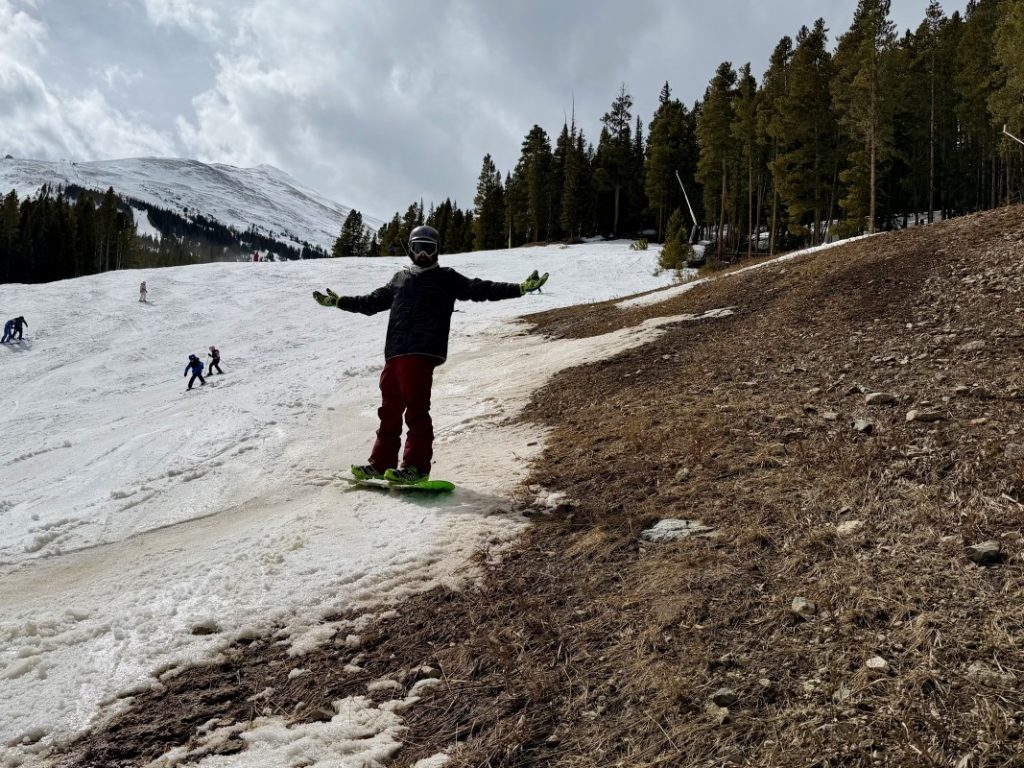
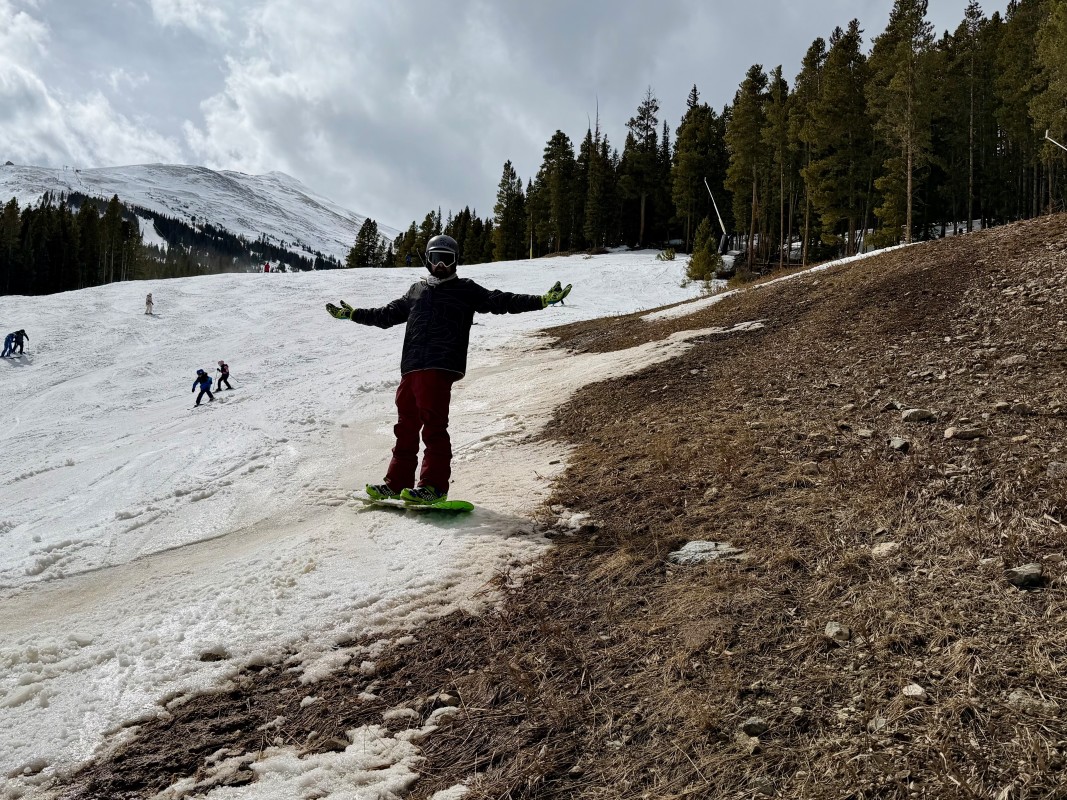
This winter ranked among the worst ski seasons in recent memory across the U.S. Rocky Mountains, with exceptionally low snowfall impacting major ski resorts in Colorado, Utah, Wyoming, and New Mexico. After more than four decades skiing in Colorado—and occasional trips to Utah—this season stood out for its lack of consistent snow coverage. Regional snowpack levels fell well below average, and many resorts hovered near record lows, creating thin coverage, limited terrain, and challenging ski conditions. The one silver lining for skiers: uncrowded slopes and shorter lift lines, even during peak weekends and holiday periods.
Instead of deep powder and reliable mid-season conditions, the Rockies experienced what felt like an endless early season. Warm, dry weather dominated, leaving many ski runs with exposed dirt and rock, while some trails remained closed for the entire season. With spring arriving early, the already limited snowpack is melting quickly, bringing a disappointing close to an underwhelming ski season and raising concerns for both skiers and the ski industry.
So what caused such a poor ski season in the Rockies? The primary culprit was a persistent high-pressure system that frequently parked over the region, creating what meteorologists call an Omega block. This atmospheric pattern effectively diverted Pacific storm systems away from the Rockies—pushing them north into Canada and sometimes east toward the U.S. East Coast—resulting in far fewer snow-producing storms reaching key ski areas.
This dominant high-pressure pattern also led to warmer-than-average temperatures, particularly in November and December, which ranked among the warmest on record. Without sustained cold air, snowfall was limited and existing snowpack melted more quickly. In addition, drier air reduced overall moisture availability, further decreasing the chances of significant snowfall throughout the ski season.
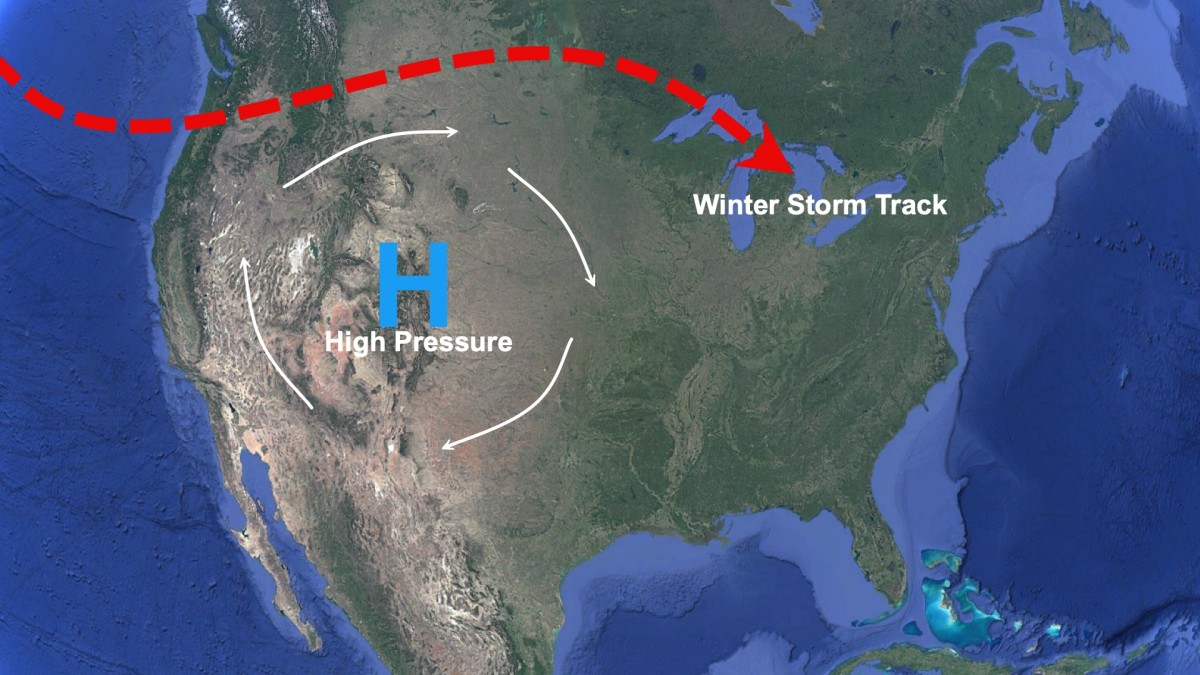
A weak La Niña pattern may have also contributed by favoring a more northerly storm track, though this season appears to be an outlier driven by a rare combination of unfavorable conditions for snowfall in the Rockies.
Looking ahead, there is cautious optimism for skiers and resort operators. Climate models indicate a potential shift toward El Niño next winter—a pattern that historically brings increased snowfall to parts of the Rocky Mountains. If that transition materializes, the next ski season could offer a return to more typical—and hopefully much better—conditions across the region.