Updated April 6, 2026 12:05PM
On the last day of a week-long hut trip across the Berner Oberland route in the Swiss Alps, Northwest Mountain School co-owner John Race knew something was wrong. The forecasted hazard for the day was considerable (Level 3), but the observations he’d made throughout the morning indicated the danger was even greater, consistent with a High (Level 4) hazard rating.
Knowing most clients would miss their flights home, Race directed the group to reverse course and take a longer, safer route out of the mountains. From a risk management perspective, it was an easy call.
Fellow IFMGA guide Olivia Cussen Race, his wife and business partner, recalled that they later learned a group traveling behind Race had continued on, triggering an avalanche that killed multiple skiers.
Each trip, backcountry athletes and guides make dozens of little choices starting the moment they think about skiing and ending long after the gear comes off.
Often, it’s a combination of such little choices that make sure skiers return home safely— or lead to a big tragedy. The National Avalanche Center estimates 25-30 people die in avalanches in America each winter, and this year, one sole incident in California’s Castle Peak backcountry took nine lives near Lake Tahoe. While even the most well-trained skiers can make mistakes, and there are no guarantees in the backcountry, experts spend years learning to make the decisions that keep them skiing another day.
We talked to a few guides about how they go about doing so, and the answer isn’t so simple.
There is no single rule of thumb or red flag sign that they can always count on. Multiple variables impact the outcome of a ski trip, and guides spend years gaining the experience and education required to plan one safely. But, they also lean on decision-making systems that can make some calls easy and force them to constantly keep learning.
Building a Base
If skiers hope to avoid being caught in an avalanche, they first need to know the conditions that cause one. And in order to choose the lower-risk routes, they must understand the terrain they plan to venture out on and how conditions can impact it.
Marc Ripperger, IFMGA guide and co-owner of Cirque Guides in Colorado, said in making each of his decisions, he has “this Rolodex of experience” he pulls from.
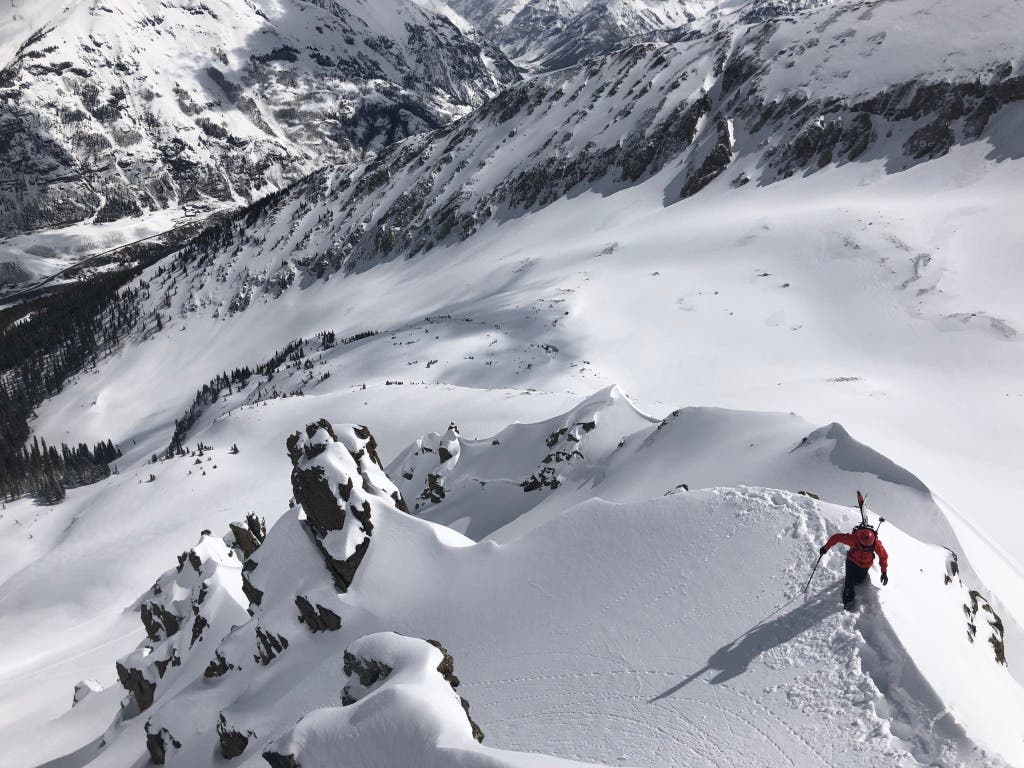
Taking Avalanche 1 and Avalanche Rescue classes is a natural starting point for skiers hoping to start building that Rolodex. The former is a three-day course that focuses on identifying what avalanches are, how they form, and how to utilize resources like forecasts to choose terrain where they’re unlikely. The latter, a one-day affair, covers rescue techniques if an avalanche occurs— though Ripperger said the goal is not to get caught in the first place.
Upon getting his own start in the backcountry, Ripperger used tools like the five-point Avalanche Terrain Exposure Scale to identify relatively simple terrain, and slowly worked his way toward more complex routes as he gained confidence and experience. Additionally, he explored terrain outside of his home in the San Juan Mountains and started developing a feel for how different snowpacks can vary from region to region.
He looks at the progression as “putting all these different kinds of tools in my toolbox.”
Developing a Process
Cussen Race honed her skills and instincts through a combination of education, backcountry touring experience, on-the-job training, and mentorship with other high-level professionals. While there are plenty of choices to be made throughout any given backcountry trip, she uses planning techniques and “guardrails” the most to help her stay on track.
“The main thing we try to convey to people is that they need to have a process,” shared Cussen Race. And that process starts before they even head out the door. Safety checklists, which students learn about in avalanche courses, help them gather important information and make a plan for the day.
Much of what they need can be gleaned through resources like avalanche forecasts, and Cussen Race noted that the vast majority of incidents occur on the kind of slopes identified by these forecasts. She pointed to a 2024 study of avalanche incidents dating back to the 1970s that found around 90 percent of “risk managing parties”— those traveling in the backcountry who’d taken steps to mitigate exposure— were caught on slopes with the very characteristics (such as elevation, aspect, direction) indicated in the forecast.
“This evidence suggests that knowledgeable accident parties used their avalanche skills to access avalanche-prone slopes during periods of instability,” reads the report by Ian McCammon and Kelly McNeil.
The finding illustrates how experience can become its own deadly trap, and why even experts must rely on decision-making processes that keep them cautious.
Cussen Race subscribes to Canadian platform InfoEx for more information, which allows her to share and see observations with colleagues from around the world when planning or debriefing a trip. Before the expedition, she likes to set boundaries in advance so there’s no temptation down the line. One way she does this is by mentally “closing” possible runs based on the conditions before even heading out. Or, based on the risk factors, she may decide not to ski anything steeper than 30 degrees.
“If you’re standing at the top of the slope and it looks really good, it’s really hard to not ski that,” she said. Pre-determining the rules of engagement makes walking away simple.
Practicing Ongoing Observations
Once the parameters have been set and skis are on the ground, every moment is another chance to gather information. Ignoring observations, or in some cases, skipping the chance to make them, can be a recipe for disaster.
“It’s a series of bad decisions that leads many times to the fatal decision,” Ripperger said. “For example, somebody might be out touring. They’re getting a bunch of collapsing of the snowpack, they’re getting shooting cracks, the weather might be changing rapidly.”
While this is not an exhaustive list, he said, these are all red flags, and the decision to ignore each could lead to the fatal decision of dropping into a slope that slides.
Skiers should be extra careful in the “sidecountry,” adds Cussen Race, where they may not get a chance to make all these observations. This backcountry terrain just outside ski resorts is generally lift-served, but not avalanche mitigated. Its easy access can lure inexperienced backcountry skiers while missing out on the uphill process that allows them to gather crucial information.
“When you’re accessing it from the edges of a ski area, it speeds everything up, and it makes it harder to collect good information,” she said.
Group Dynamics and Guided Tours
Whether skiers are headed out with a guide for their first trip or hitting the trails with buddies for their hundredth, it’s important for them to have a voice in the group.
Ripperger said groups should discuss risk tolerance before trips while being ready to walk away if anyone feels off in the moment. “If somebody in the group doesn’t feel good about skiing a certain slope, then as a group, you have to honor that,” he said.
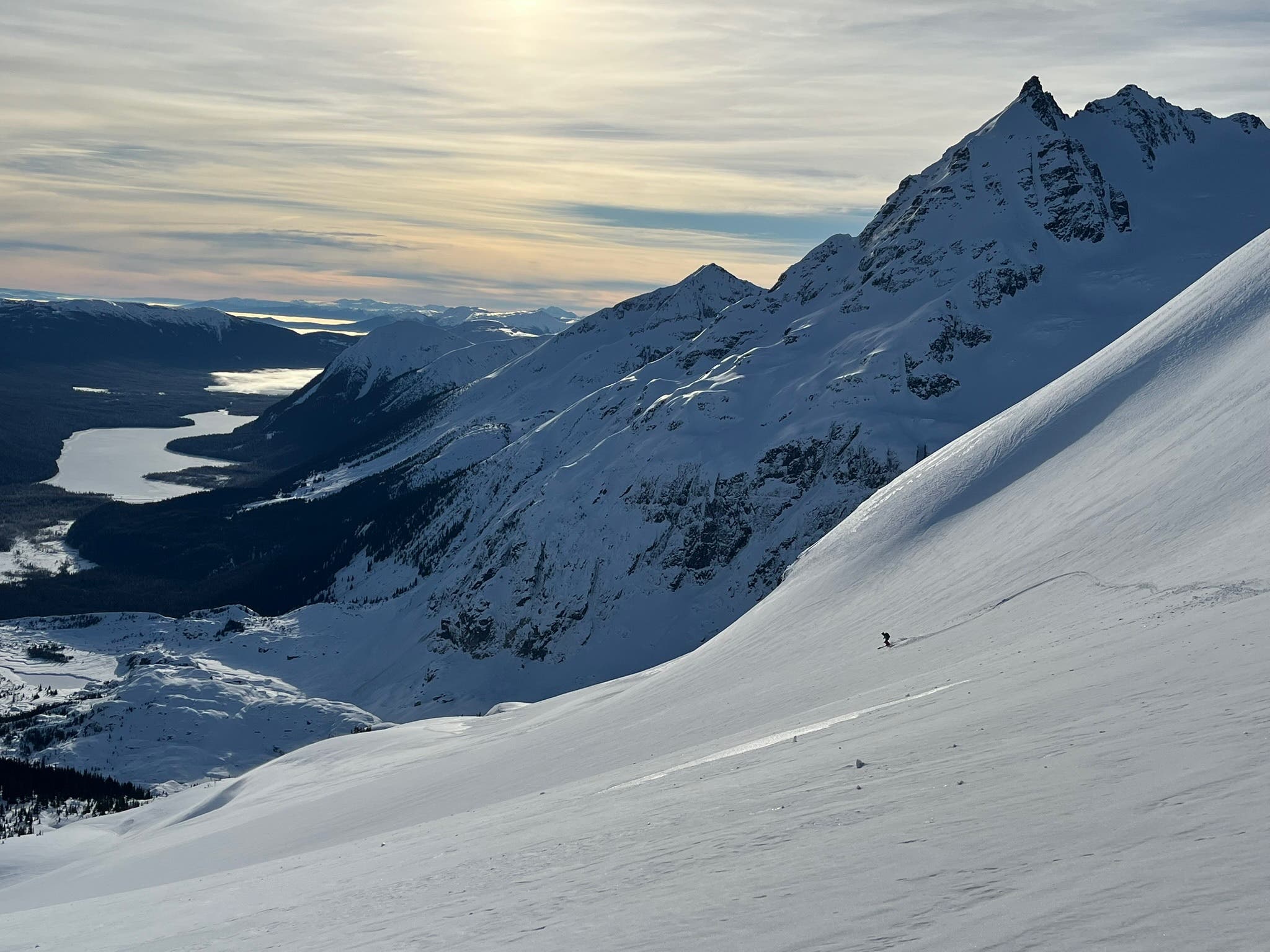
As a guide, he’s responsible for making sure everybody both feels comfortable with the plan for the day and confident that they can speak up if something concerns them.
Throughout the trip, Ripperger constantly makes observations and conveys them to his guests so they understand why he feels safe on a given slope—or why they’re skiing back on the skin track. But, he said, anyone could notice something like a remote avalanche or snow cracking underfoot, and everybody should feel comfortable saying something.
Whether in a guided or unguided setting, he said, “Creating that forum of open communication, where you value everybody’s opinions and observations, goes a long way and that helps the whole group make better decisions in the mountains.”
Debrief by Default
By the time you’re sipping hot chocolate at home, you’re probably safe from avalanches for the night.
However, Cusssen Race adds, “The debrief at the end of the day is a really critical part.”
Once the snow has settled, there’s always something to learn, something you might need when you turn to your mental Rolodex down the line. She encourages skiers to at least work through two big questions: “Where were we most at risk?” and “Is there anything we should have done differently?”
Those answers just might be the difference between life and death on your next outing.