Updated April 27, 2026 12:31PM
With a rather forgettable North American winter at our heels, the most passionate skiers and riders among us are now directing their attention to the Southern Hemisphere.
For the coming year, all meteorological eyes are turned toward the coming El Niño, and the warm phase of the greater El Niño Southern Oscillation, known as ENSO. This cyclical pattern consists of three phases: warm (El Niño), cold (La Niña), and neutral. In the warm phase, westerly trade winds subside, allowing warm water to pool around the eastern two-thirds of the equatorial Pacific Ocean.
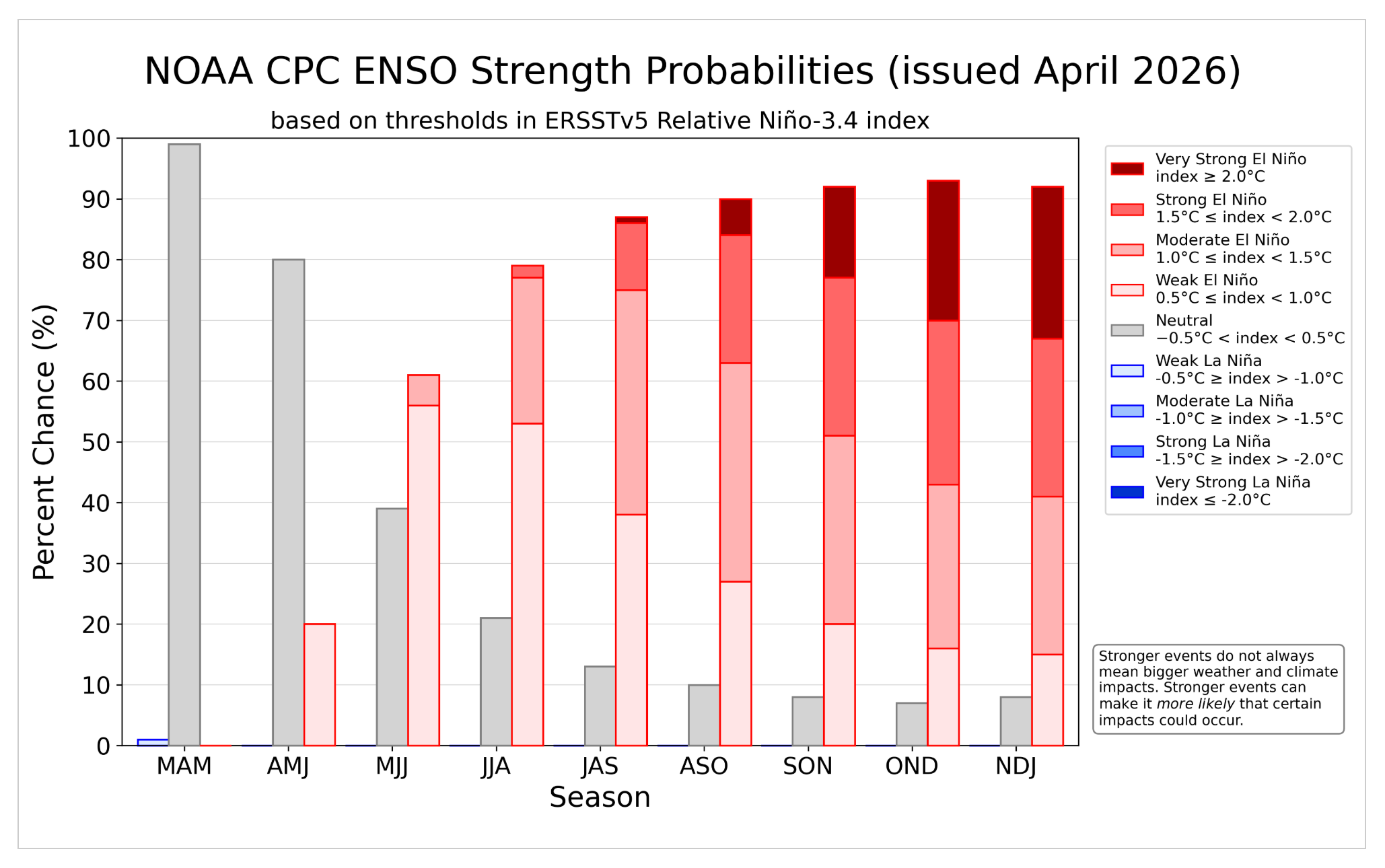
NOAA’s Climate Prediction Center is now suggesting a 90 percent chance of El Niño conditions (>32.9 degrees F above average sea surface temperature) by the July-August-September timeframe, which is the bulk of the Southern winter. Moreover, there is a nearly 50 percent chance of a moderate, strong, or very strong event by this time.
While long-term forecasts should always be taken with a grain of salt, weather patterns during ENSO tend to follow broader patterns, especially during stronger events.
Planning a trip to the Southern Hemisphere? See where you can ski based on your pass.
Important Note: This year’s budding El Niño is occurring with a backdrop of already elevated global temperatures. In fact, this year is likely to be the second-warmest on record, and only because a weak La Niña somewhat depressed temperatures during the first few months. With El Niño expected to peak around the beginning of next year, models predict that 2027 will be the warmest on record. This year’s drought in the Western U.S. was driven more by these warm temperatures than by a lack of precipitation, and the same scenario could play out during the Southern Hemisphere winter.
With all that in mind, let’s dive into the three main ski regions of the Southern Hemisphere to see what winter might have in store.
South America
Chile and Argentina are the heavy hitters in the Southern Hemisphere. These countries are home to legendary resorts like Portillo, Las Leñas, and Cerro Catedral.
With a strong El Niño in the cards, models are favoring wetter conditions across the central Andes, where many ski areas are located. The more southern ski areas, such as Nevados de Chillán and Catedral, are less favored but still looking at a decent signal for precipitation.
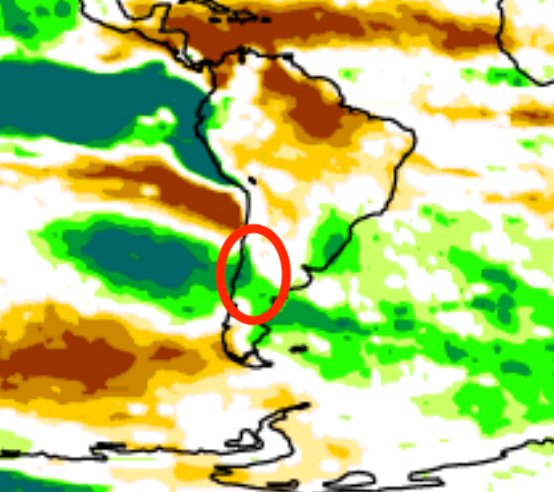
El Niño’s warmer waters create more convection, which is why models show generally lower pressure over the eastern Pacific Ocean. That can give low-pressure systems added moisture to push over the mountains, which condenses and falls as snow.
The models are already picking up on this. For example, the ECMWF seasonal product shows a 60 percent-70 percent chance of precipitation in the upper tercile (33 percent) of annual totals (some areas show 70 percent-100 percent if you zoom in). That’s impressive consistency for a seasonal ensemble at the edge of its forecast range.
Historical precedent also supports this conclusion. The central Andes had massive seasons during the last strong El Niños of ‘97-98, ‘15-16, and ‘23-24. These seasons featured multiple strong Atmospheric River (AR) events.
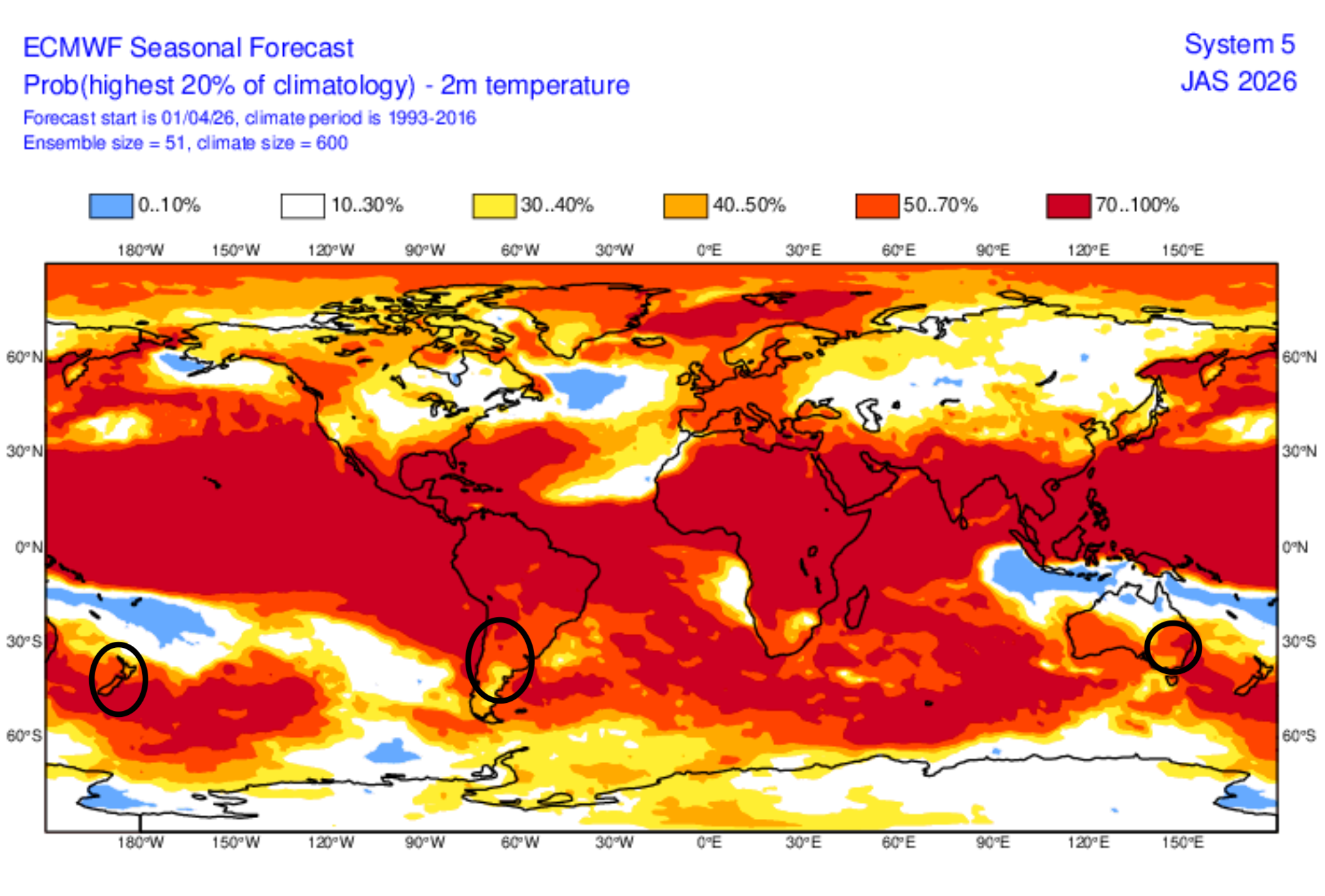
The caveat, as we’ve discussed, is the warm temperatures. With the ECMWF model showing a 50 percent-70 percent chance for temperatures in the 20th percentile, we can expect it to be warm. Climate models expect 2026 to finish about 34.5 degrees F above the historical average (with landmass heating more than oceans). Warming isn’t uniform, but for each degree Celsius of warming, we can expect the snowline to push up about 500 feet.
The region’s highest resorts, like Portillo and Las Leñas, will probably have enough elevation to ski well in a wet but warm winter. Yet they come with their own caveats. For one, these are the most pricey South American resorts. Secondly, their elevation puts them entirely above treeline. That means if you arrive during an AR event, you’re not skiing until the skies clear. And that could take weeks. Meanwhile, Catedral and its legendary tree skiing will likely be too low to benefit from this season’s storms.
Australia
Unfortunately, this winter is likely to put one of the world’s most vulnerable ski regions to the test, as El Niño typically brings warm, dry conditions to the continent.
However, as if that weren’t enough, the Indian Ocean Dipole (IOD), another climatic indicator, is also forecast to be in the positive phase, which tends to promote rainfall over East Africa while limiting moisture over Australia.
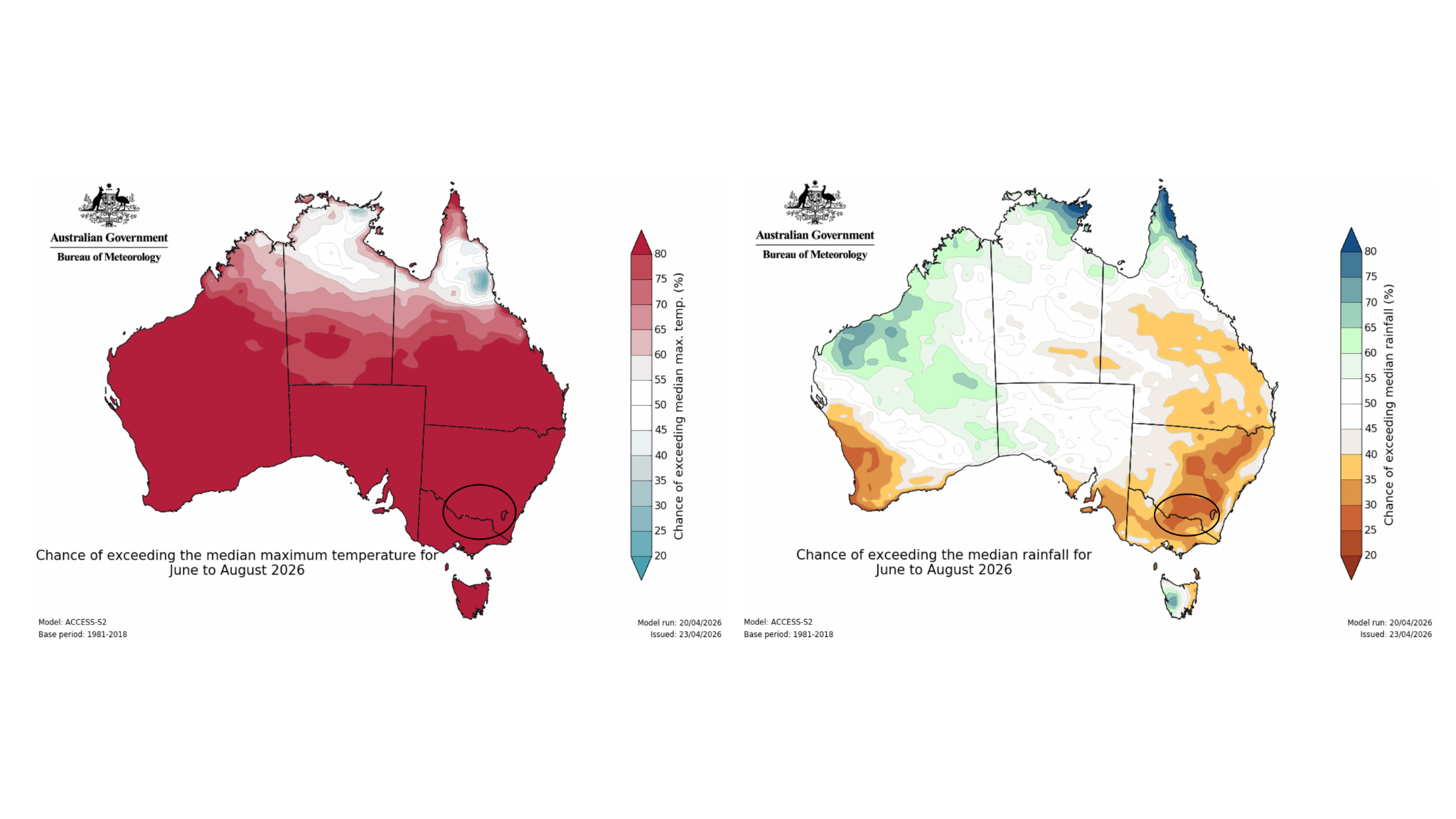
The Australian Alps are already limited to just a few meters of snow, even in a good year. However, the high water content can promote a healthy base and make for a few solid months of skiing. But the resorts are low enough that a degree or two of warming could push the snowline well past the base areas.
Looking at Snowy Hydro’s Spencer Creek weather data center, we can see that snowpack was generally subpar during the strong El Niños of the last 40 years, though ‘91 was a bumper year (with snowpack topping 10 feet).
In conclusion, the El Niño / IOD combo is likely to limit available moisture for the low-pressure systems that bring snow to the Australian Alps. We’ll just have to hope for the best.
New Zealand
Among Southern Hemisphere ski regions, New Zealand offers the least clear signal one way or the other. Simply put, it’s an equal chance for an above-average or below-average winter, at least from a precipitation perspective.
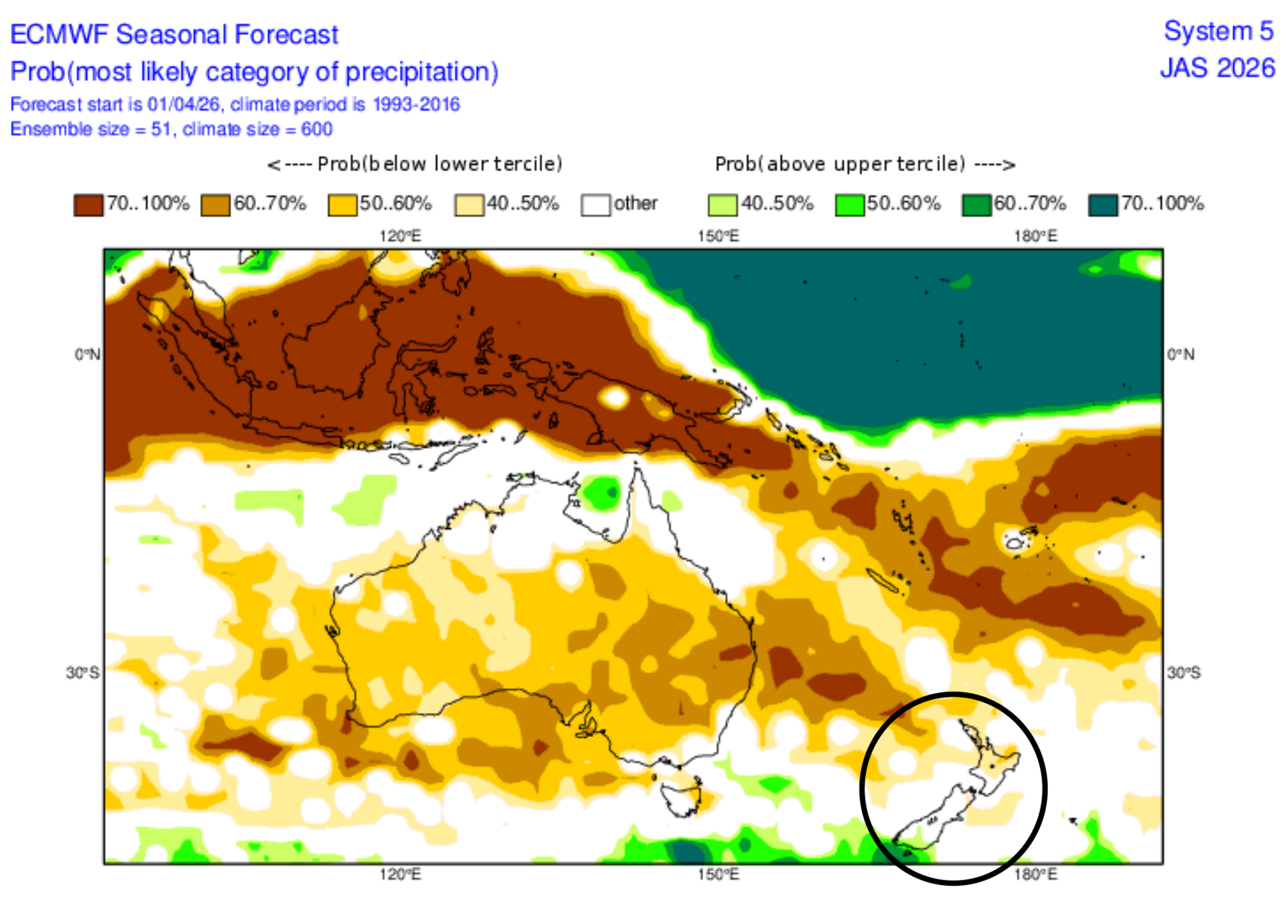
While it’s true that El Niño may push more southwesterlies toward the South Island, these storms don’t actually benefit the majority of ski areas—just the ones further south. Still, when high pressure sits over Australia, as it may want to do this winter, it can open the storm door for NZ. The reverse was true in 2025, when Spencer Creek (Australia) reached over seven feet of base depth, and NZ was essentially shut out of storms the entire winter.
Unfortunately, NZ will also experience a warm winter (about 50 percent-70 percent chance of the upper 20th percentile of climatology), similar to our other ski regions. Most NZ “ski fields” don’t have much of a buffer for rising snowlines, which proved to be an issue last winter.
Conclusion
Though we use seasonal forecasts for skiing and many other things, they still exist very much in the realm of speculation. They are far from certain; a single storm can alter the course of a ski season.
Patience is required here. It might be many decades before we start to see models really hone in on trends several months in advance.
However, one thing is certain. It’s getting harder and harder to find cold air in all of our ski regions, so while we still have plenty of excellent skiing, the decks are steadily stacking against “great seasons.”