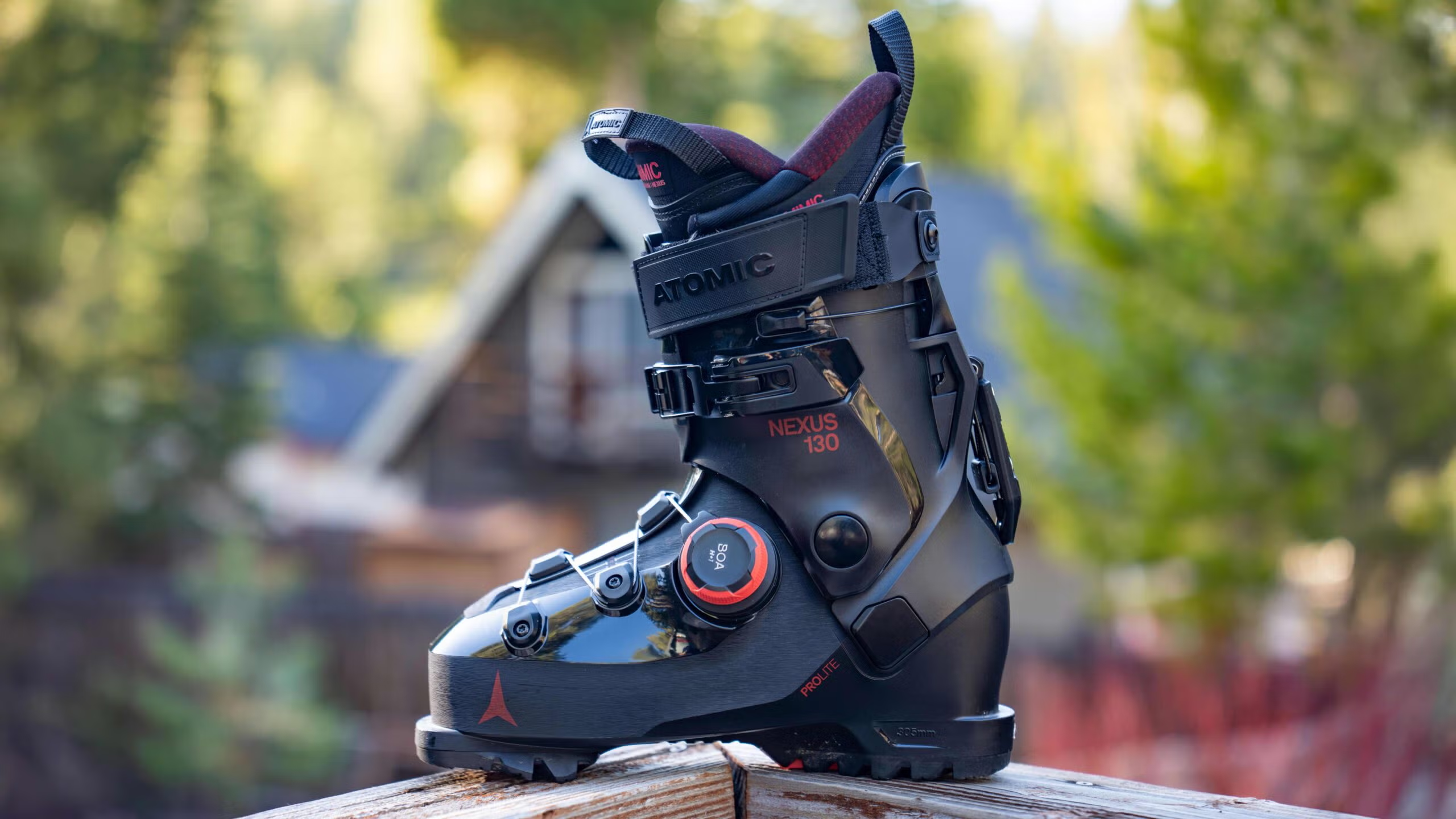
The new Atomic Nexus 130 BOA shows how hands-free entry can finally deliver real alpine performance.
The Atomic Nexus 130 BOA joins a growing wave of mid-entry designs that prioritize accessibility without sacrificing downhill power. (Photo: Jake Stern)
Published March 20, 2026 08:00AM
One of the coolest things about working as a bootfitter is watching ski boot technology evolve to meet the needs of skiers whose issues were previously unaddressed. It’s rewarding, of course, to have a customer come in with unique problems—mobility issues, injuries, and the like—and to put on your puzzle-solving hat to find a workaround. But these days, manufacturers that have nailed the basics of ski boot design are venturing into niche products aimed at the fringes of their audience. Boots like the new Atomic Nexus models are, frankly, making my job easier—and serving skiers better right out of the box.
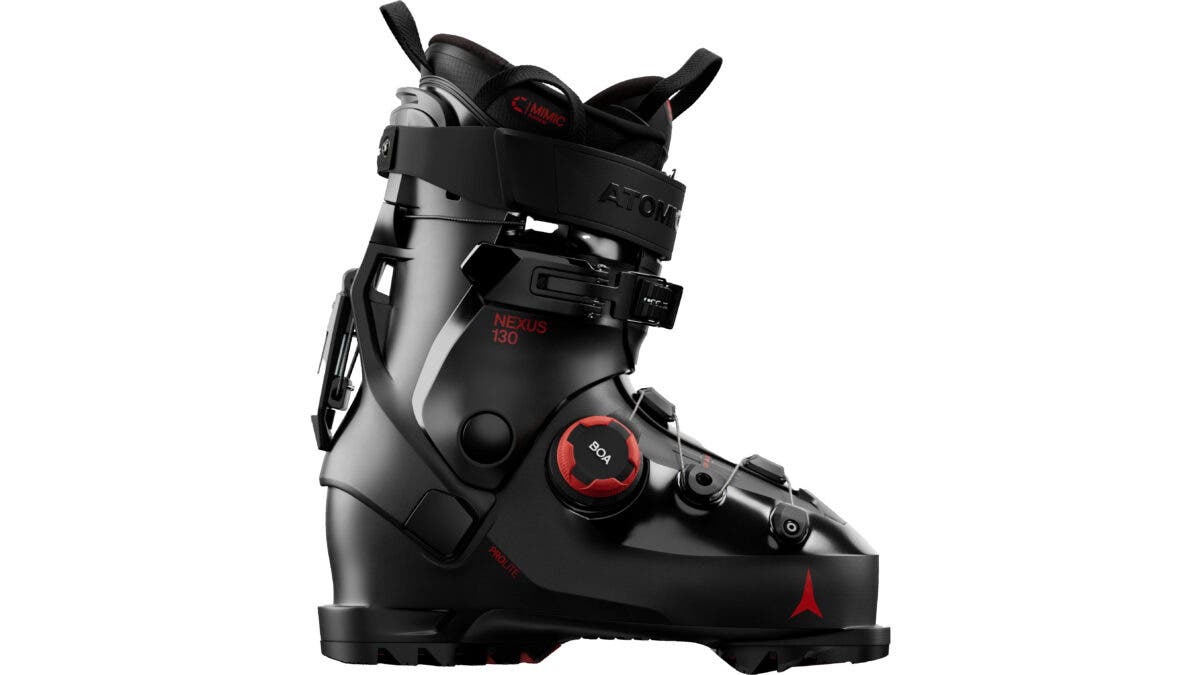
The 101 millimeter-lasted Atomic Nexus 130 BOA is the flagship model in Atomic’s new series built for skiers who struggle to enter a traditional four-buckle boot but still demand serious, hard-charging performance. The Nexus lets you step right in like a rear-entry boot, with one key difference: it isn’t a rear-entry boot, and it doesn’t ski like one either.
Atomic Nexus 130 BOA Ski Boot
Mid-Entry Design for Accessibility
The Nexus 130 BOA is a mid-entry boot—a design where the front and rear of the cuff separate so you can step straight in—aimed at demanding skiers with mobility limitations. Think arthritis in the fingers or difficulty stooping to put on a boot, but still plenty capable of bending a ski and ripping turns. As a bootfitter, I can confidently say there are a TON of skiers who fit this description. Plenty of folks who struggle to open a pickle jar can still smoke you on a bump run, and they’ll appreciate a boot they can easily enter (hands-free!) that’s built with downhill performance in mind.
How the Nexus Entry System Works
The Nexus 130 features a set-it-and-forget-it top buckle, a mid-entry platform with a rear lever reminiscent of an AT boot’s walk mode, an extremely stout heat-moldable Mimic Platinum liner, and a lower BOA H+1 closure system most skiers will now be familiar with. To get in, simply lift the spine lever and open the power strap, then step in hands-free. You can even close the lever with your other foot (once the tension wheel is properly set) for a legitimate no-hands, no-stooping entry.
This is where my BOA skepticism alarms start to go off. I personally find BOA dials unfriendly for skiers with compromised fine motor skills or those who struggle to bend over—I’d rather have a buckle I can flick open or closed with a ski pole. That said, the BOA can be pretightened before stepping in, so in practice, this may not be a major issue for many skiers.
On-Snow Performance: Surprisingly Legit
I skied the Nexus in variable spring conditions at Sierra-at-Tahoe and came away impressed by just how hard I could push a mid-entry boot with what is, admittedly, a somewhat unusual three-piece construction. I typically ski a low-volume boot with a Zip Fit liner, so stepping into a higher-volume boot designed to balance comfort and performance felt jarring at first. But the more I stayed aggressive and drove my heel into the well-shaped pocket, the less I noticed any slop around the foot.
It wasn’t until steep, chunky terrain that I felt meaningful play in the boot. For skiers with genuinely high-volume feet, I suspect heel hold will feel excellent—because even for me, it was largely on point. The ankle break sat high and slightly forward for my anatomy, though that positioning should work well for skiers with higher insteps.
Unbolted spine be damned, the Nexus skied like a real 130-flex boot. The dual-pivot design (similar to the Lange Shadow) seems to help generate rebound, creating leverage that gives the boot a lively, springy feel between carved turns.
How It Compares to Other Easy-Entry Boots
I haven’t spent time in the Rossignol Vizion, which uses a similar mid-entry concept, but I can confidently say the Nexus will outski the Nordica HF series. That boot may better suit older skiers or those with more significant mobility limitations—it’s even easier to adjust, and the heating elements make it exceptionally cushy—but the Nexus 130 is aimed at skiers who want to shred bell-to-bell without dreading the parking-lot struggle of getting boots on and off.
Why Boots Like This Matter Right Now
We’re living in exciting times where designers have largely mastered the traditional all-mountain and race boot, freeing them to reach new audiences by building boots for skiers who have been long ignored since the death of the rear-entry boot.
The Nexus isn’t for everyone. But for skiers who have thrown a boot across a parking lot in frustration—or been defeated by cold plastic—it could be exactly what they’ve been waiting for: real skiing performance, no assistance required. Save the pain and anguish for the red snake, since you were able to ski until last chair.
The Atomic Nexus lineup also includes the men’s 120 BOA, 110 BOA, and 110 (no BOA), along with the women’s 105 BOA W, 95 BOA W, and 95 W (no BOA). All Atomic Nexus models will arrive in shops in fall 2026.