The slide, which caught 15 people, appears to be the deadliest skier-involved avalanche in history, surpassing the 1982 Alpine Meadows disaster in the same region.
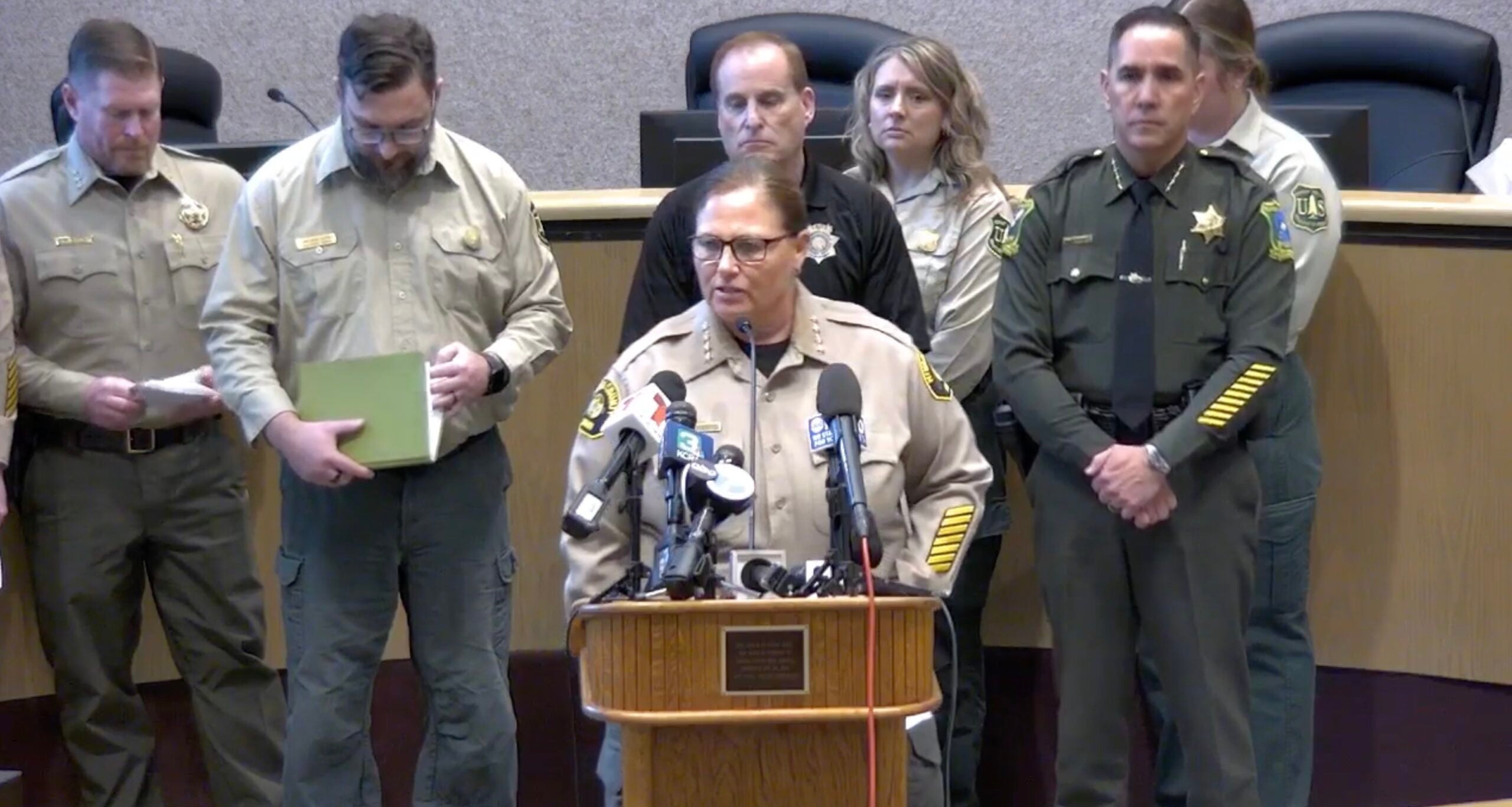
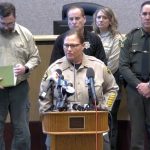
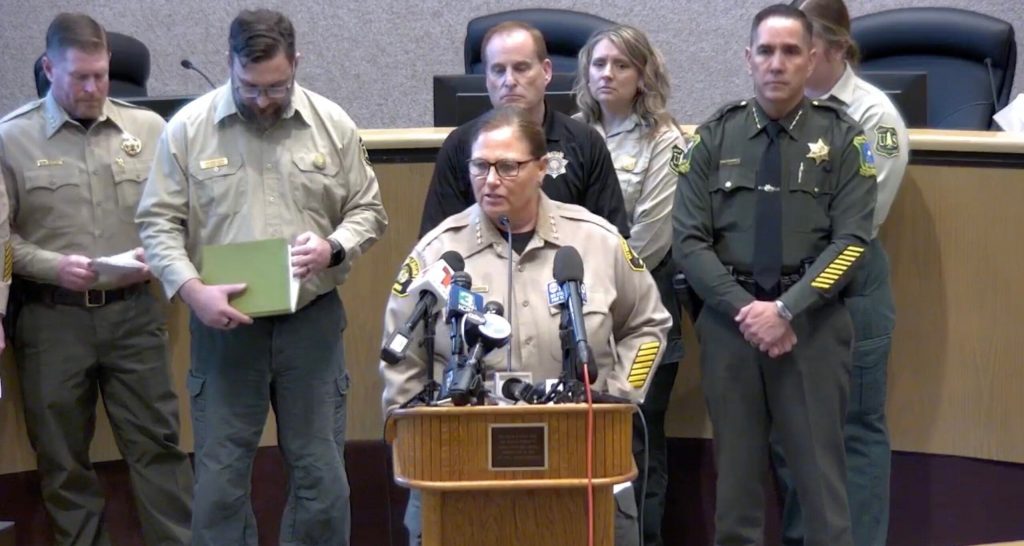
ScreenshotNevada County Sheriff Shannon Moon speaks during a Wednesday press conference in Truckee, providing an update on the Castle Peak avalanche that left eight people dead and one presumed dead.
Updated February 18, 2026 03:20PM
An avalanche in the Castle Peak area of Nevada County on Feb. 17 has left eight people dead, with one skier still unaccounted for and presumed deceased, Nevada County Sheriff Shannon Moon said Wednesday during a press conference. Search and recovery efforts are continuing under dangerous conditions. Authorities have not yet released the names of the victims pending notification of families.
The tragedy is among the deadliest U.S. avalanches involving backcountry skiers in decades and appears to be the worst in modern California history, according to historical records and previous incidents in the region. The incident surpasses the 1982 Alpine Meadows avalanche, which killed seven people and was long considered the deadliest ski-related avalanche. Decades apart, both incidents occurred in the same Sierra Nevada region near Donner Summit.
A group of 15 was on a guided backcountry ski trip operated by Blackbird Mountain Guides out of Truckee when the avalanche struck late Tuesday morning. Six people survived and were rescued from the mountain.
Moon said dispatchers received a 911 call reporting the avalanche at approximately 11:30 a.m. The slide occurred north of Interstate 80 near Donner Summit in rugged backcountry terrain within the Tahoe National Forest.
Rescue teams made contact with the six survivors at approximately 5:30 p.m., roughly six hours after the initial 911 call, after traveling by snowcat and skiing about two miles into the avalanche zone, officials said. Survivors had sheltered in place while responders navigated whiteout conditions and high avalanche danger.
Initial reports indicated 16 people were on the trip, but authorities later confirmed that 15 individuals—11 clients and four guides—departed on the three-day excursion to the Frog Lake Huts. One person opted out of the trip at the last minute.
Operations Capt. Rusty Greene said the group had been traveling together when “someone saw the avalanche, yelled ‘avalanche,’ and then it overtook them rather quickly.” He added that survivors and those later located deceased were found “fairly close together,” indicating the group was moving as a unit when the slide struck.
Of the six survivors, two sustained injuries serious enough that they could not walk out on their own. One injured person was treated and released, and another remains hospitalized with non-life-threatening injuries, Moon said.
Moon said survivors had located three deceased victims before rescue teams reached the scene. In total, eight of the nine unaccounted-for skiers have now been found dead. Operations Capt. Greene said all of the decedents were wearing avalanche beacons. Crews are still searching for the remaining missing person, whom Moon said is presumed deceased “based on the totality” of conditions and survivor statements.
Due to severe weather, high avalanche danger, and unstable snow conditions, officials have shifted from rescue to recovery operations.
“It’s not a resource issue,” Moon said. “It is a weather condition and safety condition for our response teams. Extreme weather conditions, I would say, are an understatement.”
Tahoe National Forest Supervisor Christopher Trier said preliminary information indicates the avalanche, about a football field in length, was rated a D2.5 on the destructive scale (a classification between D2, which can bury or kill a person, and D3, which can destroy a structure). Officials said the avalanche occurred when a persistent weak layer in the snowpack was overloaded by a large amount of new snow. That weak layer remains in place and has since been reloaded with additional snowfall, and the Sierra Avalanche Center continues to list avalanche danger in the area as very high.
More than 50 rescuers from Nevada, Placer, and Washoe counties responded, deploying snowcats and skiing into the remote site amid gale-force winds and near-whiteout conditions. Interstate 80 was closed during the response, further complicating access.
Officials said responders communicated with the group through text messages and iPhone emergency communications. Don O’Keefe of the California Office of Emergency Services said they exchanged text messages with one of the guides for more than four hours during the response.
Placer County Sheriff Wayne Wu said one of the deceased was the spouse of a Tahoe Nordic Search and Rescue team member, adding emotional strain to an already dangerous mission.
“This incident has specifically struck our organization … hard,” Wu said. “We are committed to being here until the end and making sure we make all these recoveries.”
Wu said the Placer County Sheriff’s Office has previously responded to a major avalanche tragedy, referencing the 1982 Alpine Meadows avalanche. He said the incident was “extremely taxing” on the organization and the community at the time.
Due to steep, vertical terrain and continued avalanche danger, the deceased skiers remain on the mountain and have not yet been removed, officials said. The decedents will be transported to the Placer County morgue once recovered. Authorities said identification and official causes of death will be determined through contracted pathologists.
Officials are urging the public to avoid backcountry travel in the Sierra during the ongoing storm cycle.
“Please allow us to focus all of our resources on continuing to recover these bodies for the family and bring them home,” Wu said.
The Sierra Avalanche Center advises backcountry travelers to check forecasts, avoid closed or high-risk terrain, travel with partners, and carry proper avalanche safety equipment and training.
The incident remains under investigation. No additional press conferences are scheduled at this time.