Published February 18, 2026 11:58AM
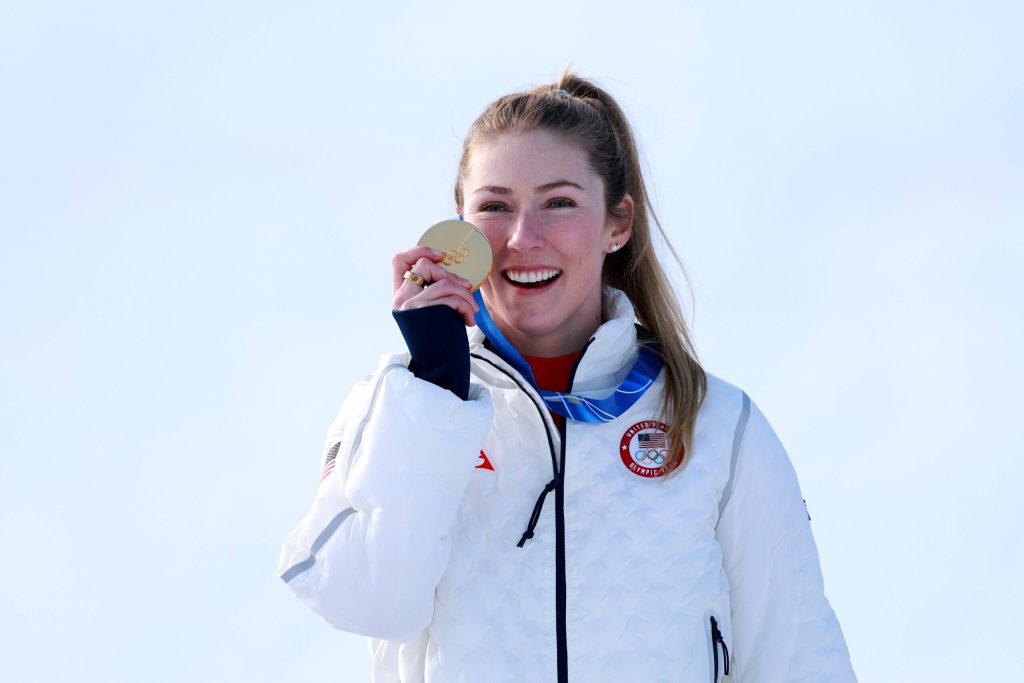
Under blue skies on the sun-baked flanks of Cortina’s Tofane, Mikaela Shiffrin did what only she could: she won slalom gold and became the most decorated skier in Olympic history.
Twelve years after winning Olympic gold at 18, and eight years after her last medal, Shiffrin, now 30, became the first American to claim three Olympic alpine golds, and is the youngest and oldest U.S. woman ever to win gold in the sport.
It was the skiing, more than the records, that made Shiffrin’s day golden. “I came here for the skiing,” she said after the race. “I wanted to feel these two runs that I felt today, that it was on the limit, that it wasn’t easy, but I took the risk even when it felt like there was something to lose. But in the end, there was everything to earn.”
The slalom took place on the same hill where Shiffrin skied the team combined, where her lackluster run landed her, with teammate Breezy Johnson, in fourth place. The performance kicked off a media narrative questioning Shiffrin’s Olympic chops and floated the idea that this would be a continuation of the medal drought that started in Beijing.
In reality, the winningest World Cup skier ever, who has won 7 of the 8 World Cup slaloms this season alone and already clinched the season title, is just fine. Multiple factors conspired to make this last medal chance also her best chance.
Team Combined was a blip, and the 11th-place finish in GS was a reflection of her still being in the process of returning to form in the discipline after her injury in Killington last season. The Tofane course is flatter and less challenging than the slopes where Shiffrin’s precision and disciplined slalom skills shine.
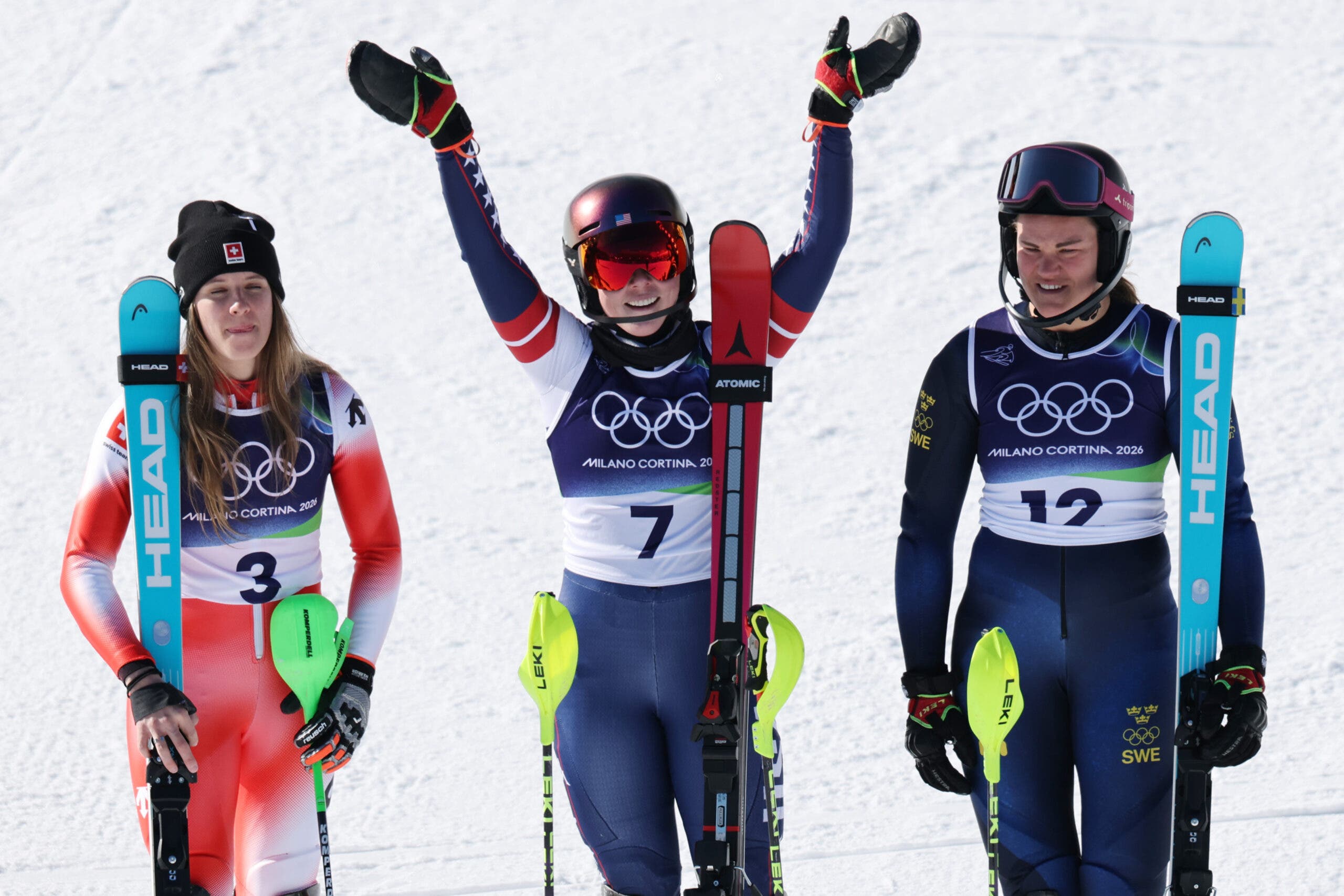
Today, however, the snow was significantly firmer, giving it the responsiveness that is in her comfort zone. Wearing bib 7, Shiffrin took control of the competition from the start. Despite a tricky set by the Austrian coach that triggered 27 DNFs (including American Nina O’Brien), Shiffrin skied flawlessly and powerfully to lead Germany’s Lena Duerr by .82 seconds, an enormous margin in slalom.
“It felt really clean, really active, but also a little bit on the limit,” Shiffrin said. “There were a couple of moments when I thought I could easily be off this course, but I just kept pushing and fighting.” Sweden’s Cornelia Oehlund finished third, a second off the pace, with Switzerland’s Camille Rast and Sweden’s Anna Swenn Larsson close behind. Team USA’s Paula Moltzan, also a medal favorite, stumbled in the final few gates and landed in 28th place, 2.77 seconds back.
Run two saw a set more favorable to Shiffrin and to the two Swedes in close medal contention. Moltzan, starting third and with nothing to lose, showed the form and fire that have landed her on the podium five times this season. Her time of 51.39 would be the fastest run of the day, and ultimately moved her up 20 spots to 8th place.
“I didn’t really think I’d be able to climb this much,” Moltzan said. “But I’m really happy with the second run I put down. My first run ski was also good. It just wasn’t clean, and that sets you back in a really strong field.”
The run belonged to Moltzan, but the day belonged to Shiffrin.
Rast, 26, the only skier who has beaten Shiffrin in SL this season, was realistic. “After my first run, I knew that the gold was gone, but silver and bronze were open.” She skied a fast, composed run to take the lead over Svenn Larsson. Then came Oehlund, at 20 years old in her first Olympic appearance. After a series of mistakes and finally a broken pole, she skied out of the course.
Then came Duerr. In Beijing, after winning the first run, she fell to fourth. This time, she was determined to win a medal. Instead, she straddled the first gate and was out before Shiffrin slid into the gate. That left Shiffrin with 1.05 seconds in hand, a margin most racers would protect. She did the opposite. Instead of idling, with Team Combined still fresh in her mind, she stepped harder on the gas. In another flawless run, she built speed all the way down, finishing 1.5 seconds ahead of Rast.
Once across the line, Shiffrin stood still for a moment, letting the scoreboard confirm what she already knew. “I did see the green, but then sometimes it’s a little hard to believe.” Between runs, she had been thinking about her father, Jeff, who passed away tragically in 2020, and about all the people who have made her journey possible. “I just wanted to take that moment and communicate in my heart and in my mind with the people who have been there and thank them.”
Swenn Larsson, 34, was similarly grateful to her team. “It is my last Olympics– maybe not my last season, but for sure I’m not here in four years. So it feels extra special to put it together today and walk away with this medal. It’s really huge for me, and I’m really thankful for a lot of people who helped me to get here.”
When asked if 2026 Olympic Champion Mikaela Shiffrin would have any advice for her 18-year- old self, she was thoughtful on the value of uncertainty and of all the lessons learned along the way. In the end, it would simply be this: “Buckle up!”
American AJ Hurt rounded out Team USA with 19th and, like the rest of the tech team, will now head home for a short break before the World Cup tech events resume in Are, Sweden March 14.