This vital item can be the difference between a complicated and expensive rescue and getting out of the mountains on your own terms.
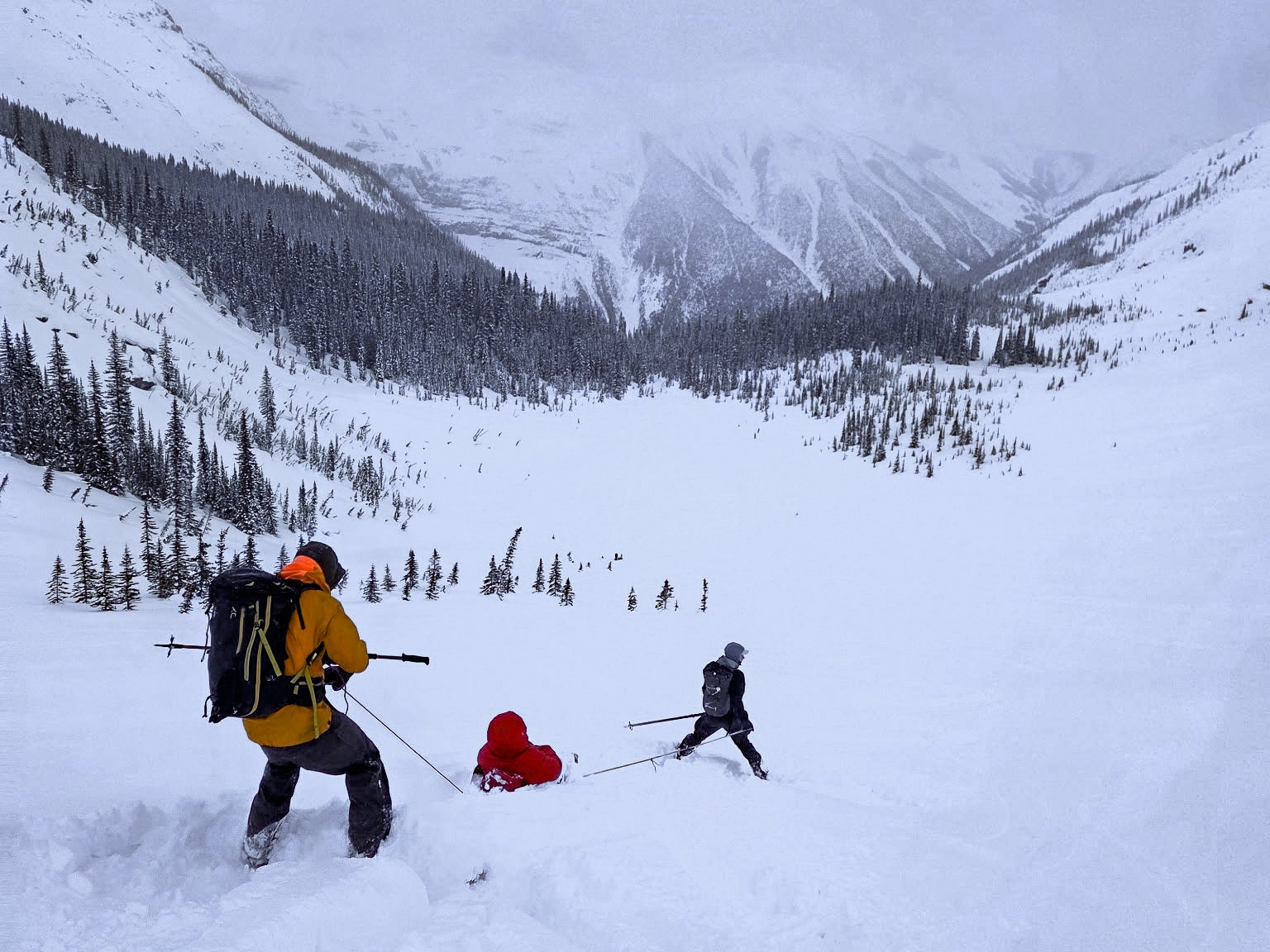
(Photo: Phil Gibney)
Published February 24, 2026 07:00AM
The snow depth was only 41 inches in Lake Tahoe at the end of January, and it was bonded tight. Kind of silly conditions in which to take a Level 2 avalanche course. But my wife, Rita, had signed up as a November optimist so she went anyway. People say not to bother trying to learn about snow safety during a green avalanche forecast, but when one door closes another opens, and the course veered off into other kinds of rescue discussions.
Midway through the first day, Richard Bothwell, a ski guide and avalanche instructor, turned to Rita and said, “You know, in 30 years of guiding skiing, I’ve unburied one person from an avalanche. But I’ve used my rescue sled dozens of times.”
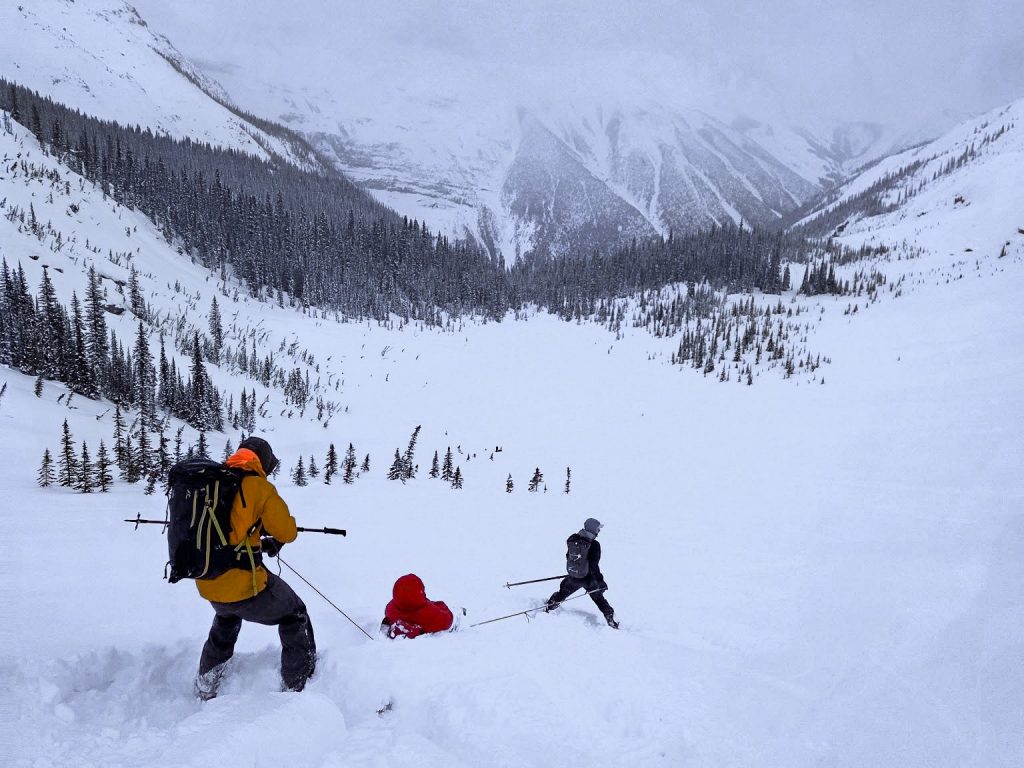
A rescue sled is essentially just a tarp, made from a durable fabric like Dyneema, with grommets for cordalette that you can rig to drag an injured skier to a sheltered location, a helicopter landing zone, or, if you’re brave and strong, all the way back to the car.
We’ve spent the past few years pushing our steep skiing and going farther back beyond the front range of our Eastern Sierra backcountry—to pad our margins, we’ve also started reinforcing our rescue skills. I recently recertified my Wilderness First Responder (WFR) certification and last spring we bought a rescue sled. But I’m happy to report that I’ve never had to use it. Bothwell said he expects to use his at least once a season—either for his party or for another hapless, sledless party. I called him up to talk about his experience.
“I think there’s a mindset that a lot of backcountry skiers have that ‘I’m going to hit my InReach and the cavalry is going to come screaming over the ridge top,’” said Bothwell, who has guided out of the Tahoe and Lassen regions for 30 years and served as Executive Director at The American Institute for Avalanche Research and Education (AIARE). “It’s too late to take a WFR course when your ski partner has just run into a tree.”
The current state of avalanche education has a tendency to make beginners think that rescue in the backcountry is the same as playing hide-and-seek with a beacon. “That’s a valuable skill that people should have,” says Bothwell, “but it’s not the same thing as avalanche rescue.” The cold reality is if you’ve dug someone out of avalanche debris—and they’re alive—you likely have a debilitated patient on your hands who will need to be dragged somewhere.
Bothwell told me that he believes that words have power, and that for the longest time rescue sleds were referred to as “guide gear.” He argues that does a disservice to recreational backcountry skiers, who are not impervious to tearing an ACL or fracturing their tibial plateau in the backcountry.
All of a sudden, though, rescue sleds are having a moment. Mark Smiley, the IFMGA guide known for sharing his gear tinkering on Instagram is selling an ultralight version called the “Bruce Wayne Rescue Tarp”—think Batman-utility-belt sleek for about $125. Hyperlight Mountain Gear just released a fancy rescue tarp made of a futuristic composite fabric.
People are finally catching onto the fact that rescue sleds are multi-purpose marvels. Sometimes skiers get so caught up in the complex how-to of rigging a sled together that they forget the expensive sheet they bought is also—get this—a tarp. You can use it to block the wind or make a lean-to as an impromptu shelter. You can wrap someone in it to keep them from getting hypothermic. You can put a patient under it (or on top of it if you don’t have a sleeping pad) while administering first aid to keep them out of the snow.
Smiley, who’s been selling his Bruce Wayne tarp for a while now, used his own for the very first time on January 29th—the same day I asked him if he wanted to discuss rescue sleds. Earlier that day, touring out of the Hilda Hut in southern B.C., a client blew his knee in a slow, backward-twisting fall. Smiley and fellow guides were able to rig the sled and drag the client all the way back to the hut, through steep terrain and down more than 1,400 vertical feet. “We had a lot in our favor—fall line, not too far from the hut—but the tarp worked really, really well,” said Smiley.
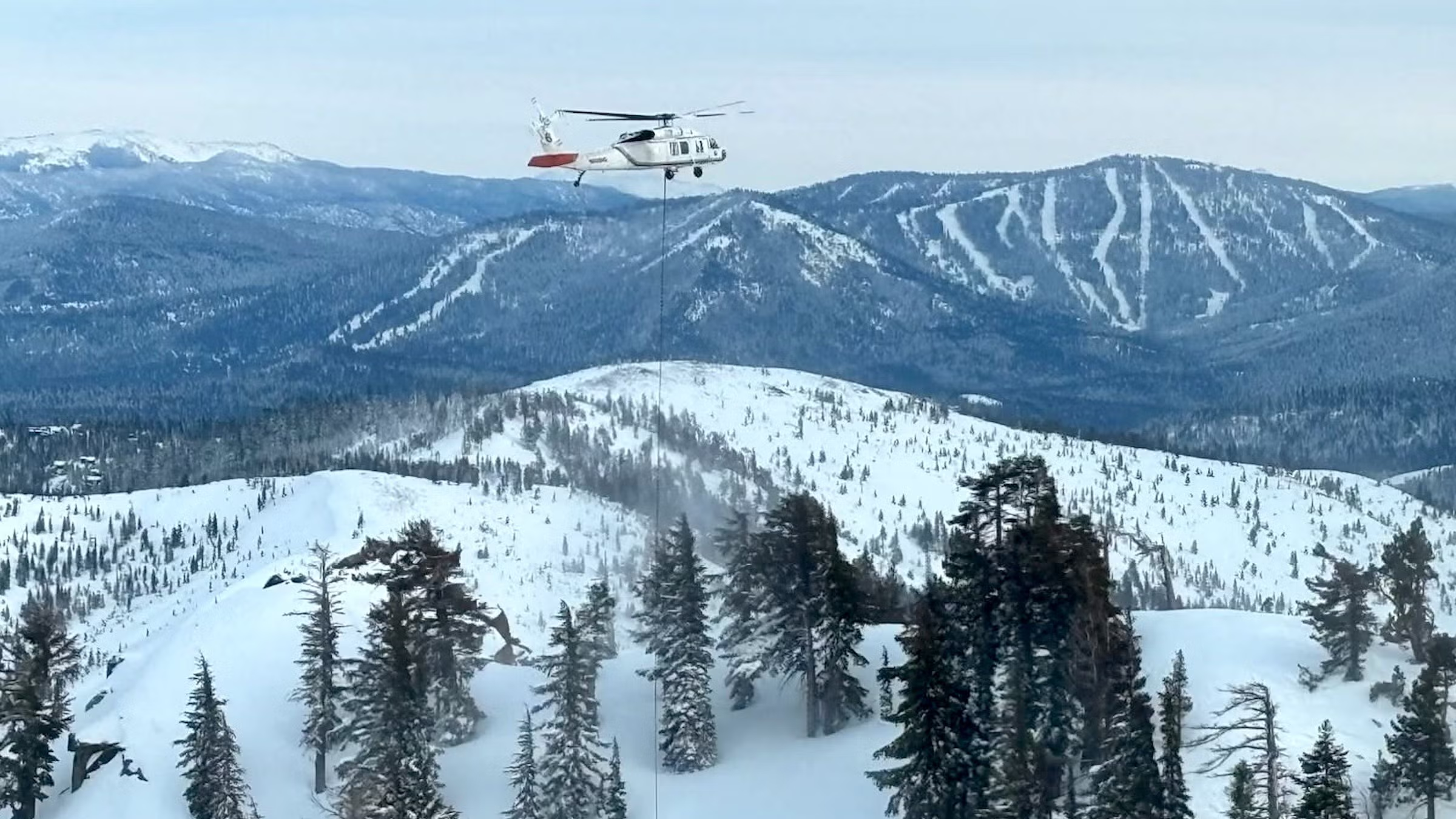
When asked what he might have done had he been skiing without his tarp, Smiley responded “I would have had to call a helicopter.” Helicopters are a funny thing in the backcountry skiing world. To those who’ve never called one, they’re a panacea to any and every woe. Like an Easy Button. To those who have called a helicopter, they’re capricious birds who come—or don’t—at the inscrutable whims of an unseen arbiter. SAR rescues in the Eastern Sierra backcountry, for example, tend to take between four and more than 24 hours, depending on one million things. In winter exposure, that’s longer than most skiers are prepared for.
Better pack a sled—and know how to use it. “If you’re a backcountry skier, you have two options,” said Bothwell. “You need to either recognize that you’re well prepared, or that hope is your strategy.”