Cooke City, Montana, is a long way from anything, and that’s just the way the locals like it. Tucked into the heart of the Beartooth Mountains right outside the Northeast Entrance to Yellowstone National Park, the town of 77 inhabitants (per the 2020 census) is the kind of place you go in order to not be found. It’s also one of those places that’s steeped in backcountry skiing lore–but somehow gets overshadowed by more popular locales. In fact, I’ve lived just on the other side of Yellowstone in the Tetons for nearly a decade and never made it here until now.
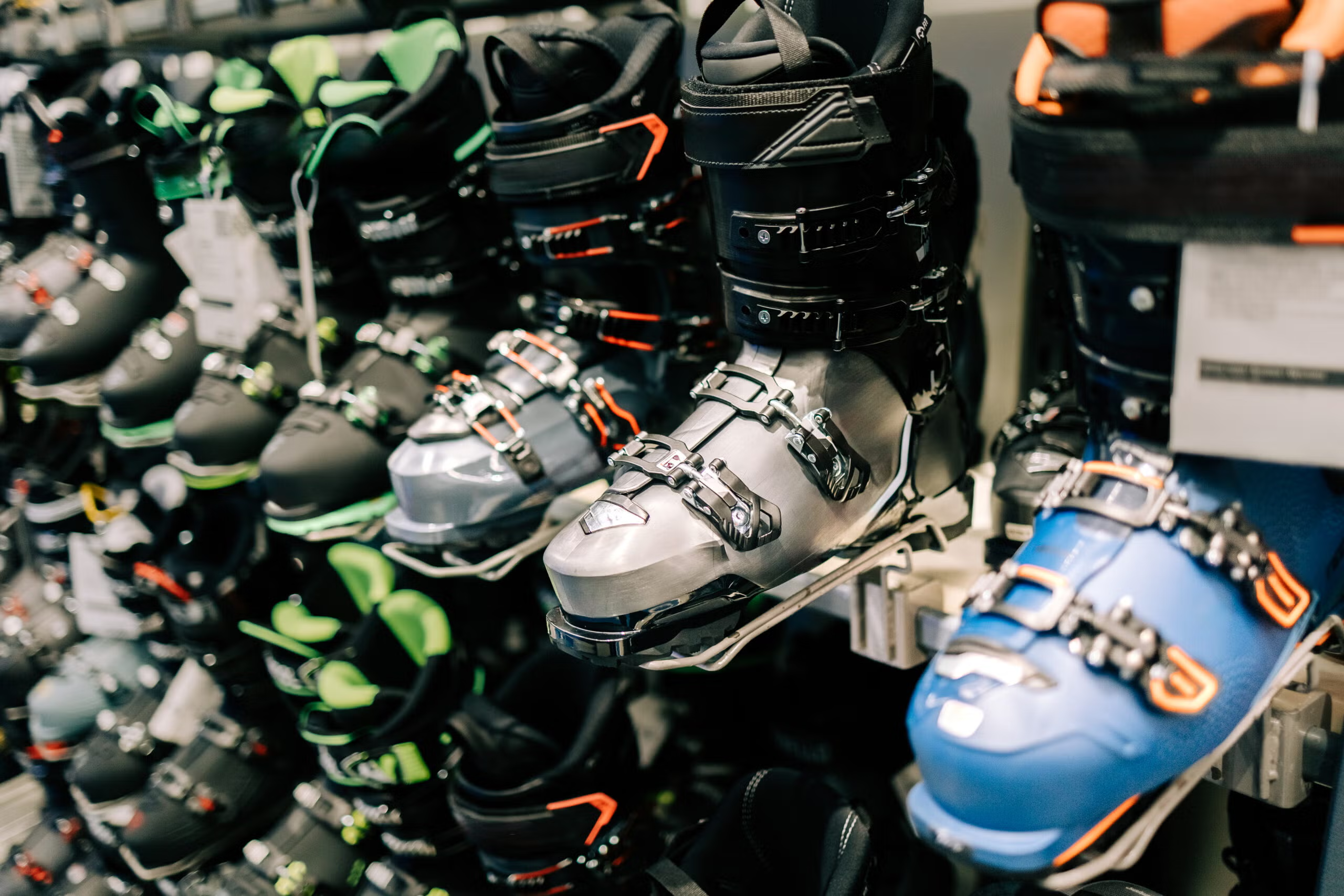
That all changed this spring with an invitation to join pro skiers Connery Lundin, Piper Kunst, Tim McChesney, some of the Blizzard-Tecnica team, a small crew of fellow media friends, and Beartooth Mountain Guides for a week of snowmobile-access backcountry skiing in Cooke City. On paper, the impetus was putting the brand-new Blizzard Canvas ski and Tecnica Decoy boot collection to the test–but as ski trips of this caliber tend to go, it quickly turned into far more than that. I feel incredibly fortunate that I get to ski a lot, both for work and for fun, but one of my favorite parts of my job is experiencing new places on skis. There’s something about having completely new sights, sounds, and experiences imprinted on my brain that never gets old.
At its core, backcountry skiing is a very simple activity: you walk uphill, then you ski back down. It’s beautiful, it’s engaging, it’s hard, but it tends to mean you don’t actually get to spend a lot of time skiing downhill. Of course, for most of us, it’s as much about enjoying the journey as it is experiencing the reward–but the thing about snowmobiles is that you get WAY more of the reward (5+ ski laps a day, instead of 2-3)…and the journey is about as fun as it gets (you get to ride a sled in the mountains). It’s a numbers game, really.
Max Ritter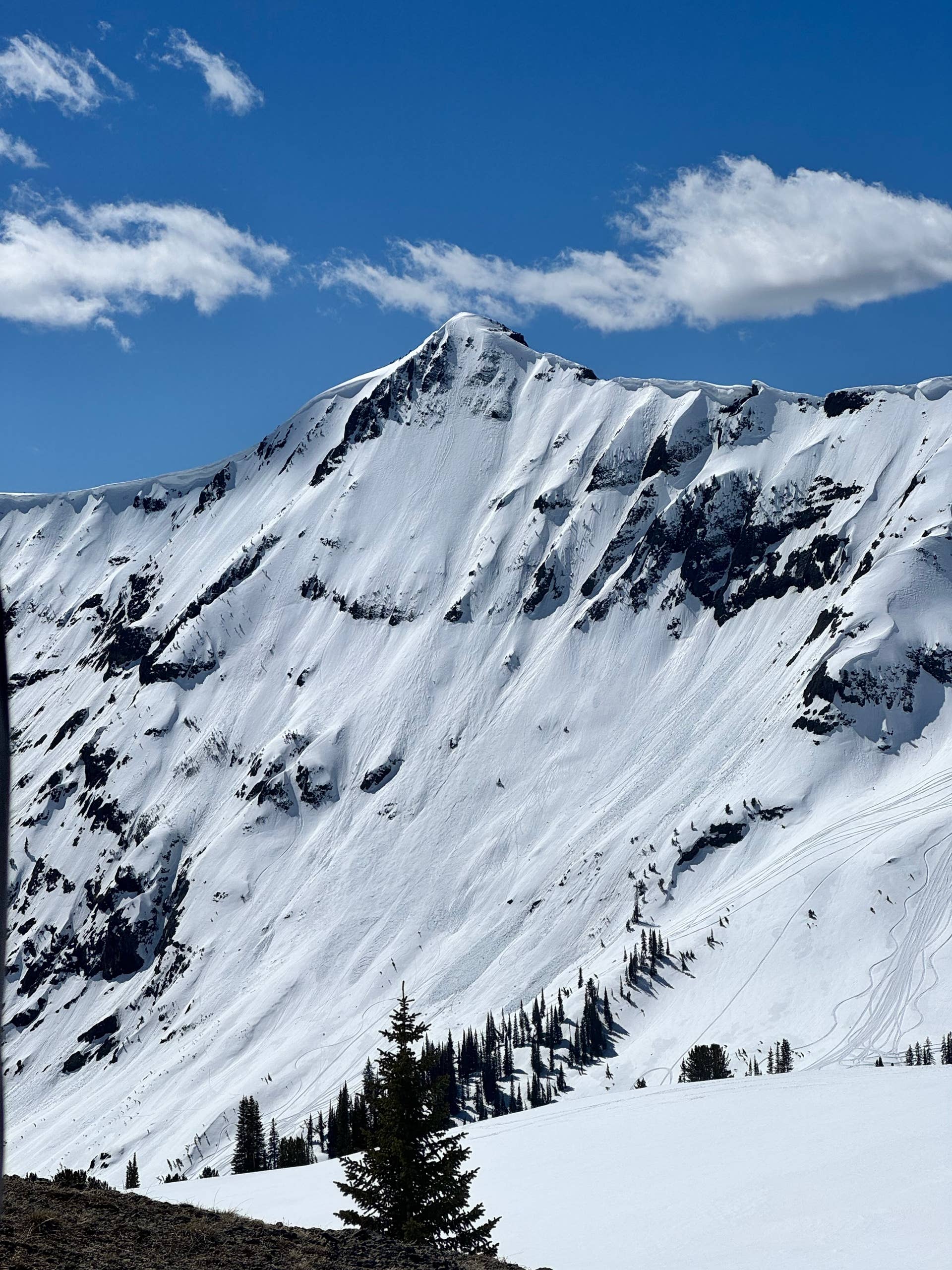
Of course, bringing sleds on a ski trip adds a whole new set of complexities to the game. Particularly in the spring, when conditions are firm and frozen in the mornings, sleds like to overheat when rallying up groomed tracks. Modern mountain sleds rely on loose snow being kicked up by the track to cool their motors. Ironically, when it’s cold on early spring mornings, there’s not enough loose snow to cool the engines, meaning you have to periodically stop and cool down the machine by “chainsawing,” eg. tipping the sled on edge and revving the motor to cut through the crust and kick up loose snow.
As a devotee to the church of primarily human-powered skiing, the pace of mountain sledding continues to absolutely blow my mind. It’s undoubtedly one of the most difficult things I’ve done (wrestling a 500-pound turbocharged snowmobile with more horsepower than my Subaru up a steep sidehill ain’t as easy as the pros make it look), and the fact that you can cover an entire day’s approach to a line in an hour or two of fun riding opens up a a remarkable amount of terrain. Then there’s the whole concept of doubling (also known as “two-up” riding or riding “Canadian”), which I’ll just call the high-mountain Uber. Ski touring be damned.
Max Ritter
In fact, I’m still not used to the fact that you don’t really get the whole experience of entering the mountains at a “normal” pace–with a few blips of the throttle, you’re suddenly underneath (or on top of) your line, ready to go skiing. There’s something to be said about the fact that this method leaves very little time (or entirely skips an opportunity) for gathering beta on conditions, stability, or other potential hazards as you go deeper into the mountains–on a sled, you can enter potentially hazardous avalanche terrain very quickly. In short, do your homework beforehand, and don’t hesitate to stop the sleds, take a breather, and poke your head into the snow to double-check your situation.
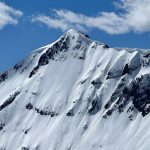
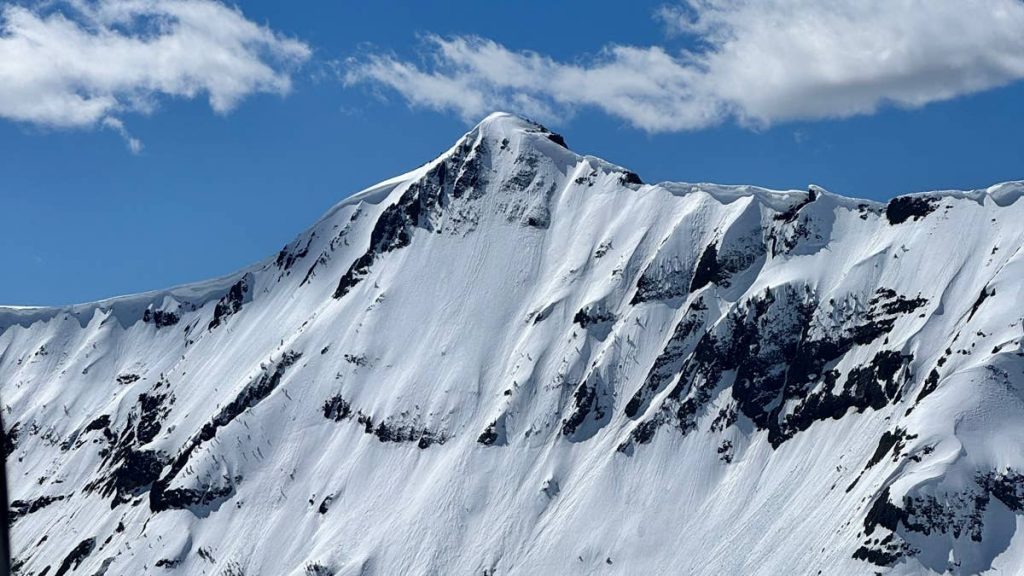
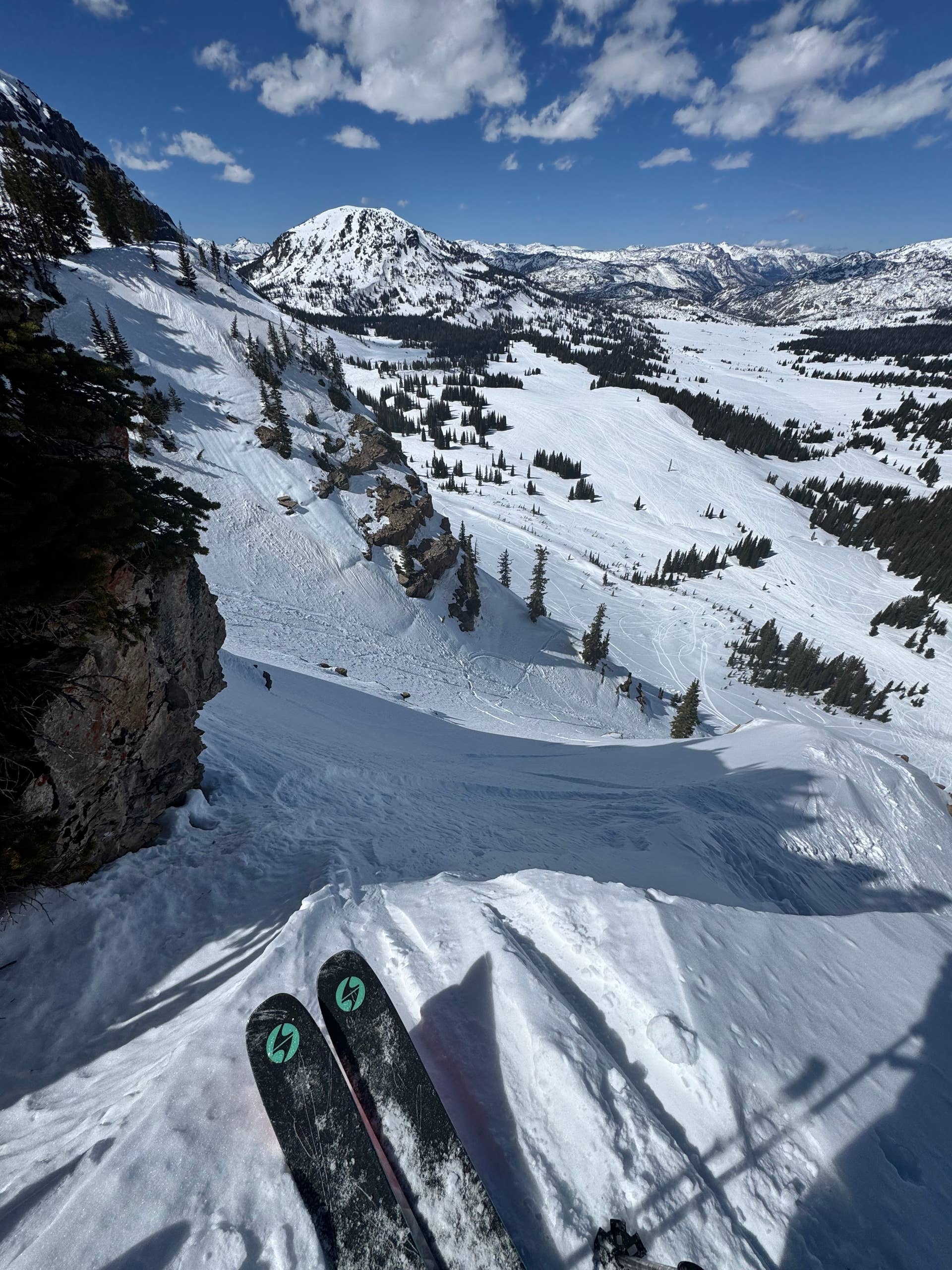
Ok, enough about the snowmobiles. We were here on a ski trip after all. The Beartooth Range straddles the border between Montana and Wyoming, and is home to some of the most beautifully skiable terrain I’ve ever seen. Outside of Alaska and maybe the Tetons, I don’t think I’ve ever seen mountains that are this perfect for big-mountain skiing in North America.
Max Ritter
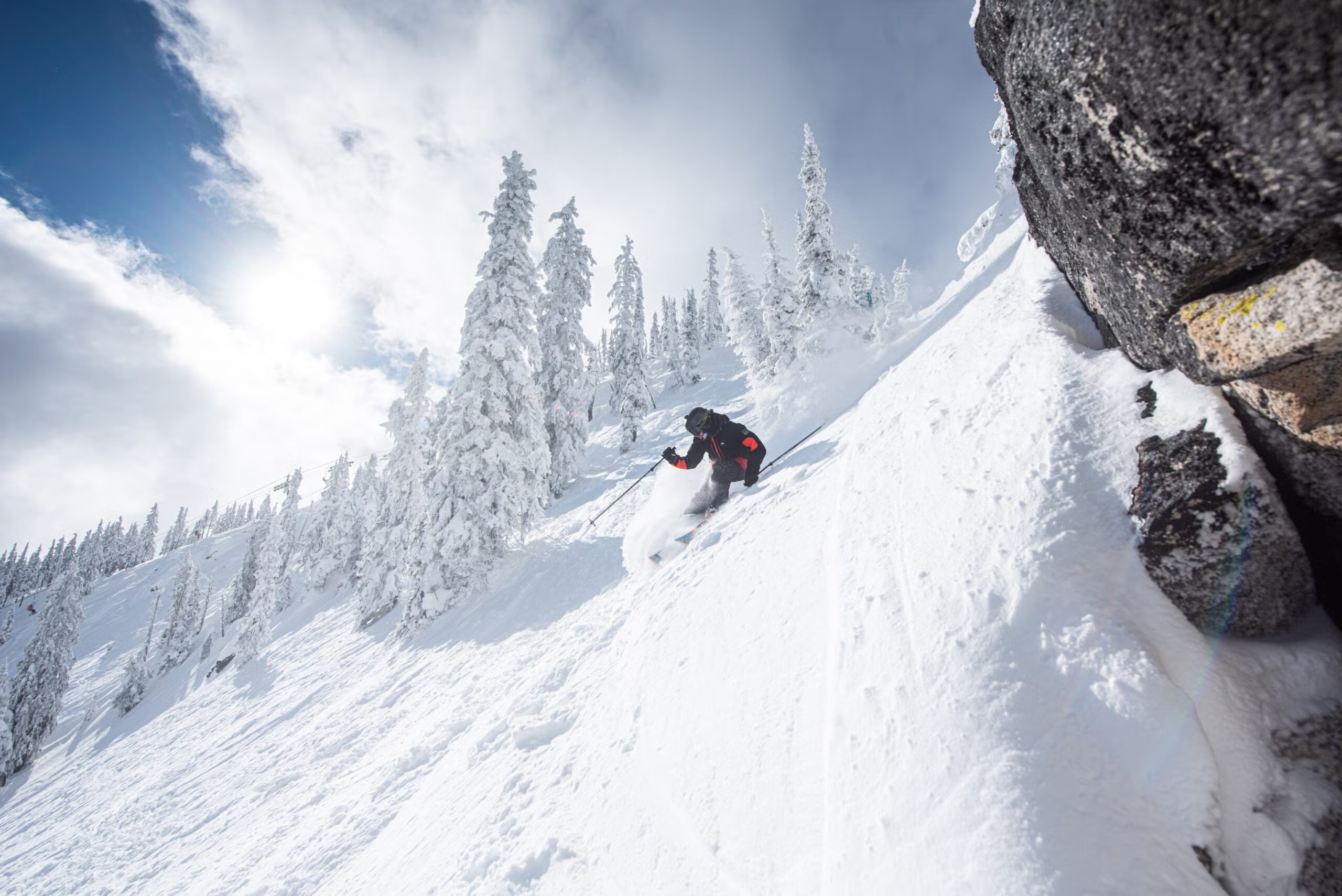
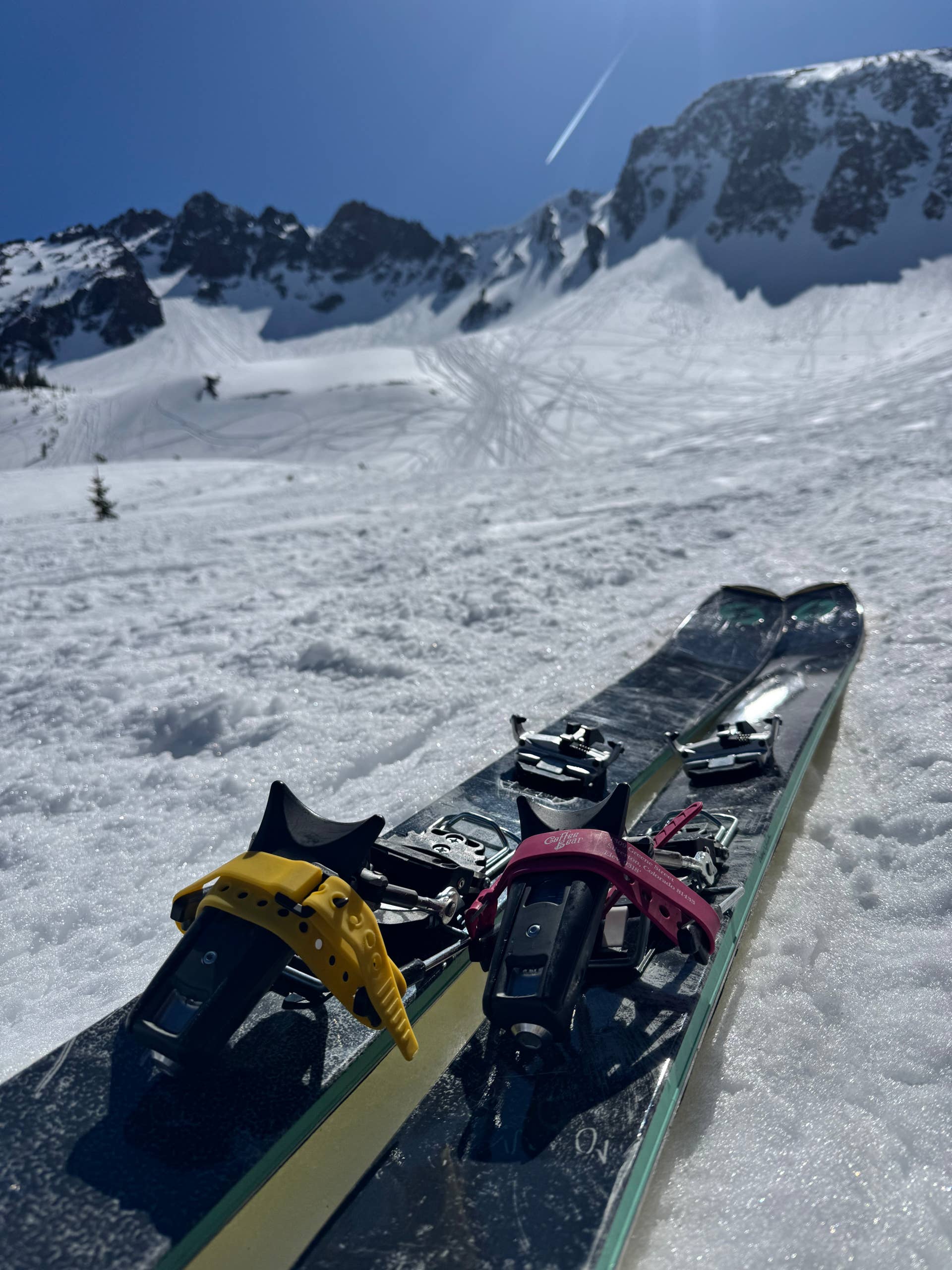
In short, these peaks are big enough to be interesting, but not too big as to prevent easy access, and the variety of high-level terrain is truly mind-blowing. From steep sub-alpine pillow stacks, to perfectly-spaced tree ramps, to hundreds of high-alpine couloirs and faces accessible by short ridge scrambles and some truly heady ski mountaineering testpiece lines, there’s a lifetime worth of riding packed into a relatively compact mountain range. In essence, it was the perfect testing grounds for testing a ski and boot designed for aggressive backcountry skiing in aggressive backcountry terrain–Canvas and Decoy.
With a group this big, we naturally split into a few smaller crews to explore terrain more efficiently. On our first day, I joined Tim, Connery, and our guide Aki to top-down a couloir on the north side of Iceberg Peak. We skinned for a few miles past the Wilderness boundary before booting up the final few hundred feet to the top.
Despite the truly abrasive winds we encountered on the 11,500-foot summit, the tube held 1,200 vertical feet of creamy, soft pow and stunning views of Montana’s high point, Glacier Peak, directly across the valley.
At the bottom of the line, Aki gave us the origin story of the Grasshopper Glacier we now stood on: a few years ago, he had guided a party of field biologists to this exact point to study a layer of prehistoric locusts that had melted out of the ice as the glacier receded. Kind of gross, but pretty cool.
The next day, our crews split up to ski both the iconic Fin feature of Republic Mountain, towering directly above town, and spin some sled slaps on the Scotch Bonnet zone a few miles to the north. By day 3, our legs and upper bodies were pretty cooked, but wind conditions had calmed down, and we were all still hungry for more high-alpine riding.
While this last day of the trip probably wasn’t too crazy by any means for someone who frequents this zone, I’d consider it a somewhat pivotal day in my skiing career: it truly showed me what sleds were capable of deep in the backcountry in a ski setting.
Having worked in ski film production and media for a decade now, I knew that sleds could open new frontiers, but I’ll be honest and say that I had never truly experienced it firsthand.
Greg Fitzsimmons
With our guides Aki, Austin, and Aidan supporting us with sled bumps and helping us with snowpack and risk evaluation, our crew put a week’s worth of tracks down couloirs, ramps, and faces in a matter of a few hours. The amount of dopamine released in our collective brains was biblical.
After all, how does the saying go? You only get to experience something for the first time once.
Oh yeah, and anyone have a sled they want to sell me for cheap?