Updated May 4, 2026 12:43PM
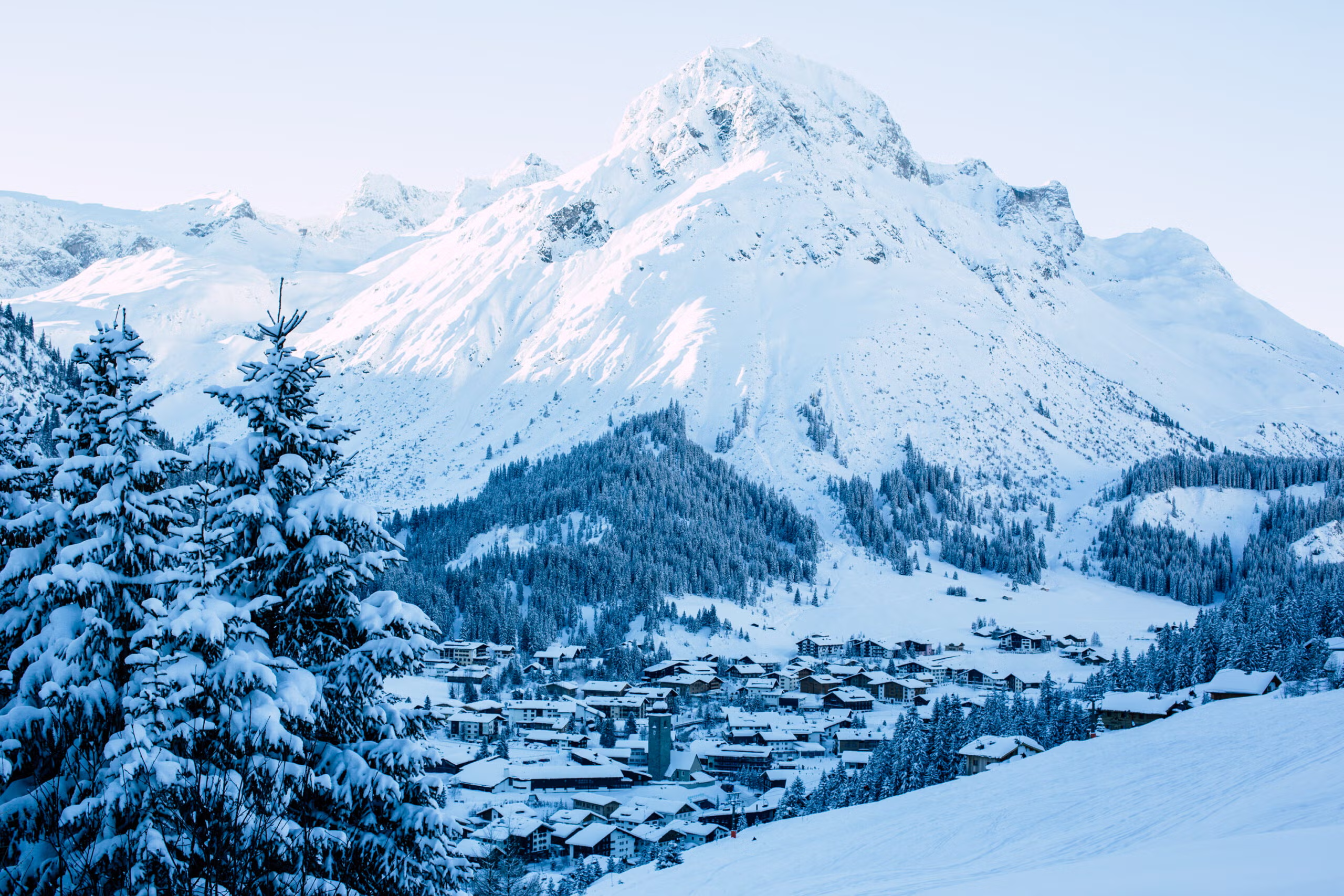
Even though I arrived at night under heavy snowfall, I could easily see why so many ski towns across the globe try to emulate Lech’s quintessential Austrian alpine village aesthetic. Wooden chalets with gabled roofs, colorful painted exteriors, shutter-lined windows, and balconies made for ogling mountain views line the cobbled streets, while the river Lech meanders through the village. It’s the perfect intersection of old-world ambience and modern mountain chic.
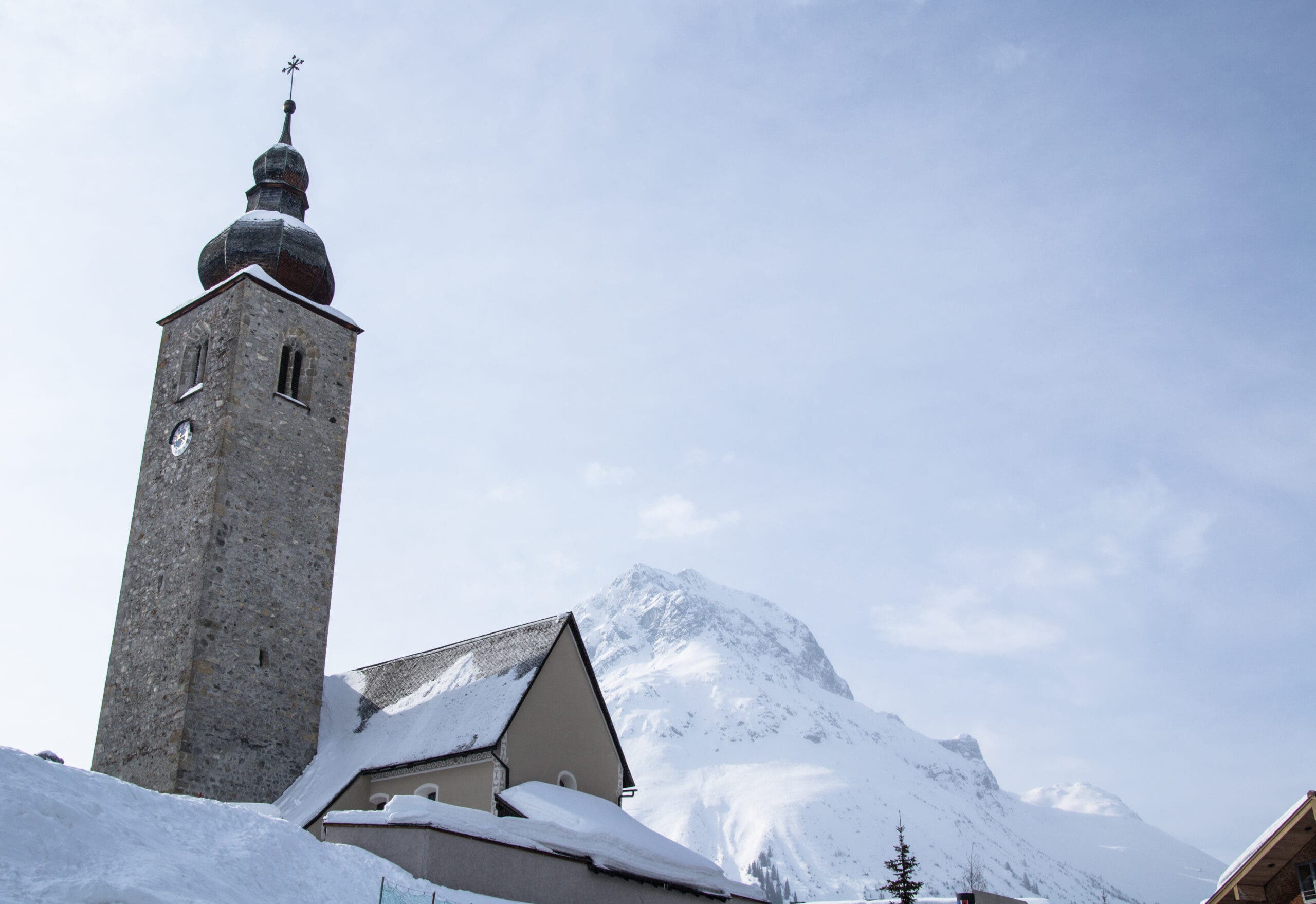
But the town didn’t get that way without some effort. Situated in the Arlberg region of Austria, close to the German, Swiss, and Liechtenstein borders, Lech adopted strict building regulations that have shaped the village, prohibiting any structure taller than the stone steeple of the circa-1390 St. Nicholas Church, in the heart of town. Just beyond the storybook hotels, ski shops, and restaurants, though, are modern six-person chairlifts and sleek cable cars that rise into the surrounding peaks. Everything feels high-end—a seamless blend of natural materials and high-tech design. (To put it bluntly, I couldn’t find a kitschy souvenir store anywhere.)
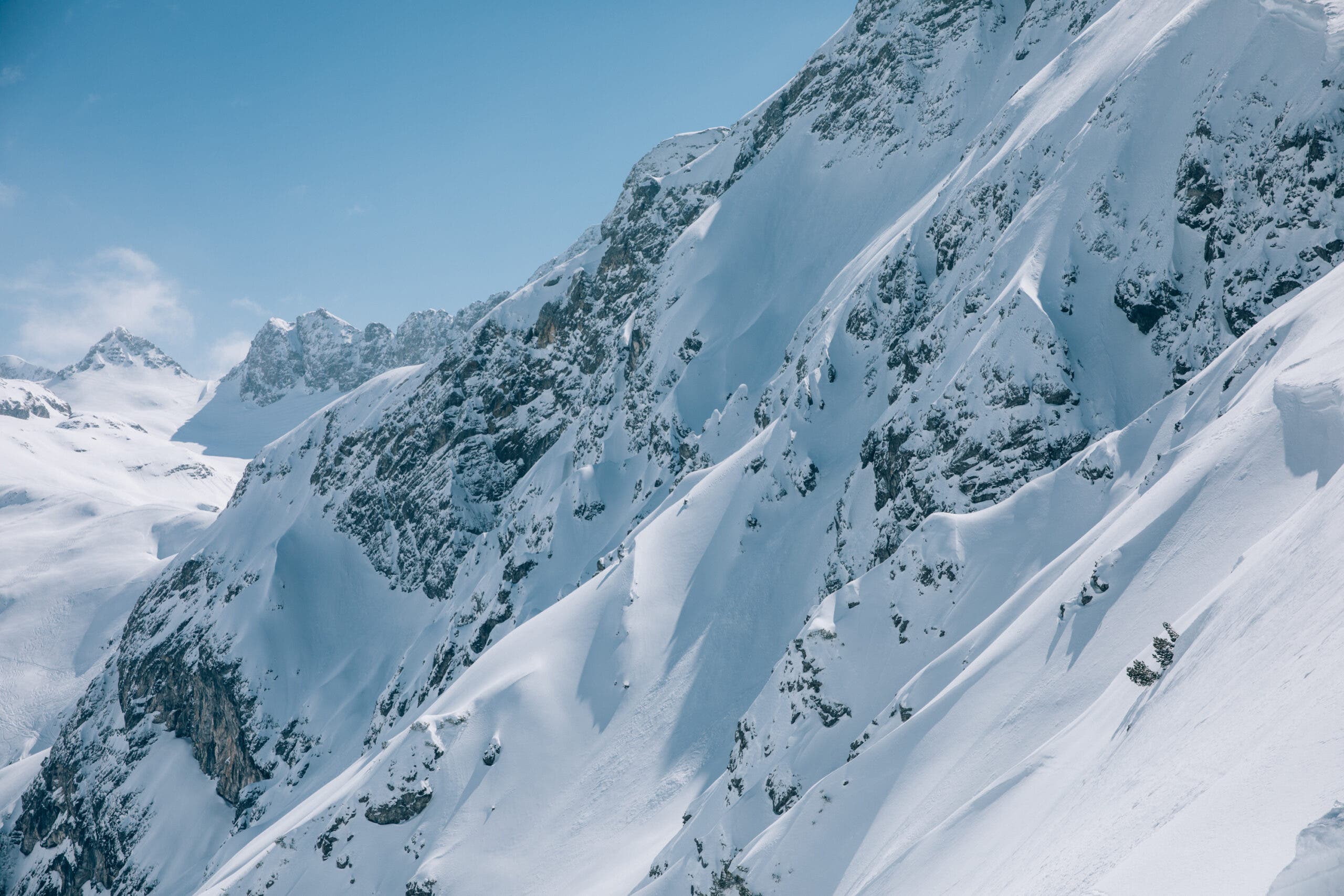
Part of the massive Arlberg region and home to the largest interconnected ski area in Austria, Lech boasts over 85 lifts that access nearly 200 miles of groomed slopes and 125 miles of off-piste terrain. The Ski Arlberg pass gets you access to five ski areas—Lech, Zürs, Stuben, St. Christoph, and St. Anton—as well as Schröcken and Warth, however those two aren’t part of the Epic Pass partnership that gets you three free days of skiing (more on that below). Five resorts are plenty, though—you could ski for days and still not see everything.
Also Read: Which Season Pass Offers the Best Alps Access. Find Out Here.
I, however, don’t have endless days. With less than a week to fit this spring trip in, I scheduled an overnight flight on Tuesday, returning Sunday afternoon, giving me four full days of skiing. And boy did I hit the Lech lottery: a Nordwestau—a storm created when cold, moist air from the Atlantic and North Sea collides with the mountains and dumps heavy snow on the Northern and Western Austrian Alps—blew in ahead of my first ski day. Given the drought that plagued the U.S. Rockies, including my home resort in Colorado, I was in heaven.
But what really made the trip worth my time, money, and effort was not only the amazing snow and varied terrain but also being fully immersed in Austria’s authentic ski culture. After a long weekend here, I resolutely decided that the Arlberg is a place I will return to. It’s a true bucket-lister for skiers but it is massive, so here are some things to consider when you plan a trip.
5 Travel Tips for a Lech Ski Trip
No. 1: When to Go
Though remote, Lech is worth the travel time. The snow typically sticks around longer into the spring than many other European resorts, so the possibility for snow-producing Nordwestau is high. You can plan a late-spring trip, just outside of high season, with a little more confidence. It’s also a good opportunity to save a little money.
No. 2: Getting There
From the U.S., the best options are to fly into Zurich, Switzerland,or Munich, Germany. You don’t need a car in Lech since there’s free public transportation between villages—or you can ski between them.
From Zurich, the Arlberg Express shuttle service operates up to five times a day to Lech. I flew direct from Denver to Munich then hopped a bus to the Innsbruck airport. It’s worth an overnight stay in Innsbruck, where you can bed down at the Penz Hotel West and visit the medieval district of the city. In Innsbruck, I took the F bus, a free bus system that travels through Innsbruck between the airport and the train station. From there, I boarded a train to St. Anton and was picked up by my hotel for the 30-minute drive to Lech. We passed through the picturesque town of St. Christoph and the Arlberg Hospiz Hotel, dating back to 1386 when it operated as a hostel for travelers crossing the Arlberg Pass. Next, we drove past the high-end hotels and restaurants in Zürs, which has been attracting movie stars and royals for decades, and finally down into the Lech valley.
No. 3: Where to Stay
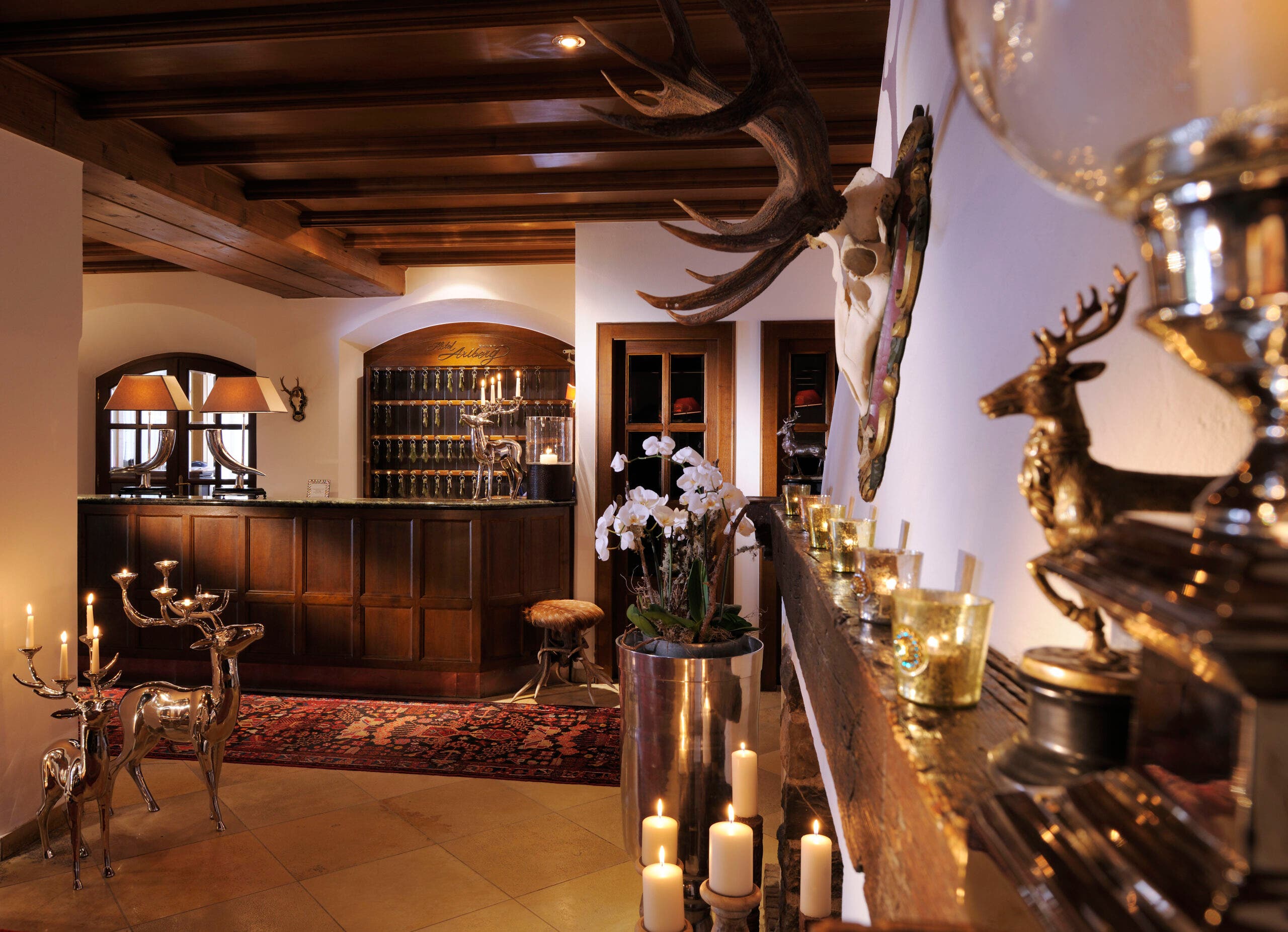
In Lech, four- and five-star hotels are plentiful—and if there’s one place to splurge, this is it. Hotels in the center of the village are mere minutes away from the slopes. I stayed at the Hotel Arlberg, established in 1956 and run by four generations of the Schneider family. With its fine dining, amazing spa and beautiful guest rooms, this nod to the Austrian alpine aesthetic is fit for a queen, or in the case of the Hotel Arlberg, fit for Diana, Princess of Wales, who visited frequently with Prince William and Prince Harry from 1991 until her death in 1997. In fact, since it’s customary to provide regular guests long-term storage awaiting their return, the Hotel Arlberg still has Lady Di’s skis.
High-end hotels provide extensive breakfast buffets and dinner service, but you can also look at garnis, which provide breakfast only; pensions, essentially family-run B&Bs; chalets, for larger groups, or hostels for a budget option. Oberlech, just up the road, offers true ski-in/ski-out lodging. Hotels in Zürs and St. Christoph are located close to the slopes, but you can often find lower rates in nearby Zug and Stubenbach.
Epic Pass holders can redeem their three-day Ski Alrberg lift pass by staying at participating Arlberg resort properties. Note that hotels have a minimum night stay anywhere between three and seven nights and you must book directly through them (and not a third-party website). Click here for a list of participating lodging properties.
No. 4: How to Ski It
Given the size of the skiing, it’s best to hire a guide for your first day. There are multiple ski schools and guide services in the area, but one of the oldest and most respected is the Skischule Lech, founded in 1925. The Arlberg is, after all, known as the birthplace of modern skiing and the Arlberg technique proliferated in the U.S. after Stuben local Hannes Schneider emigrated to New Hampshire during WWII, bringing with him his learn-to-ski program that he honed in the Austrian Alps. I grew up seeing a statue of Schneider at the base of Cranmore Mountain and always wondered about this “father of modern skiing.” Now I was skiing in the mountains that initially inspired him.
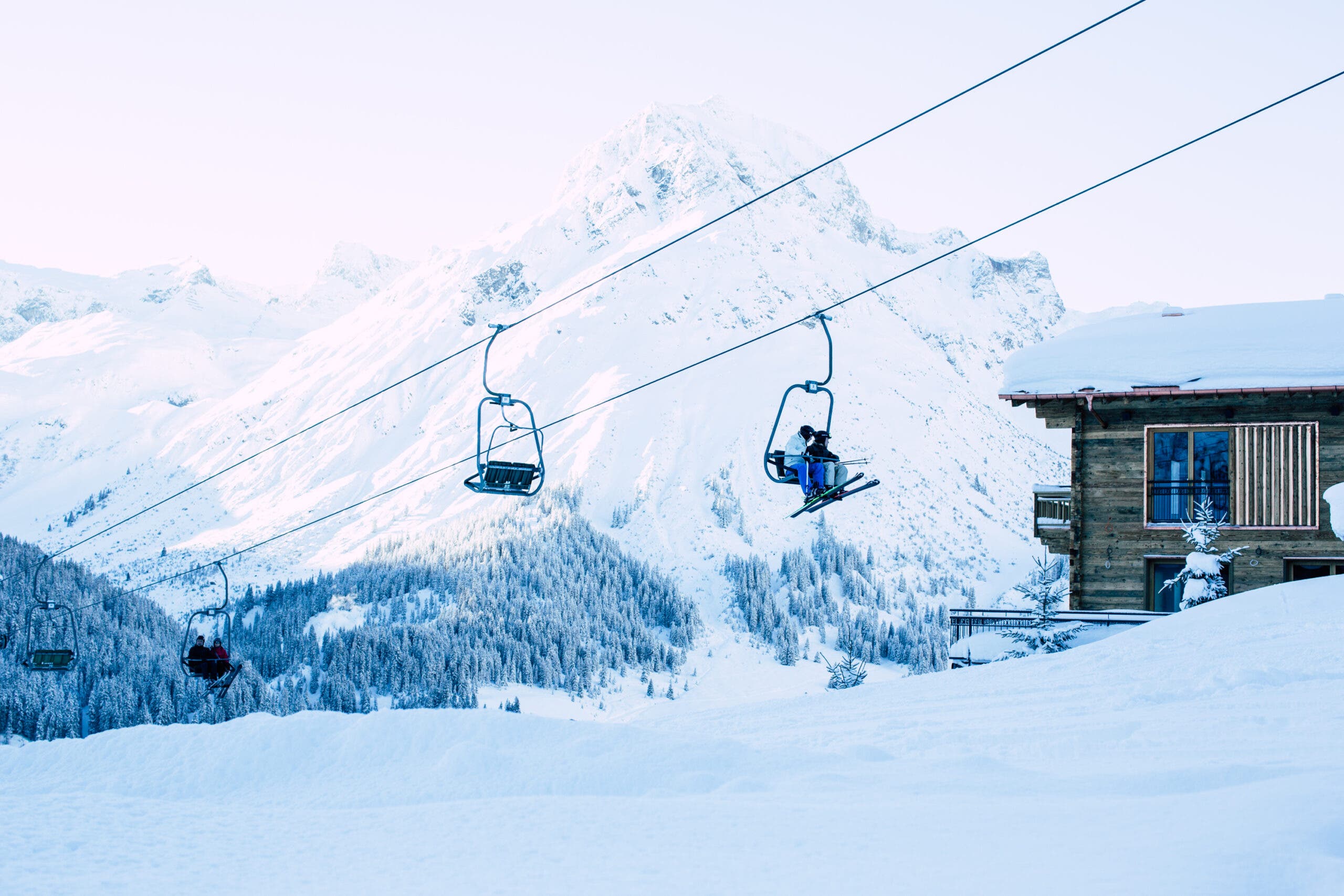
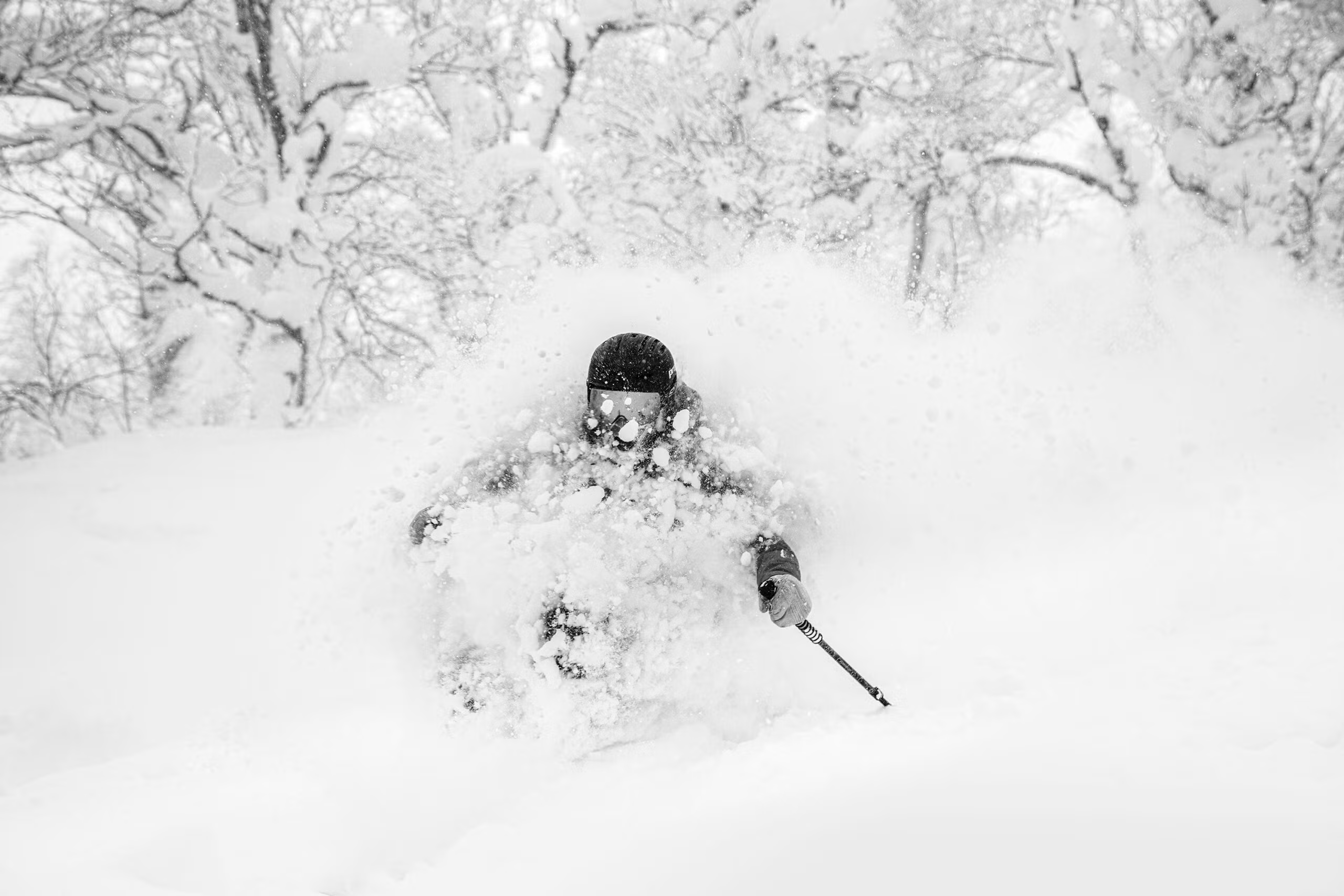
My first day at Lech was a white-out powder day, so I was thankful to ski with 28-year-old Niklas Gundolf, a local Skischule Lech guide with family ties to the Schneider family on his grandmother’s side. I followed Gundolf’s blue jacket all day to powder stashes off the sides of the marked runs. Having grown up there, he knew the mountain intimately and we skied fresh line after fresh line, a present that I felt immensely grateful for after the low-snow year I experienced in Colorado this past season.
After an amazing late lunch of bauerngröstl, or sauteed potatoes, local beef, bacon and a fried egg, washed down with a cold lager, I picked Gundolf’s brain about where to ski next, knowing I would be solo. Since snow was forecasted for the next day, he recommended that I ski Lech again, getting out early for fresh tracks. And with the sun scheduled to come out the following day, he suggested I walk across the street from the Arlberg Hotel and ride the Rüfikopfbahn cable car to Zürs for steep runs and amazing views.
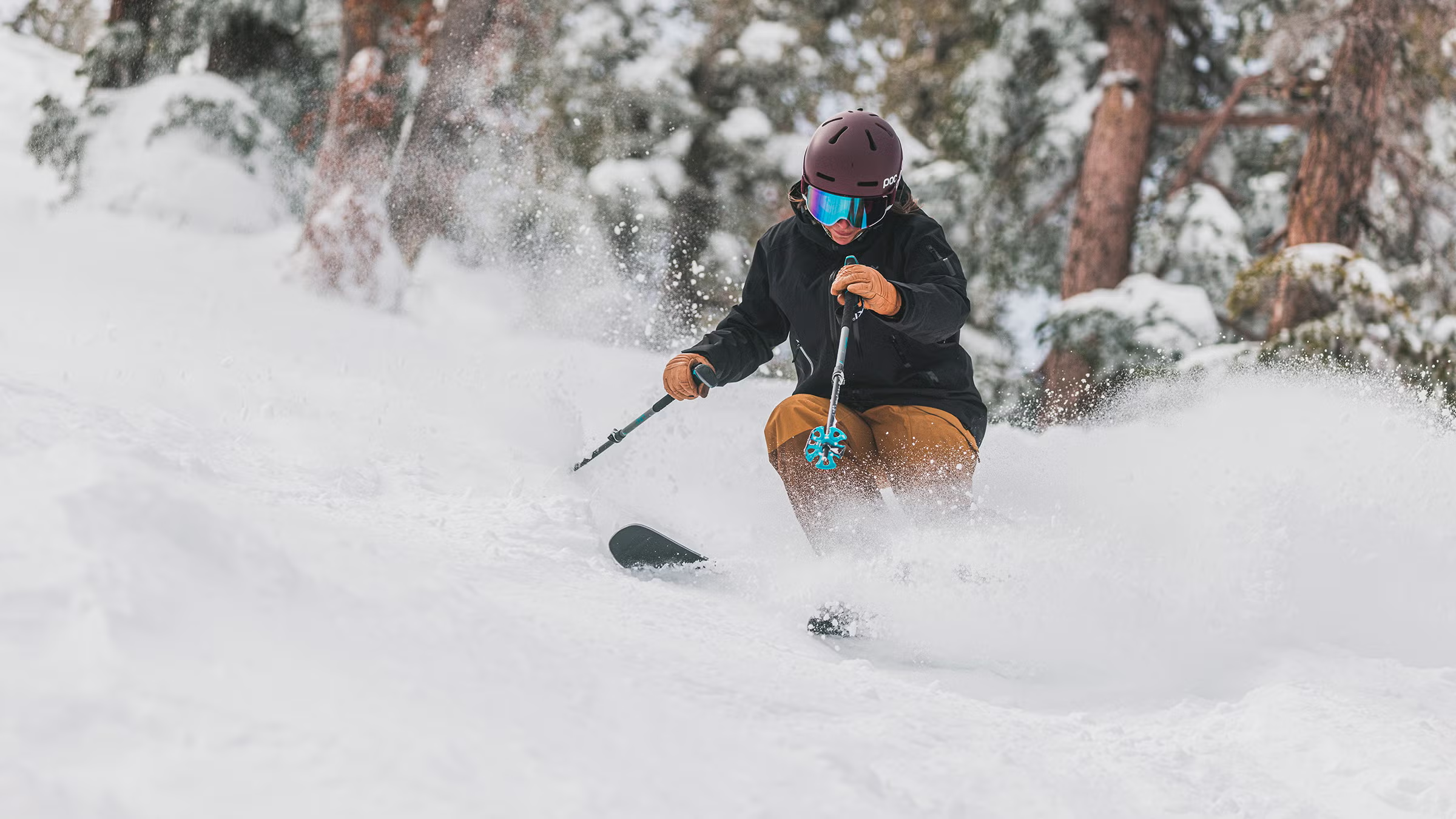
On the second day, I followed Gundolf’s advice, getting out early, and making my way north to the Steinmähderbahn, lapping the high speed six-pack before most people were finished with their eggs, speck, and Alpkäse, or alpine cheese. I resisted skiing off-piste beyond 100 yards from the designated runs because the avalanche danger was at Level 4, indicating by the European Avalanche Warning Service that large, natural avalanches were likely due to significant snowfall and wind slabs.
On the third morning, the sun finally shone, and I was awestruck by the 8,399-foot Omeshorn, the prominent rocky peak that serves as Lech’s landmark, towering above town. A bridge across the Lech river took me to the Rüfikopf cable car and up to an amazing panoramic view of the peaks that surround Lech and Zürs. I wanted to tackle the Langer Zug, considered one of the steepest groomed slopes in the world thanks to its nearly 40-degree slope angle in some sections. I didn’t come close to the 154-mph speed record set back in 2002 by an Austrian speed skier, but let’s say I channeled my inner ski racer as I carved down the 2.9-mile run.
No. 5: Experience Lech Like an Austrian
Europeans love to follow designed routes or circuits, and in fact the slopes are marked with numbered routes to follow. The most famous circuit in the Arlberg is Der Weisse Ring, or the White Ring, which circumnavigates the Omeshorn and links Lech, Zürs, Zug, and Oberlach. Most people ski the White Ring in a few hours, followed by a two-hour lunch in a mountain hut, which are plentiful around all the resorts. Patrick Ortleib, the Olympic gold medalist, father of Olympian Nina Ortleib and owner of Lech’s four-star Hotel Montana, created a downhill-style White Ring Race to celebrate the now 86-year-old ski circuit, attracting hundreds of skiers each January to compete for the fastest time.
With an afternoon train to catch, I returned to the Hotel Arlberg to collect my bags and take a hotel shuttle to the St. Anton train station. I could have ridden the free bus from Zürs back to Lech, but I preferred to ski, and was instructed to take the Seekopfbahn, ski down to the Madloch lift, follow the ski route to Zug, up the Zugerbergbahn and back to Lech.
When I got to the Seekopfbahn, there was a huge line. Lift lines in Europe can seem quite chaotic, with an every-skier-for-themselves vibe. I started to worry about missing my train but finally loaded next to a man in his late 50s with a pair of white Head Kore 117 skis, noticeable because they were the widest skis I’d seen in three days. Through a pleasant conversation about how most Europeans prefer narrower waist widths, I was thrilled to find out I was seated next to Patrick Ortleib himself. He wished me well as he skied off, making elegant, powerful turns and I soaked in the view one more time, knowing I would return to the Arlberg region again someday.