Published May 12, 2026 12:32PM
I’ve been skiing my whole life, but it took me years to actually enjoy backcountry skiing. Part of the problem was expectations. I thought backcountry skiing would be like resort skiing, but with guaranteed powder. I pictured myself arcing super-G turns down high alpine bowls and hop turning down steep couloirs in feet of fresh. But I live in Colorado, where safe backcountry skiing often looks more like harvesting creamy 30-degree spring turns than charging big terrain.
The bigger problem was my backcountry gear. Chasing that elusive uphill-downhill balance, I’d built a lightweight setup optimized for long approaches, not fun descents. As a result, I had AT boots that didn’t feel like real ski boots in ski-mode, pin bindings that I didn’t trust, and skis that were nice and light but too flimsy and unpredictable in weird snow.
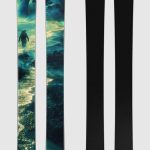
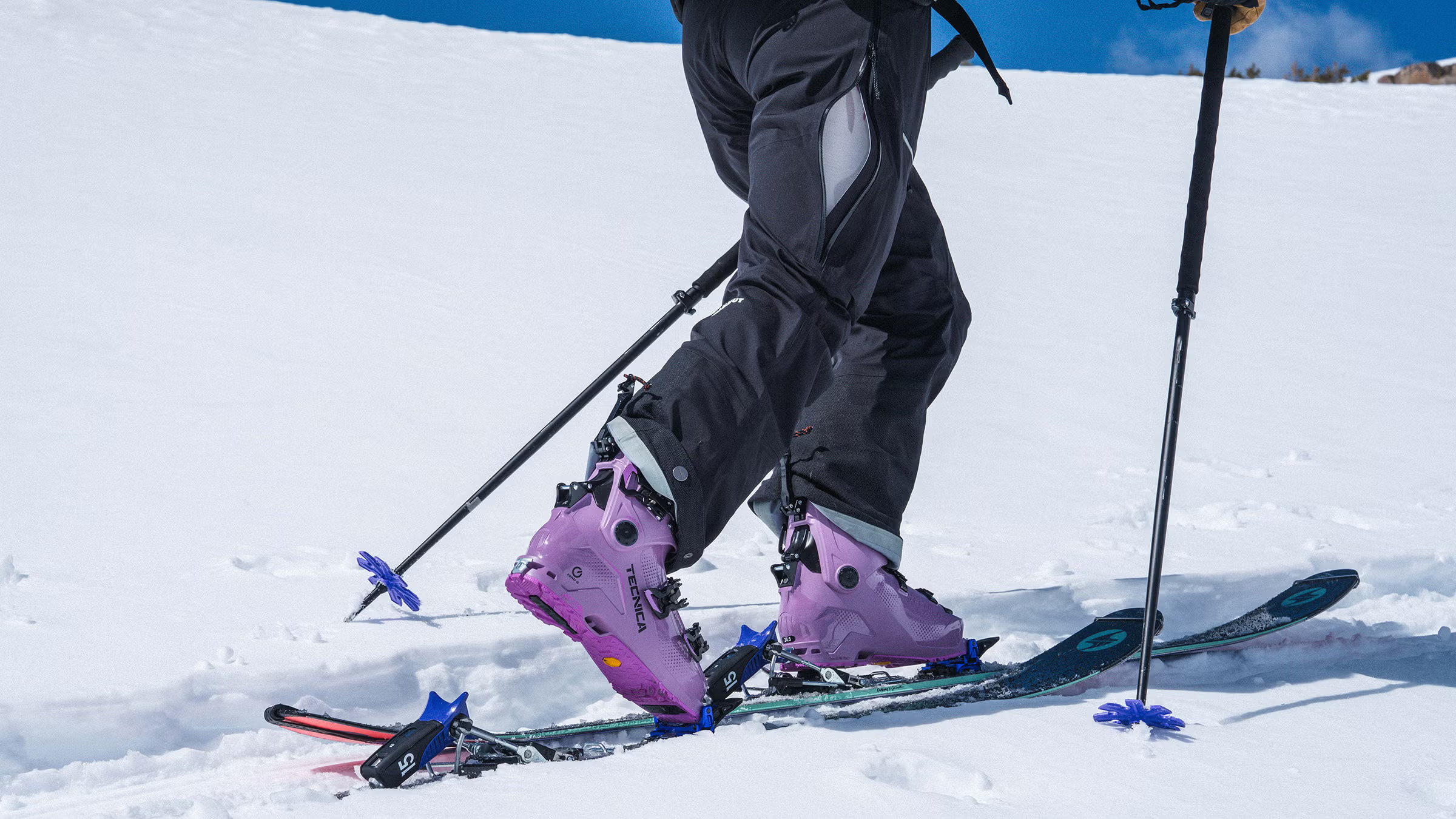
Then earlier this spring, I spent a week in the backcountry playground of Cooke City, Montana, testing a much burlier setup: the all-new Tecnica Zero G Decoy boots, paired with the Blizzard Canvas 108 ski and CAST Freetour 2.0 Pivot 15 bindings—a setup that weighed a burly 4,400 grams per ski (including boot and binding). After 14 miles and 12,000 feet of climbing over three days, I came home wrecked—and fully converted.
That trip changed how I think about touring gear. I’d always assumed lighter was smarter, and that you inevitably had to compromise some downhill performance. But skiing a heavy, confidence-inspiring setup reminded me why I go into the backcountry in the first place: for the skiing, dammit.

2027 Tecnica Zero G Decoy Pro GW
Price: $1,200 (coming fall 2026)
Weight: 1,650 g
Flex: 130
Volume: MV (99 mm)
Binding Compatibility: Tech, GripWalk
Pros and Cons
+ Excellent downhill performance
+ Doesn’t get knocked around in variable snow
+ Comfortable fit right out of the box
+ Anatomically sculpted liner
– Doesn’t walk as well as a dedicated touring boot
– Expensive
Tecnica Zero G Decoy: Built to Split the Difference
The Zero G Decoy is a brand-new model in Tecnica’s 2027 lineup designed to slot between two of the brand’s existing boots: the touring-specific lightweight Zero G Tour, and the inbounds-leaning, freeride-oriented Cochise. The Decoy design brief: ski better than a Zero G Tour, and walk better than a Cochise.

Anyone who’s spent time in either the Zero G Tour and Cochise will understand that goal. The Zero G Tour is light (1,285 grams per boot) and efficient, but its softer Grilamid shell and cable-style cuff buckles don’t give you much leverage over bigger skis or in variable snow. It gets you up the skintrack fast, but the descent can feel like a compromise. The Cochise, on the other hand, skis closer to a downhill boot thanks to a stiffer polyurethane shell and traditional cuff buckles, but it turns tours into a slog with its considerable weight (1,885 g per boot) and more limited range of motion.
The Zero G Decoy is an attempt to thread the needle. Weighing 1,650 grams, it’s a lean, 99-millimeter-lasted boot with a PU shell, four traditional buckles, tech inserts, and a Vibram GripWalk sole that’s compatible with all modern bindings. It’s the very definition of a hybrid backcountry boot, but unlike other hybrids out there (including the Cochise), the Decoy doesn’t make the same compromises.
How Does the Zero G Decoy Compare to Tecnica’s Other Backcountry Boots?

Testing the Tecnica Zero G Decoy in Cooke City
I arrived in Cooke City, Montana (elevation 8,127, population 77) in early April. Tucked against the Beartooth Mountains—one of the snowiest ranges in the Lower 48—Cooke serves up some of the best snowmobile-accessed backcountry skiing in the country. It made ideal testing grounds for a boot like the Decoy. To see what the boot was really capable of, I joined Blizzard Tecnica athletes Connery Lundin, Piper Kunst, and Tim McChesney—the very type of skiers the Decoy was built for—for three days of exploring Cooke’s sprawling backcountry by sled, skins, and our own two feet.
On Snow Performance: How Does the Decoy Ski?
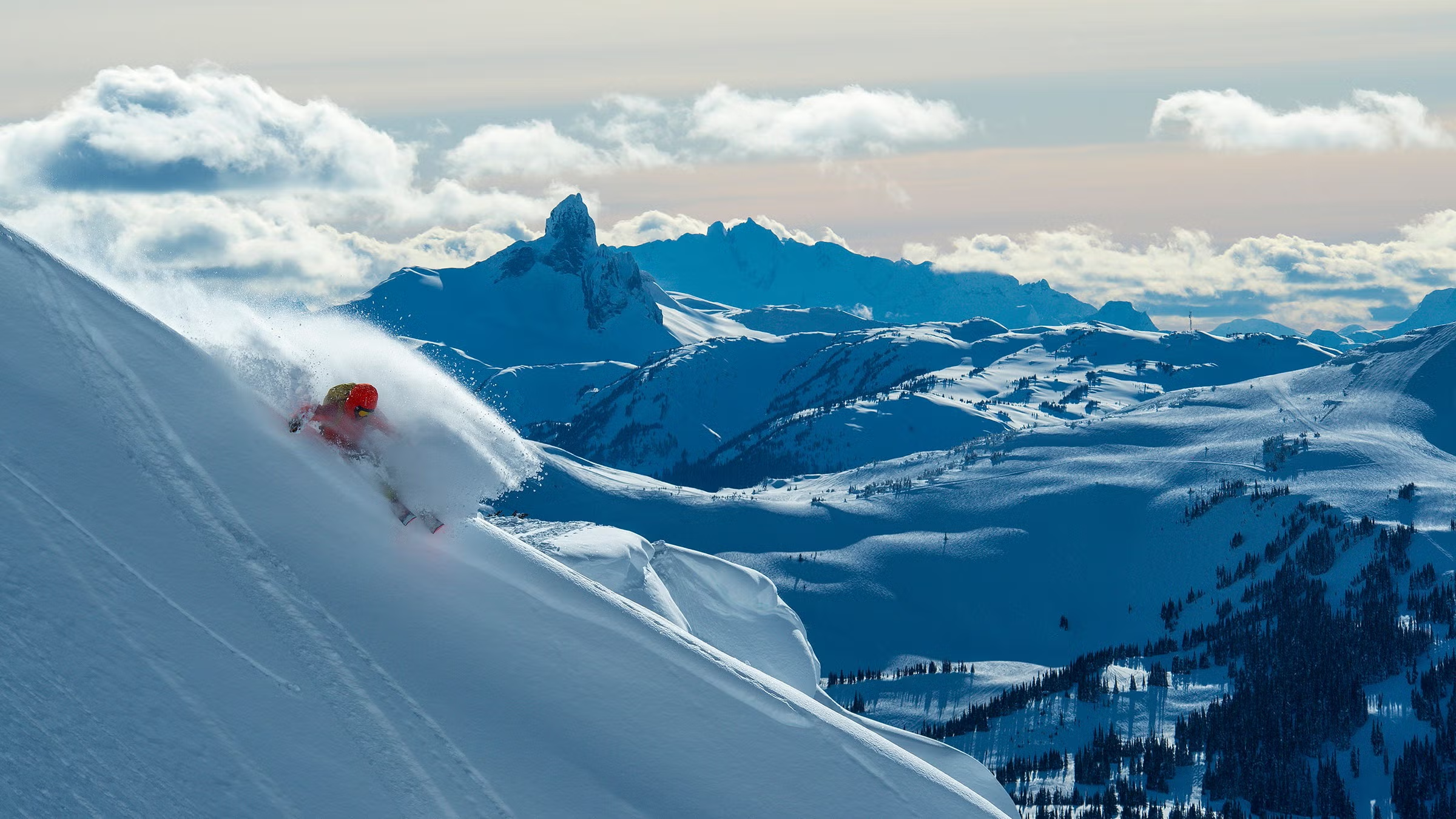
I could spend this entire review talking about Cooke’s mind-blowing terrain, but the important part is this: thanks to a stable snowpack, we got to ski some steep lines holding everything from creamy corn and cold winter snow hiding in north-facing chutes to sun-baked aprons littered with avalanche debris and sled tracks. Thanks to a recent heat wave that pushed temperatures into the upper 60s—even above 8,000 feet—the snow changed every few turns.

It was the kind of inconsistent conditions that normally has me skiing cautiously in touring gear, especially after three ACL surgeries. But after my first few turns in the Decoy, I stopped thinking about the boots entirely and skied the way I would on an alpine setup. Part of that was being clicked into the CAST Freetour bindings on the Blizzard Canvas 108, sure. But the driving force behind it all was the Decoy. Where lighter, softer touring boots tend to fold when pushed through mank or variable snow, the Decoy stayed composed and predictable.
The boot’s progressive flex, courtesy of its polyurethane shell and reinforced Power Frame construction, let me drive the skis aggressively and responded quickly when I needed to make quick stance adjustments when conditions got weird. Instead of forcing me to adapt my skiing to the limitations of a touring boot, the Decoy responded like a real alpine boot should.
As far as downhill performance goes, the Decoy nailed its assignment: not only does it ski better than the Zero G Tour, it skis better than the Cochise.
But How Well Does the Zero G Decoy Walk?
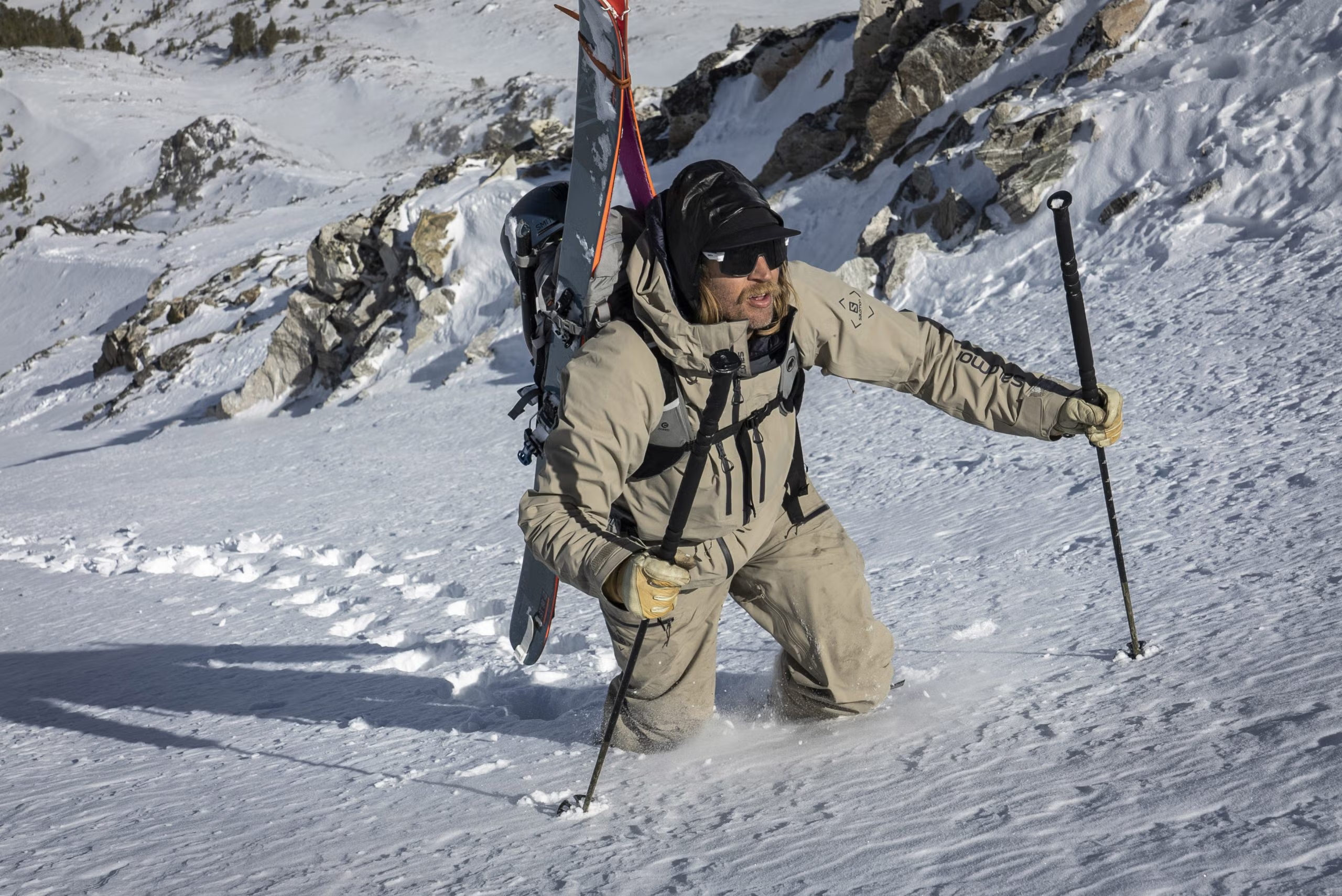
Though we did our fair share of sled skiing—getting bumps to the top of our lines courtesy of our guides and only bootpacking a few hundred feet to drop in—we also toured in the Decoy well beyond the “short tours” it was ostensibly designed for. On our second day, we climbed and skied Cooke’s iconic Fin, the peak towering directly above town. Seven miles and 3,000 vertical feet of climbing proved the Decoy can comfortably handle bigger days than Tecnica’s marketing might suggest.

A lot of that came down to the boot’s out-of-the-box fit (which is how I tested it). Built in the same 99-millimeter-lasted, medium volume mold as the Cochise, the Decoy fit my low-volume foot better than the Cochise ever did. I suspect the thicker polyurethane shell paired with Tecnica’s plush, anatomically shaped liner helped reduce the dead space I usually fight above my flat instep and around my heel. Even touring with the boots unbuckled, my feet stayed surprisingly secure.
Good fit gets you halfway there on the uphill. The rest comes down to range of motion. The Decoy uses Tecnica’s T-Hike mechanism, which connects the cuff and shell at two points to deliver 65 degrees of range of motion. That’s impressive for a four-buckle PU boot, but it still doesn’t move like a lightweight touring boot. Despite sharing the same claimed ROM as the Zero G Tour Pro, the Decoy’s stiffer PU shell and thicker liner requires noticeably more effort on the skintrack than the lighter, more malleable Grilamid construction of the Tour Pro.

Still, the Decoy gets the job done on the ascent. I managed to drag it to the top of the Fin, despite being seriously out of touring shape (this was my first and only backcountry outing of the season … in April). If you’re fit and technically efficient on the skintrack, the Decoy won’t hold you back. If you’re not—and I wasn’t—you’ll feel the extra weight and friction.
That’s the biggest tradeoff with the Decoy: it’s capable on the skintrack, but not forgiving of fitness gaps the way a lighter boot like the Zero G Tour is.
Why I’m Never Going Back to a Lightweight Touring Setup
Standing there on top of the Fin, that was my epiphany moment: I’m OK with compromises in backcountry gear, as long as what gives is the uphill and not the downhill. I’ll willingly slog up mountains on heavy gear if the payoff means skiing the way I actually want to ski.
When you first get into backcountry skiing, people have a way of convincing you that lighter automatically equals better. And for some skiers, it probably does. But what often gets left out of that conversation is how much you give up on the descent, especially in variable snow.

Now, having swung in the opposite direction with the Decoy, CAST Freetour binding, and Canvas 108 ski, I’ve finally understood what type of backcountry skier I am: I’m not the gram-counting skimo type (never a doubt in my mind), and I’m apparently not the Goldilocks type, either. I’m the “I don’t care how much this weighs as long as it lets me ski for real” type.
I still think there’s room to fine-tune the system—I’m not convinced the CAST Freetour is my forever binding because, frankly, that thing is a beast and I’m not nearly fit enough to pretend otherwise. But the Decoy is now my go-to backcountry boot, whether I’m going for a quick skin or multi-hour tour. Because at the end of the day, I’m in the backcountry for the skiing, dammit.
The 2027 Tecnica Zero G Decoy Pro GW and Decoy 115 W GW will hit shop shelves in fall 2026.