Published May 11, 2026 03:01PM
Whistler Blackcomb is a behemoth. It is one of the largest ski resorts in North America and consistently ranks among the top 10 largest on Earth.
For years, Whistler Blackcomb’s size intimidated me, and I avoided planning group ski trips there because it felt overwhelming.
This March, I decided to tackle the giant alone. My logic being if I were to get lost, at least there wouldn’t be anyone else to blame. Plus, my passport was burning a hole in my pocket, and I was ready for a solo adventure. That’s how I learned firsthand that skiing Whistler Blackcomb isn’t as formidable as I anticipated. In fact, I learned the opposite may be true.
The Mountain:
In 1997, Whistler Mountain and Blackcomb Mountain merged to create what is today known as Whistler Blackcomb. The two resorts, which hosted mountain athletes during the 2010 Vancouver Olympics, were acquired by Vail Resorts in 2016.
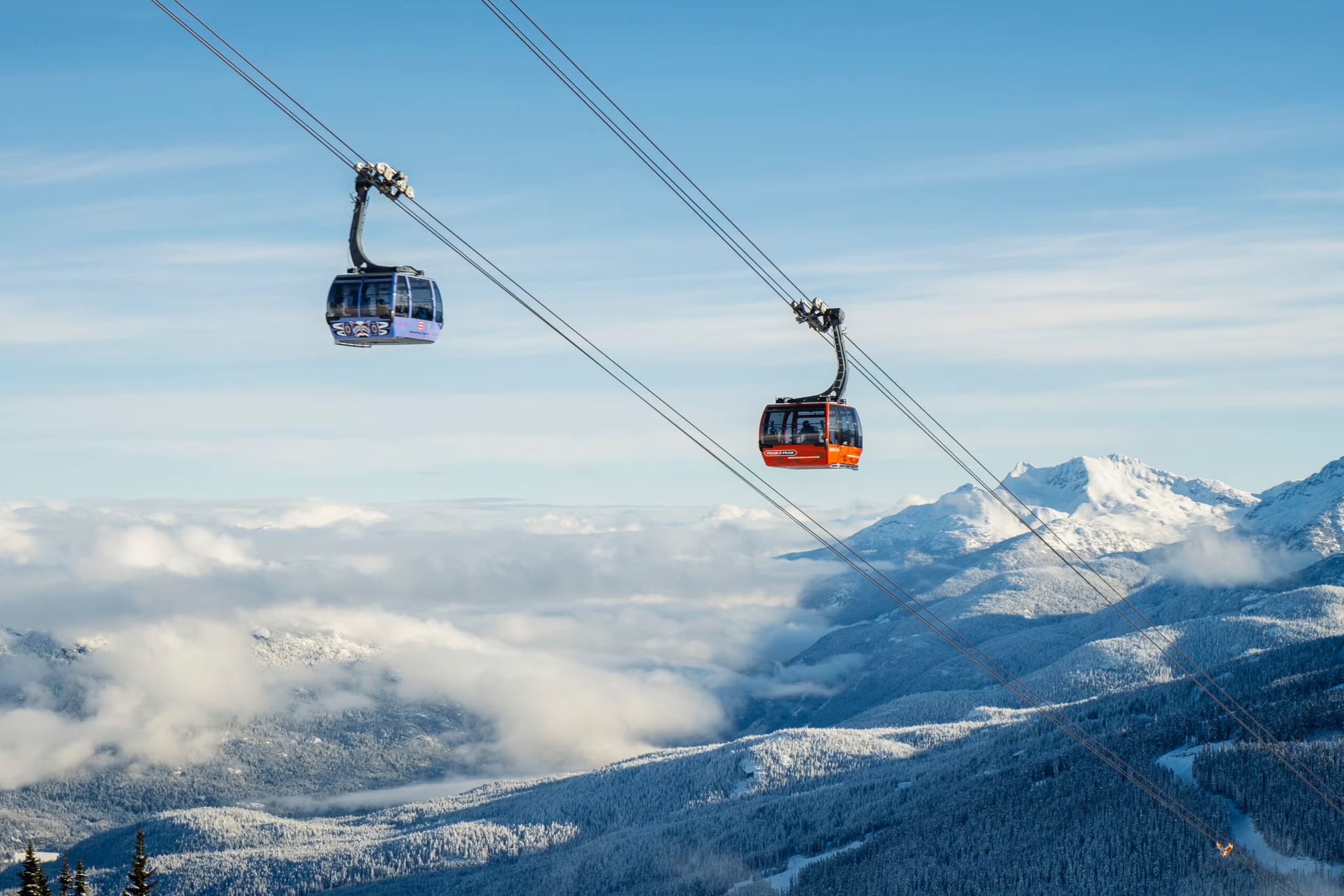
Whistler Blackcomb occupies 8,171 acres and offers skiers over 200 trails served by 36 lifts, including the iconic red Peak 2 Peak Gondola, the world’s longest continuous lift system.
Of the 200-plus trails, 20 percent are beginner-friendly, 35 percent are for intermediates, 25 percent are for advanced skiers, and 20 percent are for experts only. There are also 16 marked bowls, three glaciers, and three terrain parks. The resort receives about 400 inches of snow a season. While the Pacific Northwest climate brings frequent bouts of rain and slushy, wet snow to the village, much of this precipitation is snow as you get higher up.
With all of this terrain at my fingertips, I was a bit unsure where to start. But, like most things in life, the best way to explore is to just get out there and figure it out. I began at the gondola closest to my hotel, the Excalibur Gondola (which I had mistakenly believed to be the Blackcomb Gondola at the time). I spent some time skiing around on the Blackcomb side, notably the runs off the Jersey Cream Express, before heading down to the base to try the Whistler side.
After a short walk to the Whistler Village Gondola, I settled in for the 25-minute ride to the summit—the perfect window to study the trail map. At the top, I was greeted by the famed Olympic rings, a sea of Canadian flags whipping in the wind, and the terminus of the Whistler side of the Peak 2 Peak. I also found the Corona Mountaintop Lodge, a perfect spot for food and panoramic views (though visibility was near zero during my visit).
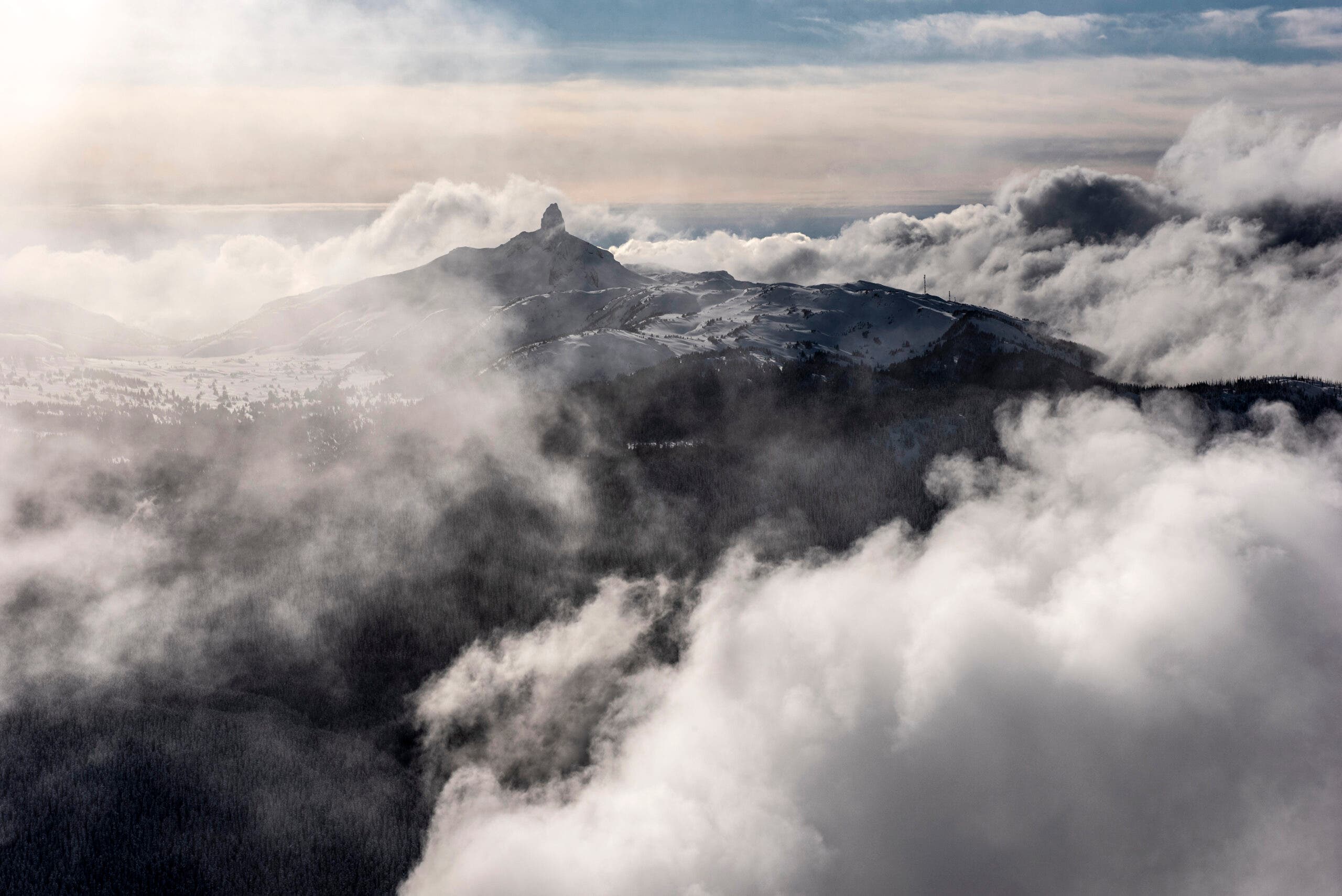
One aspect of skiing in Whistler that surprised me was how accessible most areas were to skiers of different abilities, allowing guests of all levels to navigate the mountain together—practically every lift offers at least one green run. There’s even a green bowl off Whistler’s Emerald 6 Express.
Since the visibility was poor (a common occurrence at the top of the mountains due to the region’s maritime climate), I spent the majority of my day dodging the fog by skiing through the trees off the Garbanzo and School Yard lifts. When the weather cleared marginally, I hopped on the Peak 2 Peak to the Blackcomb side to explore the Glacier area. I rewarded my efforts with a gluten-free waffle, a rarity in the world of on-mountain dining, at the Crystal Hut, located right next to the Crystal Ridge lift.
Throughout the day, I picked the brains of locals to find out what truly set each mountain apart. The consensus was that Whistler is slightly more family-friendly, while Blackcomb appeals to a more hardcore crowd. However, in my experience, both mountains offer more than enough variety to satisfy either group and everyone in between.
The Town:
Whistler Village is a walkable, pedestrian zone filled with hotels, shops, restaurants, bars, and even a few mini supermarkets. It has everything skiers may need, and a whole lot more.
Having skied other Vail-owned resorts before, I expected the village to mirror the manicured, uniform style of resorts like Beaver Creek. Instead, I was pleasantly surprised by the number of locally owned establishments, and if you’re hoping for après-ski ramen or fresh sushi, you’ll have no shortage of options.
Getting There:
Whistler Blackcomb is a little under two hours away from Vancouver, B.C. There are plenty of options to get to the resort from Vancouver, including airport shuttles, private shuttles, and public buses. You can rent a car, but between all of the shuttle options and the walkable village, you won’t need one. Plus, the drive along Highway 99 (Sea-to-Sky Highway) is so stunning you’ll want both hands to reach for your camera.
Where To Stay:
Like most ski towns, there is no shortage of accommodations. I stayed at the Pan Pacific Whistler Mountainside, which gave me ski-in/ski-out access to the Fitzsimmons Express, Excalibur Gondola, and Whistler Village Gondola. There’s a second Pan Pacific Hotel, more centrally located in the village, and something to note is that the two hotels share amenities. Mountainside has a gym while Whistler Village has a spa. Guests of the two are welcome to use the facilities in both locations. My favorite part (offered in both) is the complimentary après hours, where non-alcoholic beverages and a wide variety of snacks are served.
If you choose to stay further from the village, some shuttles run throughout the area and bring skiers to the resort bases and into the village.
Where To Eat:
Whistler Village has hundreds of dining options and markets (even specialty Japanese grocery stores), so even the pickiest eaters won’t go hungry. The Dubh Linn Gate Irish Pub offers no-frills Irish comfort food accompanied by live music. It’s directly next to the Excalibur Gondola, so you can go straight from the slopes to your Guinness. For lively tapas and small bites, I loved Bar Oso, and if you’re looking for a classy space that serves a bit of everything, there’s also an Earl’s (I recommend the truffle sushi).
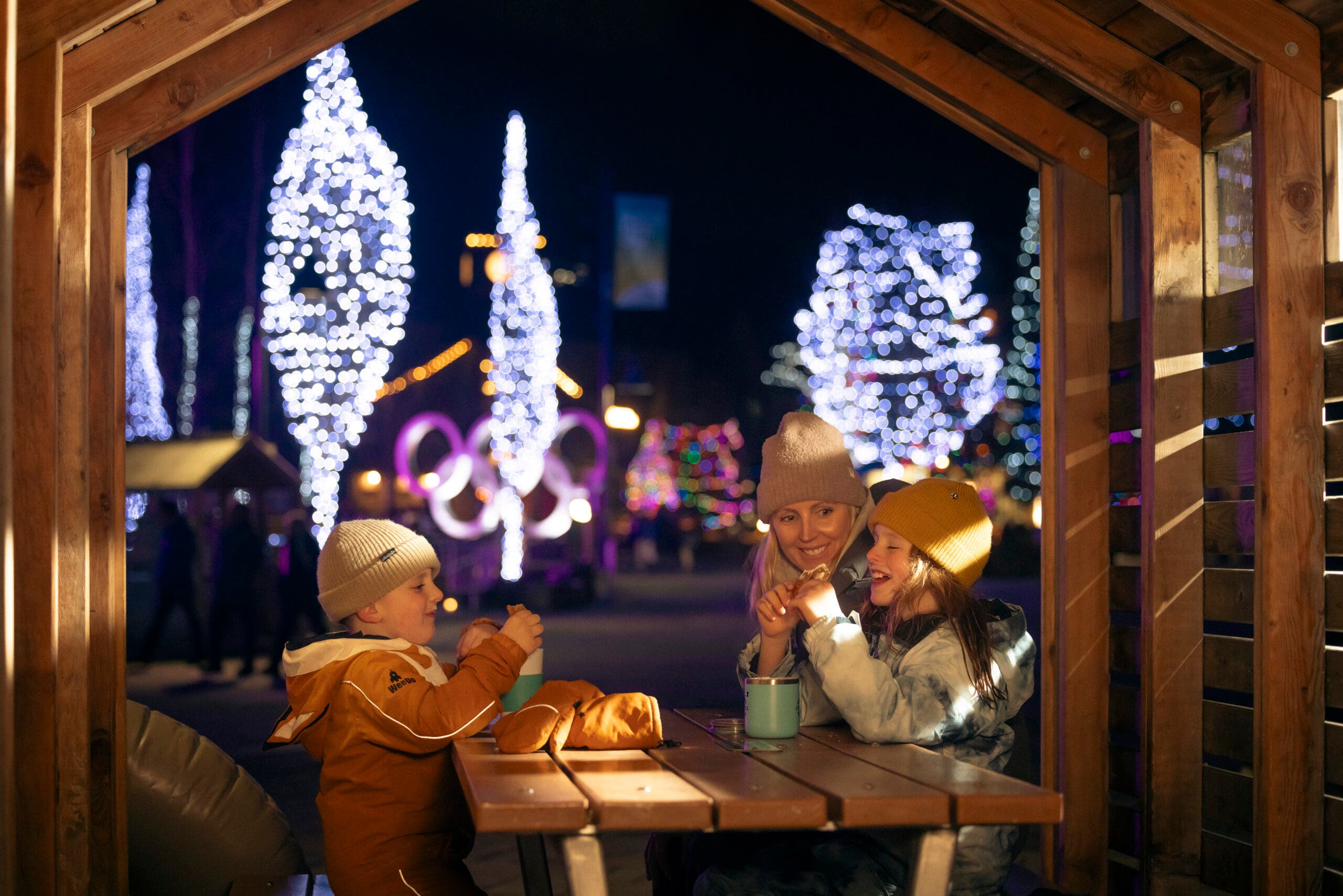
For morning coffee, check out Provisions or Forecast Coffee. Unsurprisingly, both can be crowded before the lifts open, but you can order in advance online.
Where To Après:
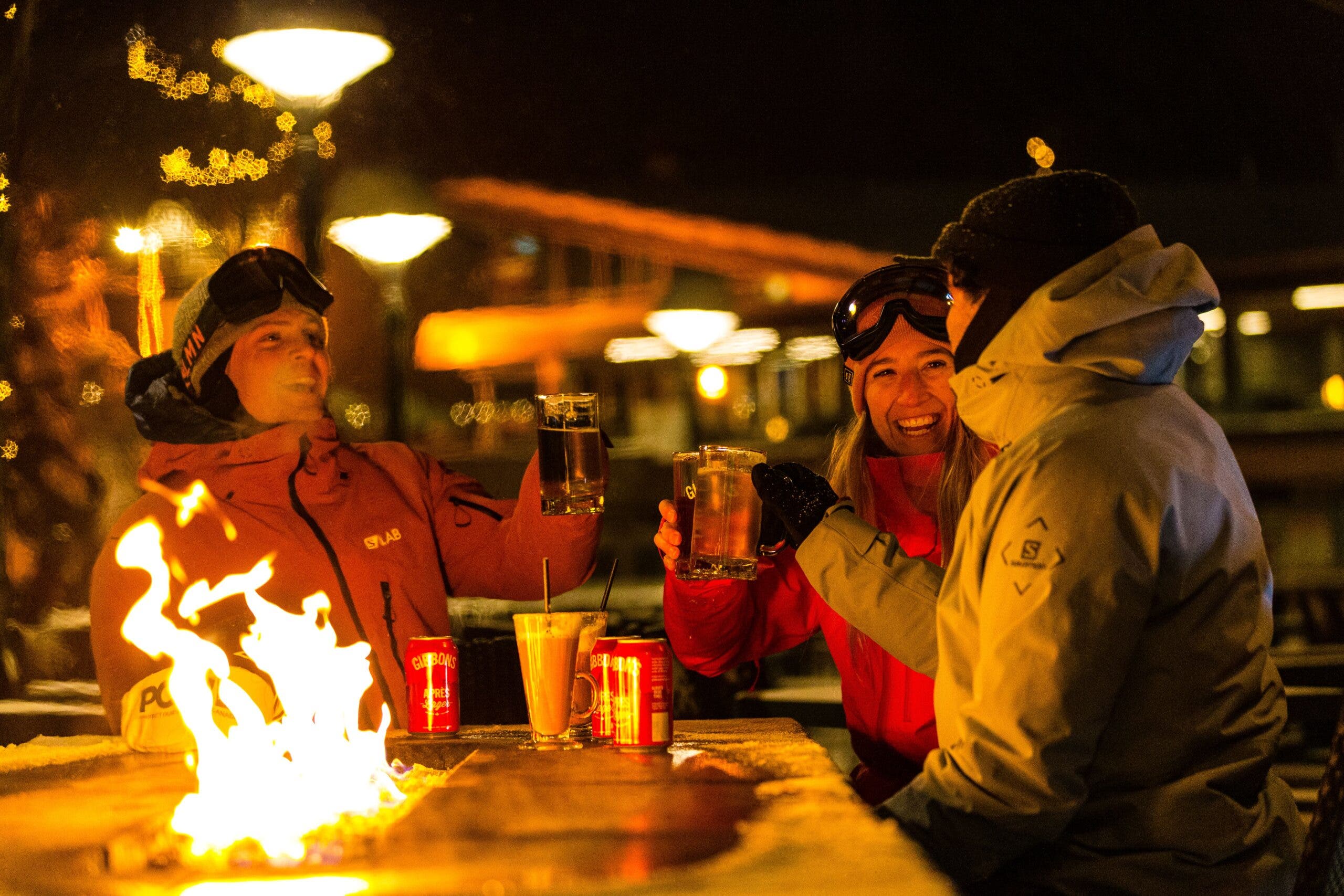
You don’t need to look hard to find a raucous scene in Whistler Village, especially if you’re looking to party Aussie-style. Live music, table dancing, and disco balls are common sights and sounds in Whistler Village. Longhorn Saloon by the base of the Whistler Village Gondola has all of the above, plus champagne showers and a big stage for performances. Above the Whistler Gondola is the Garibaldi Lift Co. Bar & Grill, with a massive indoor stage, food, drinks, and plentiful people watching down below.
If you prefer to dance sans ski boots, Buffalo Bills and Moe Joe’s offer the best late-night club scenes
Sidequests:
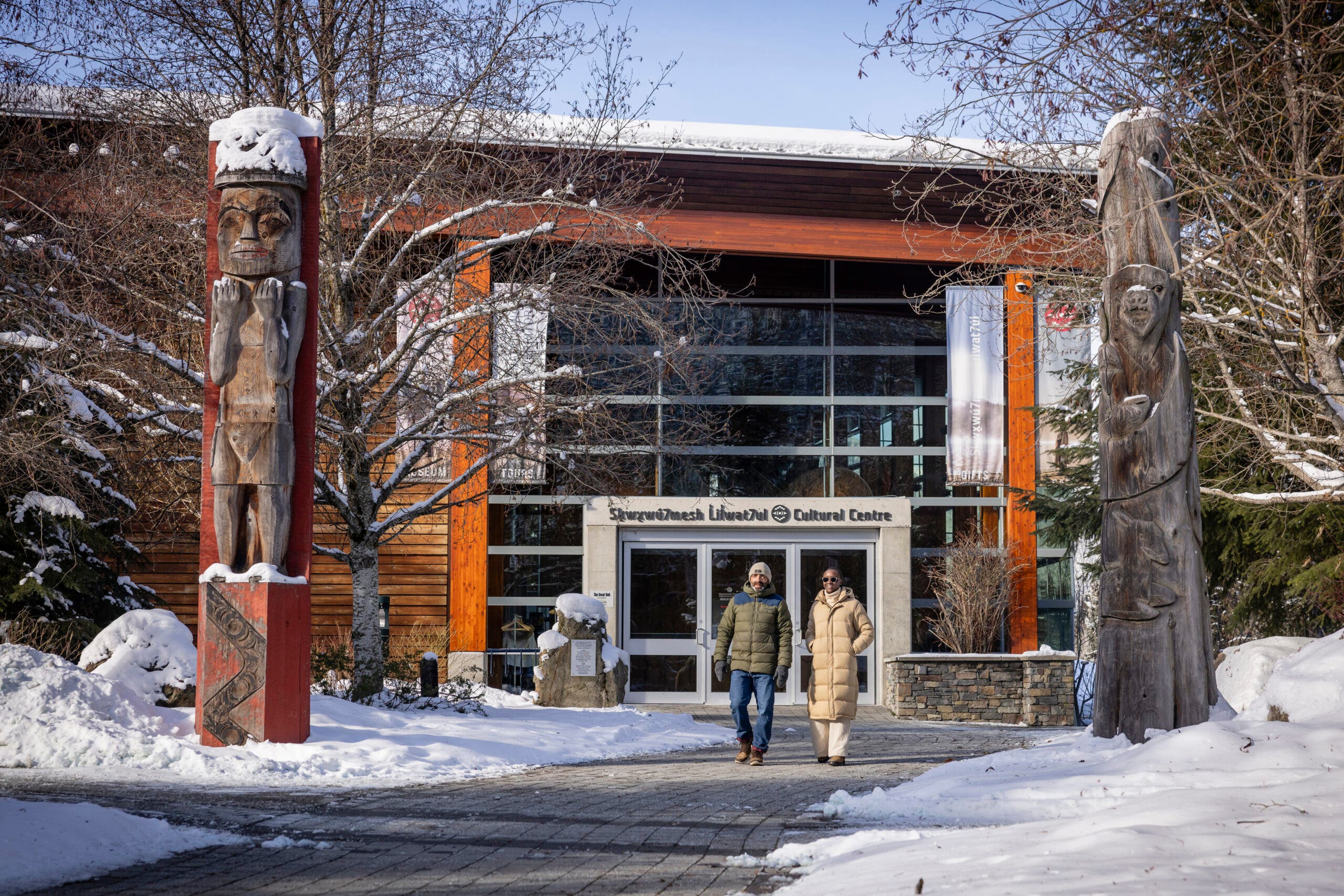
Take a day off from skiing and walk along Whistler’s Cultural Connector Path. This scenic stroll links the Squamish Lil’wat Cultural Centre, Audain Art Museum, and Whistler Museum. You can also restore your aching muscles (or hangover) by doing a red light therapy massage at the Pan Pacific Spa, or if you’re craving something a bit more adrenaline-inducing, take a ride at the Whistler Sliding Center—the country’s only bobsled run open to the public.
Worth a return?:
Decidedly, yes. I feel as though I’ve only scratched the surface of what this resort has to offer. Given the low visibility during my trip, I’m already planning a return to chase those elusive bluebird skies—or at least conditions clear enough to actually see the view from the Peak 2 Peak Gondola.