Even experienced skiers can miss one of the most important details in bootfitting. I did for decades.
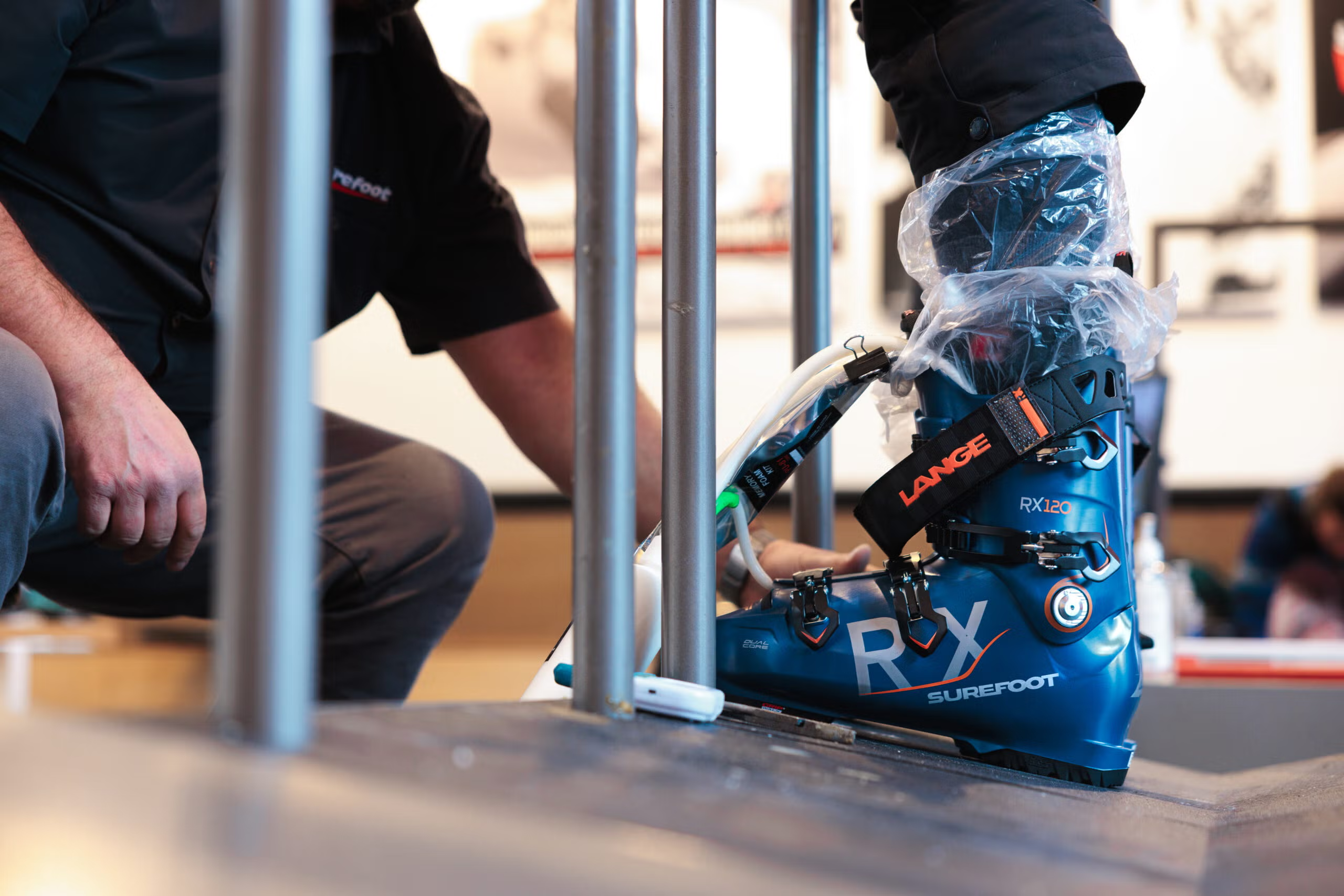
(Photo: Courtesy of Surefoot)
Published May 15, 2026 07:00AM
I’m about to really embarrass myself. I’ve been skiing since grade school, have raised three amazing skiers, and, as SKI’s Executive Editor, I’ve practically built my life around the sport. Yet I recently found out a critical piece of information about what’s arguably my most important piece of ski gear: I’ve been wearing the wrong volume ski boots for the last few decades.
Oof.
Despite assigning many bootfitting stories for SKI, talking with boot experts, and editing countless boot reviews in our annual Gear Guides, I never connected the dots about why my ski boots never seemed to fit quite right.
In my defense, it wasn’t glaringly obvious. My boots always felt snug—“like a firm handshake,” as the bootfitters like to say. There were no hot spots or huge gaps between my foot and the liner. And my boots never stopped me from skiing steep terrain or enjoying epic powder days. I just never seemed to be able to take it to the next level.
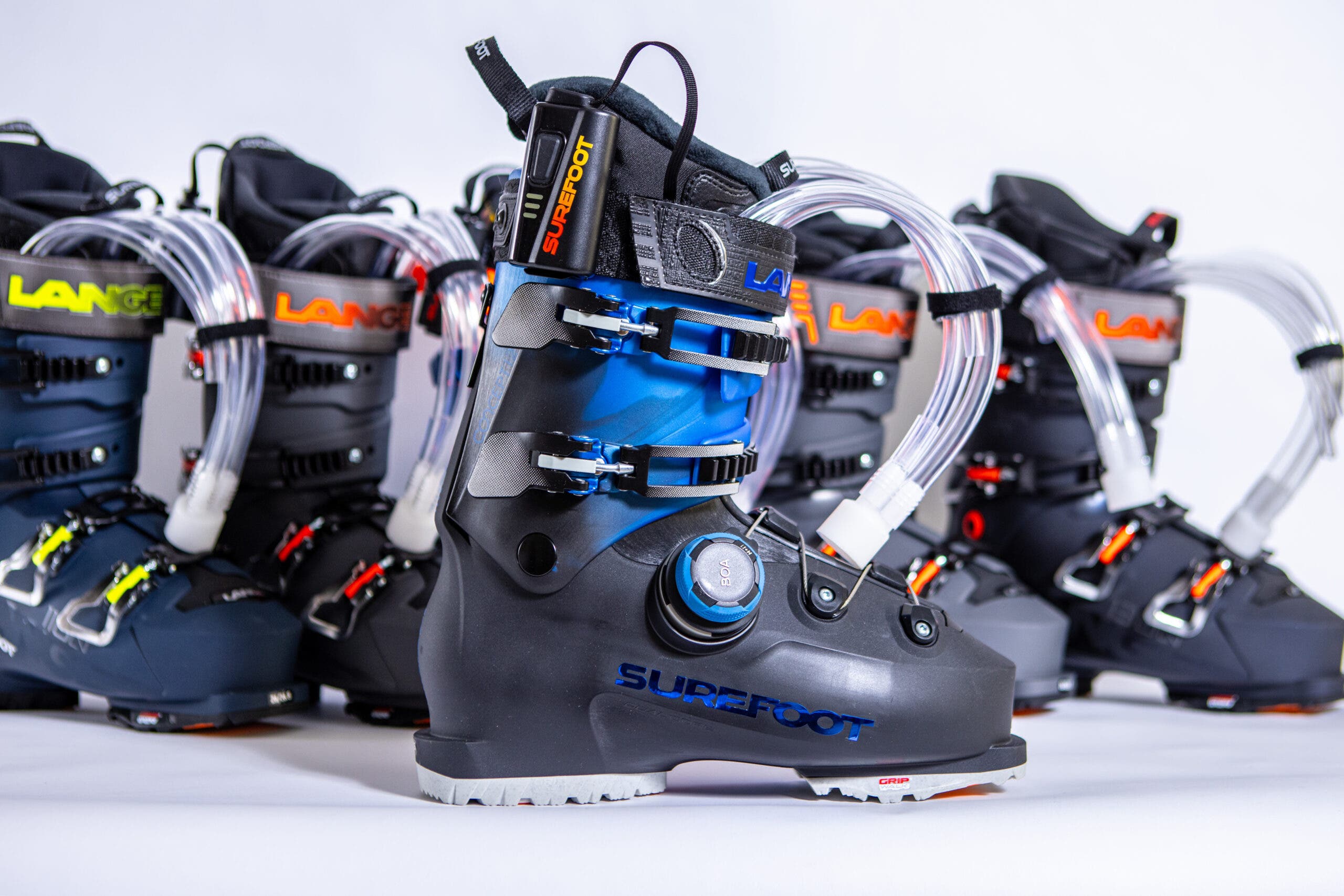
Of all of the ski boot metrics, volume is perhaps the most overlooked—and the easiest to get wrong. There’s so much focus on shell size and flex that volume ends up an afterthought. Part of the issue is that ski boots are such a different type of footwear than we’re used to. Even a pair that’s technically a bit too big for your foot will still feel tight, because we’re simply not used to something so formfitting. Heck, my go-to street shoes are my Birks and Uggs—you get the idea.
So how did I finally figure it out? In November, I got a new pair of ski boots—my first with a BOA closure, which I thought would really help lock down my heel and give me the performance I was seeking. I took them up to Vail in December for their first turns, and despite what felt like a firm, perfect fit, I still didn’t have the level of control I was hoping for. Down in the village, I took the boots into a Surefoot store to see if a custom footbed or liner was the solution to my problem.
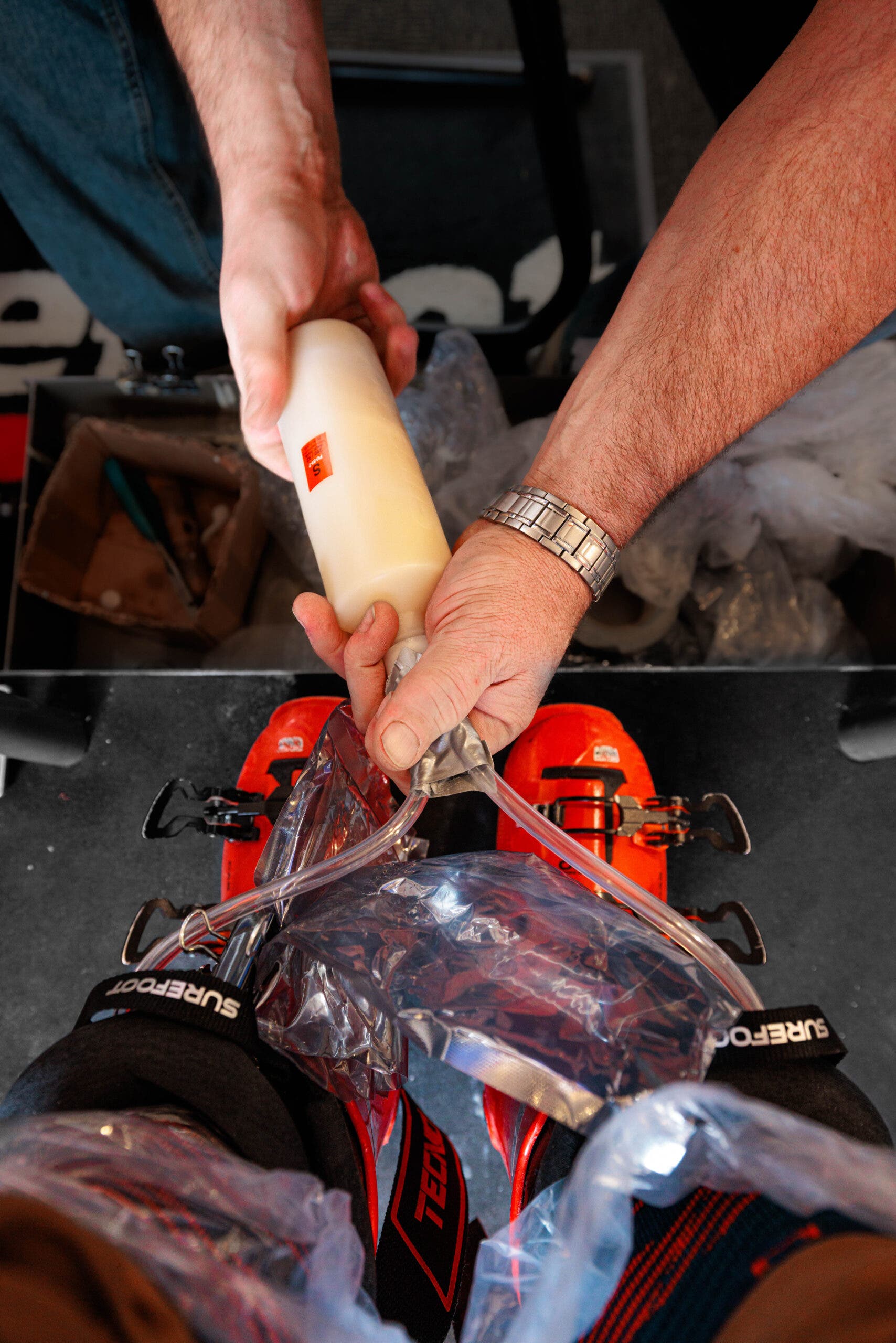
Founded in 1982 by Park City’s Bob and Russ Shay, Surefoot was created to solve a problem the brothers had experienced firsthand: painful, poor-fitting ski boots. As lifelong skiers and racers, the Shays believed skiers needed customized boots rather than one-size-fits-all gear. They pioneered custom ski boot fitting technology and currently have 30-plus stores across North America and Europe.
The Surefoot bootfitting process consists of three steps: a digital scan and foot evaluation; the creation of a custom insole; and the molding of the boot liner to your foot and lower leg. Each step is critical in creating the perfect fit, but it was the initial 3D scan that revealed my underlying issue: low-volume feet with narrow heels.
Have I ever been fitted in a low-volume boot, my Surefoot technician asked. Never, I replied. “Oh yeah,” he smiled. “That’s going to make a big difference.”
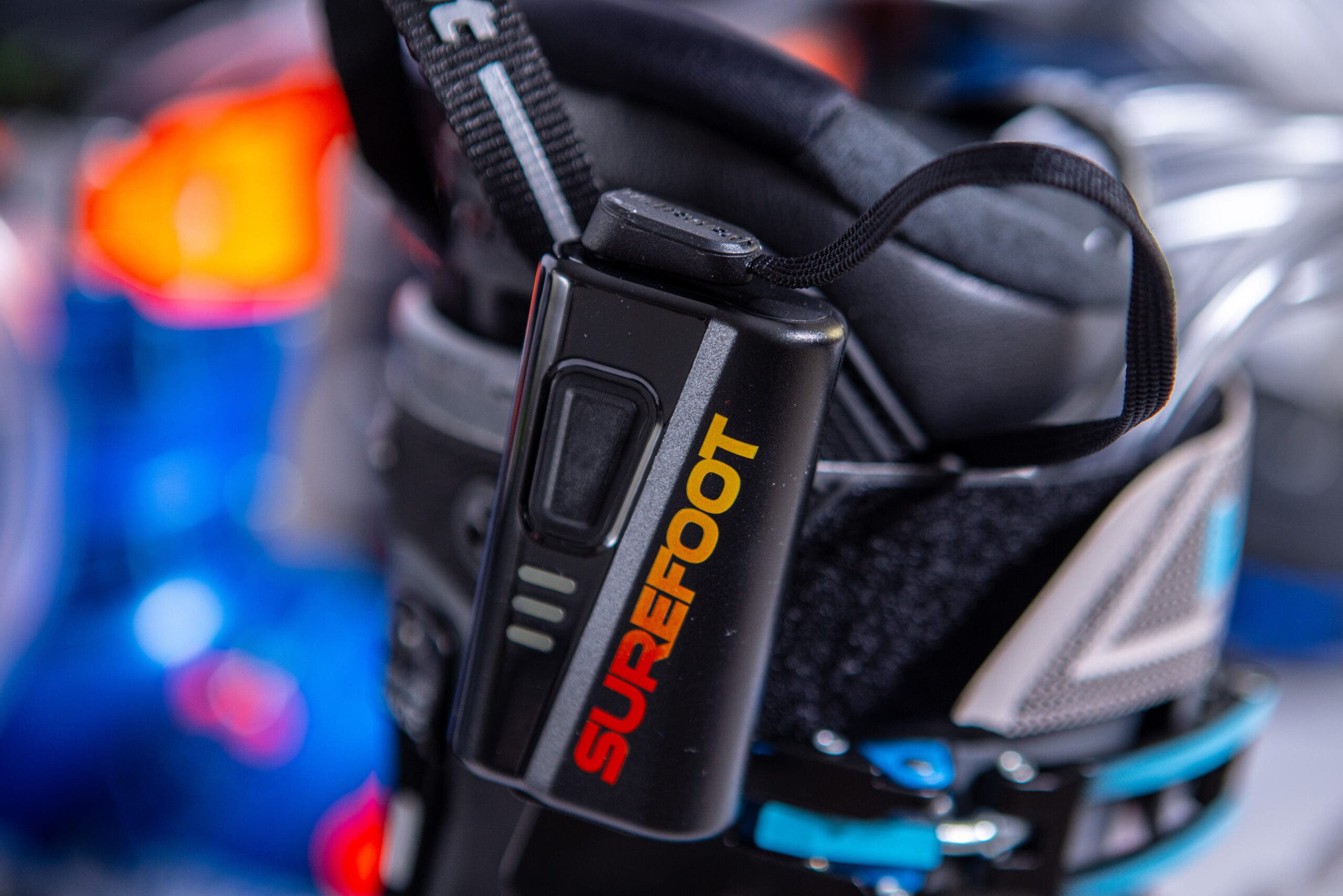
The process from start to finish took about an hour, and I walked out with my first pair of low-volume boots with a custom liner and removable insole that I can use in other performance footwear. All Surefoot boots and liners also come with bootheaters included—a huge bonus for my always-cold toes.
I skied in my new Tecnica Mach1 LVs for the rest of the season, and while the difference was subtle, it was definitely noticeable. I still have a little bit of heel lift—darn skinny heels—some of which a Surefoot technician was able to address with wedges to narrow the heel pocket. (You can go to any Surefoot location for complimentary modifications or fit tweaks.) But overall, my boots conform perfectly to the lumps, bumps, and unique features of my feet, and I finally know what a proper-fitting boot feels like.
What’s more, I’ve never had more control over my skis in dicey or tough terrain, which is great for my confidence. I still need to improve my technique in really tough terrain, but I feel like I have the right tools to finally level up. I want to ski for another 25 years, and that actually feels like a viable option now. Probably not in these specific boots, but now I know what I’m shopping for when it’s time for the next pair.