The skier in front of you may be slow, unpredictable, or making wide turns. It doesn’t change the most important rule on the mountain: You are responsible for avoiding people downhill of you.
(Photo: Getty Images)
Updated July 24, 2026 01:10PM
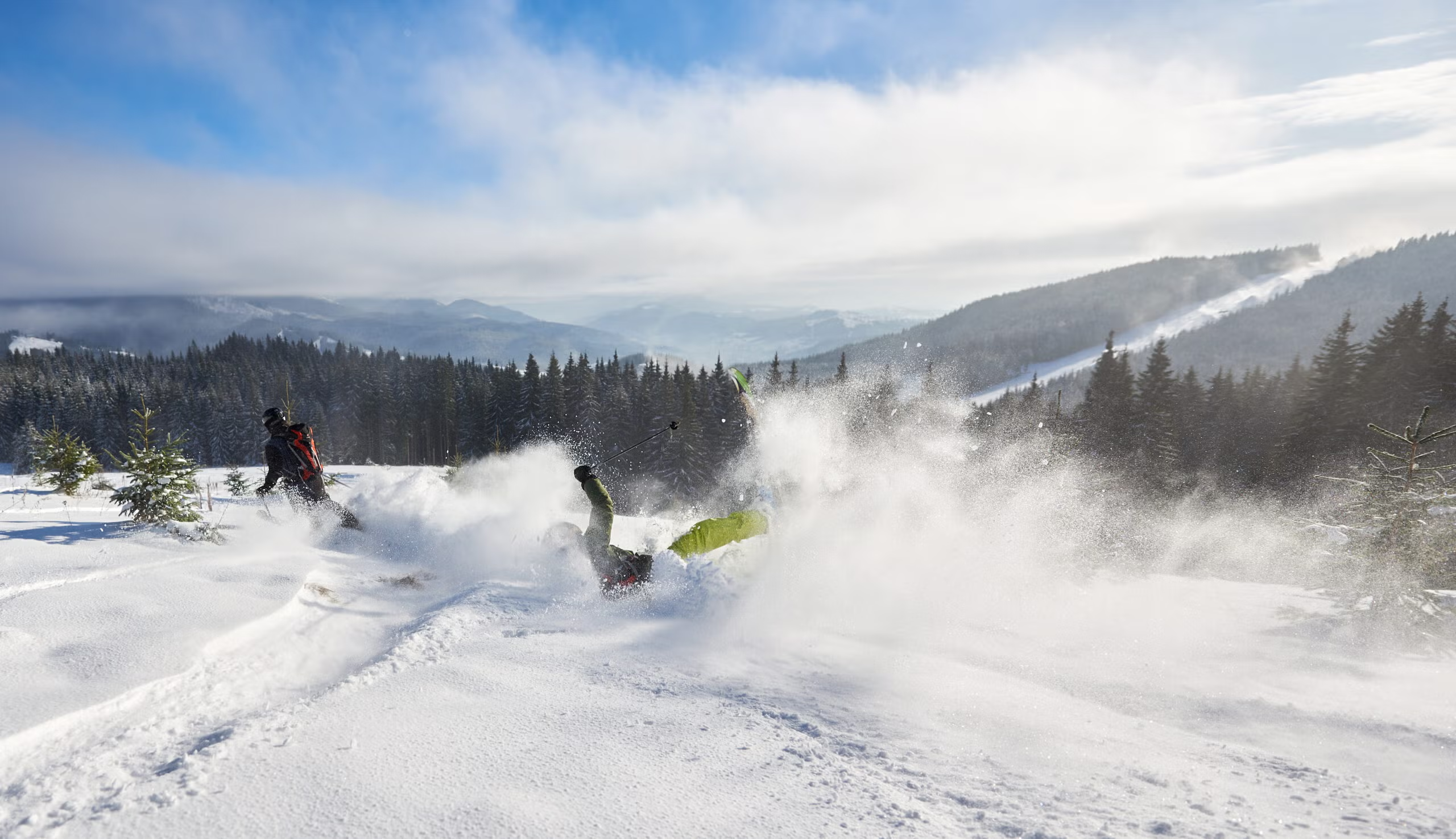
Have you ever scrolled on social media and come across a video of a on-slope collision accompanied by someone asking “Who’s at fault?” It’s typically a yard-sale type of affair where a skier or snowboarder has come from behind and completely taken out the other person in spectacular style. These are often shocking to watch—and possibly PTSD-inducing if you’ve ever been involved in one of these collisions.
In most of these cases, including the widely circulated reel below, it’s pretty obvious who had the primary responsibility to avoid the collision: the uphill skier. (Snowboarder, in this case, but it could have just as easily been a skier.) Per the National Ski Areas Association’s Skier Responsibility Code, “people ahead or downhill of you have the right of way.” You wouldn’t know it from reading the comments, though.
Downhill skiers who ski too slow, make wide, sweeping turns, or even swerve unexpectedly take the brunt of the blame from frustrated experts bee-lining to lunch. That makes sense, given that the bulk of skier-on-skier collisions take place on the less challenging slopes that funnel down to the base.
Experienced skiers get annoyed with newer skiers and learners as they master the basics of the sport, practicing linking turns and checking their speed by cutting clear across the slope. Experts often feel like they’re just minding their own business, carving their way down the mountain, when suddenly a slower skier appears in their line. But skiing is not a video game with a clear path and stationary obstacles, and other people are not roadblocks to navigate around at the last possible second.
Also Read: How I Forgave the Snowboarder Who Ended My Ski Season
Here’s where I’d actually argue that the better skier you are, the more responsibility you have. Even if you are “minding your own business,” it’s not a defense—especially when you’re the more experienced skier with the ability to give a wide berth, easily change direction, and stop on a dime. After all, the alternative—keeping learners off the terrain they need to ski to get better—isn’t a viable option. We were all beginners once.
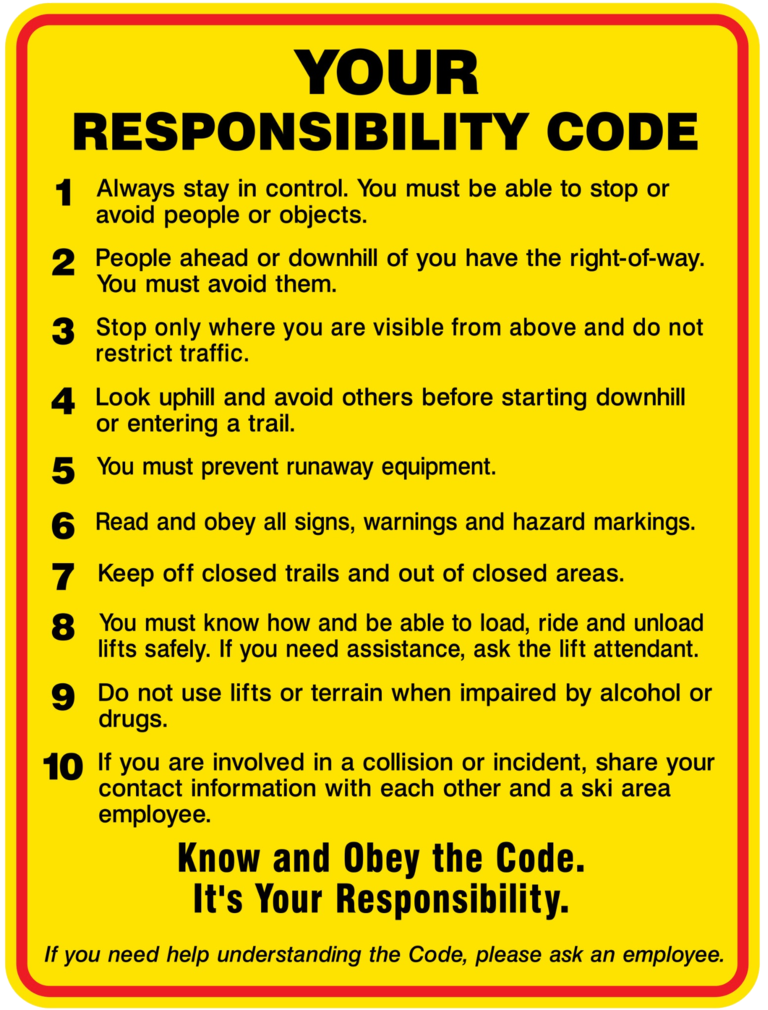
Does this mean the downhill skier can do whatever they want? Of course not. There are certainly things a downhill skier can do to contribute to—or even cause—a collision. Stopping in the middle of a run, especially below a blind rollover, is one example. Skiing out of control is another. I would love to see every new skier receive basic instruction on slope etiquette and safety, but with lessons priced beyond the reach of many beginners, that feels like a pipe dream.
So in the absence of any professional instruction, we will continue to rely on the Skier’s Responsibility Code and its 10 bullets—the first three being the most relevant to this argument. Review it, share it, and remember that the people in front of you—even when they do stupid, unpredictable things—don’t have eyes on the back of their helmets. Ski in control, give people plenty of space, and do whatever it takes to avoid co-starring in an Instagram collision reel this winter.