Updated July 28, 2026 04:54PM
Though skiing has always been a privilege and not a right, there was once a time when it was a much more accessible privilege. When my uncles grew up skiing in Maine in the 1960s, a day pass at Sunday River was a couple hours of wages, even with an entry-level job. Since those hallowed days, the cost of everything—gear, food, lift tickets, accommodation—has skyrocketed.
Fortunately, while the Alps have also seen costs increase in this time frame, prices just haven’t kept up with the United States, Canada, or Australia. And of course, the Epic and Ikon megapasses and the Indy Pass offer more cross-continental coverage than ever, eliminating a major expense for many travelers.
For the budget-conscious traveler, it’s not a fantasy to do a ski trip to the Alps for less than $100 a day (outside of airfare), especially if you already have lift tickets covered by your season pass. Those are positively foolish numbers to throw around in the U.S., but it’s still possible in the Alps.
One of my favorite things about Europe is that, if you’re slightly flexible, there always seems to be at least one affordable option. I’ve been skiing on a budget here for years, and here are a handful of tips I gathered along the way.
Choose Your Destination Wisely
In the hierarchy of budget-friendly Alps countries, it generally goes like this: Italy → France → Austria → Switzerland
Most Americans would probably guess that Italy is cheaper than Switzerland, but I’m not sure they understand just how much cheaper. In my experience, lodging, groceries, eating out, and lift passes are just 50-75 percent of the price in Italy compared to Switzerland.
But the difference is even more profound when you look at specific staples. A spectacular shot of Italian espresso will run you about $1.50, compared to $5 for coffee in Switzerland. Similarly, a baguette in France is also generally $1.50, whereas bread in Switzerland will run you north of $5, and it won’t even be as good.
Travel in April
April is the discount season in the Alps. Accommodation is often 50 percent of what you’ll find in the high season and lift passes are sometimes discounted as well (though not by half).
The Alps are farther north than most ski resorts in the U.S. while still having altitude, and therefore the winter season hangs on longer. Some years, the best conditions are in April—good snow cover, spring skiing, or cold storms are all possible, especially at the higher megapass resorts like Chamonix, Zermatt, Les 3 Valleés, and Andermatt. The warmer air of spring holds more moisture to release during storms. In France, the phenomenon is known as “Janvril”—the offspring of Janvier (January) and Avril (April).
On the other hand, sometimes April is terrible. Expect variability. That’s one of the reasons it’s cheaper (in addition to the fact that people are just tired of winter by that point).
Use Public Transportation
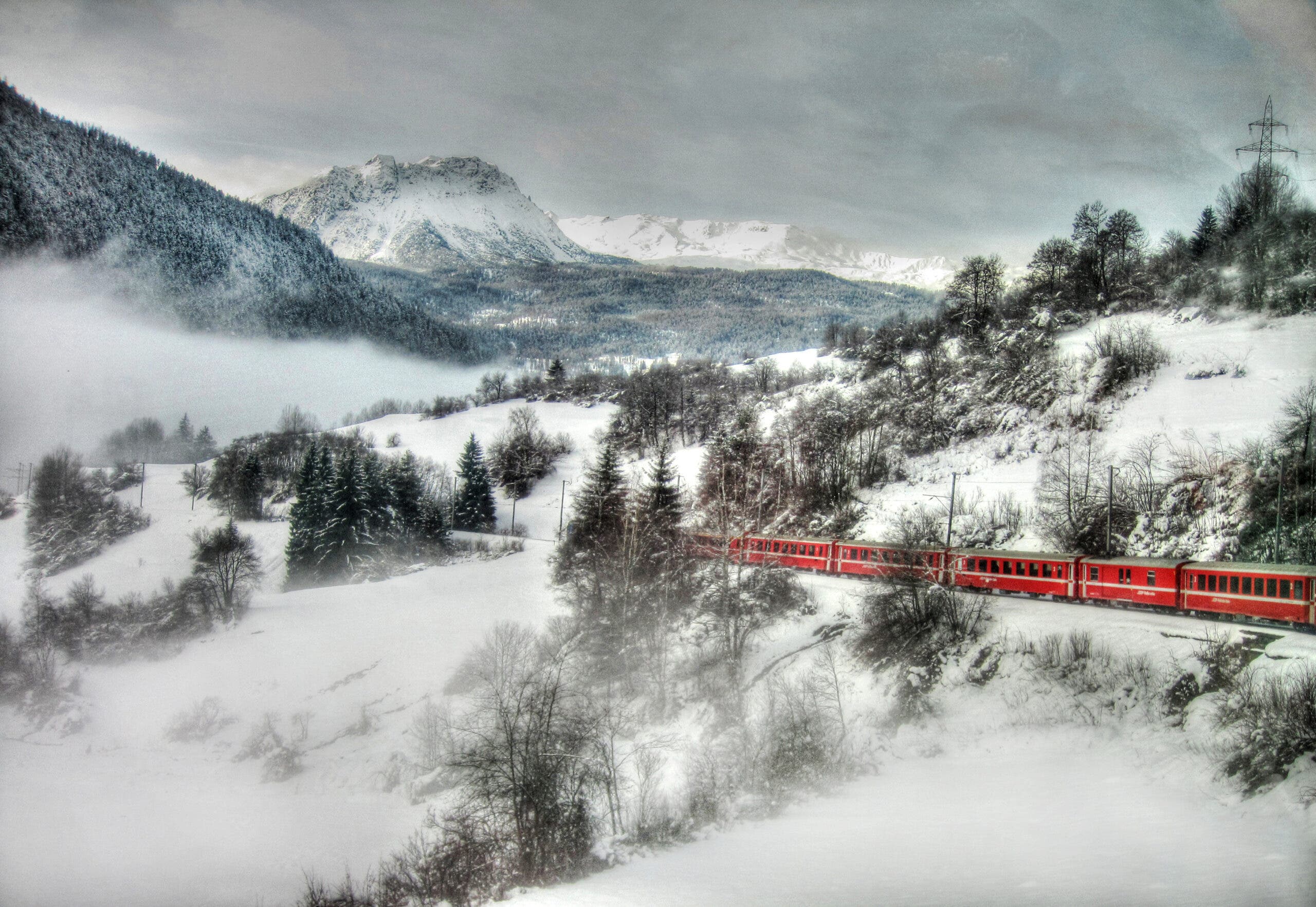
Public transportation in the E.U. exists at the highest level—it’s as good as public transportation can get. Many boomers recall the days of cheap train passes all around Europe, as they explored the great capital cities.
Trains are still great, if not as cheap as they used to be. But for skiers, it’s the bus that takes us to the goods. Essentially every destination, especially the big resorts in the Alps, is linked by bus. Take Chamonix, for example. The bus from the Geneva airport to Chamonix is $10 to $30 bucks. Compare that to at least $100 for a shared airport shuttle, the only advantage of which is that it drops you off directly at your hotel. Private shuttles run in the $200-$300 range.
Related: Try This Money-Saving Travel Hack to Get to the French Alps This Winter
What’s more, buses in Europe aren’t some Greyhound-esque nightmare. They aren’t sketchy; they’re safe, comfortable, on-time, and it’s easy to buy tickets online.
BlaBlaCar
If you’re looking for an adventure, the ultimate Euro life hack is BlaBlaCar. It’s a safe, hyper-affordable ride-share program where people offer spaces in their personal vehicle. It’s incredibly popular in Europe, but you’ll have to build a profile and correspond in a foreign language. However, that’s certainly not an impossible task in our age of translation tools. And if you’re working to become multilingual, it’s like getting a free lesson while getting where you need to go.
…Or Rent a Car
Renting a car, especially for a family or with friends, may actually save you money. It also allows you to opt for accommodation outside of walking distance from ski lifts and stay in less expensive, and maybe more authentic, villages.
Know Your Airports
With a bit of dedicated research on your end, you should be able to find an affordable flight across the pond. One of my favorite tools is the Google Explore feature, where you can set your starting point, dates, and flight filters, then see all options within a certain map area.
Consider a more diverse set of airports: Turin, Milan, Geneva, Innsbruck, Salzburg, Munich, Lyon, and Grenoble are all great points of entry and may work well in your travel plans.
Leave Your Skis at Home
Leaving your skis and poles at home could save you money, time, and effort when it comes to a European trip. In fact, unless you’re really attached to your gear, I recommend bringing your boots and renting skis and poles for a few reasons.
First of all, you’re going to save a lot of money on your flight if you go with carriers that don’t offer checked baggage. That alone will easily cover the cost of renting for a week, if not two.
Second, dragging a ski bag around is a massive hassle. That’s why skiers pay five-fold for shuttles to drop them off directly at their door. Traveling light means taking cheap public transport, even if you have to walk a few minutes on either end of the journey.
Third, off-piste skiing is often the draw for Americans visiting Europe, and rocks are going to do a number on your skis. You might as well damage someone else’s.
Last, it’s easy to find performance rentals. Unless you’re the proud owner of some high-end powder skis or Look Pivot 15s, you’ll probably find better skis to rent in Europe.
Stay in a Hostel
In my experience, the idea of a “hostel” does not excite the average American. Even when I’ve stayed at hostels in the U.S., such as in Cape Cod, Mass., and Santa Cruz, Calif., many of the other patrons are foreigners. Go to hostels abroad, and Americans are even more sparse. I’m telling you—it’s America’s loss. Hostels are the best accommodation out there, especially in ski towns. Just be sure to bring earplugs!
First, let’s start with the social aspect. Frankly, even when I can afford to stay at a hotel, I’m going to choose the hostel. Meeting new travelers from around the world is one of the best parts of any trip. Not to mention ski partners; my friend successfully climbed and skied Mont Blanc with somebody he met at a Chamonix hostel this past winter.
Now let’s get to prices. Hostels in European ski towns are going to run you around $30-$60 per night in Italy, France, and Austria. It’s by far the cheapest option if you’re traveling alone, or even with another person. Although this option is more expensive, many hostels now offer private rooms, so you don’t have to sleep in a dorm but can still meet other travelers and cook your own food.
As far as safety goes, it’s unlikely your stuff will be stolen. For women, there are many safety measures like female-only dormitories and bathrooms.
Which ski towns have these affordable hostels? Nearly every single one, even Ikon and Epic destinations. Chamonix, Les 3 Valleés, Monte Rosa, Zermatt, Andermatt—even St. Moritz has a hostel (though it’s going to run you about $80 bucks a night, which is still a steal in the bougie town).
Pro Tip: Hostels often have different names in different countries, i.e., they’re called gîtes in France, and ostellos in Italy. Just keep an eye out for “dormitory-style accommodation.”
Book an Apartment Rental Instead of a Hotel
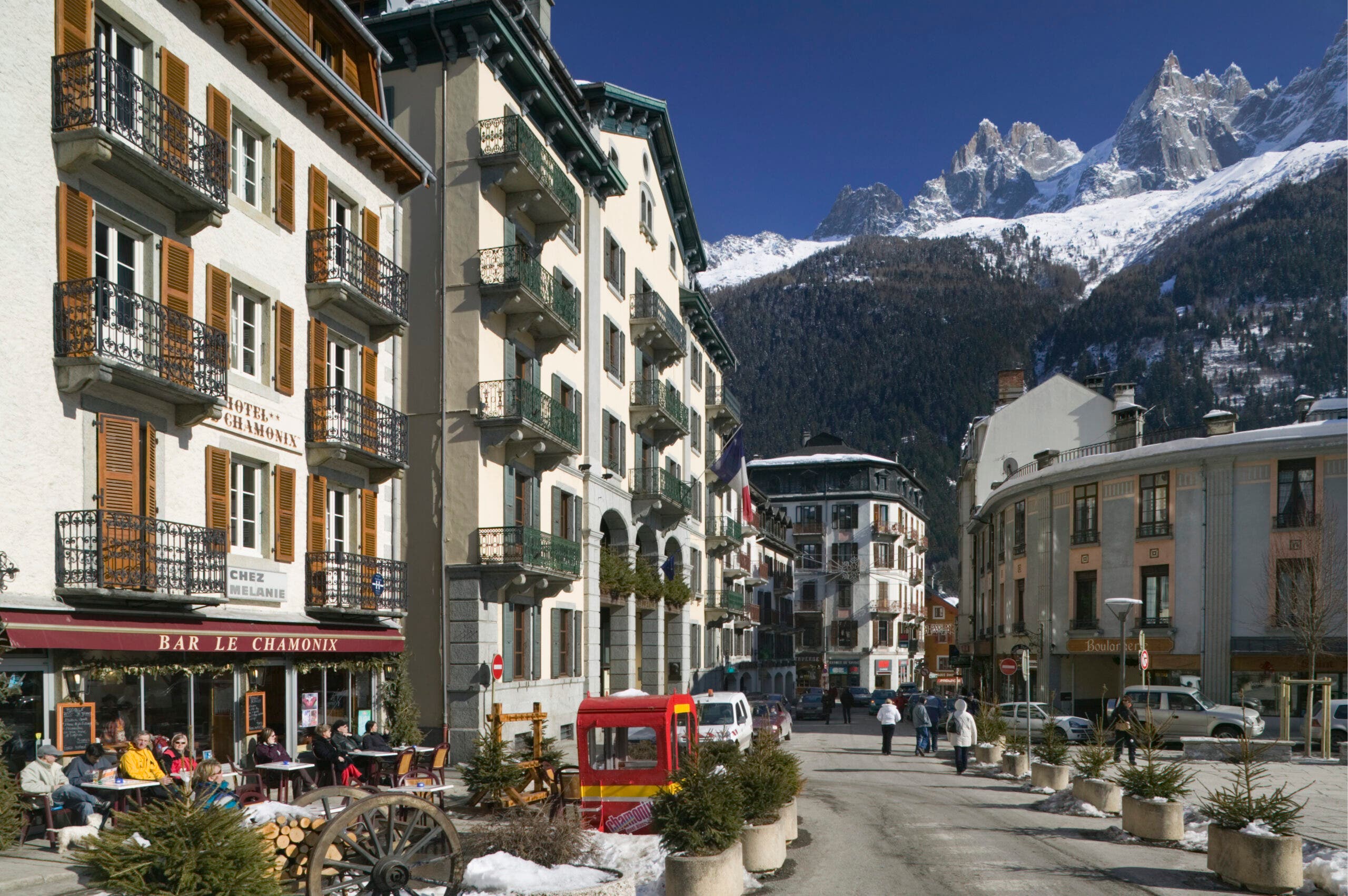
Don’t bother with hotels in Europe. There are apartment-style accommodations everywhere, even in the tiniest ski towns. This is by far the most cost-effective way to travel for families and groups—you can actually beat hostel rates and you have a full kitchen where you can prepare your own food. For example, two friends and I took a trip to Digne-Les-Bains, a small town in the Southern French Alps, and our lovely apartment rental cost about $30 per person, per night on a weekend.
Having a group may also make car rental a feasible option. A vehicle capable of carrying skis and driving in snow will typically run you north of $500 per week—perhaps prohibitively steep for the solo budgeteer, but feasible split between a group.
Cook Your Own Meals
Speaking of cooking your own food, I can’t do without it on a ski trip. Imagine eating out every meal for a week. Not only is it expensive, but it’s unhealthy, especially for more than a couple of days.
Besides, if you have even a modicum of interest in home cooking, how could you walk by the amazing bakeries, butchers, cheese shops, and purveyors of fine wine without being drawn inside? A ski trip to Europe is so much more than just skiing!
Plan On-Slope Meals in Advance
Overall, I’ve found that while the skiing is great across the Alps, the food culture is far better in France and Italy. I have two go-to budget (but high quality!) options in these countries.
In France, my daily ski routine involves picking up a sandwich at the bakery and eating it later on the mountain. Sandwiches are usually around $5-$7 and they’re delicious, usually made with a fresh baguette and quality cheese and charcuterie. You’d rarely catch me eating a sandwich in the U.S., but these little baguette creations are next level.
In Italy, I usually go for a pizza. There are pizza joints everywhere, on-mountain or off, city or country, all serving little personal-sized pies, usually from a wood-fired oven. The cheapest pizzas can be as little as $7-$8, but around ski areas you’ll end up paying closer to $12-$14. While I wouldn’t eat a pizza every day, you won’t find anything ultra-processed in these artisanal beauties.
Meet New People
The dying art of befriending, or even acknowledging, other people is still practiced in the Alps. Especially as a solo traveler, meeting new skiers and riders is a ticket to new experiences.
People often want to share whatever they have—an extra place in the car, an extra lift pass that their sick friend is not using, a few extra groceries they aren’t taking home with them. In fact, I’ve met people who have offered me a bed in their own home and have hosted many travelers in return.
The greatest reward of all this is forging new friendships on foreign shores, one of life’s most rewarding experiences.
Base Yourself in a Large Town and Commute to the Slopes
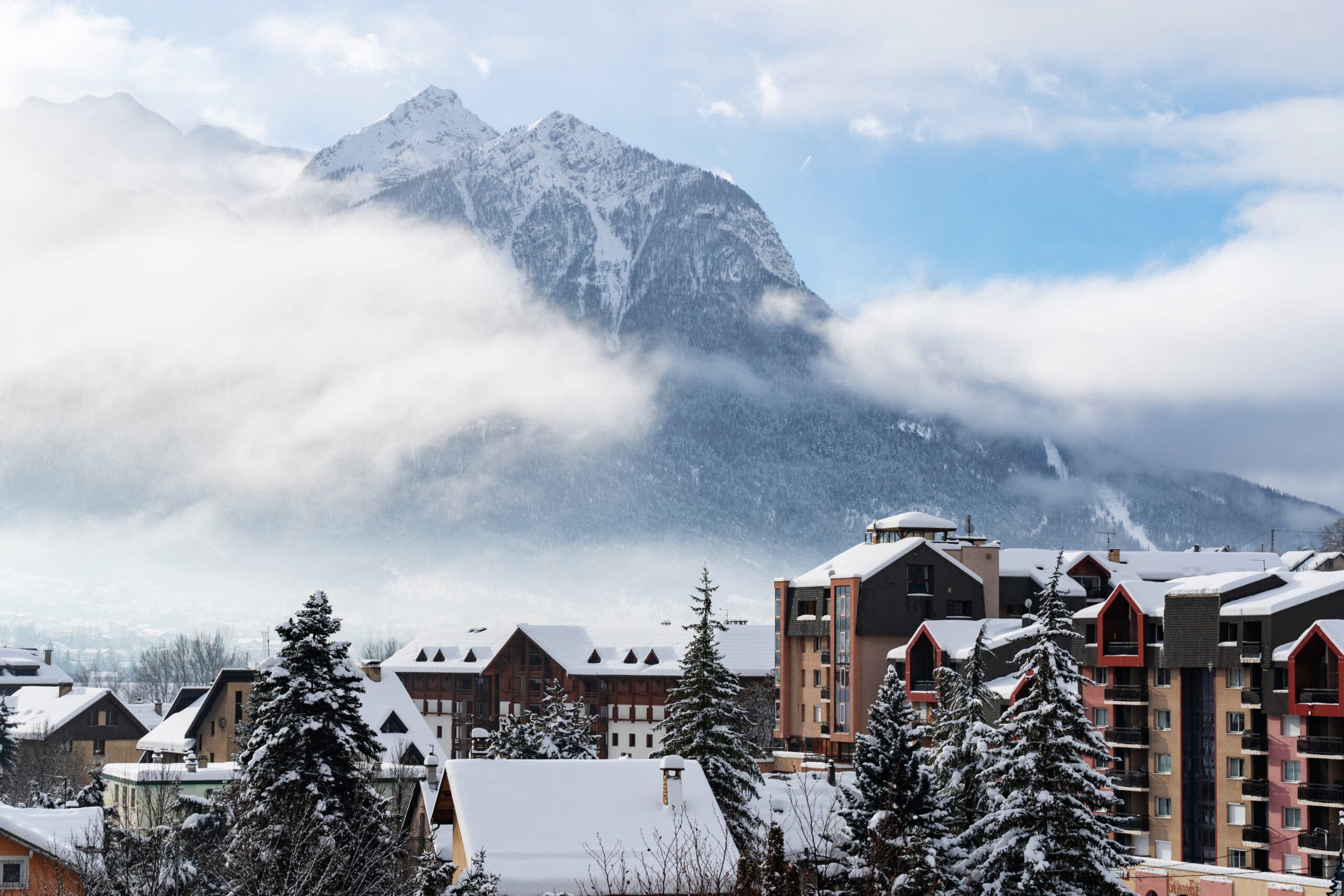
Public transport is so rampant in Europe that you don’t have to be slopeside to enjoy the slopes. How many Americans have heard of Bourg St. Maurice? Bourg d’Oisans? Servoz? Briançon? Aosta? Often, these larger towns don’t have their own ski resorts, though Briançon and Aosta do. The rest are a short bus ride away from world-class skiing. Not only will accommodations be less expensive, everything else will be, too. That means ski rentals, restaurants, and grocery stores, which are generally a fraction of the price of mountain town markets.
Find Villages Connected to Large Resorts
Many ski resorts in the Alps have several base villages connected by lift. Often, the smaller, quieter villages can be far less expensive than the main base. Vallorcine near Chamonix, Allemond and Auris-en-Oisans near Alpe d’Huez, and Venosc near Les 2 Alpes are just a few examples of more affordable villages with good access to a large network of lifts.
Add On a Sightseeing Trip
Americans can’t get enough of the great capitals of Europe, especially for summer trips. But do the same in the winter and you’ll find far fewer crowds and an overall more authentic experience.
Linking a ski vacation and a city trip has a few distinct advantages. First, airfares to large cities will be less expensive than the smaller airports around the Alps. Because it’s the low season, accommodation is also more affordable. Lower prices mean less demand, which you should read as fewer crowds. Why battle the masses on your one getaway of the year?
Second, Europe has gotten extraordinarily hot during the summer. It’s not just this year; these heatwaves have been pummeling the continent each summer since 2022. Winter is a much more comfortable time to visit.
Lastly, you’ll be able to find excellent public transportation from any city in Europe, whether Madrid, London, or Budapest, to the Alps.
Think Outside the Megapass Box
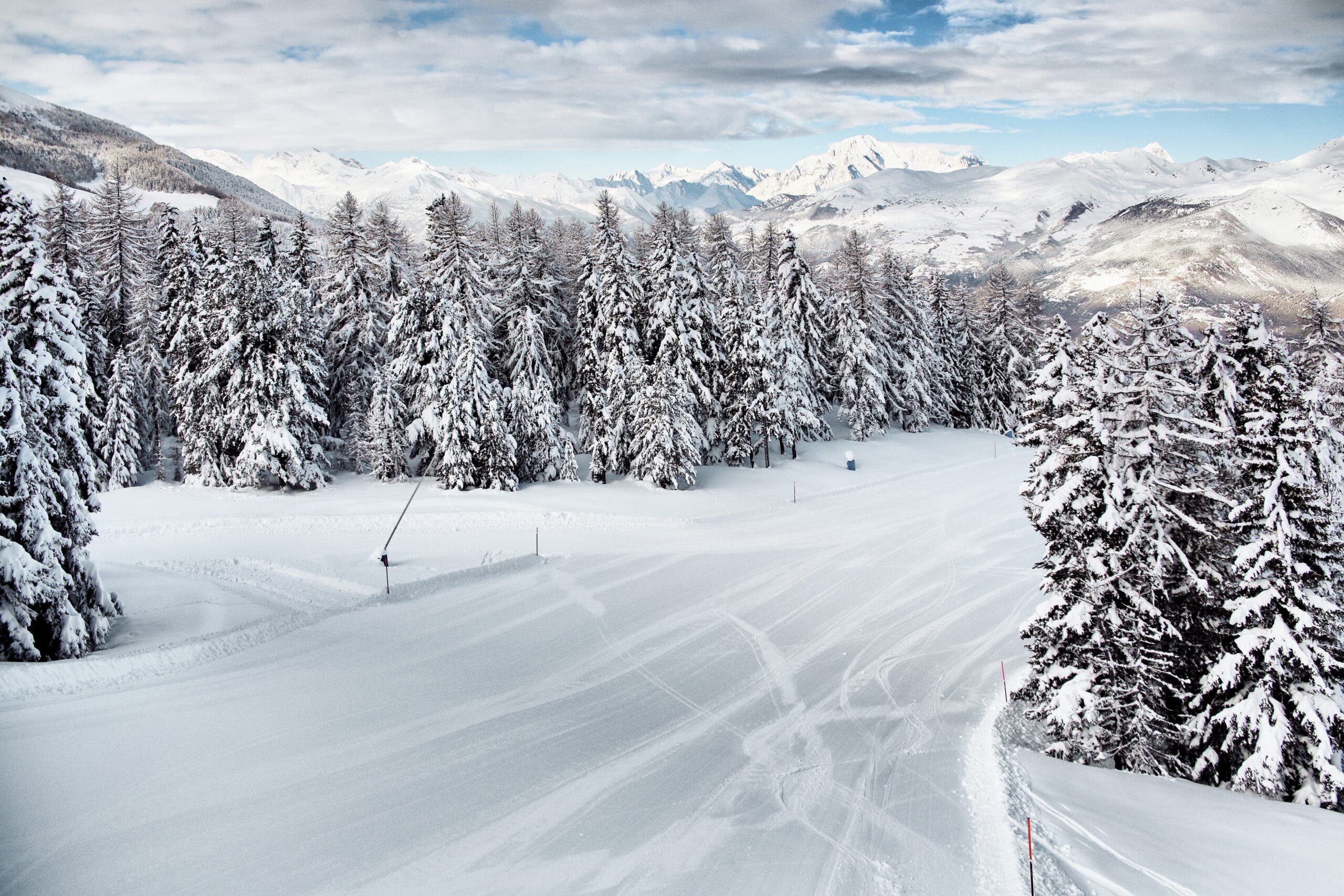
At this point, it seems the majority of Americans are visiting the Alps looking to use their Ikon or Epic passes. It’s a great way to save, but you can find much less expensive—and far more authentic—destinations by looking outside of the select ski areas on your passes.
Longer Trips Lower Your Per-Day Cost
The old “economies of scale” argument rears its head again. The longer you can extend your stay, the more affordable it will be on a per-day basis. Everything is cheaper in bulk, from lift passes to lodging to car rentals. And if you have remote capability, consider the fact that the Alps are divinely paired with the American workday. You can ski all day and log on just in time for breakfast in America!
At the end of the day, you can still come over and have a reasonably priced adventure. For ski-obsessed budgeteers, that might mean trading luxury hotels for sheer vertical drop and fine dining for high-speed gondolas. But play your cards right, and you’ll come away with fresh tracks and memories to last a lifetime.