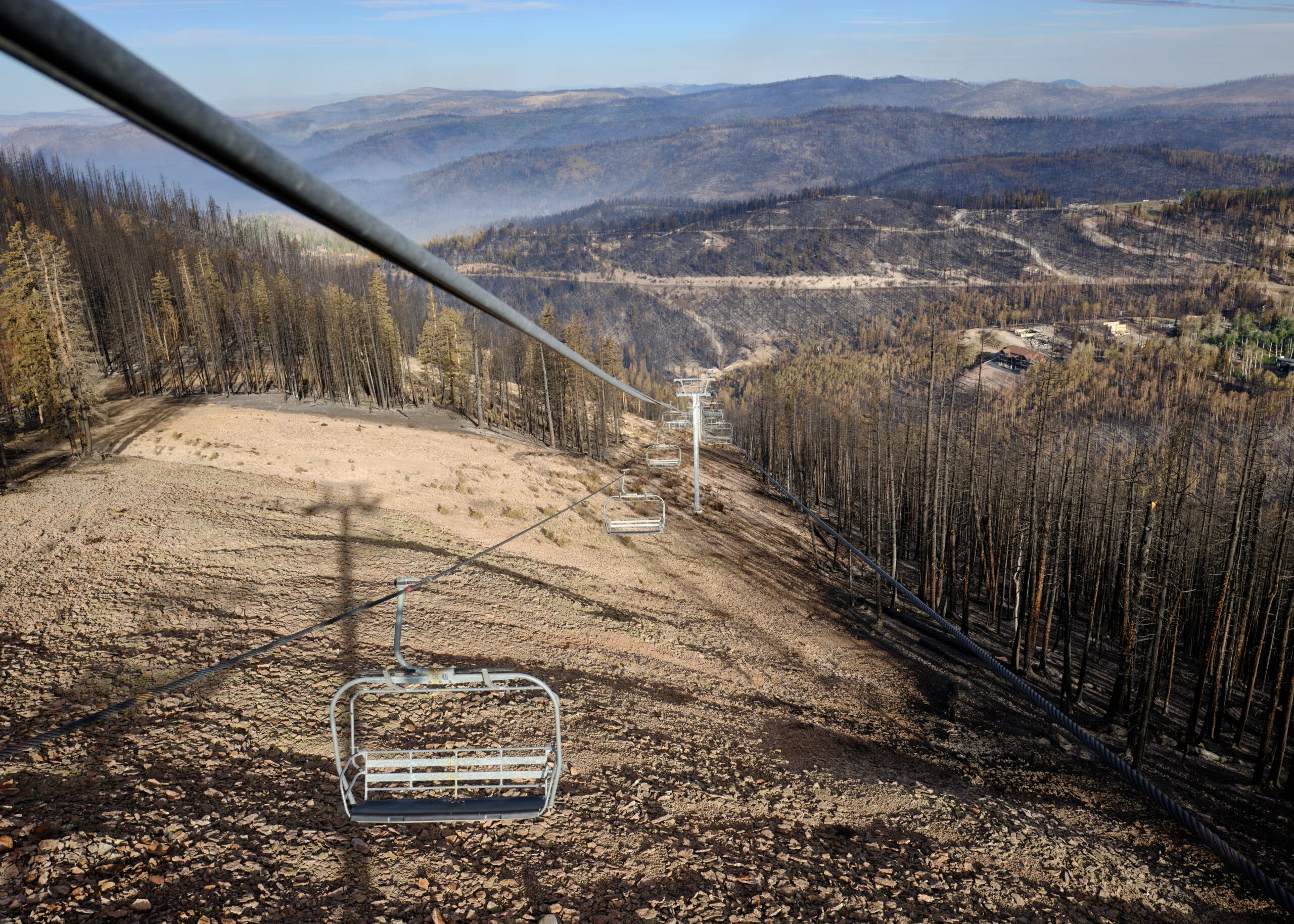
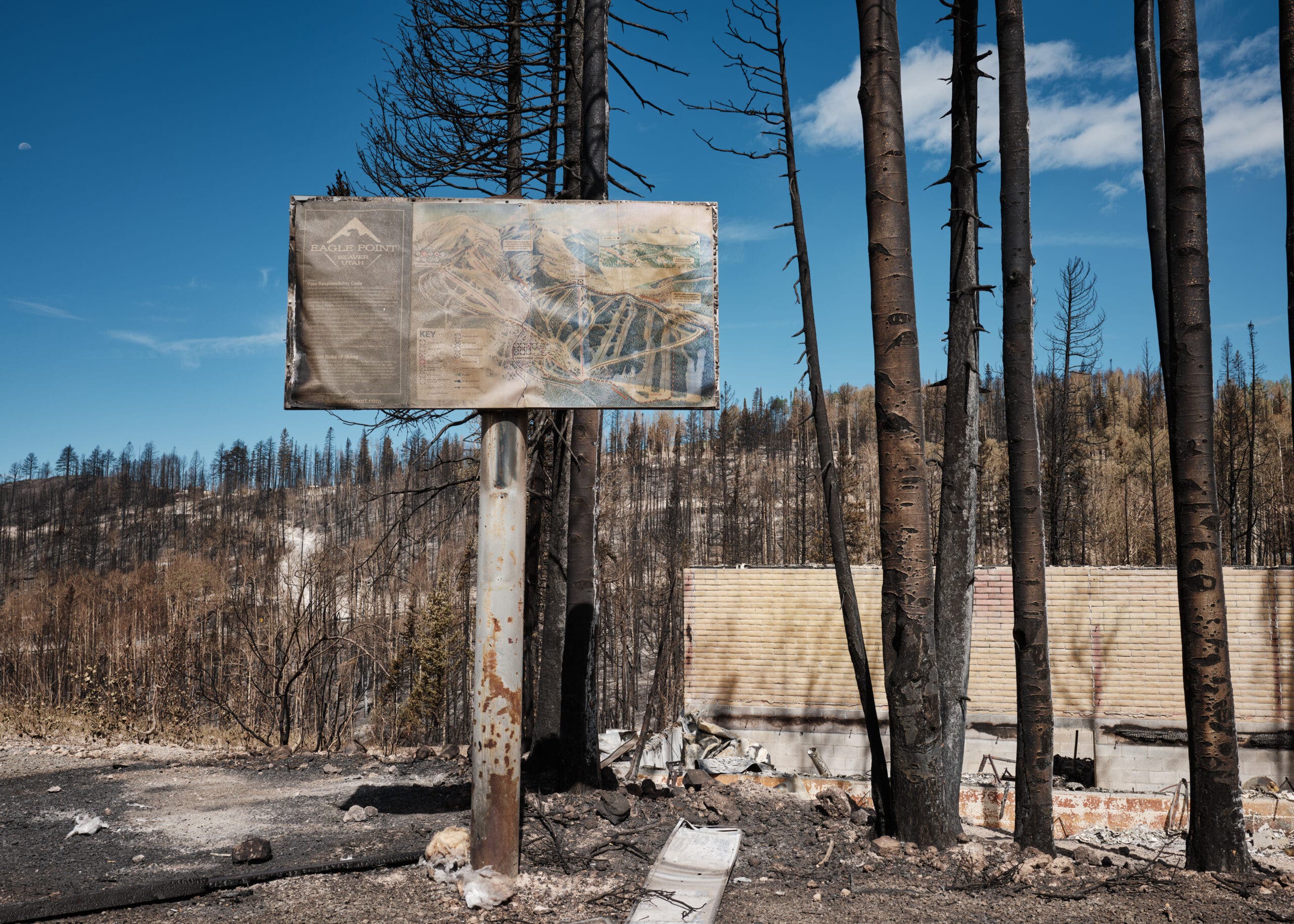
Two lodges, four chairlifts, and over 145 homes were destroyed by the wildfire.
(Photo: Courtesy of Michael Kern / Eagle Point Resort)
Published August 3, 2026 01:15PM
Eagle Point Resort announced today (Aug. 3) that it will not open for skiing this winter.
In June, the Cottonwood Fire caused extensive damage to the southern Utah resort’s lifts, ski terrain, and surrounding forest. In a statement to SKI, Eagle Point cited this destruction, along with the extensive recovery work still needed, as the reason it won’t be reopening.
“The damage to our lifts is significant, and the full extent of that damage is still being evaluated,” said Eagle Point Resort owner Shane Gadbaw. “We are scheduling rope inspections, non-destructive testing, and manufacturer inspections, and we believe it is likely that portions of our lift infrastructure, including several haul ropes, will require replacement. Those components can take months to manufacture and deliver, making it impossible for us to responsibly plan for winter operations this season.”
The Cottonwood Fire impacted approximately 300 acres of the resort’s terrain, damaging two lodges, four out of the five chairlifts, and contributing to the loss of 145 homes and condos within the Eagle Point community. Additional flooding and road damage from recent rains have created more challenges and have made getting to the resort and assessing damage increasingly difficult. Current access to Eagle Point is restricted to an unpaved route and is difficult to reach.
Season pass holders have the option to cancel their passes for a full refund, transfer them to the 2027-’28 season, or donate some or all of the pass cost to BeaverTUF, a new local nonprofit working to support recovery efforts in Beaver County, where the ski area is located.
“This effort is about much more than the ski experience,” said Gadbaw. “Healthy forests help protect our community, our water resources, our roads, our homes, and the long-term future of Beaver County. Many grant opportunities require local matching funds, and donations to BeaverTUF help position our community to pursue those larger funding opportunities and bring additional resources into the area.”
To restore the county and its lands as quickly as possible, the organization is consulting forestry experts and preparing grant applications to support long-term forest restoration and future fire prevention and recovery efforts in the watershed and wildfire mitigation. To learn more about recovery projects or make a donation to BeaverTUF, visit www.BeaverTUF.org.