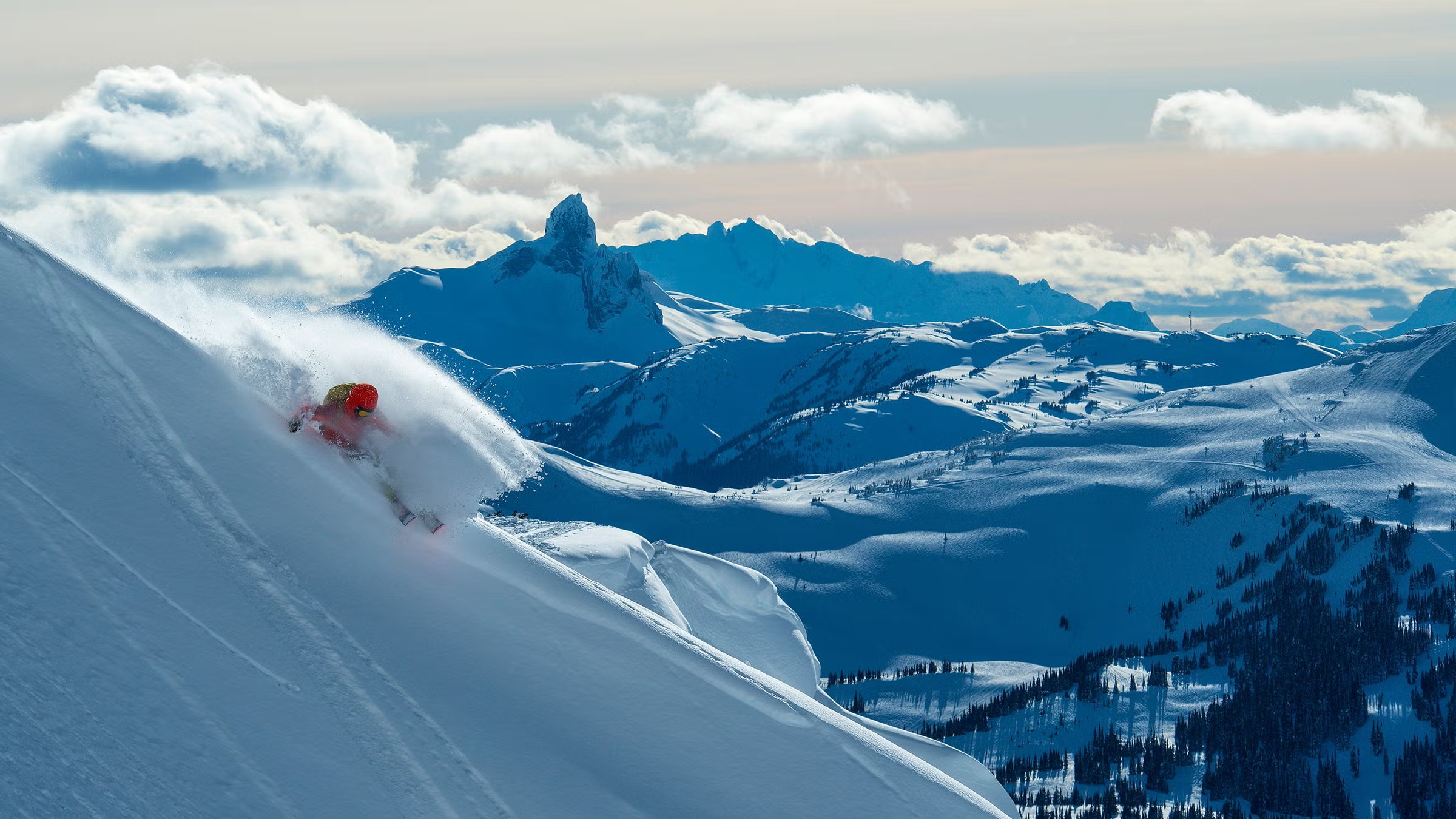
Low snow and warm temperatures in the West dragged down skier numbers across the country despite strong performance in the East.

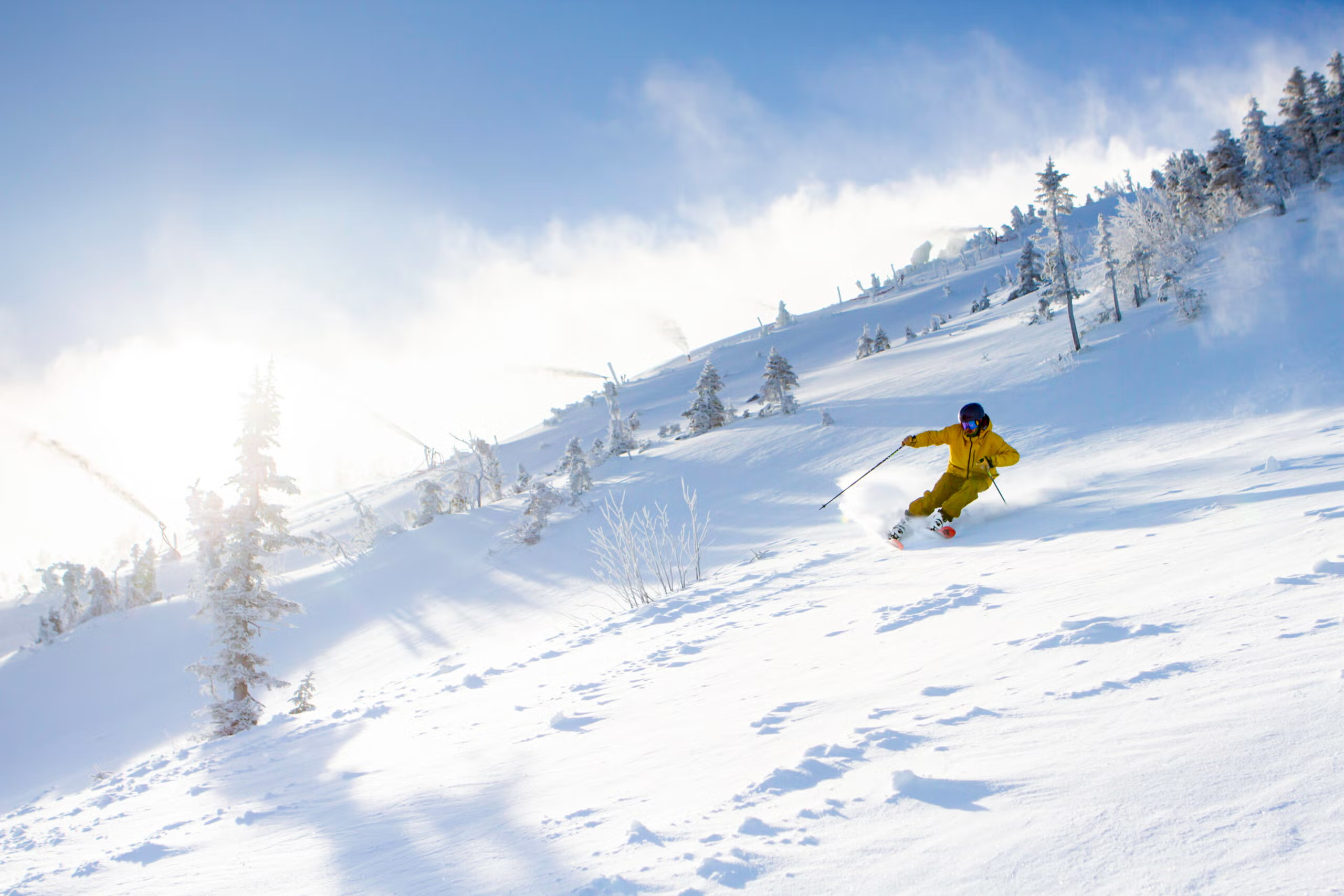
“Worth the long trip for some of the best terrain and snow on the east coast,” one reader wrote in. (Photo: Courtesy of Sugarloaf)
Published May 5, 2026 03:26PM
This winter was one of the worst ski seasons in over 10 years, according to data just shared by the National Ski Areas Association. National snowfall averaged just 112 inches across the country—well below the 10-year average of 169 inches, with Western regions hit hardest. To put it another way, snowfall totals were 33 percent below average during the 2025-’26 ski season.
Skier visits numbered 52.6 million across U.S. resorts—a 9.1 percent drop from the 10-year average. This amounts to nine million fewer visits than last winter, placing this season in 32nd out of the last 48 winters the NSAA has been keeping records.
That said, it wasn’t bad everywhere, and the NSAA’s regional numbers clearly align with where the snow fell—and didn’t. We combed through the report and dug a little deeper to analyze what it all really means.
An Eastern Feast—and a Western Famine
The biggest single cause of the overall decline in visits can be attributed to a lack of snow in the West. Shocking, we know.
Winter just never really got going, and a slow start around the holidays led to a lethargic January and February. It felt like spring all the way from mid-February through March in the West, and while April got a couple storms, it was too little, too late.
Colorado’s Arapahoe Basin was scheduled to close on May 3—a full month earlier than usual—but extended to this weekend (May 10) thanks to a late-season dump that brought over a foot of new snow.
It was a different story on the other side of the country, where ski areas in the Northeast and the Southeast enjoyed record seasons with consistent storms and cold temperatures. Even the Midwest made out well thanks to consistently colder temps that allowed for sustained snowmaking.
Also Read: These 5 East Coast Resorts Just Had Their Best Seasons on Record
Analyzing the Numbers by Location
The Rocky Mountain region still pulled the most skier visits—20.1 million—due to the sheer amount of ski areas and their national appeal, but numbers were way down from last winter’s 26.5 million. The Northeast totaled 12.9 million, up slightly from 12.5 million last season; the Southeast was also up a bit, to 4.8 million from 4.4 million in 2024-’25. For context, the Northeast enjoyed its third-best season in a decade, and the Southeast its second-best.
Could this reflect a broader shift in the ski industry, where smaller ski areas and regional resorts might prove to be more resilient than the destination resorts that rely on good snow years? That remains to be seen, but this winter’s struggles in the West have certainly given us something to think about.
Betting on the Future
Despite the overall national decline, ski areas are still investing big time in their infrastructure.
The NSAA reports that a total of $569 million was spent on capital improvements in 2025-’26, resulting in 45 new lifts and another 52 upgrades. That’s down from last season’s $625 million, but with fewer visitors, it still calculates to about $22 per skier being infused back into the resort—up from last season’s $21. It’s clear that the industry is banking on long-term growth.
Has the Pass Boom Finally Plateaued?
One more important metric that the NSAA looks at every year is how many people are buying season passes, and what the ratio of those purchases is compared to years past. For the 2025-’26 season, passes were used in 49 percent of all visits, and daily lift tickets accounted for 31 percent. This is virtually the same as last year, so after years of massive growth in pass sales, it seems that numbers are finally stabilizing. That said, we won’t be surprised to see lower pass sales next season, as poor conditions tend to make skiers gun-shy for the following winter.
Looking Forward to Next Winter
This season wasn’t the first disappointing winter, and it won’t be the last. If there’s a bright spot on the horizon, it’s that historically, low-snow seasons tend to be followed by strong rebounds—a pattern the industry is hoping holds heading into 2026–’27. Our fingers are crossed.