Published April 15, 2026 10:01AM
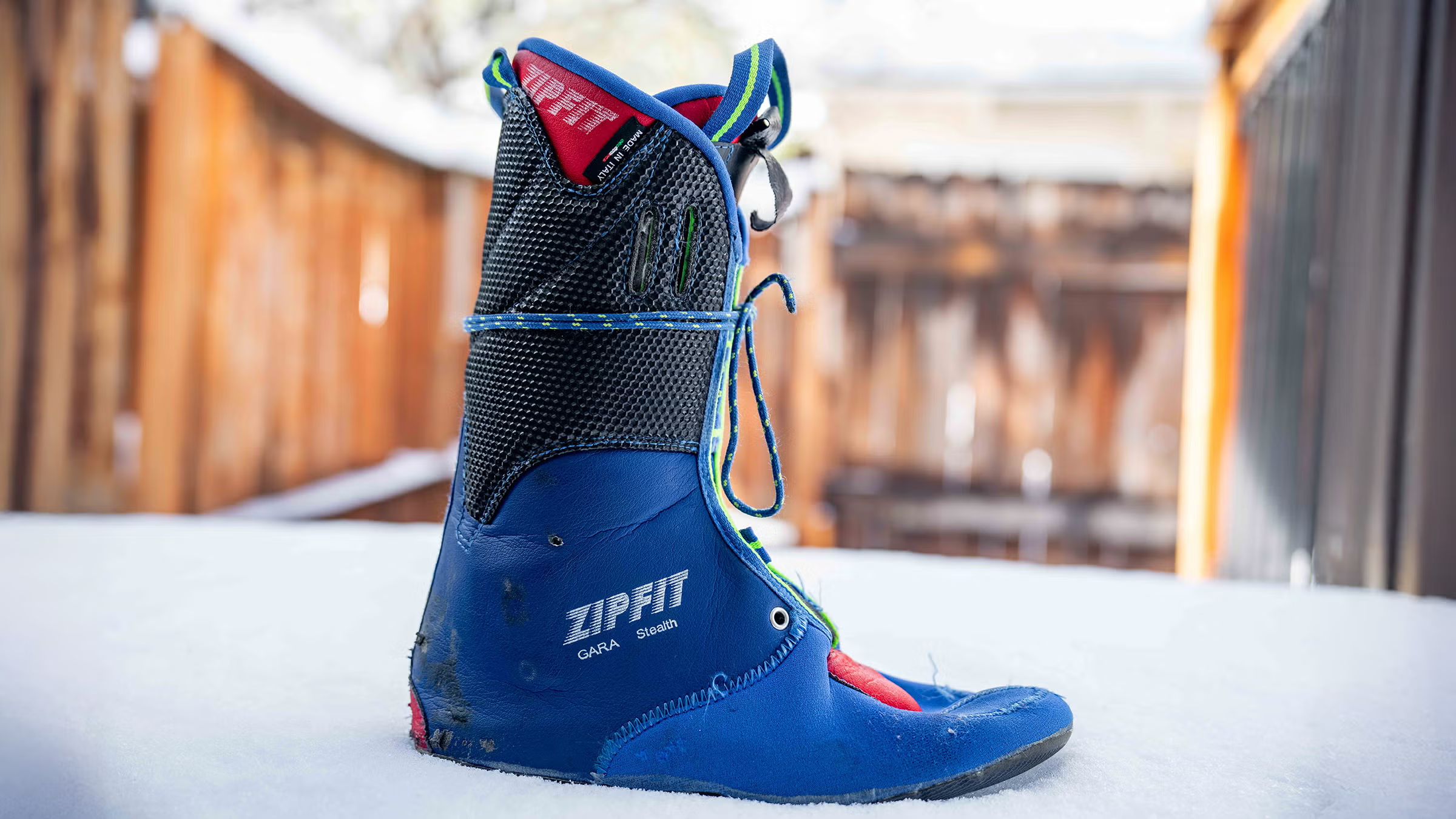
Standing by the dumpster, I gazed down at my beloved Tecnica Mach1 LV 130s—the orange plastic whitened and nearly cracking after well over 200 ski days—and tossed them in. Then I went back inside and stuffed my trusty, aftermarket Zipfit Gara LV liners into their next shell, a pair of Armada AR ONE 130. This would be the third set of shells my liners had seen, and it may not be the last.
My relationship with Zipfit liners has gone through a few iterations. For full transparency, I later worked as a bootfitter and sold Zipfits, though I don’t anymore. I first heard about them in 2020, when my roommate came back from the boot shop with a look of wonder on his face. He told me his ski boot problems were over—it just cost him an arm and a leg. Having been plagued with boot issues myself, I went straight to the shop to investigate. Thanks to some pandemic-era unemployment benefits, I was able to fork over the cash and see what the fuss was about.
A Brief History of Zipfit Liners
The shop that sold me my Gara LVs holds a special place in Zipfit history. Mammoth’s Footloose Sports was co-founded in 1979 by Sven Coomer, a hardgoods innovator who was inducted into the U.S. Ski and Snowboard Hall of Fame in 2021. You probably know his work if you’ve ever skied any kind of plug race boot, an Atomic Hawx, or a cabrio boot like a Full Tilt or K2 Fl3x.
Coomer had been experimenting with ground-up Birkenstock cork to make custom footbeds. In 1989, he founded Zipfit, creating the first custom liner that didn’t rely on toxic foams.
Hagiography aside, Zipfits haven’t changed much since. That’s a testament to the design. They’re built from leather, neoprene, and wool, with internal bladders in the tongue and ankle pockets that can be filled with OMFit cork—a mixture of cork and oil that moves when warmed.
Unlike foam, cork doesn’t compress; it redistributes. That’s what makes Zipfits remoldable and, crucially, transferable between shells.
How Do Zipfits Change Your Skiing?
I’ve been a gear writer for seven years and tested hundreds of pieces of equipment. Nothing has changed my skiing experience as much as these ski boot liners. That said, they didn’t change my life from the jump. Sewn from hearty leather and filled with dense cork, they took some breaking in. Most bootfitters recommend skiing at least five days in the liners before adding any cork.
Once broken in, my feet felt fully mated to the shell in a way I’d never experienced. Heel hold was exceptional, and because I was so locked into the plastic, I could deliver power to the ski more quickly and consistently through a turn. Perhaps just as importantly, I was far more comfortable in my extremely low-volume Tecnicas (I first paired the Zips with Mach1 LV 120s) because the unstructured toebox gave me far more room in the front. Because my heel was securely anchored, that extra space was a bonus, not a problem.
Off-piste, the Zipfit Gara keeps me far more balanced over my outside edge than any stock liner I’ve ever used. The lacing helps keep my feet in exactly the position I like, allowing me to drive my skis in steep terrain, flow through bumps, and catch transition without missing a beat.
I’ve also found they adapt well across a range of shells—from ultra-low-volume boots like the Tecnica Firebird 130R (a 96 mm cheater plug boot) to roomier cabrio designs like the 100 mm Armada AR ONE. The heel hold lets me size up slightly in volume without sacrificing performance. In the Armada, I get more warmth from the extra toe room without feeling disconnected from the ski.
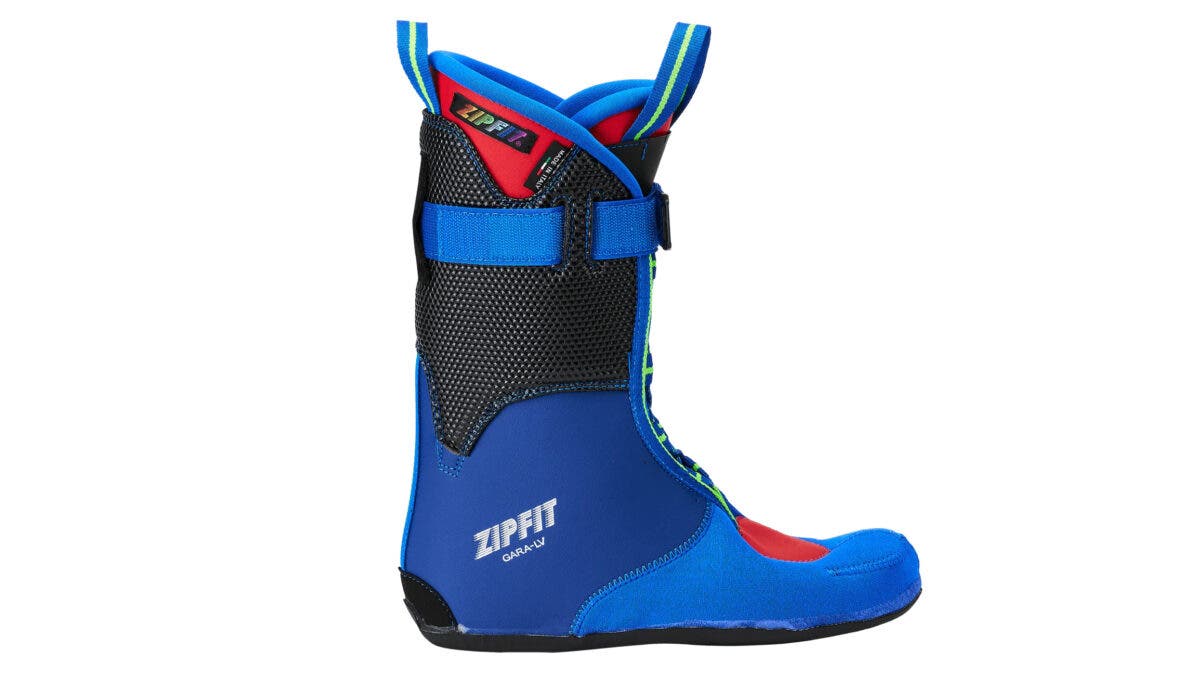
Zipfit Gara LV Ski Boot Liners
Pros and Cons
+ Snug, secure fit
+ Cork can be re-added to extend life of liner
+ Doesn’t pack out like foam liner
– Expensive
– Makes getting ski boots on more difficult
Do You Have to Modify Zipfit Liners Over Time?
I’ve made a few changes to my liners over the years. For one, I ripped out the power straps. They’re definitely a selling point, and a factor in making the liner more of what Zipfit calls an “inner boot.” But I found they put too much bulk in my shell and added a little space between the tongue of the liner and the front of the cuff.
I kept the laces but relaced them at the suggestion of my friend Jeff Colt, who works for Zipfit. I skip the bottom two eyelets to avoid pressure on my instep, then wrap the laces around the back of the liner and tie them high on the tongue. The tradeoff is that I have to “World Cup” into the boots—lace the liner on my foot and then step into the boot.
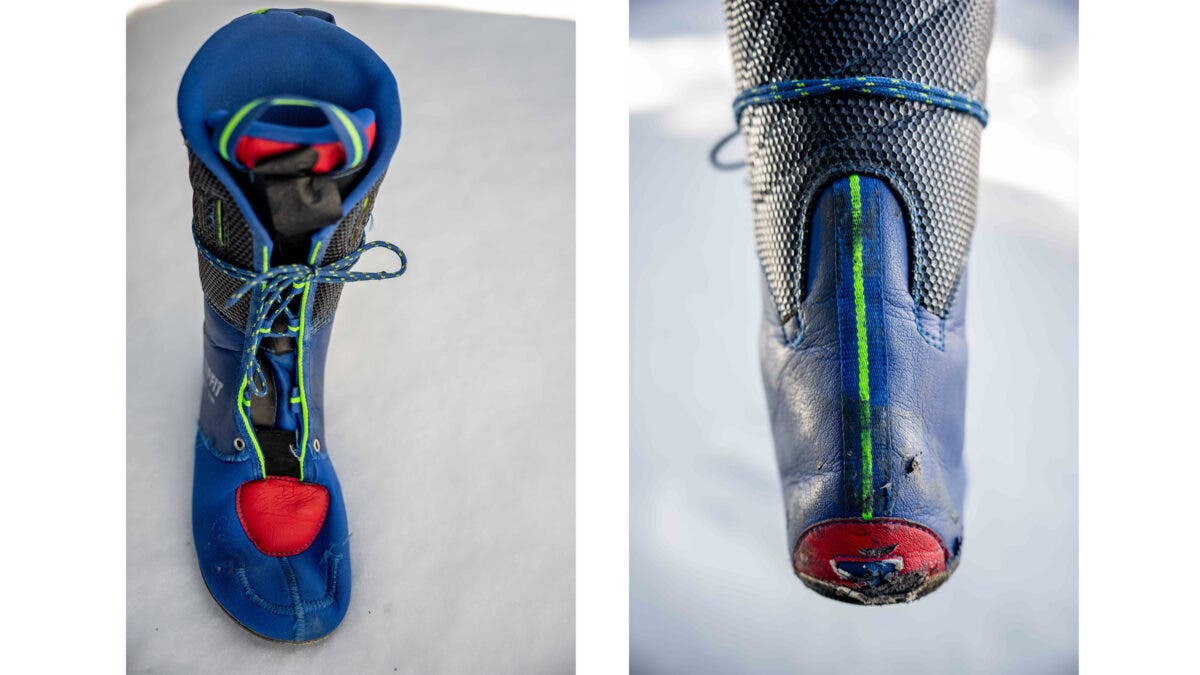
That’s a sticking point for some skiers, especially those with mobility limitations, and I get why. But in my experience, you get used to it quickly. I went my first 400 days without a shoehorn, and the heel of the liner shows it, but I use one now and it makes entry easy—even in a cold shell.
I didn’t need to add cork until year three, when the material had started to spread thin in the tongue and ankle pockets. Now, finishing my sixth (!!) season in the Gara LV, I’m just starting to think about adding more cork again.
Are Zipfits Better Than Foam Liners?
Foam-injected liners can deliver a higher peak performance, assuming a proper shell fit and footbed. Getting locked exactly into place by expanding walls of foam can give you a more precise connection to the ski. The issue is longevity. Once foam packs out, performance declines. You might get 50 to 75 great days, but after that you’re on the downslope—even if the liner is supposed to last 150 days.
With Zipfits, you can add cork as needed, bringing performance back up each time.
Bottom Line
I think there’s a kind of cosmic irony when “sustainability” is used as a buzzword to sell new gear. But a liner that lasts more than six seasons is objectively a good thing. I reckon I’ve bought one fewer pair of boots in the last few years just because I’ve been able to eke out each set of shells far beyond its usable life with the help of these liners.
My Gara LVs have seen better days. The stitching on one toebox is starting to fail, the heels have been peeled up from years of stepping in without a shoe horn, and the tongue foam is thinning. But honestly, I haven’t once felt the urge to replace these Zipfit liners. I’m starting to think I should hire an estate lawyer to decide who gets them next.