Published August 28, 2026 08:57AM
There’s a point in every skier’s progression when simply getting down the mountain stops being the goal. You’re comfortable on groomers, you can link turns, and maybe you’ve started venturing onto steeper terrain, dealing with icy patches, or following your ski buddies into places that feel just a little outside your comfort zone.
Now comes the harder part: learning to ski with confidence. When you’re skiing well, it’s more fun—and isn’t that the point?
The good news is that leveling up doesn’t necessarily mean skiing faster, taking bigger risks, or mastering complicated new techniques. Rather, it means getting rid of the habits that make skiing harder than it needs to be.
If you’re ready to move beyond the intermediate plateau this winter, start with these seven minor adjustments.
1. Let Your Feet Start the Turn
One of the biggest mistakes that intermediate skiers make is throwing their entire body into a turn. That’s because modern shaped skis make it so easy do that. Tilt your shoulders toward the inside, lean your body, and the skis will probably come around. But initiating every turn with your torso gives you less connection to what your skis are doing—and less ability to react when the snow or terrain changes.
Instead, start from the ground up.
As you begin a new turn, gently roll your feet and ankles onto their edges. Feel pressure develop along the big-toe side of your outside foot and the little-toe side of your inside foot. Let that movement travel upward: Your knees respond, your hips move naturally inside the turn, and your upper body stays relaxed and balanced.
Think: Feet first, body follows.
The goal isn’t to freeze your upper body. It’s to stop throwing it around. When your feet initiate the action, you get more feel for the snow—and more time to respond to whatever happens next.
2. On Hardpack, Engage the Front of Your Skis
Ice and firm snow expose sloppy skiing fast. When conditions get slick, many intermediates make the problem worse by leaning back or trying to force the entire ski onto edge at once. Instead, focus on getting the front of your skis involved.
Open your stance enough to give your legs room to work. Keep pressure against the front of your boot cuffs by flexing at the ankles, then begin the turn by gently tipping both ski tips onto their new edges. This early engagement helps your skis bite into the snow rather than skid across it.
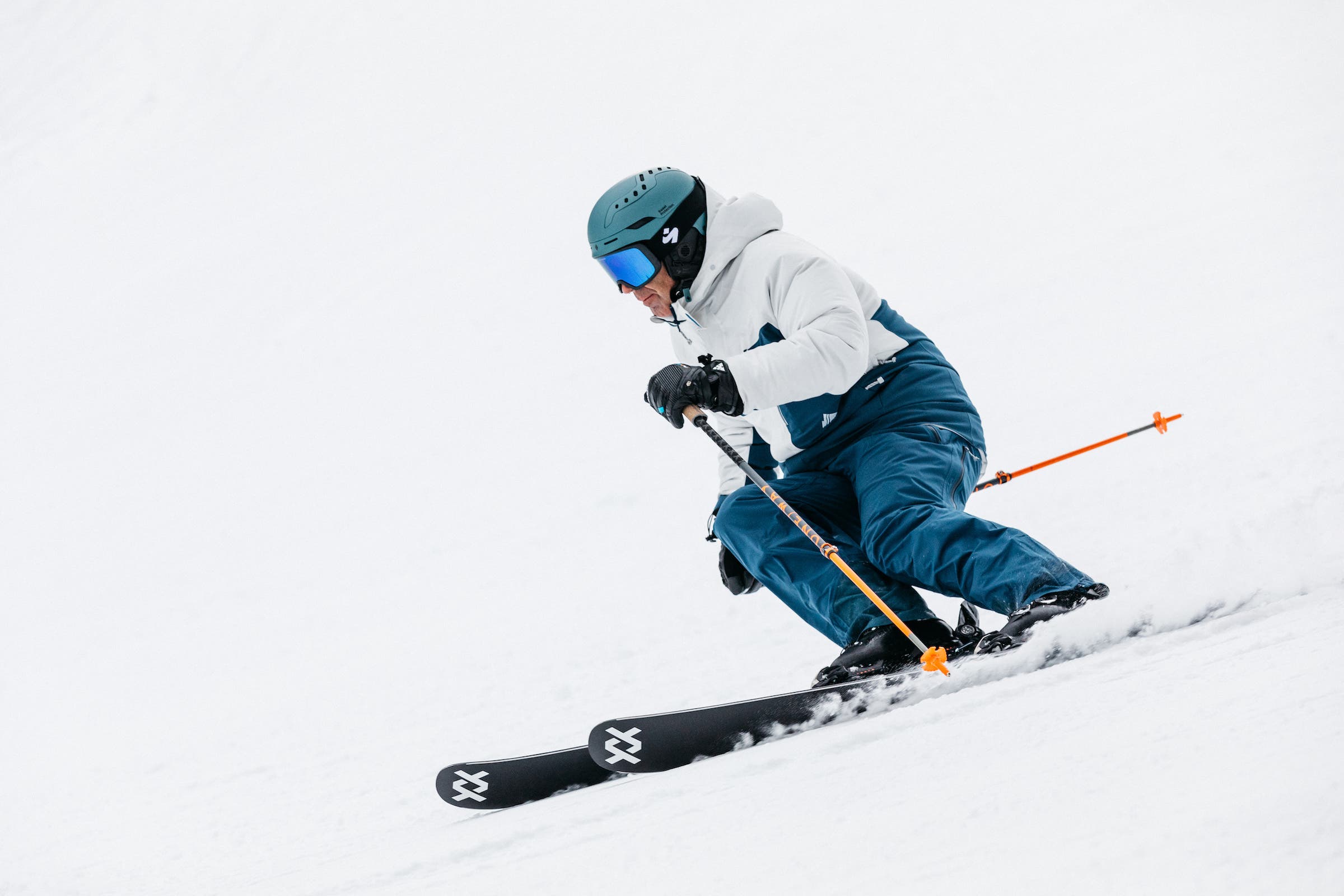
You’ll naturally feel more pressure build on your outside ski as the turn develops, particularly through the bottom half. That’s fine. But don’t wait until you’re already deep into the turn to find your edges.
Try this: On a firm groomer, make a few easy turns and consciously focus on feeling the new edges engage near the ski tips before the rest of the ski comes around.
3. Finish Your Turns When You Need to Slow Down
If your speed is your nemesis, the problem may not be your ability to turn. It may be that you’re quitting your turns too early.
One fundamental truth of skiing is that your turn shape controls your speed. Point your skis more downhill and you’ll accelerate. Shape your turn farther across the hill—and slightly uphill—and you’ll slow down.
Many intermediate skiers make what they think are complete turns but abandon them soon after crossing the fall line. On mellow terrain, that works. On a steeper pitch, those shortened turns can quickly become a speed problem. The solution isn’t necessarily to make sharper turns or slam on the brakes. Let your skis keep traveling across the hill.
Think: The steeper the slope, the more of the hill you may need to use.
Learning to adjust your turn shape is one of the biggest steps toward skiing more confidently on varied terrain. Long turns aren’t always faster, and short turns aren’t always slower. It depends on where—and how—you finish them.
4. Don’t Become a One-Turn Skier
Everyone has a favorite turn. Maybe you love big, high-speed arcs on a freshly groomed blue. Maybe short, quick turns make you feel like a mogul master. That’s great—until the mountain asks for something else.
Versatile expert skiers don’t have just one turn shape. They can make big turns, short turns, rounded turns, more direct turns, and everything in between. The key is learning to change gears.
The next time you’re skiing a familiar run, experiment. Make a few wide, sweeping arcs. Then tighten them up. Link two or three short turns, then stretch out the next one. See how each shape changes your speed, rhythm, and position on the hill. Learn to ski each run the way the terrain calls for, and you’ll rapidly improve your skill set.
5. Calm Your Hands Down
Your hands have a sneaky way of revealing what’s happening everywhere else in your skiing. When things feel out of control, arms start flying and you do things like reaching behind you or throwing your hands downhill as if they might somehow save the turn.
Calm, steady hands give your upper body a stable platform while your legs do the work below. Keep your hands forward and roughly level, with your elbows comfortably in front of your chest.
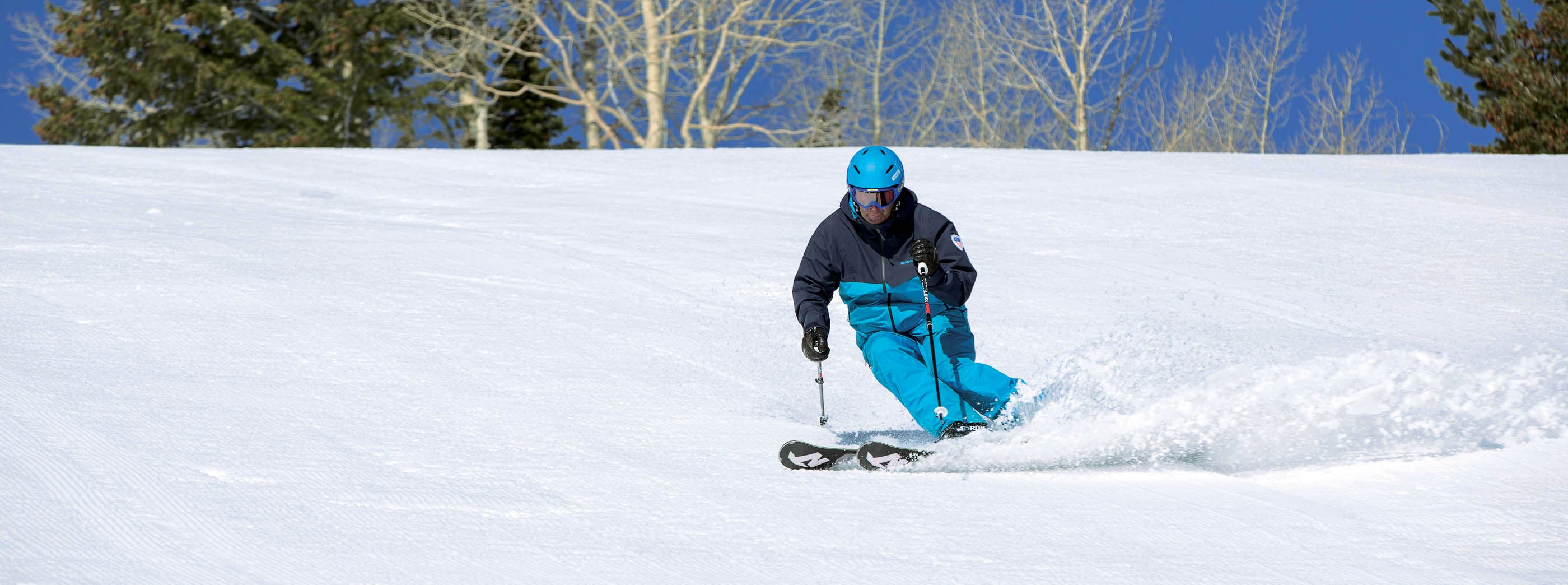
Imagine a horizontal line connecting your hands. Try to keep that line relatively level as you move through the turn instead of letting your downhill hand collapse toward your knee.
This doesn’t mean skiing with rigid robot arms. Your hands should be relaxed and ready, especially when using poles. But unnecessary arm movements can pull you out of balance at exactly the moment you need to be most stable.
Ask youself: If someone filmed you from the front, would your hands look like they’re along for the ride—or trying to direct traffic? It should be the former. Let your skis do the turning.
6. Ski the Run Before You Ski the Run
The best time to make decisions about a challenging slope isn’t always while you’re halfway down it. Before dropping into terrain that pushes your comfort zone, stop and make a plan.
Look at the slope from the lift if possible, then take another look from the top. Identify where the pitch changes. Notice obvious terrain features. Find places where the snow might be scraped off, where the run narrows, or where you may want to control your speed.
Then break the run into manageable pieces.
You don’t need to memorize every inch of the slope like a World Cup racer. Just give yourself a roadmap: I’ll ski across to that knoll. Then make a few controlled turns through the steeper section. Then open things up below those trees.
Visualization isn’t just for elite athletes. It can keep an intimidating run from feeling like one giant problem.
Think small: Instead of worrying about skiing all the way to the bottom, focus on skiing the next section well. But do leave room for adjustments. Conditions change. Other skiers do unpredictable things. Your plan should give you confidence, not lock you into a line that no longer makes sense.
7. Look Farther Ahead—and Give Yourself Time to React
Great skiing often looks relaxed because good skiers seem to have time. The farther ahead you look, the sooner you see what’s coming—and the more time you have to react. If you’re staring at the tips of your skis, every bump, patch of ice, and change in pitch becomes a surprise.
Instead, keep your eyes moving down the hill, like you watch the road ahead when driving.
Look toward the next section of terrain, not just the next few feet in front of you. As you gain confidence, start reading the slope: Where is the snow likely to be softer? Where does the pitch steepen? Where will you want to finish your next turn?
This is where many of the other skills come together. When your feet are guiding your turns, your upper body is calm, and you know where you’re going, skiing starts to feel less reactive. You’re no longer just responding to the mountain—you’re skiing it.