It’s a brilliant May afternoon, and though the ski season officially ended weeks ago, I’m making the ten-minute walk through pools of snowmelt and over a rickety wood bridge to the shuttered local ski area, still encased in snow. At the base, I gaze up at its modest high point, four hundred feet above, and smile at potential lines down its short but steep headwall, flanked by towering ponderosa.
The sun is beaming with the promise of spring, so I’m clad in the minimalist fashion; running shorts, no shirt, low-cut plastic telemark boots, and skinny fish-scaled skis—planks that borrow as much from cross-country tradition as much as downhill. I wiggle my boot’s boxy toes into the wide metal toe cages of the rudimentary free-heel bindings I’m using. And I traipse up the mountain, looking not just for an overland jaunt on my lunch break, but laps of downhill turns.
With its breadth of styles and equipment, cycling has a term for using gear that is wonderfully undergunned for the task at hand, like taking a svelte gravel rig up and down a mountain bike trail, or even your cruiser, where conventional wisdom says you shouldn’t. It’s called underbiking, and I’m pressing that perhaps off-center ideal into the service of sliding on snow. My wider skis, mounted with new-fangled bindings, and their tacky climbing skins are in the garage today. Where I’m going—and in the manner I’m doing it—I won’t need them, anyway.
It’s not the most optimized approach for getting up and down even so small a mountain as this. The directional pattern of my skis’ fishscales find purchase only on slight inclines. And where the latest uphill ski gear would see me absent-mindedly pointing straight up the mountain, I’m instead nudged toward ascending in a different way.
I make countless switchbacks when the grade steepens, even occasionally sidestepping. At times awkward, even comical, it’s more of a conversation with the terrain than a vanquishing of it; the topography something of a partner rather than an impediment. I find rabbit tracks in the glistening snow, and follow them for a time, convinced that this invisible little beast might know the way up better than a shirtless middle-aged desk jockey would.
Eventually, I’m at the top, and gaze out at the town below, aged stone buildings with flat roofs still holding snow, all basking in the sunlight. With no dedicated uphill gear to remove or a mode change to transition from, I’m not bound by any routine before descending; I’ll instead start the ski whenever the mood strikes.
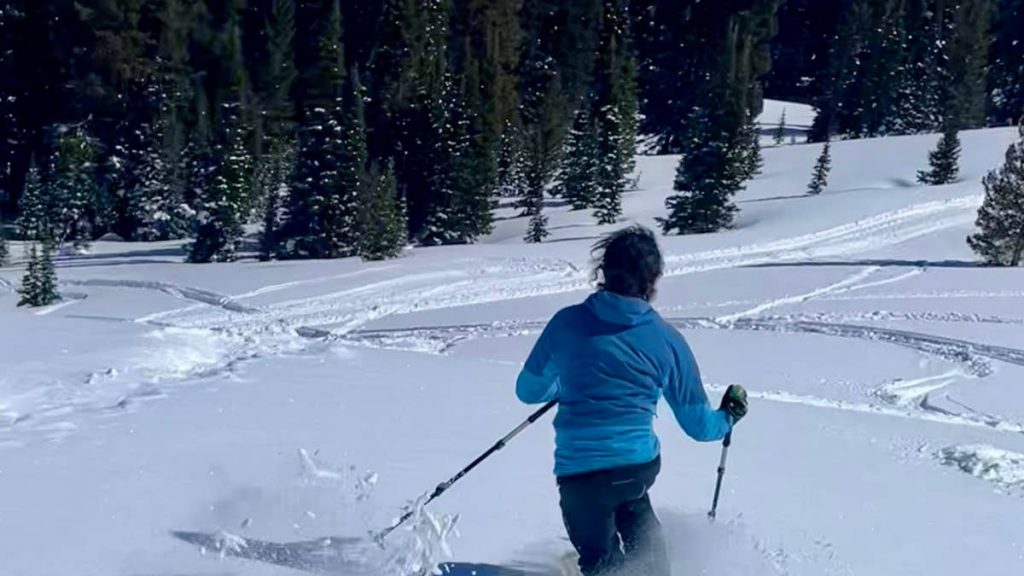
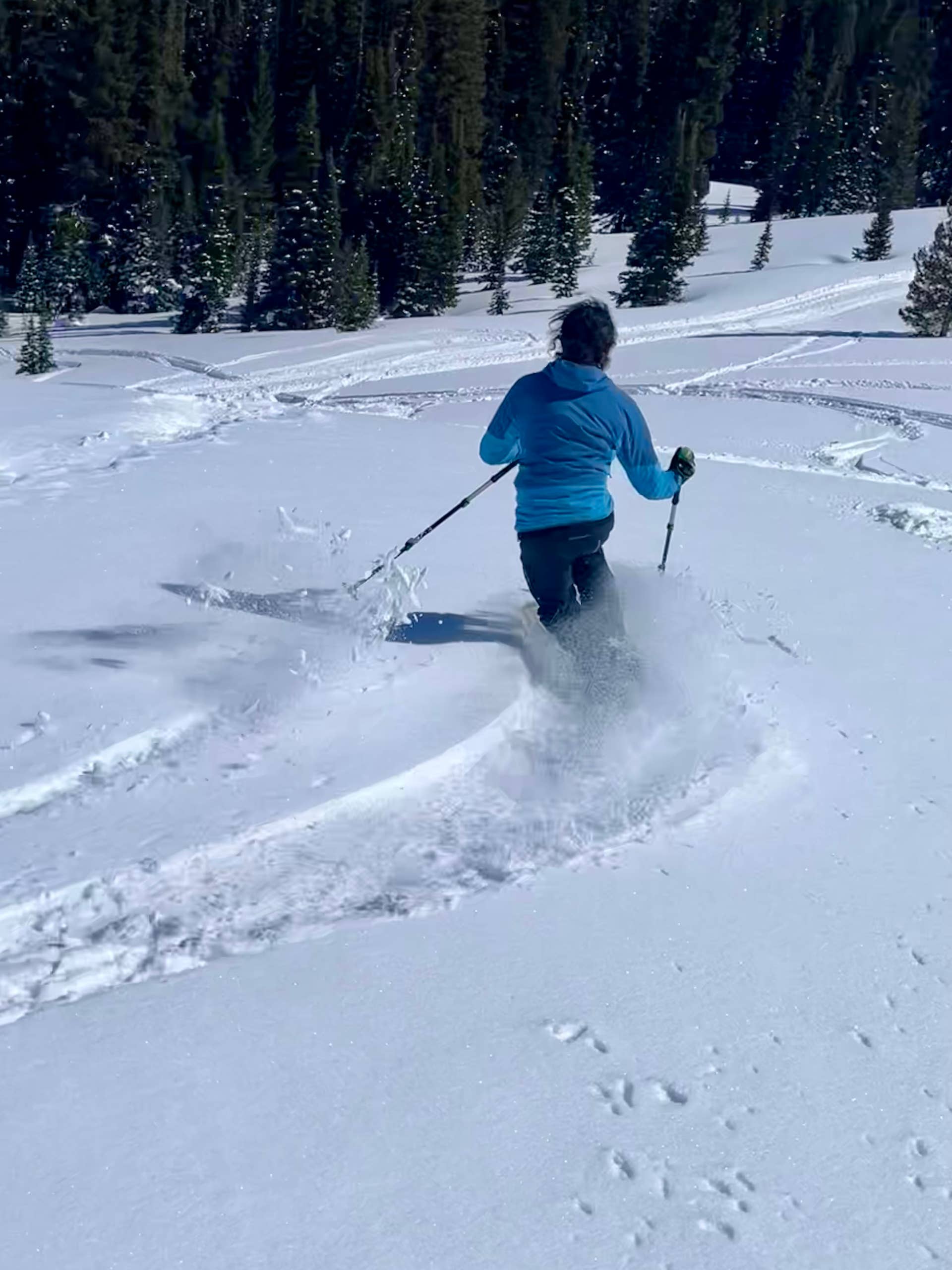
I eventually make that subtle mind shift and begin sliding down the corn snow. When I reach a certain speed, I flick my hips, knees, and feet into a lunging telemark turn. The equipment is slack, offering only so much resistance, making each lead change a dance with gravity; I feel weightless at the apex of each jump turn before ski, binding, boot, and ski return to the supple plane, spraying my naked shins with cold, vernal snow.
I make three more laps in this underskiing fashion, then walk away with a smile, ready to finish a day of work.
Jack O'Brien
I discovered underskiing by accident. As a younger telemark skier, looking for an alternative to the alpine method I had long taken to, I was drawn to the lunging turn’s blend of grit and finesse, but I was still smitten with power and precision.
One midwinter day—early both in my telemark journey and my backcountry skiing one—I joined a group I loosely knew, and we traveled high on the pass, to a local mountain I had never been to before. At the trailhead’s snowy lot, we parked our Outbacks and Tacomas in a line, where we stretched robust climbing skins over our wide freeride skis, mounted with the latest in alpine touring and telemark bindings. Our group assembled, clicked into our techy rigs, and strided off in an excited line toward the ruggedly named Walton Peak.
I knew of this mountain through vague, mythologizing stories. More than one time, seated at a particular dingy bar, with beer in hand and a few coursing through my system, I had been subjected to exploits from this pinnacle of our local backcountry scene. It wasn’t just a geographical point, it seemed, but a wellspring for cachet. As we made our way around its wooded flanks, I was filled with equal parts excitement and trepidation. With what I had heard, the group I was with, and the gear we had brought, I felt the pressure of a pending test piece.
But as we approached the skin track’s terminus, and then when we arrived at the summit, I was surprised to find that the rounded high point, while beautiful, offered ten or so fun but mellow turns down its East face before disappearing into the trees we had just come from. I was perplexed. Not only was this location not where legendary pursuits were forged, but it also seemed like a crummy place to ski. We transitioned our gear to its downhill modes, made our few turns, and returned to the trailhead.
Of course, I was wrong about Walton Peak. It wasn’t a bad place to ski; we were just on the wrong gear. I had arrived at its summit with an incompatible mindset. And though I didn’t know it then, my telemark skiing journey was already nudging me toward finding the implement and philosophy best suited to that kind of skiing.
Dean Conger/Getty Images
As with any niche endeavor, like any pursuit with a cult following, telemark skiing dug its claws into me. Not even summer days passed without thinking about free-heel skiing: its then-evolving but backwater gear, its retrograde but awakening subculture, and what it meant to take part in something so spellbinding, if perhaps anachronistic.
In my pursuit of both a proficient turn and the fabric of the telemark mythos, I sought the equipment of the previous generation. Seldom-visited corners of the internet and morsels of advice from free-heeling friends and strangers alike often insisted that the nuanced telemark turn could be best mastered with older, softer-flexing, perhaps crummier gear. It was a backward and gatekeeping sentiment, but I abided nonetheless. I found downhill-oriented setups from telemark’s previous zenith—rigs then twenty years old—that sported narrow, parabolic profiles and the flimsy bindings of another era.
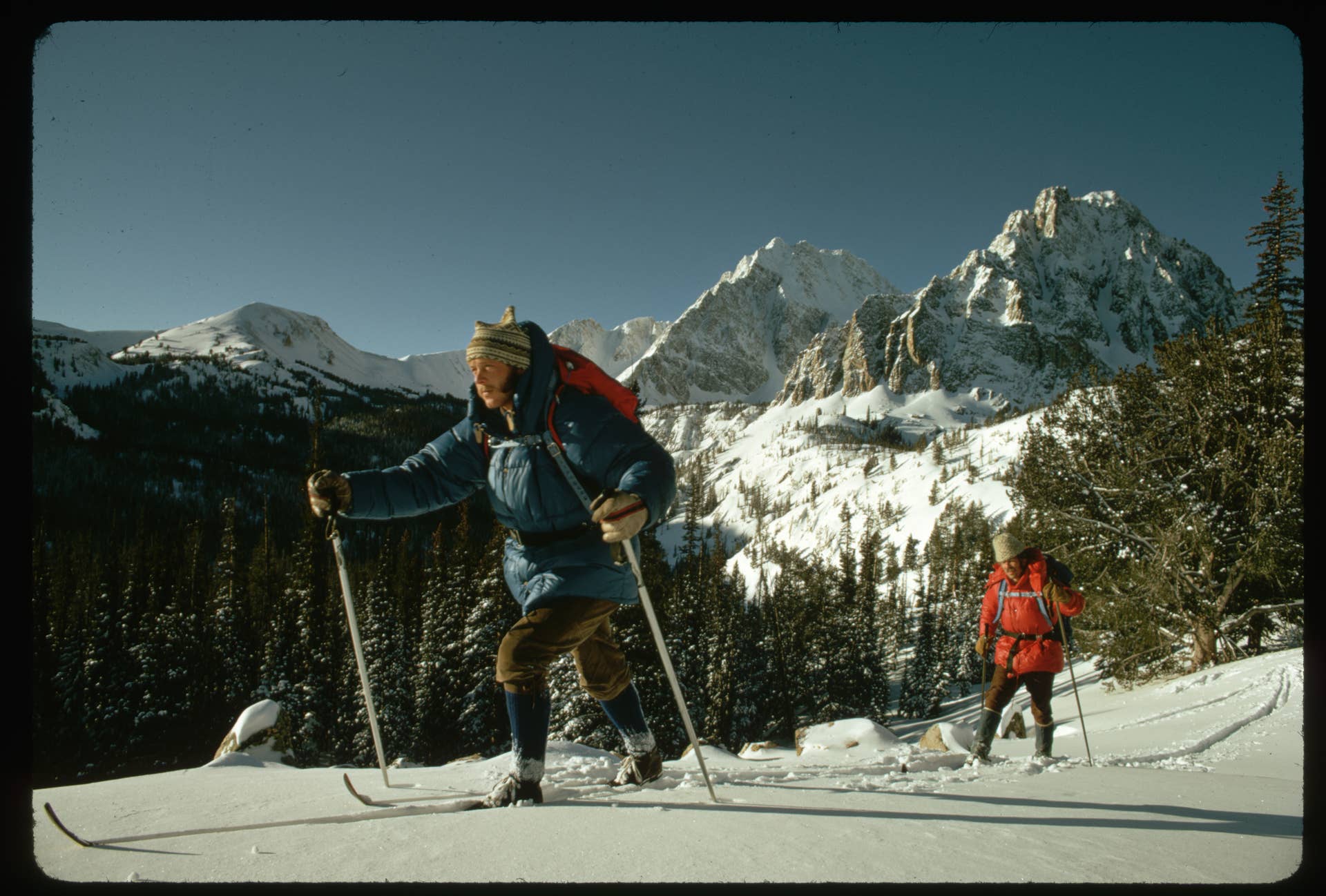
And, to my surprise, I loved skiing them. The equipment wasn’t just aged, it offered a free sensation I hadn’t felt in the modern gear I was then hoarding. I began seeking out these older models, and some even became my everyday choice. At that time, I had also come to learn more about Telemark’s roots in North America; how a cadre of countercultural, backcountry-minded skiers had rediscovered the Nordic method in the freewheeling 1970s, and, with that, instigated a mellow revolution.
But they used gear that little resembled even the previous generation’s equipment I was then enchanted by. The boots were leather, the skis long and skinny, all created for overland Nordic skiing, not strong descending.
That mattered little to this rugged corps. They skied the gear they had. And it wasn’t just used for meadows and mellow offshoots. A gentleman by the name of Rick Wyatt descended the Grand Teton in 1982, solo, on that telemark gear, then leatherbound, slight, and a far cry from the stability the alpine method then granted. It artfully marked that approach to skiing. “Many people, including several close friends, have told him they consider an attempt to ski the Grand on Nordic skis suicidal,” Chris Noble’s account, “The Grand Adventure,” read in POWDER Magazine. “But this is not an impulse for Wyatt…he is pursuing a quest which requires what one writer called ‘firm ideas about discipline and humility.”
In fact, the recent history of free-heel skiing seemed bound not to the ideal of underskiing per se, or even devotion to the telemark turn—Wyatt is said to have made parallel turns down the Grand; Lorne Glick is typically credited with the first telemark-turn descent of the peak—but of great achievement using the tools that were then available.
Still, an underskiing ethos was then nascent. “The days are long gone where there are huge voids on the map to be explored, or the highest peaks to be conquered for the first time,” Ned Gillette wrote in the Phoenix Newsletter in 1982. “Today, the essence of adventuring is style.” Gillette was writing about his and Jan Reynolds’s free-heel circumnavigation of Mount Everest, an adventure that included summiting the 23,442-foot Pumori and skiing icy passes and unnamed peaks, many over 20,000 feet in elevation. “We were doing something on cross-country skis that nobody had ever done before,” Gillette wrote.
A new cadre now carries that mantle, using similar equipment but more aligned with the true underskiing movement. Alex Kaufman, a resident of Colorado’s Front Range, typically employs skis far from the standard fare: short, wide, plastic models he uses in his “highly unorthodox style of backcountry skiing—one that seems to defy logic,” Frederick Dreier wrote in Outside. “He skis up and down slopes that are just a few miles from downtown Denver—hillsides with so little snowpack (and so many rocks and stumps) that your daredevil nephew wouldn’t sled down them, let alone tackle them on skis. Yet Kaufman navigates this terrain three or four days a week during the winter, often on his lunch break or before work.”
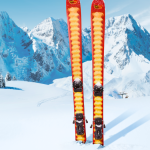
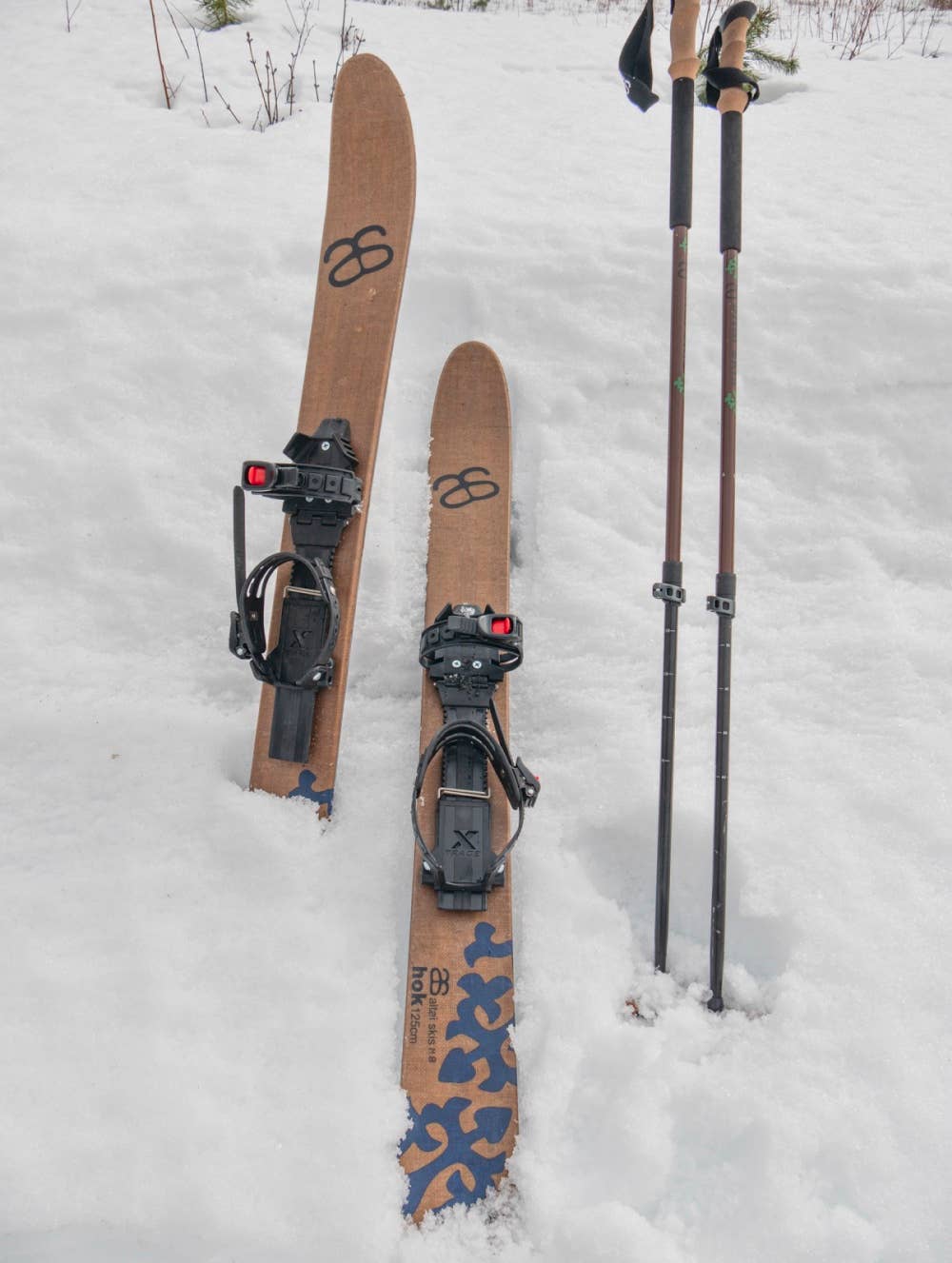
And he’s not alone in that sentiment. “You ski what your skis want to ski. And if you have on full AT gear or full tele gear with skins, and that’s the only way you can climb, you look for big verticals to ski and big mountains to ski,” says Nils Larsen, long a fixture in the cross-country downhill scene, and founder of Altai Skis, a maker inspired by the traditional skiers of the Altai Mountains, who often forge their skis with permanent climbing skins. “If you have a skin all the time, you just ski anywhere you want,” he says.
It was clear I had only gone so far; I hadn’t gone back to the beginning, where I would find not only hints of telemark’s roots, but a method for skiing—even underskiing—that was eminently valid, perhaps transcendent, even today.
Altai Skis
The moment I felt an unavoidable draw toward that take on skiing was watching an old promotional telemark video. It was a film from long-time telemark brand Voile, released in 1989, that somehow had found a home on YouTube.
Within, sweeping landscapes of the craggy, snowbound fins of the Wasatch were punctuated by just a few people skinning, bootpacking, and skiing. All on cowhide boots (with a few plastic cuffs thrown in), and three-pin bindings. Their exploits were set to a mellow acoustic soundtrack that was as welcoming as the entire film felt aspirational. There were no pretenses; no cool-or-bust mandates. Just strong skiing.
The climax came when a single, helmetless skier came into view, filmed from the side as they skied a steep, cornladen slope in commanding, rhythmic lunges. The slow-motion sequence was a heady mixture of tranquility and power; at once collected and free. There I discovered—at last—how I wanted to ski.
But it was far from a simple aesthetic. Peering through the looking glass, into another time, the vision was not of irony or nostalgia, but the timeless simplicity of strength and poise, no matter the implement. In one moment, I realized that not only was this the kind of equipment you could take to places like Walton Peak or on a snowy golf course, but, as I had heard echoed before, anywhere.
It wasn’t all easy; I wasn’t skiing big lines on little skis from the beginning. Instead, I was faced with a learning process that was perhaps more than I had bargained for. And other challenges remained. As underskiing entered my psyche as forcefully as modern free-heel skiing had before, I eventually began collecting more kits aimed at the practice.
I acquired legendary new-in-box bindings from around the year I was born, and mounted them on massive cross-country planks that were both long and wide. Skiing on them resembled a freighter meandering to and fro in a rough sea, what amounted to a haphazardly imposed bigger-is-better ideal. I soon had other options for underskiing in my quiver; one was skinny and parabolic, another mirrored in its dimensions and branding the freeride planks sold in ski shops nationwide.
I was still focused on underskiing, but was my ethos still that of the minimalist? Or had I accidentally stumbled into the pitfalls of commerce and hoarding while trying to simplify?
I had come to a culmination. In that moment, I realized that underskiing wasn’t just a re-creation of a past method. It was something new. And it was a dogma borne on deoptimization, and for the better. On any gear, my technique was more confident, my turns were stronger, and I had a newfound arrow in my quiver; one I could use as an alternative to busy resorts or on less demanding slopes when the snowpack was troublesome, but also for a long, challenging journey that was greater than the sum of these outings.
Above all, I had an ideal I hadn’t expected to find.
Jack O'Brien
Years later, I was back where it all began: Walton Peak. Many things were the same that day. The sky was the same mesmerizing high-altitude cobalt, and the snow was deep and crystalline; the same medium we had hoped to find the last time I had ventured this way. But other things were simplified. I arrived with one good friend at an empty parking lot, basking in the late afternoon sun. And we leisurely made our way, with me on my original trusty setup tailored to the de-optimized alchemy that is underskiing.
We ascended the mellow woods around Walton Peak, at times slipping, occasionally using flailing sidesteps to scale downed trees and steep sections. More utilitarian gear would surely have made the task easier. But that day, we were unencumbered not just by more gear, but by an associated mindset.
We meandered around the high point of Walton Peak, that blip that rises not so much into a jagged point but a perch, holding powder snow and its few but meaningful turns, speckled with trees and boulders. There we ascended, until there was nowhere left to rise, left only with a vantage to endless mountains and hanging valleys.
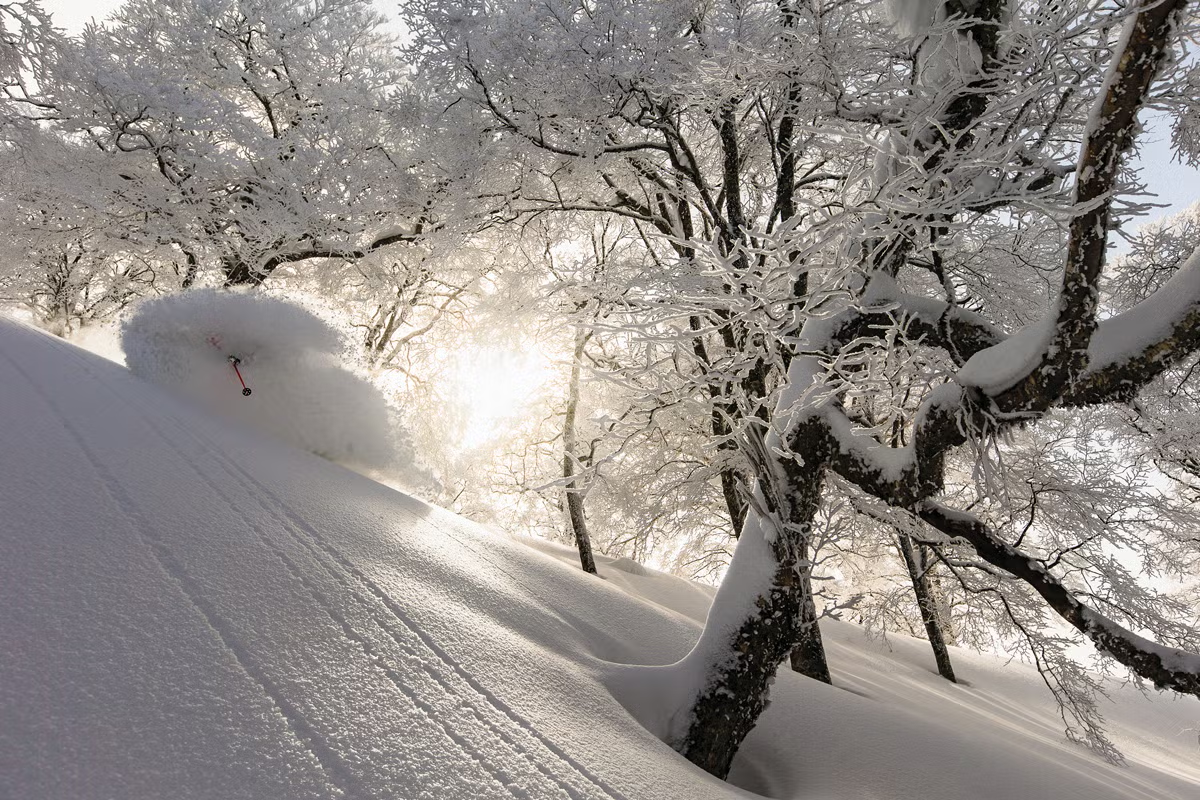
And, once the mood struck, we skied. That day I was unladen; no backpack, no helmet, just a flask of water and a friend. And a pair of skis that paired perfectly with that slope. I wiggled turns in boot top powder, down to where our final ascent had begun just moments earlier.
And we then did what thousands before us had done over countless generations, on skis either of the moment or perhaps purposefully undergunned for the task at hand; something we’re giving a name to today but has always been with us.
On simple gear, we go back up again. And ski.
About The Brave New World of Skiing Column
This article was written by POWDER writer Jack O’Brien for his bi-weekly ‘Brave New World of Skiing’ column. Click below to read the previous column, ‘Can Telemark Skiing, or Any Micro-Niche, Be Self-Sustaining?’
Related: Can Telemark Skiing, or Any Micro-Niche, Be Self-Sustaining?