Updated September 2, 2026 02:52PM
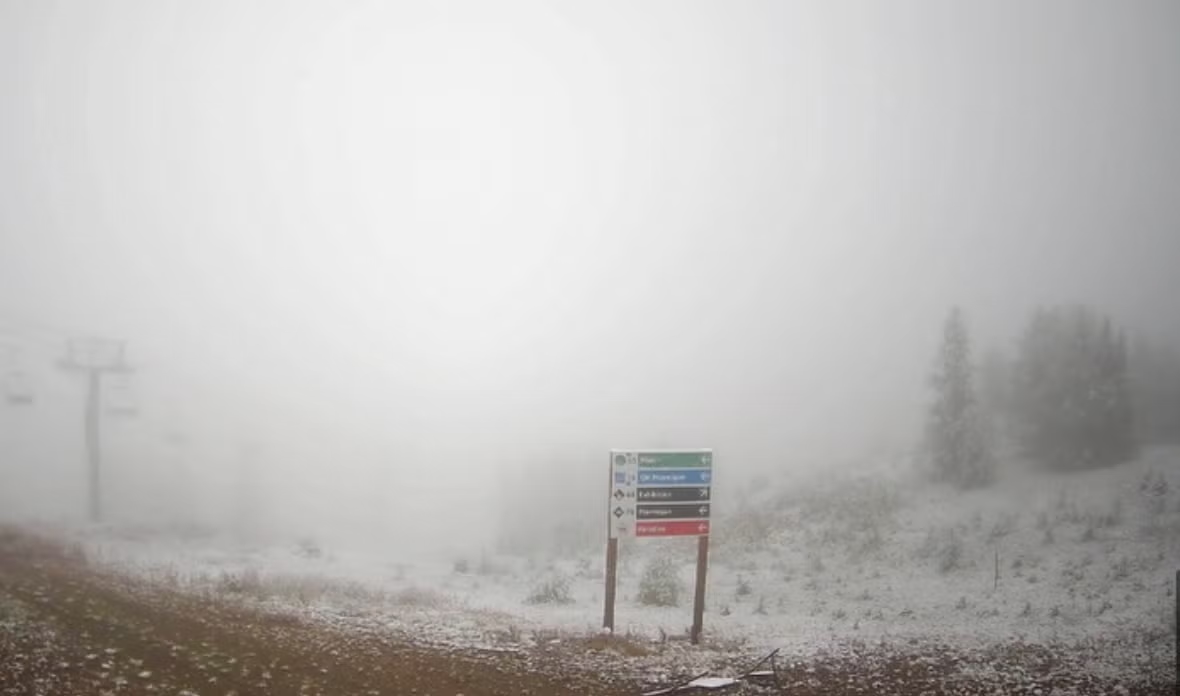
We’ve all been that skier: perched at the top of a run, ski tips hanging over the drop, eyes scanning for hazards. Do you drop in, or stick with the familiar? It’s a decision that usually comes down to the condition of the run, your confidence, and the trail rating. But what happens when the rating is something you’ve never seen before?
Most North American skiers know the standard difficulty progression: green circles, blue squares, and black diamonds. In recent years, however, a handful of ski areas have introduced a new category reserved for their most serious terrain: the triple black diamond.
In 2004, Smugglers’ Notch added a beloved but previously unmarked glade to its trail map, distinguishing it with three black diamonds. Fifteen years later, Big Sky followed suit, assigning a triple black diamond rating to nearly every run accessed from the summit of Lone Peak to better communicate the severity of the terrain.
The catch is that a triple black diamond isn’t a universal standard. Like every other trail rating, it’s relative to the rest of the ski area’s terrain.
“Terrain ratings are always relative to the mountain you’re skiing,” said Matt McCawley, the content media specialist at Smugglers’ Notch Resort. He’s the first to admit that a triple black diamond rating at Smuggs might not garner the same rating at a ski area like Jackson Hole. “[It] doesn’t have the same exposure, sustained pitch, or massive cliff features you can find in some extreme Western terrain.” But you might find extremely tight trees, turns made out of ice, and no bailout.
The triple black diamond runs below may vary in difficulty from mountain to mountain, but they accurately mark the most challenging terrain each ski area has to offer.
Most of Upper Lone Peak — Big Sky Resort, Montana
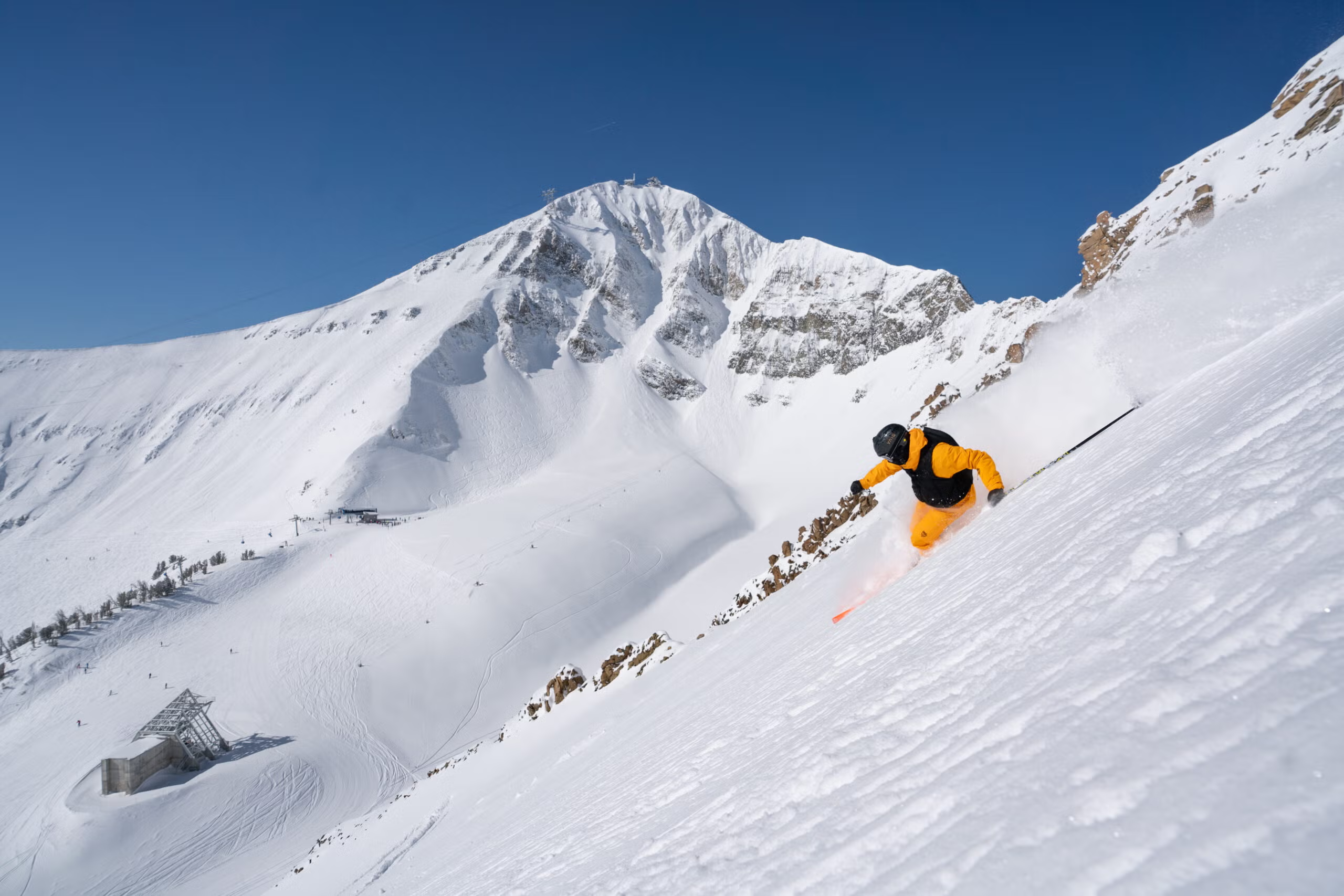
From the top of the Lone Peak Tram, only one descent isn’t rated a triple black diamond, leaving Big Sky with more than 20 named triple black runs.
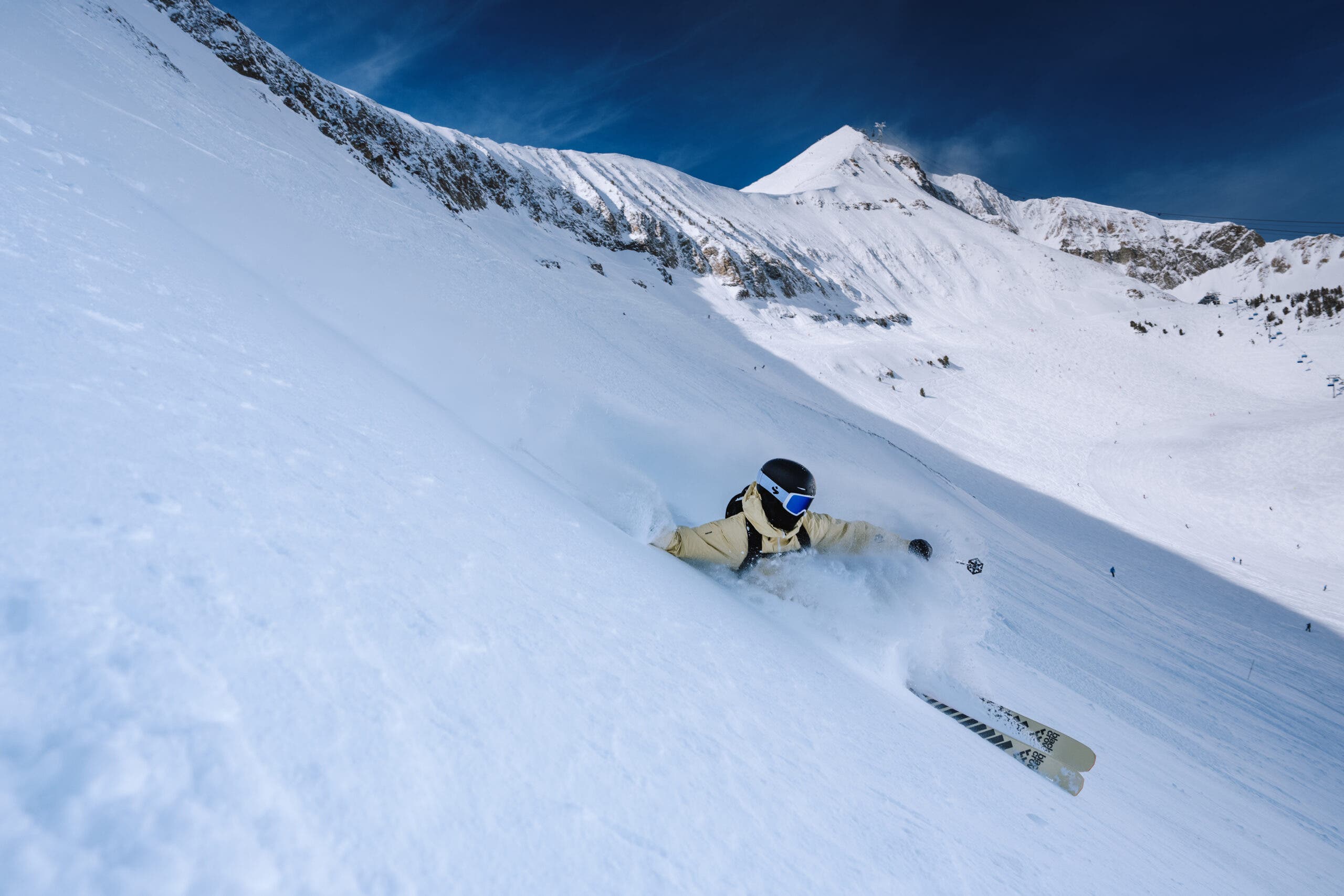
The addition of Big Sky’s three black diamond rating happened in 2019 as a way to communicate to skiers “ the risks of skiing high alpine, high-consequence terrain.” Big Sky shared that their methodology around the rating included factors like “exposure to uncontrollable falls along a steep, continuous pitch, route complexity, and high-consequence terrain.”
In addition, two of Big Sky’s “managed access” areas with triple black diamond ratings — the Big Couloir and the Upper A-Z Chutes — can only be skied by a small number of people before conditions deteriorate and it becomes difficult for ski patrol to get in for a rescue.
The Black Hole — Smugglers’ Notch Resort, Vermont
There is just one run at Smugglers’ Notch that has a triple black rating: The Black Hole. The aptly named run started as an unmarked glade where in-the-know locals would head for hits of powder after the rest of the resort was skied off, but in 2004, the resort named it The Black Hole and put it on the map with a triple black diamond rating.
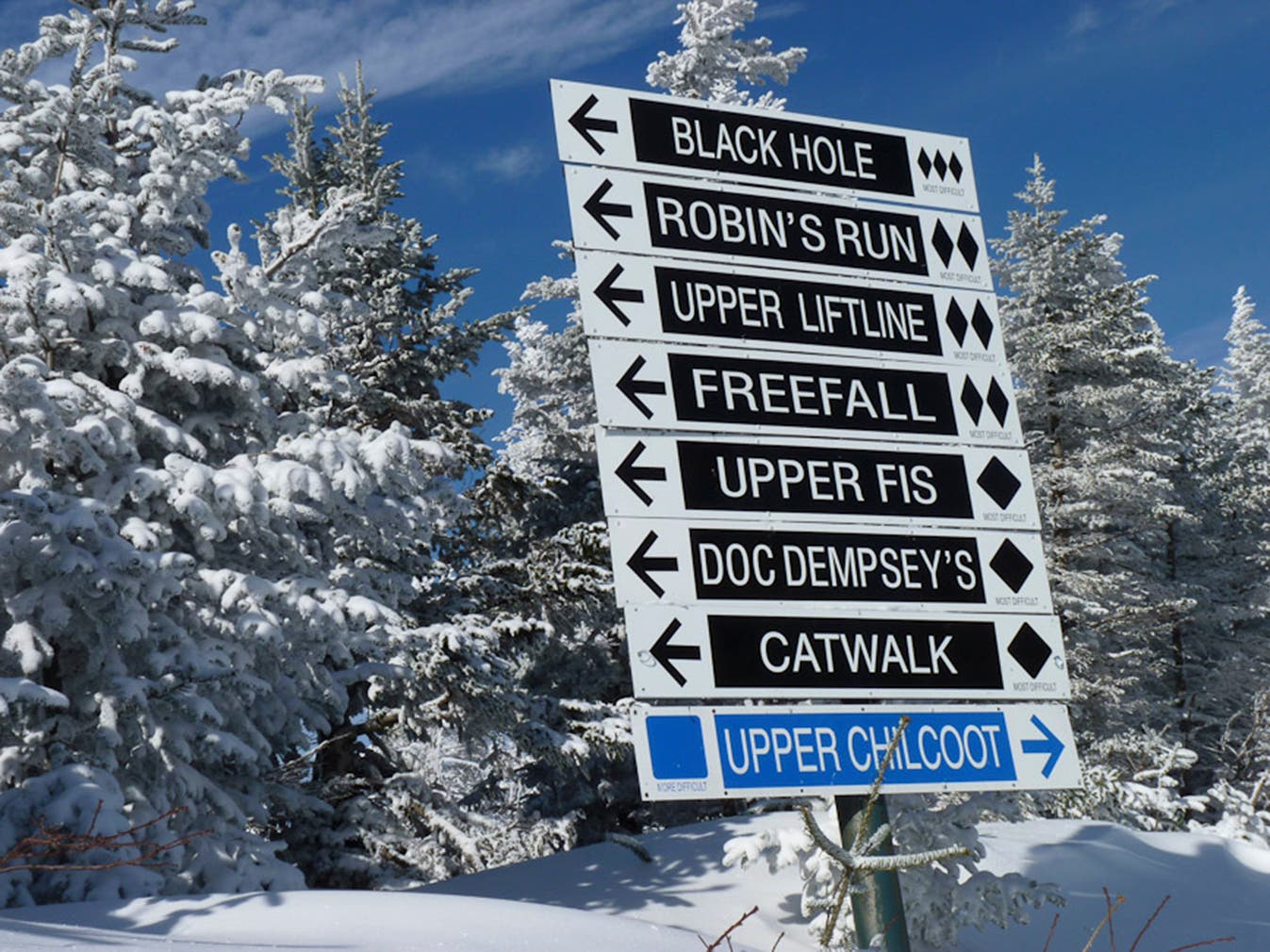
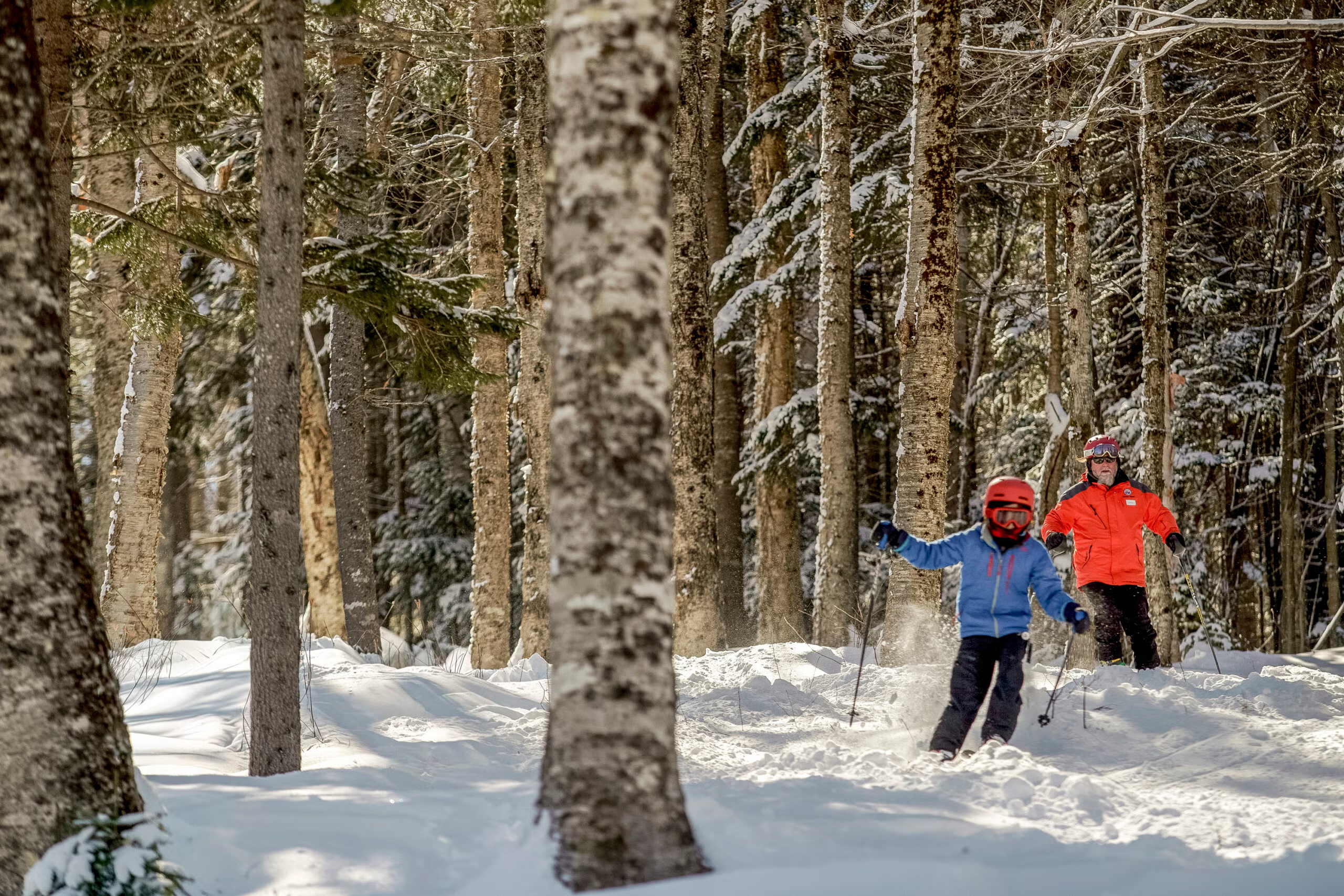
“We felt its rating needed to reflect the additional difficulty that comes with skiing terrain that steep and technical through tight Vermont woods,” said McCawley with Smugglers’ Notch Resort. “It’s really a maze of different lines through the woods. Every turn requires control because there aren’t many bailout options. Once you’re committed to a line, you’re often committed for a while. As the season progresses, some of those lines can develop almost a bobsled or luge character, where the terrain starts dictating where you’re going next.”
Rabbit Hole & the “Extreme Backcountry” Area — Mount Bohemia Ski Resort, Michigan
At most U.S. ski areas, 20 to 30 percent of the terrain might have a black diamond rating, but at Mount Bohemia, things are done a bit differently. The ski area in Michigan’s Upper Peninsula is known for some of the longest runs and highest vertical in the Midwest, and it lives up to that reputation, marketing itself as an “extreme” ski area with more than 90 percent of runs rated black diamond.
With that context, it makes sense that Bohemia needed to distinguish their hardest runs, giving Rabbit Hole and the “Extreme Backcountry” area on the frontside of the mountain a triple diamond rating.
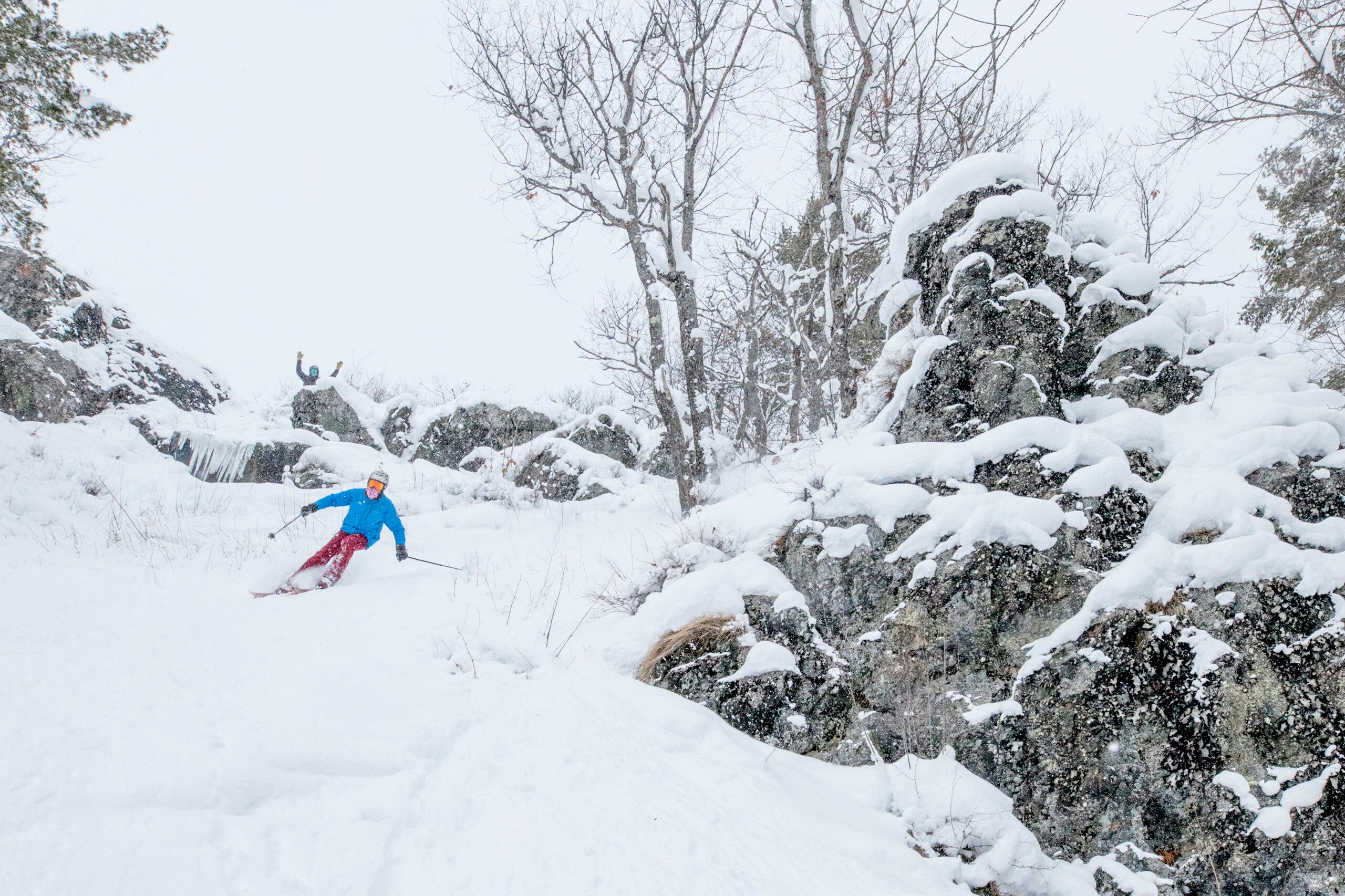
Boho’s triple black runs tend to feature variable snow conditions, unmarked cliffs, and stumps surrounded by tight trees. And, like Smuggs, once you’re in a run, there’s often no easy way out, requiring skiers to commit to the line they’ve chosen.
Upper Bou-Bou, Etonnoir & Crocodile — Mont Sutton, Quebec, Canada
Canada uses the same rating system as the U.S., but like the U.S., those ratings are relative to the rest of the ski area’s terrain. Like Bohemia, Mont Sutton has an unusually high concentration of expert terrain, with roughly 45 percent of the mountain rated single, double, or triple black diamond.
On Sutton, there are three ski runs with a triple black rating: upper Bou-Bou, Etonnoir, and Crocodile. Upper Bou-Bou and Etonnoir are fairly short, with Bou-Bou feeding into the run’s single-black lower half and Etonnoir ending at Relais, which is one of Sutton’s few green runs. Crocodile is a bit longer and more substantial.
All three runs received their three-diamond rating for features like snow variability, hidden tree wells, dense glading, and raw drop-ins.