It isn’t a good idea to paint any ski season with too broad a brush.
One-off storms, hidden swaths of wind-buff, microclimates, and a good attitude can all go a long way, even during winters that don’t add up on paper. And yet, if you were to ask many skiers living out West, they probably wouldn’t sugarcoat their answer: this past winter sucked, and it’s time we go ride bikes or something. At the very best, they’ll call it weird, and shrug.
That wouldn’t be true if you find a skier from the Banff, Alberta, area, though.
They’ll tell a different story, saying it was a season that “gave and gave and gave.” Or, they’ll use the words “remarkable” and “memorable” in the same sentence.
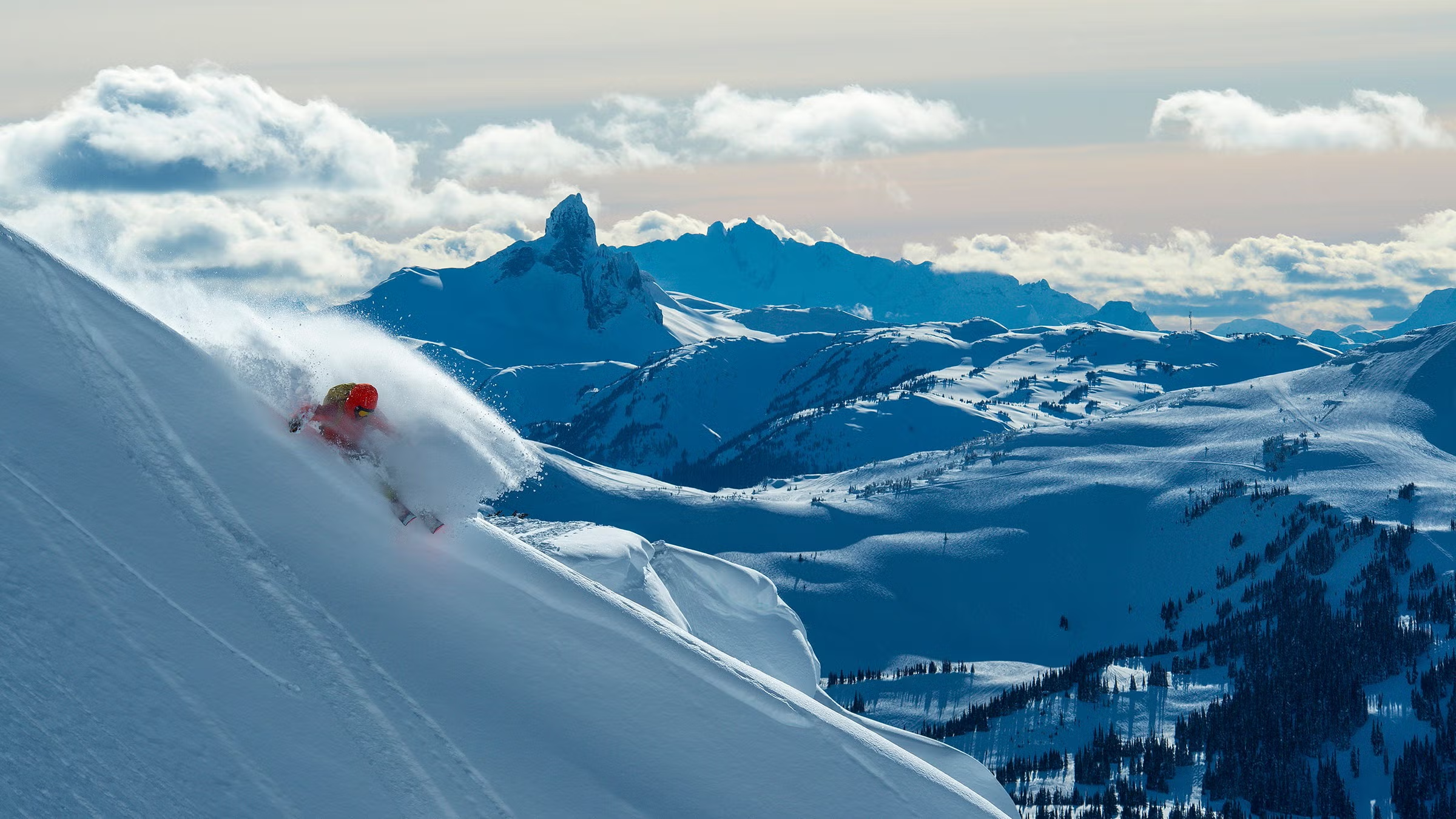
Those quotes come directly from folks at ski resorts around Banff, a picturesque hideaway with angular peaks and glittering alpine lakes. This winter, the three local mountains known as the Big3—Sunshine Village, Lake Louise, and Mt. Norquay—all saw plenty of powder, sometimes in record-breaking fashion.
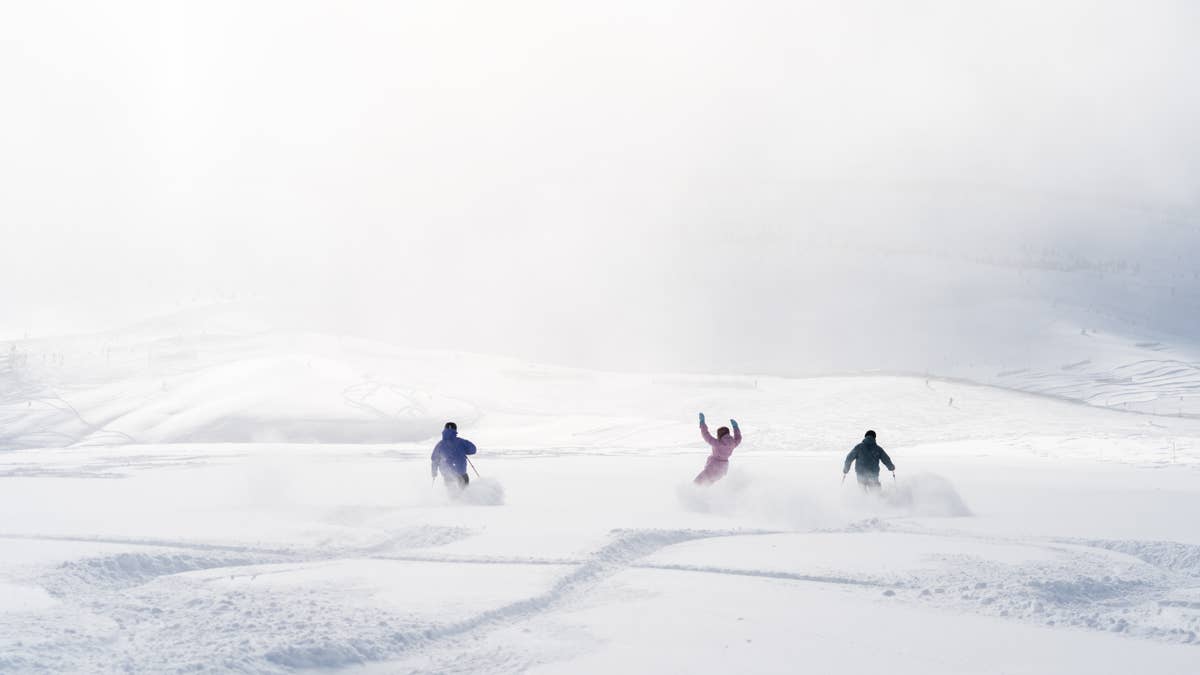
Courtesy Sunshine Village
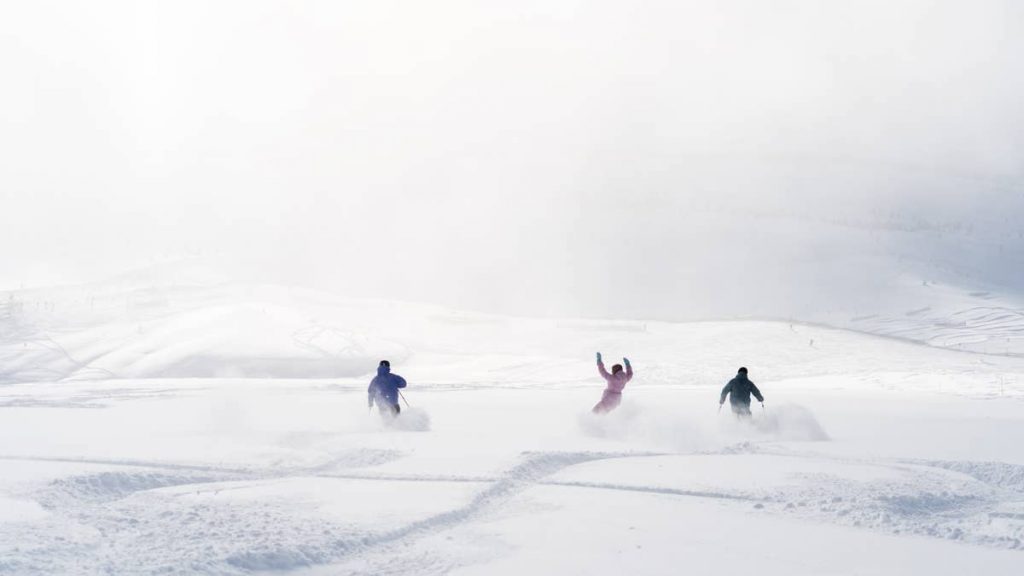
In early November, the flakes were already flying. All the snow allowed Sunshine to get a head start on the second of the month, notching its earliest opening date in about four decades. The conditions were such that Kendra Scurfield’s son perhaps got too comfortable with living every skier’s fantasy.
“On one of the days that there wasn’t powder, he’s like, ‘Mom, what’s wrong with the snow? Why don’t we have powder today?’” Scurfield, the vice president of marketing, brand, and communications at Sunshine, said. “He’s smart, a five-year-old who thinks powder is the best snow.”
December proved particularly fruitful. Matt Wilson, Sunshine’s lead forecaster, told me that during a stretch that month, weather models called for 2 or 3 centimeters each day. Instead, refreshes of up to 15 centimeters—or about six inches—kept hitting.
By the end of December, Sunshine proudly announced that 105 inches of snow had fallen, making it the fifth snowiest December on record. Only three days in December didn’t see any snowfall, noted Wilson.
“That really set us up for success for the rest of the winter,” he said.
Sunshine’s season snowfall record was set in 2012, when roughly 411 inches fell. This winter didn’t quite surpass that mark, but Wilson explained it did rank among the top three seasons for precipitation, showing how wet it got. Only two other winters—1985-86 and 1995-96—saw a higher snow water equivalency, a measure of moisture content in the snowpack. As of early June, about five feet of snow remained on Sunshine’s upper mountain.
Just up the road, Lake Louise also added an entry to the history books. The resort managed a new overall best of 370 inches, said its director of marketing and sales, Emmett McPartlin. The mountain had an early opening of its own, too. Richardson’s Ridge, a new lift in Lake Louise’s back bowls, debuted three months ahead of schedule, thanks to the snow.
“It was quite a few operational things, and along with the snow, that really aligned to make it a bit of a charmed season,” said McPartlin, adding that more terrain for advanced skiers is coming to Richardson’s Ridge in the future.
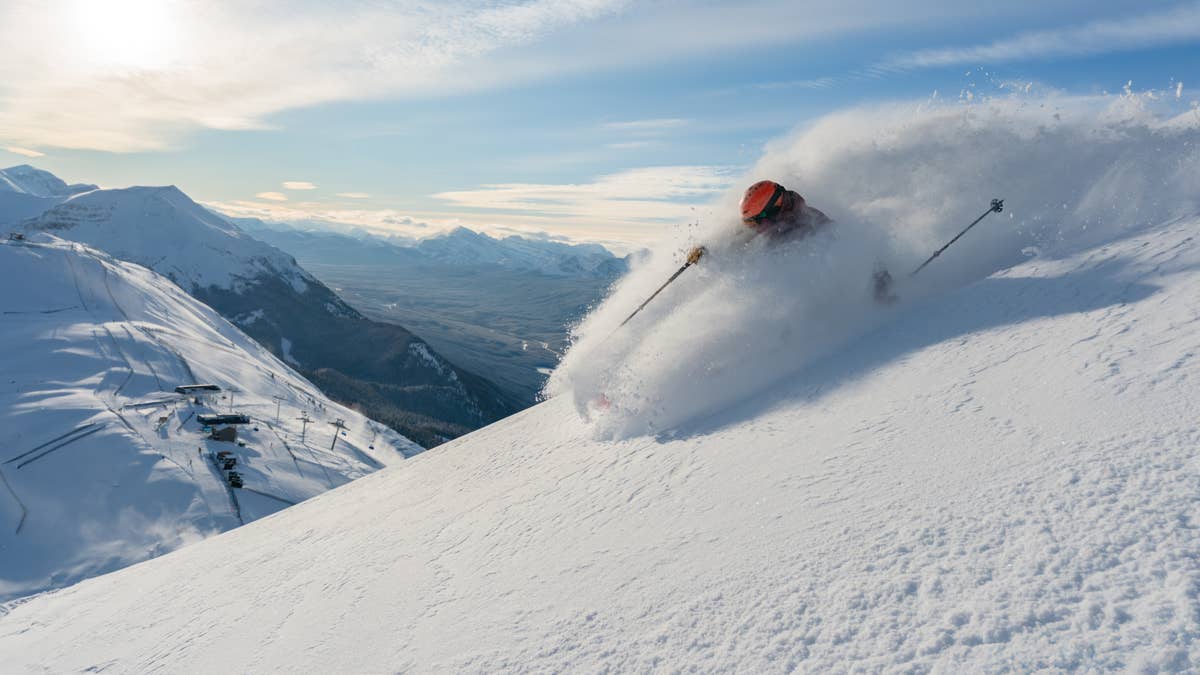
Chris Foote/Lake Louise
Asked about how the snowy season came to be, Alysa Pederson, a meteorologist with the Meteorological Service of Canada, highlighted the jet stream, a fast-moving river of air that moves from west to east, acting like a storm highway. This “fire hose of moisture,” as she called it, often pointed towards Canada.
According to Pederson, one—but not the only—factor that led to that was La Niña, the climate pattern that can influence winter weather.
“What La Niña means, and typically means for Western North America, is that we get what we call ridging in the States and into southern BC,” she explained. “That’s where that jet stream is a little bit further north than it normally is.”
Another quirk was the temperatures. Around Banff, they spent much of the winter above normal. And warmer air, generally speaking, carries moisture better, which can mean more snow if the freezing levels don’t climb too high. So, as the jet stream came in, Pederson said, the storms “had a little bit more oomph to them.”
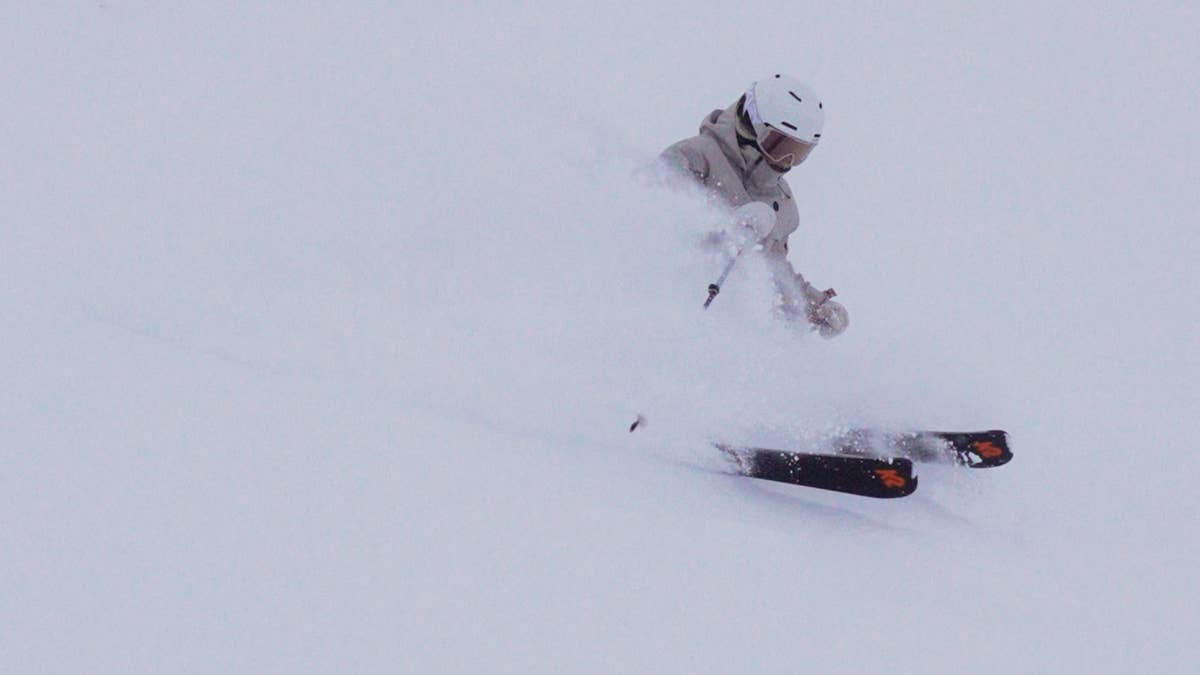
Courtesy Sunshine Village
The state of affairs left skiers in other parts of the West, myself included, gazing up north with a mix of admiration and confusion. How could it be so rough here but so great there? Some didn’t just watch from afar. Many Americans acted and headed for snowier terrain, resulting in a 50% annual increase in visitation to Banff’s ski resorts from its southerly neighbors.
“We definitely saw an influx of people from elsewhere that was stronger than other years,” said McPartlin. But this wasn’t an opportunity to gloat while some mountains struggled. “Seeing other resorts in the West going through a low snow year, that’s not something we enjoy, right?” he continued. “Low snow years of that scale, it’s bad for the industry as a whole.”
Banff’s unusual, attention-grabbing season officially came to a close last month. But for Sunshine, the show isn’t over quite yet. In 2022, the resort revived the 1990s tradition of reopening for summer skiing when the snow piles up.
While the resort is now closed for maintenance, it’ll once again welcome skiers on June 20. The plan, for now, is to spin the Strawberry Express lift until July 5, but there may be more terrain, depending on how the conditions fare.
“We really made it a conscious effort to start thinking that summer skiing could be a reality if weather permitted,” said Scurfield. “We go into our season knowing that it’s a possibility if the stars align.”
This season, they did.
Related: Matthias Giraud Lands First Ski BASE Jump of Aiguille du Plan North Face