The mountains always have something to offer—if you’re willing to look for it.
Forrest Smith chases soft snow. He doesn’t find it here (Photo: Jake Stern)
Published August 7, 2026 09:06AM
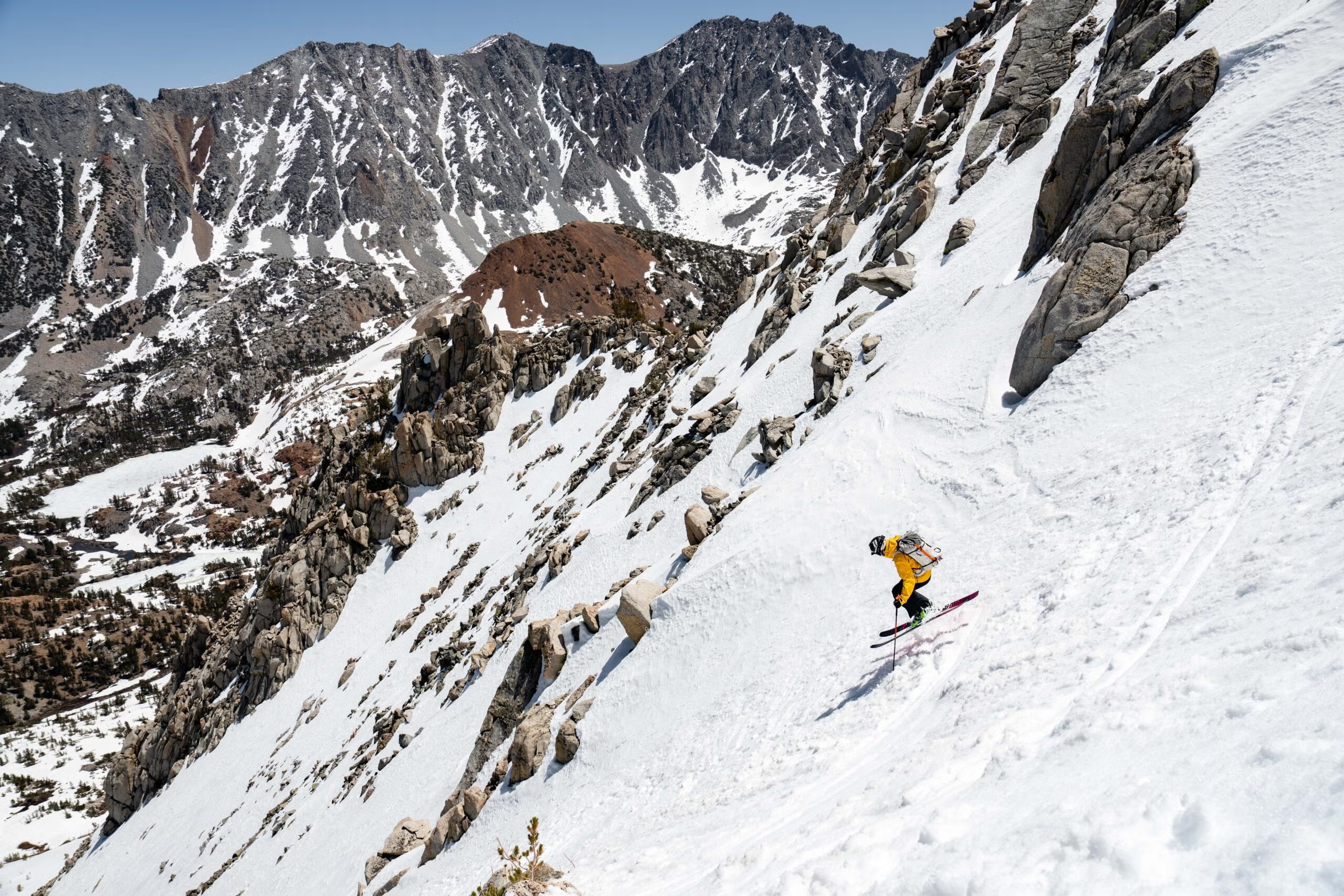
I stood atop Wipeout 1, scanning the entry for sharp volcanic rocks, considering my lackluster options. It was the third poor season in a row at Mammoth Mountain, my home hill, and the high pressure ridge had consolidated; I hadn’t seen a snowflake in weeks. So there I was, atop Mammoth’s popular Hollywood line, skiers on Chair 23 watching me with sideways grins, wondering if I’d drop in.
Screw it, I thought. I can’t keep skiing the same two groomers all month.
I feathered my edges, found the top of a Volkswagen-sized bump to turn off of, and entered the short couloir.
I didn’t realize it then, but that decision would change how I thought about skiing. Like most of us, I used to believe a good ski day depended on good conditions. Now I think it has far more to do with how you choose to approach the mountain.
Related: The Last Big El Niños Didn’t Deliver What Skiers Expected. Here’s Why That Matters Now.
Despite its reputation for big open bowls, the ability to straight line for 1,000 feet with no obstacles to avoid, immaculate wind buff, and general ease of skiing, Mammoth is a phenomenal professor of edge control. I had arrived in town in 2019 hot off a good season at Alta, where I fell in love with steep skiing without much technique to speak of.
In Mammoth, my Utah pickiness got me nowhere. After a few weeks carving Broadway and St. Anton, I became bored and frustrated. I ventured beyond the pistes, where I quickly realized I’d either improve my technique or spend a lot of time sliding. The north winds polished the upper mountain into knife-hard snow, forcing me to trust my edges, read subtle changes in texture, and make precise, controlled turns above sharp igneous rocks.
Eventually I started hammering laps off the top, oftentimes becoming the only skier doing so all day. Slowly, fluidity came, and I began to understand exactly how much edge to use to avoid the shuddering chatter. Somewhere along the way, I developed a sick affection for windboard. My wife calls it a disease—and me a boardhound—but what can I say? Predictable snow is a blessing in any form. Especially after I started skiing more of the backcountry and understood what truly bad snow looks like.
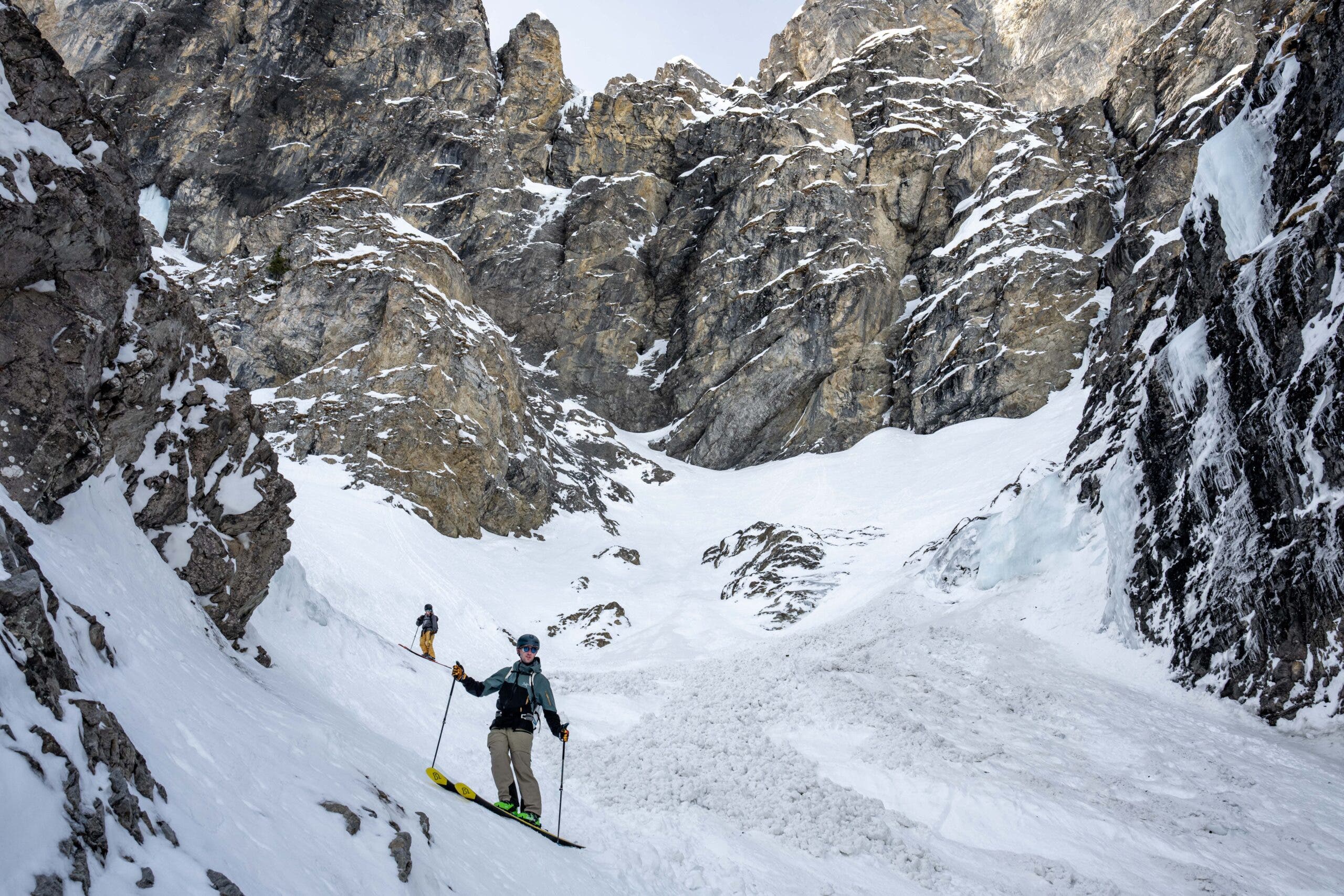
Around that same time, I started skiing more with my good friend Forrest Smith. Forrest has an ethos. He’s a true believer that somewhere, in a hidden pocket deep in a shady couloir in some stretch of our 200-mile range, there is good, soft snow waiting to be found. Forrest thinks it’s his duty to scratch around the Range of Light in search of that snow.
To do that, you’re going to ski a lot of shit snow.
But his unyielding faith that pushes him to seek also brightens his mind and his mood. He believes that a good day in the mountains is the outcome of his mindset and nothing else.
Also Read: Wind-Buff Is a Treasure and Can Be Better Than Skiing Powder
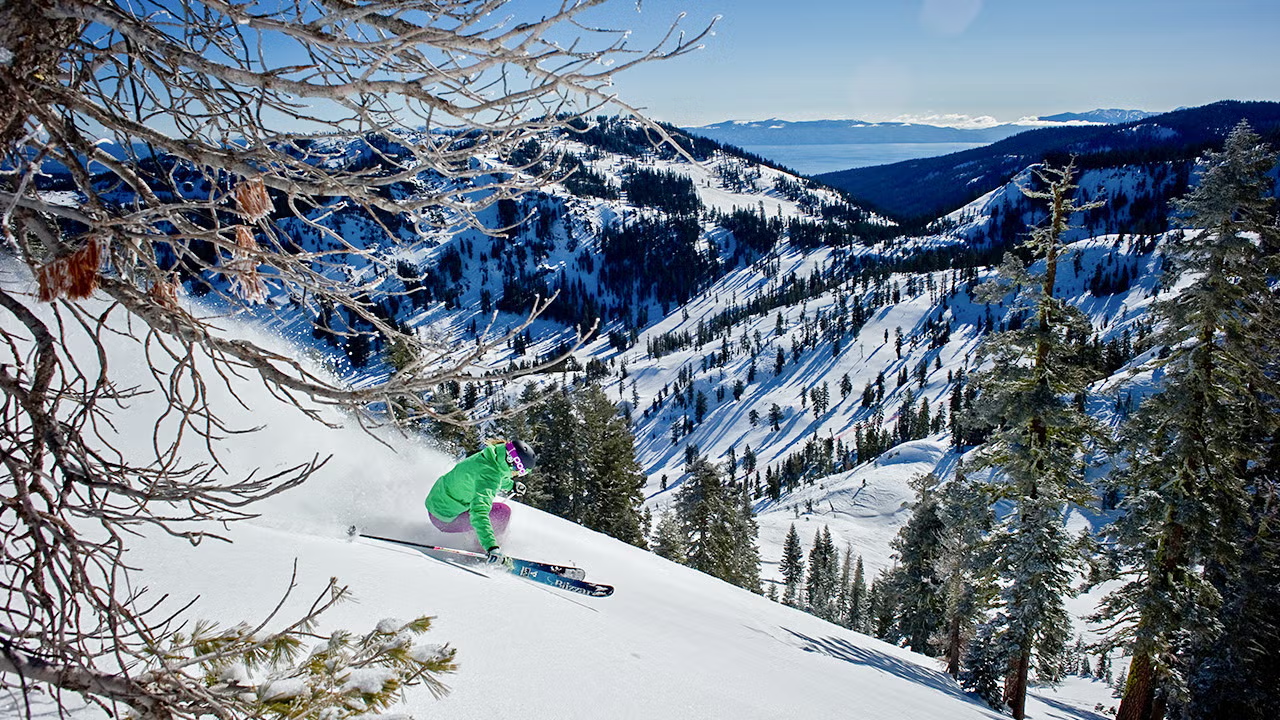
I’ve started applying that ethos to the resort. Now I poke and scratch all over the mountain, seeking out even a single turn of soft snow somewhere in a pocket of trees or beneath an overhanging cornice. Some days I’ll find it, and that turn will light my furnace for the next week of searching. Some days I won’t, but I’ll have still learned something, or glimpsed a beautiful ray of light reflecting off a lifthouse window. Some days, I get battered by wind or rain or hail and see lightning in the distance that shuts down my favorite chair. Even on those days, I’ll have moved my body and felt the arc of my ski and the energy of its rebound, or I’ll have caught sight of the teal Mono Lake far in the distance and felt the wind shake my senses.
Those moments have become just as meaningful as finding perfect snow.
I like to joke that I’ve never had a bad day in the mountains, and of course that’s not true. I’ve had my tips stuck beneath breakable crust and front-punched landings. I’ve had isothermal glop stuck three inches deep to my ski bases and slogged for miles only to turn around at the base of a dream line. But I’ve never had a day so bad that I wished I’d been anywhere else.
A good day of skiing is a mindset, and thanks to friends like Forrest, I’ve become a true believer. I used to think that blind optimism was foolish territory, but this feels like something different. It’s a faith in the general goodness of the experience, no matter how frustrating or jarring.
These days, when I stand above a scraped-off chute or stare down another wind-scoured face, I don’t ask whether it’s going to be a good ski day. I just wonder what I’ll discover. Somewhere on every mountain, there’s a turn worth remembering. The trick is simply believing it’s there.