Powder aims to feature only the best products and services. If you buy something via one of our links, we may earn a commission.
I’ll be the first to admit that I was a very late adopter to gravel biking. Despite being a diehard mountain biker, I was actually a roadie first for many years. Perhaps it was a product of where I lived at the time: New York City and Boulder, Colorado—but cranking out miles flying across perfectly smooth pavement was actually pretty damn fun. I also worked at a high-end bike shop throughout college that catered to the Boulder’s world-class cycling scene. It happened to be a leading Specialized dealer, and I remember being amazed at the build quality and clever innovations found in every bike from the California brand that I worked on at the shop. Skinny-tire road bikes like the Tarmac, Roubaix and Aethos were works of art to behold (and ride), so it’s no surprise that expertise soon carried over to the gravel world.
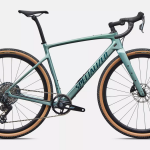
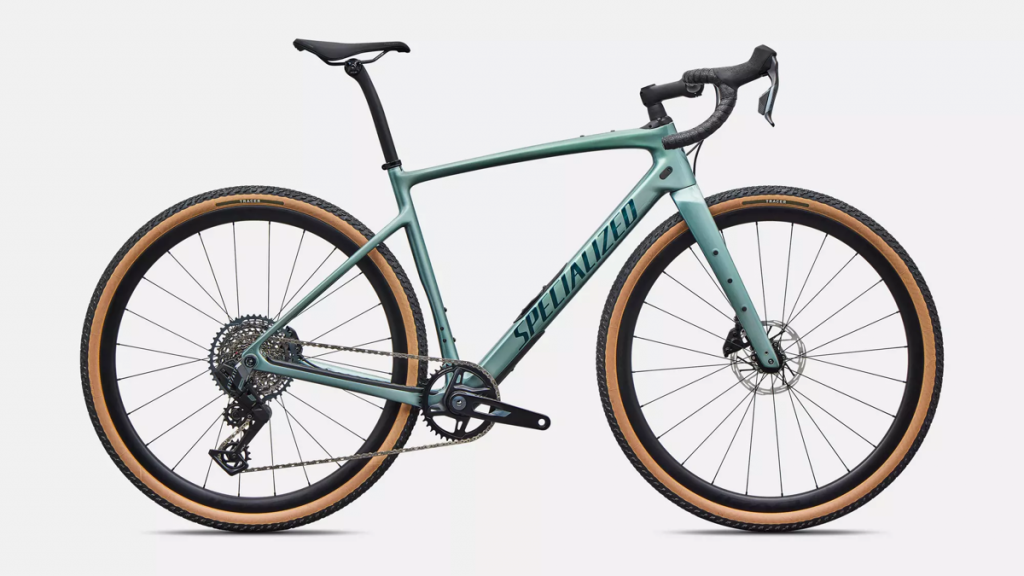
Specialized launched the Diverge in 2014 as their answer to the then-burgeoning gravel cycling sector. It’s hard to believe now, given that it has such a distinct subculture within cycling, but back then, “gravel” didn’t really mean much yet. At the time, it seemed to me like classic bike-industry marketing mumbo jumbo to get people to buy a new crop of bikes, adopt new “standards” and re-invent the wheel. Turns out, having a drop-bar bike that can quite literally go anywhere, paved or unpaved, road or singletrack, is plain old fun. It’s especially enjoyable when it encourages you to push a little harder, get into the drops, and ride rough roads like you’re on a road racing bike—low and fast. That’s the story behind the new Specialized Diverge 4, the newest iteration of the brand’s gravel racing/adventure bike. With some very clever design points, including built-in “suspension” (more on that below), comfortably aggressive geometry, and all the frame mount points you’ll ever need, the Diverge 4 proves yet again that smooth is fast, and fast is fun.
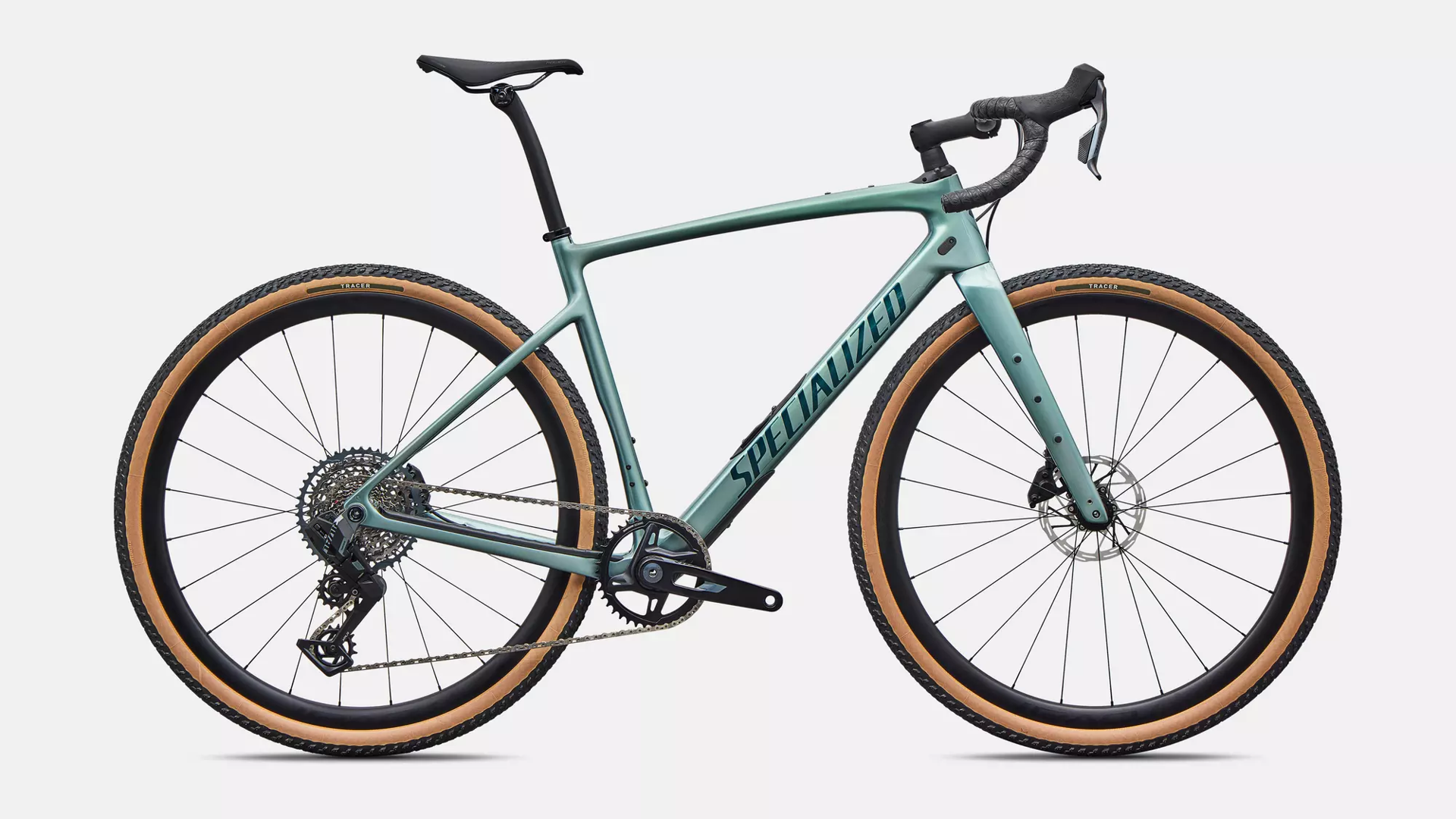
Specialized Diverge 4 Specs:
- Size tested: 58cm
- Build tested: Specialized Diverge 4 Expert
- Frame: Fact 9r Carbon
- Drivetrain/Groupset: SRAM Rival AXS XPLR
- Wheels: Roval Terra C carbon
- Weight: 19lb
- MSRP: $5999
Geometry, Sizing, Components and Tech:
Drop-bar bike frames tend to put their riders into one of two positions when it comes to geometry: aggressive/race for all-out speed, or a more relaxed, upright, and comfortable position for long rides. In my experience, the Diverge splits the difference, combining all-day comfort for your wildest adventure rides with a bit of the feel of a road racing bike. It’s not crazy aggressive, but it also doesn’t feel like a beach cruiser, the way some other gravel adventure/drop-bar touring bikes might feel. Despite the Diverge 4 being developed from gravel racing (the brand also makes a dedicated gravel race/cyclocross bike, the new Crux 5), Specialized talks about this bike bringing accessibility to the sport, and I would absolutely agree. It’s just plain comfortable.
The Diverge 4 comes in 2-3cm frame size increments, from 49cm to 61cm, and six build kits, including both carbon and alloy frames. I tested the Diverge 4 Expert, built up with an impressive array of components including carbon-rimmed Roval Terra C wheels and 45mm Tracer tanwall tubeless tires, SRAM’s wireless electronic Rival AXS E1 XLPR brakes and 1×13 drivetrain, Specialized’s FutureShock 3.2 suspension built into the head tube, and a large in-frame SWAT storage compartment. The frame accommodates up to 50mm-wide 700c tires, or 2.2″ MTB tires.
The FutureShock 3.2 is a mini hydraulically-damped shock built into the head tube of the bike that allows the bars to move vertically by about 1cm, giving a stiff but smooth suspension feel while riding really rough stuff. Some version of the tech has been around since the early days of the Roubaix and Ruby road racing bikes (built to win races on European cobblestone roads), and it just makes so much sense to integrate into this type of bike. It’s far simpler than adding a suspension fork, and is damped in a way that doesn’t really impede power transfer when you’re gripping the bars and pedaling hard.
Performance:
I would still not call myself a gravel connoisseur, and will preface this part of the review with the fact that my impressions of the Diverge 4 are coming from the perspective of a freeride skier, enduro and downhill mountain bike rider and racer who used to get to ride a lot of fancy road bikes. I do, however, now live in Teton Valley, Idaho—home to hundreds of miles of gravel roads, singletrack, and pathways to explore via bike when it’s not ski season. It’s an ok place to own a skinny-tired road bike, but it’s an awesome place to own a gravel bike.
The Diverge 4 Expert is one of the smoothest bikes I have ever ridden. Across pretty much any surface, it wants to accelerate quickly and powerfully, and smoothes out the ground below your tires, maintaining speed while begging to go faster. I mostly spent my testing time exploring various routes from my house, enjoying the sensation of effortless speed as the gravel and asphalt seemingly melted away beneath me.
Up front, the Futureshock system works remarkably well to keep your wrists and upper body from taking a pounding on rutted-out washboard roads, a reality of most gravel riding. I think some of the smoothness can be attributed to the Roval carbon wheel set, which much like on a mountain bike, adds that distinctly damp ride feel. On roads that I normally would have crept along on aboard other bikes, I found myself consistently maintaining speeds over 20mph—and pushing it much faster on descents. Even loaded down with frame bags for a longer trip, the handling remains smooth composed. Overall, the bike is incredibly stable and very confidence-inspiring.
On pavement, the Diverge 4 feels like a very fast road bike. On rough gravel, it feels like the same very fast road bike. That consistency across surfaces is pretty amazing, showcasing how balanced and predictable the bike is. In fact, it doesn’t really have all that much of a personality, which I would actually call a remarkable achievement. There’s a refined simplicity to the machine, where no detail feels like a gimmick or overdone. The 1-by electronic shifting is intuitive, and the FutureShock disappears until you’re on a rough patch of road, when it does exactly what it should. The frame storage is there when you need it, but doesn’t change anything about the bike’s ride feel. It’s a bike that’s about simply converting pedal strokes to miles. Like almost everything I’ve ridden from Specialized, the Diverge 4 just works.
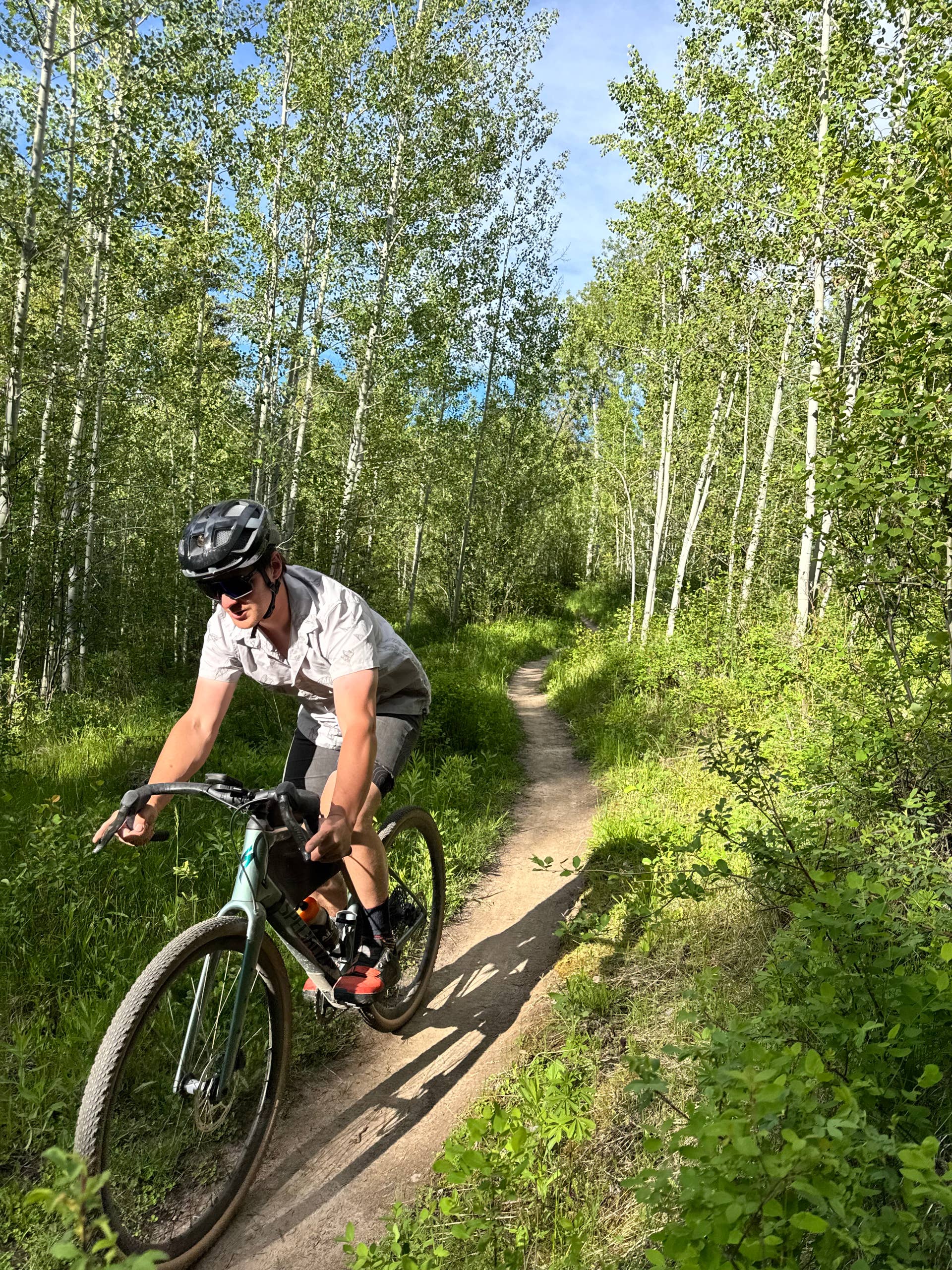
I’m six feet tall, and found that the 58cm frame put me in a pretty neutral riding position. I didn’t feel too stretched out, nor did my hands or other body parts ever feel like they were going to sleep on long rides—an issue I’ve had with many bikes before. In other words, it fit me great, even on 60-mile rides.
As a mountain biker, I had to take the bike out on some technical singletrack to see what it was capable of off-road. In all honesty, it’s a fun challenge, but it’s not something I found myself drawn to frequently. I’d rather just take a mountain bike on those trails. Handling a skinny tire drop-bar bike without a dropper seatpost on technical singletrack really isn’t all that awesome, but it handles far better than most in these conditions, and it’s fun to take singletrack shortcuts when they present themselves. However, I’m not taking this bike to the trailhead to go mountain biking. Sometimes, it’s a matter of “just because you can, doesn’t mean you should.” To put it into a skier’s terms, it’s like taking a skimo setup to the resort. It’s possible, and can be fun in it’s own weirdly challenging way, but you’re really just using the wrong tool.
Living With The Bike:
I was impressed with how little maintenance the bike required during my time testing it. That’s always a good thing. Other than cleaning the drivetrain periodically and charging the AXS battery a few times, I never did anything else to the bike. I’m sure that if I rode more steep descents, I would have burned through the brake pads, but those are an easy swap.
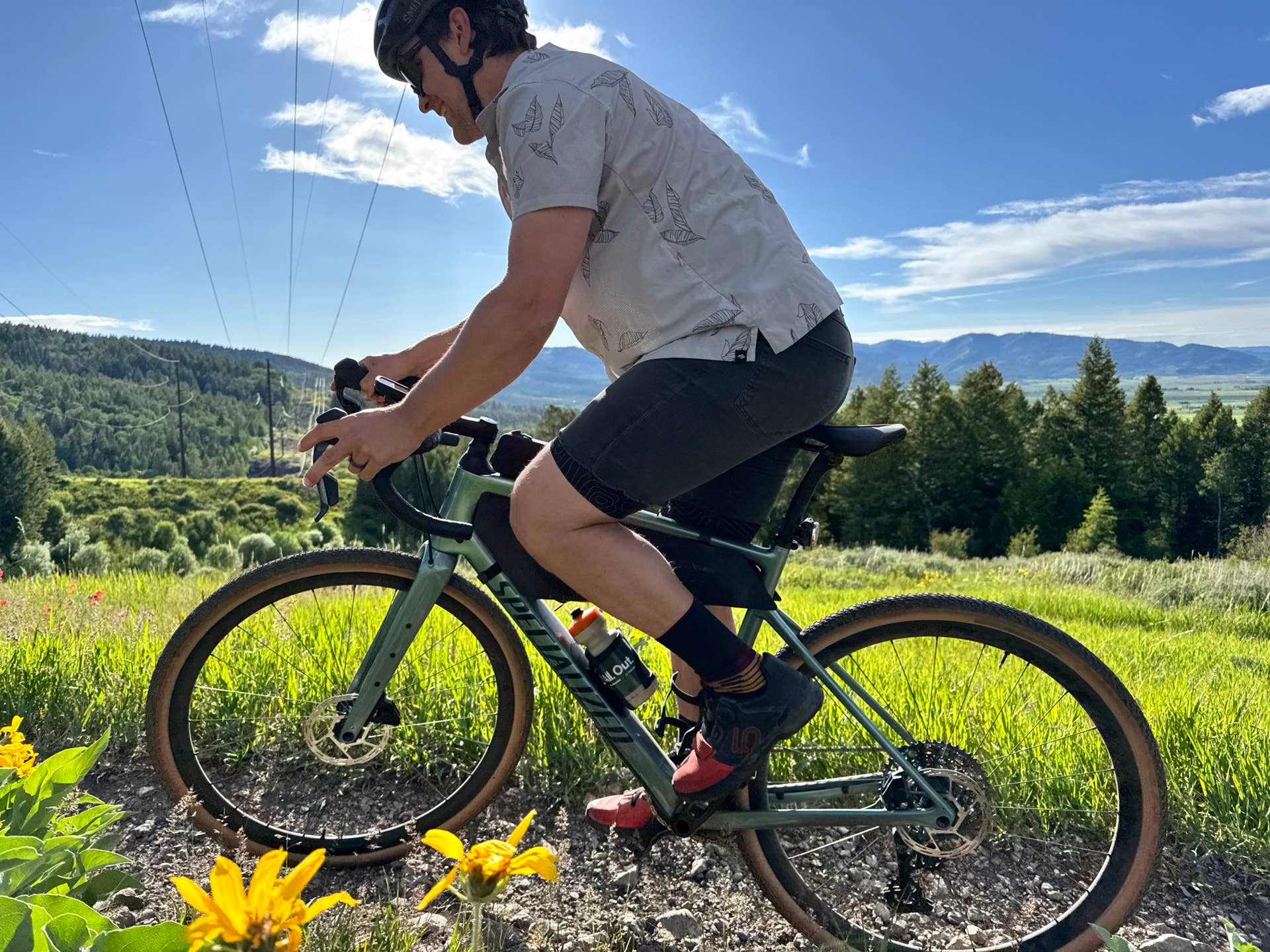
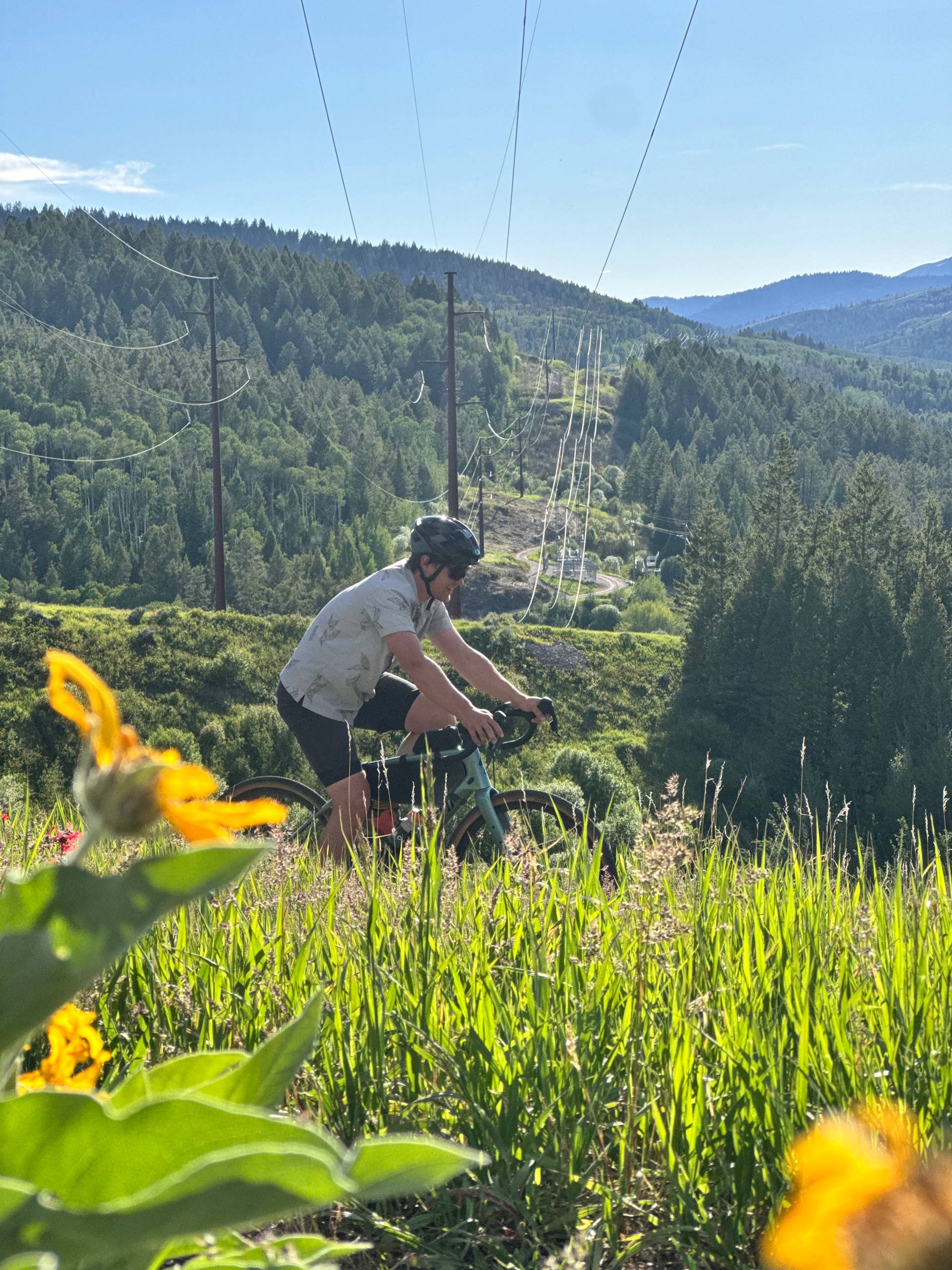
From a bikepacking and adventure riding perspective, the frame has bolt-on mount points just about anywhere you would need them on the fork and on the frame. On most rides, I rode with two bottle cages inside the front triangle and ran a small bolt-on top tube snack pouch. On longer rides, I ran a slim strap-on bag under the top tube for longer rides. A few brands make bags specifically for this frame, but I was able to easily fit a few random ones from my collection. Running the bike naked (eg. with no bags at all), felt appropriate for most shorter rides or commutes—the SWAT storage compartment swallows every tool you would need to carry, with room for a small snack or two.
Who Is the Specialized Diverge 4 Best For?
Specialized bills the Diverge 4 as an everyperson’s gravel bike. It’s not specialized (huh, see what I did there) for any particular niche or subcategory of the sport. The Diverge 4 is not a racing bike, a touring bike, a bikepacking rig, or a “rough” road bike. It’s every single one of those things. It’s a bike with two wheels and a drop bar that will pretty much take you anywhere.
If you’re a skier (or just a human) looking for your next spring, summer, and fall adventure buddy, look no further. The 2026 Specialized Diverge 4 is a set-it-and-forget-it gravel bike that is ready to go explore right out of the box, makes riding rugged gravel roads really enjoyable and blends a spectrum of capabilities from speed to carrying capacity. If I were looking for my next gravel bike, knowing I’d take it on a bike touring adventure through Europe, tackle some overnight or long single-day off-road routes like the White Rim, Wydaho 100, or the like, and use the same bike for daily commuting, this would be the one.