Yes, some people will ski on last winter’s snow—and the trend is spreading across North America.
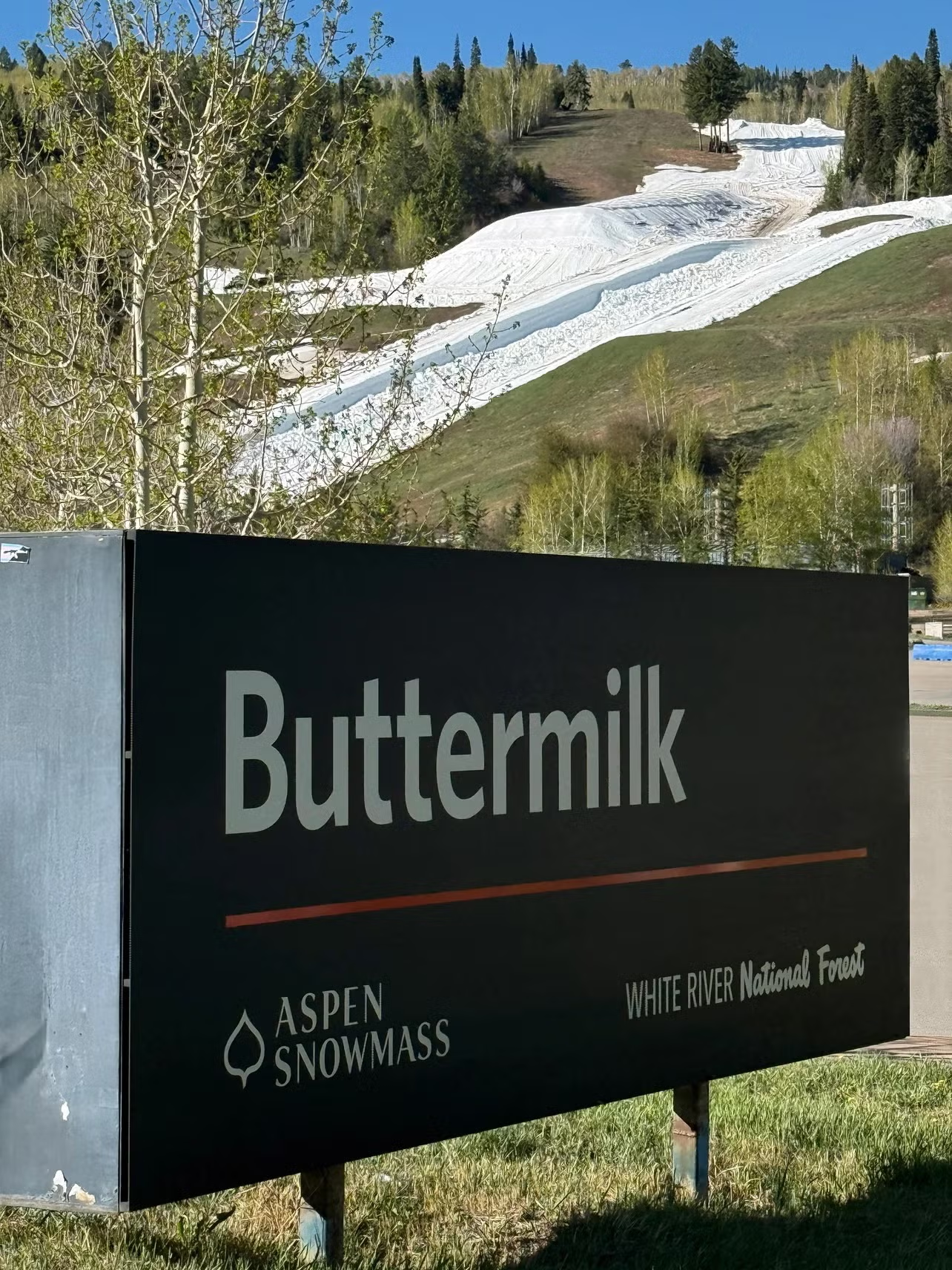
(Photo: Courtesy of Aspen Skiing Company)
Published July 10, 2026 04:25PM
Unless you live in Greenland or the remote reaches of Argentinean Patagonia, the concept of skiing on last season’s snow is probably pretty foreign to you. For most of us, the snow melts away not long after the last pond skim and cardboard derby winners have been crowned.
That might not be the case this winter. Finnish company Snow Secure has expanded its business to over 2o ski areas throughout North America, proving that while we can’t control the weather, we can help it along—which in this case, means preserving enough snow from the previous season to allow resorts to open on time, safeguard their marquis events, and build terrain parks.
The technology is startlingly simple. Snow piles are stowed beneath insulating blankets, where they can survive an entire summer while losing less than 30 percent of their volume. Finland’s Levi Ski Resort, an early adopter of the technology, stored more than 250,000 cubic meters of snow—enough to all but ensure the resort can open on schedule even if Mother Nature says otherwise.
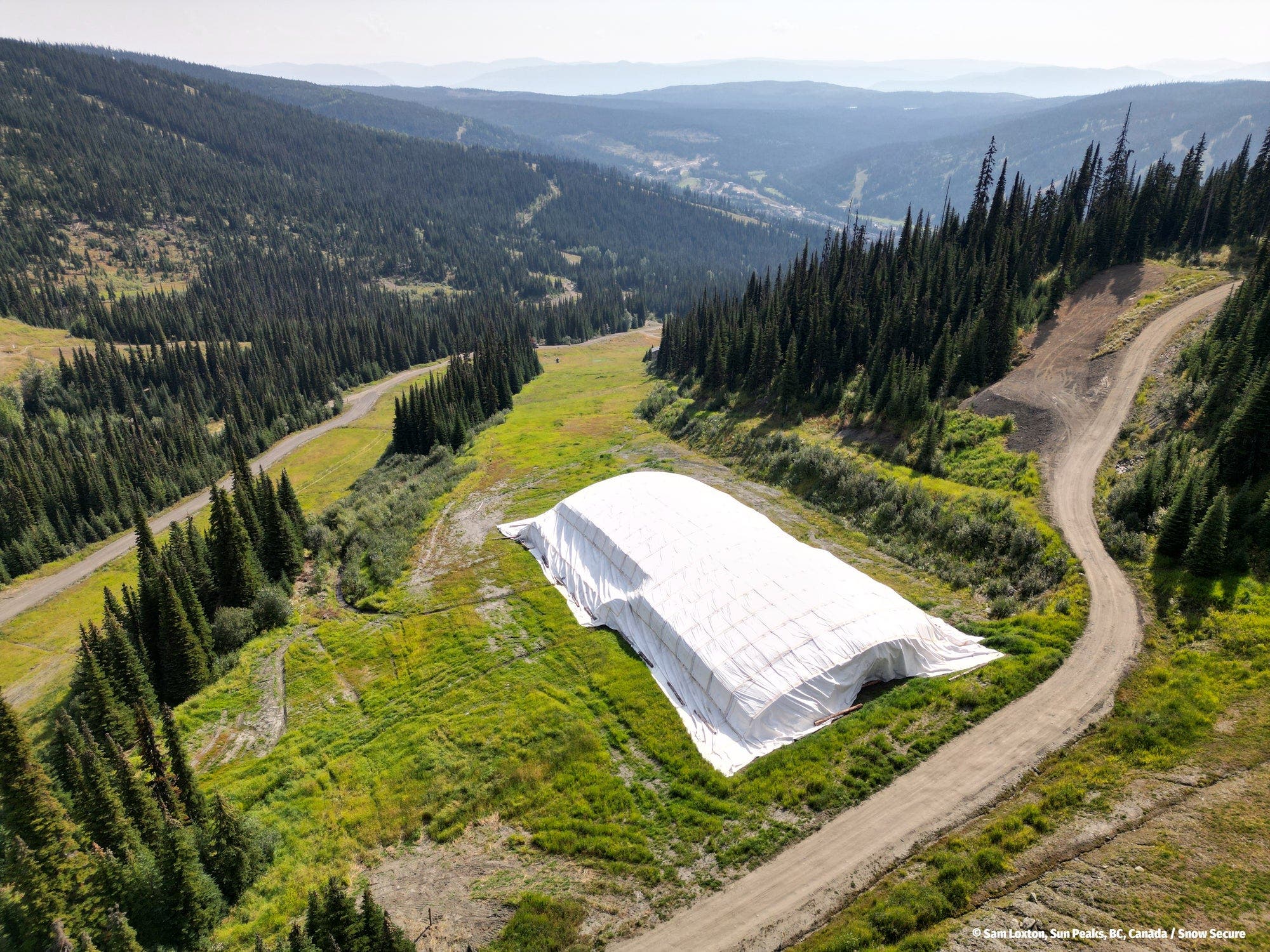
So how do they do it? Snow Secure uses thick sheets of extruded polystyrene—the same insulating material commonly found in Scandinavian homes—to shield snow from even triple-digit heat. Real-time sensors track temperatures beneath the 2- to 3-inch-thick blankets, where conditions rarely climb above 35 degrees Fahrenheit.
One of the most recent resorts to adopt the technology is Colorado’s Aspen Snowmass, where piles of manmade snow are currently tucked away beneath Snow Secure blankets, biding their time until ski season returns. Up north, Sun Peaks became the first Canadian ski area to give it a go, preserving snow at the of the 2025 season and using it to open its race venue in early November.
At the very least, Snow Secure can help more resorts stick to their opening day schedules. Last winter, over two dozen resorts had to delay the start of their season due to warm temperatures and lack of snow. They also reduce water consumption by cutting the need for snowmaking—another win for the sustainability movement. While they’re not a cure for climate change, snow blankets offer ski resorts a practical way to adapt to increasingly unpredictable winters while buying valuable time for the industry. We don’t see a downside to that.