Updated June 25, 2026 01:11PM
Editor’s note: Some new reporting is suggesting the incident occurred on Kapura and not K6. This is an ongoing story, and updates will be made once they are verified.
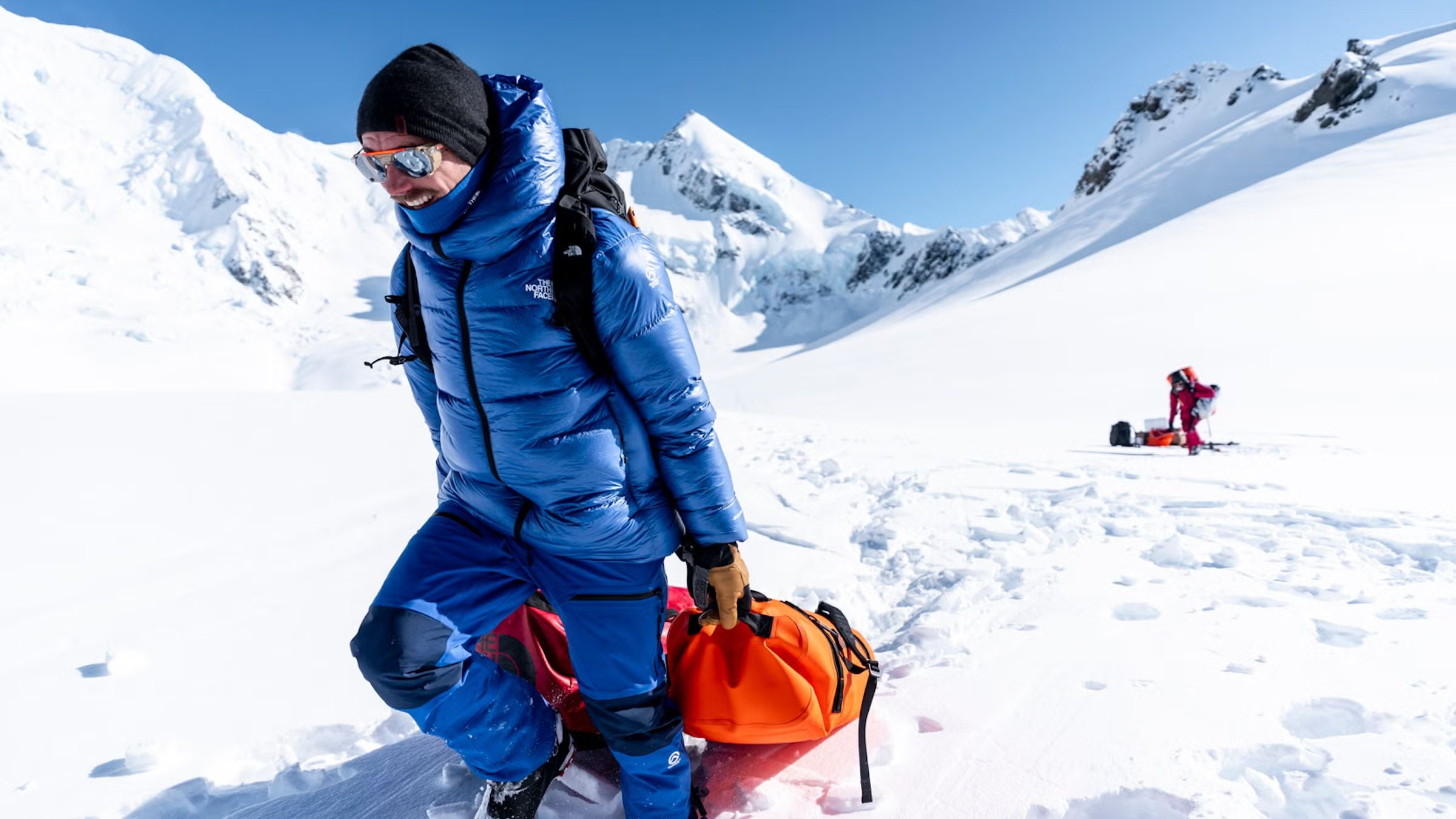
Acclaimed ski mountaineer and IFMGA mountain guide Guillaume “Gee” Pierrel died at age 42 during an attempt to climb and ski K6 in Pakistan. He was climbing with the French Boris Langenstein and Canadian Christina “Lusti” Lustenberger at around 5,000 meters (16,400 feet) on June 24 when an avalanche caught Pierrel. According to the preliminary reporting by Pamir Times and Everest Daily, the accident occurred during the ascent when a sudden avalanche of snow and rocks swept over the climber, killing him instantly. (Local Pakistani media originally called the survivors Christina Maria and Boris Jule—their first and middle names.
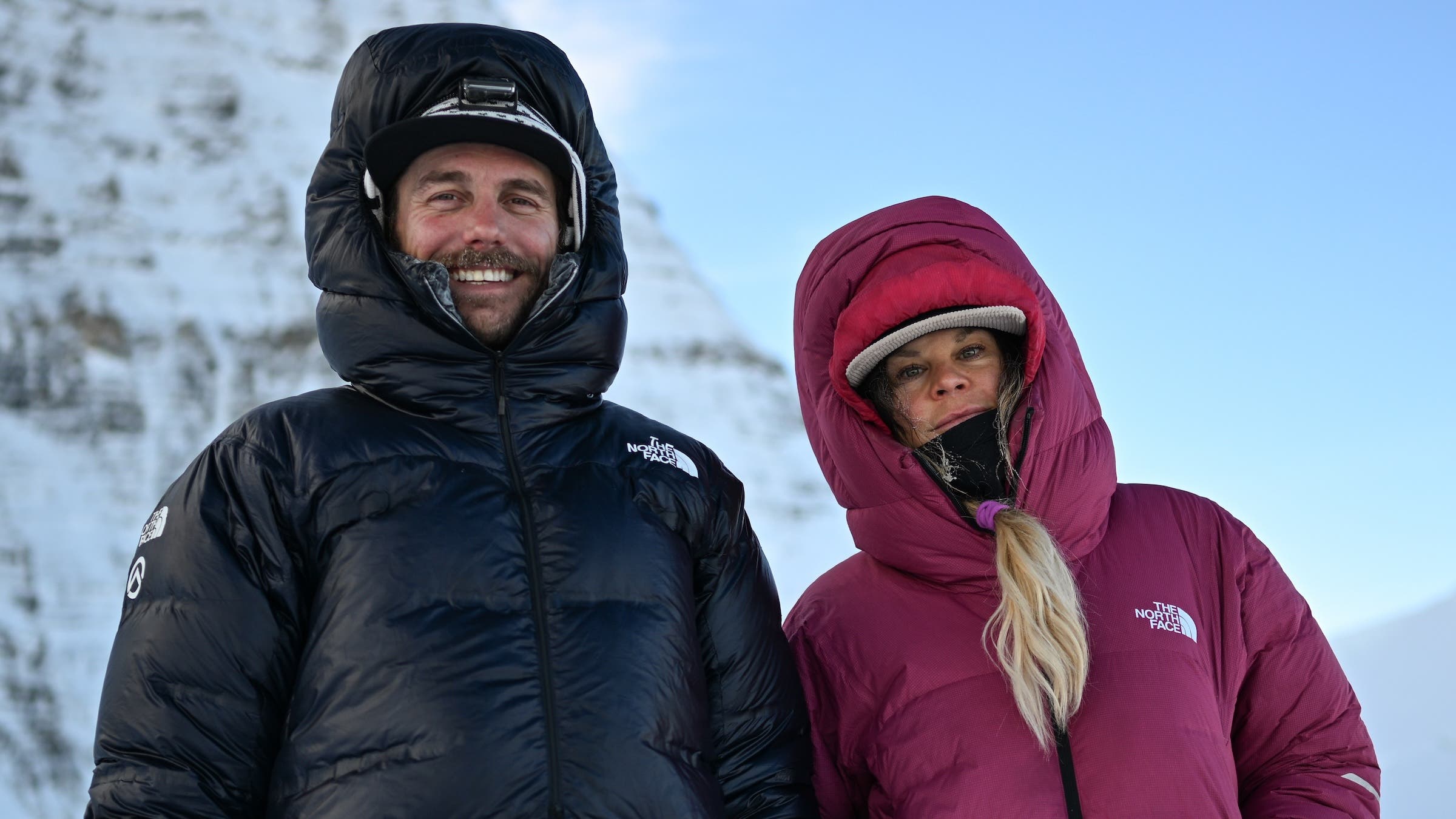
“Both Christina and Boris are safe and are also working to recover the body,” Ishaq Ali, the tour operator assisting the recovery, told Outside via email. Ali said the team was able to bring Pierrel’s body down to Camp I, but a helicopter was unable to arrive due to high temperatures (the Baltoro Glacier will see temperatures in the 90s Fahrenheit this week). The team is hoping the helicopter will be able to fly today, June 25.
Legendary steep skier Aymar Navarro took to Instagram today to eulogize his friend. “Goodbye Gee, goodbye my friend,” Navarro wrote. “Still processing the sad news of your loss. It’s hard that the mountains give us the best of ourselves and at the same time tear us apart like this. Watch over us from wherever you are, my friend.”
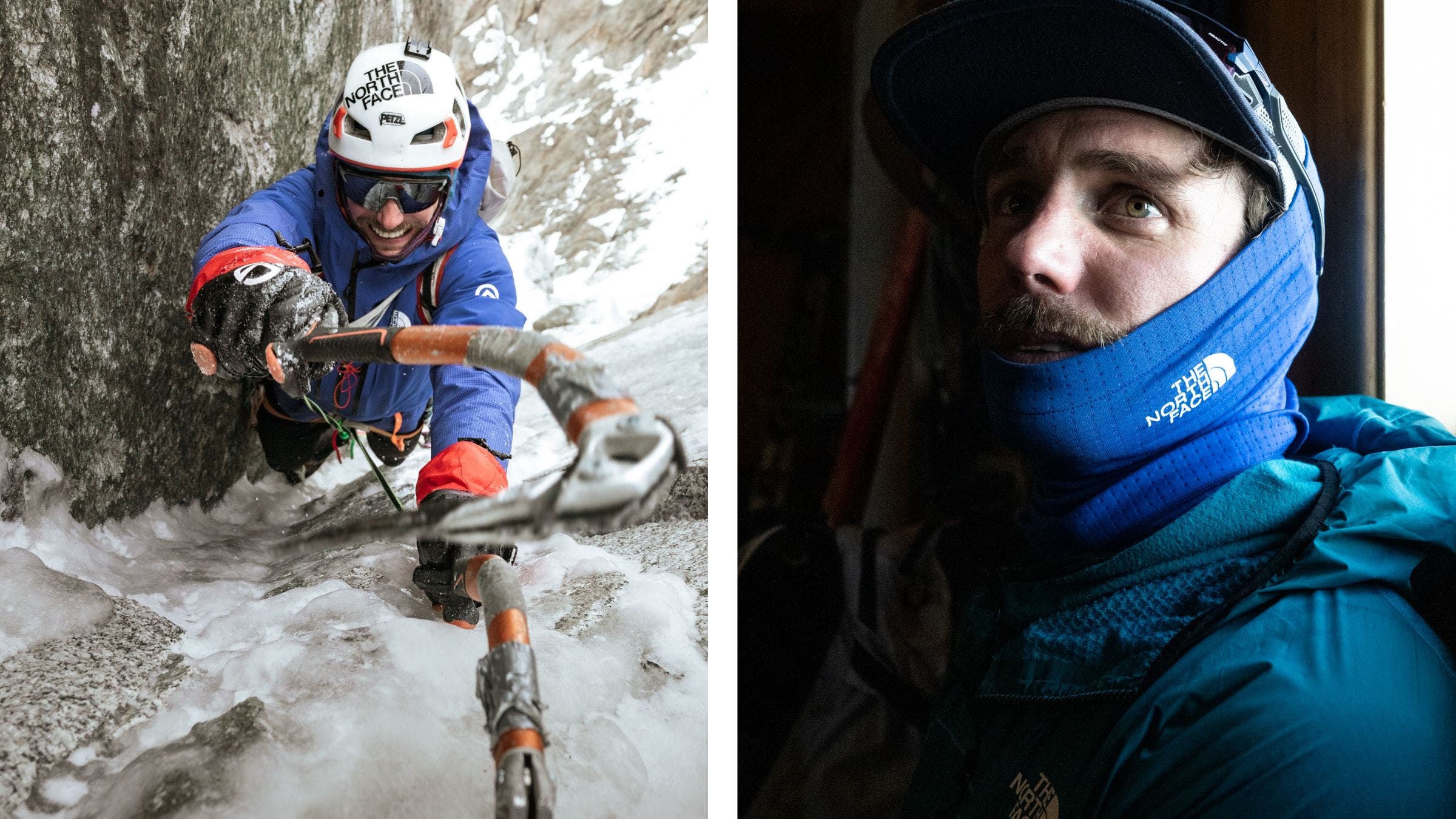
Gee Pierrel: Ski Mountaineering’s Rising Star
Pierrel was born in the Vosges range between Alsace and Lorraine, France, in 1983. A skier since the age of two, Pierrel climbed his first mountains in the Swiss Alps at four years old. He progressed through his mountain guide curriculum with speed and quickly undertook a bevy of stunning ski descents in Chamonix.
Gee Pierrel has made headlines in the last few years for daring ski descents of some of the steepest and most technically demanding peaks on Earth, skiing primarily with Lusti. In February 2025, the two ski mountaineers climbed and skied the first descent of The Great Couloir on the South Face of 12,972-foot Mount Robson in British Columbia, Canada.
The nearly 10,000-foot-long couloir is a mind-boggling test piece, requiring perfectly stable rock and snow to make a safe descent. The team skied it early in the season in sub-zero Fahrenheit temperatures to give themselves the best safety margin against rockfall.
Just a few months earlier, Pierrel and Lustenberger skied a new line on the highest peak in New Zealand, 12,218-foot Aoraki, also called Mount Cook. An IFMGA guide, Pierrel typically skied in impeccable alpine style—traveling light and fast and carrying only what he needed to make a quick descent.
Photographer Mathurin Vauthier skied Aoraki with Pierrel. “One of the greatest of his generation has left us, leaving behind indelible marks on the mountains and in our hearts,” he told Outside. “My deepest condolences to his family, loved ones, and all those fortunate enough to have crossed his path, and especially to Christina Lustenberger and Boris Langenstein, who were by his side until the very end during this K6 expedition.”
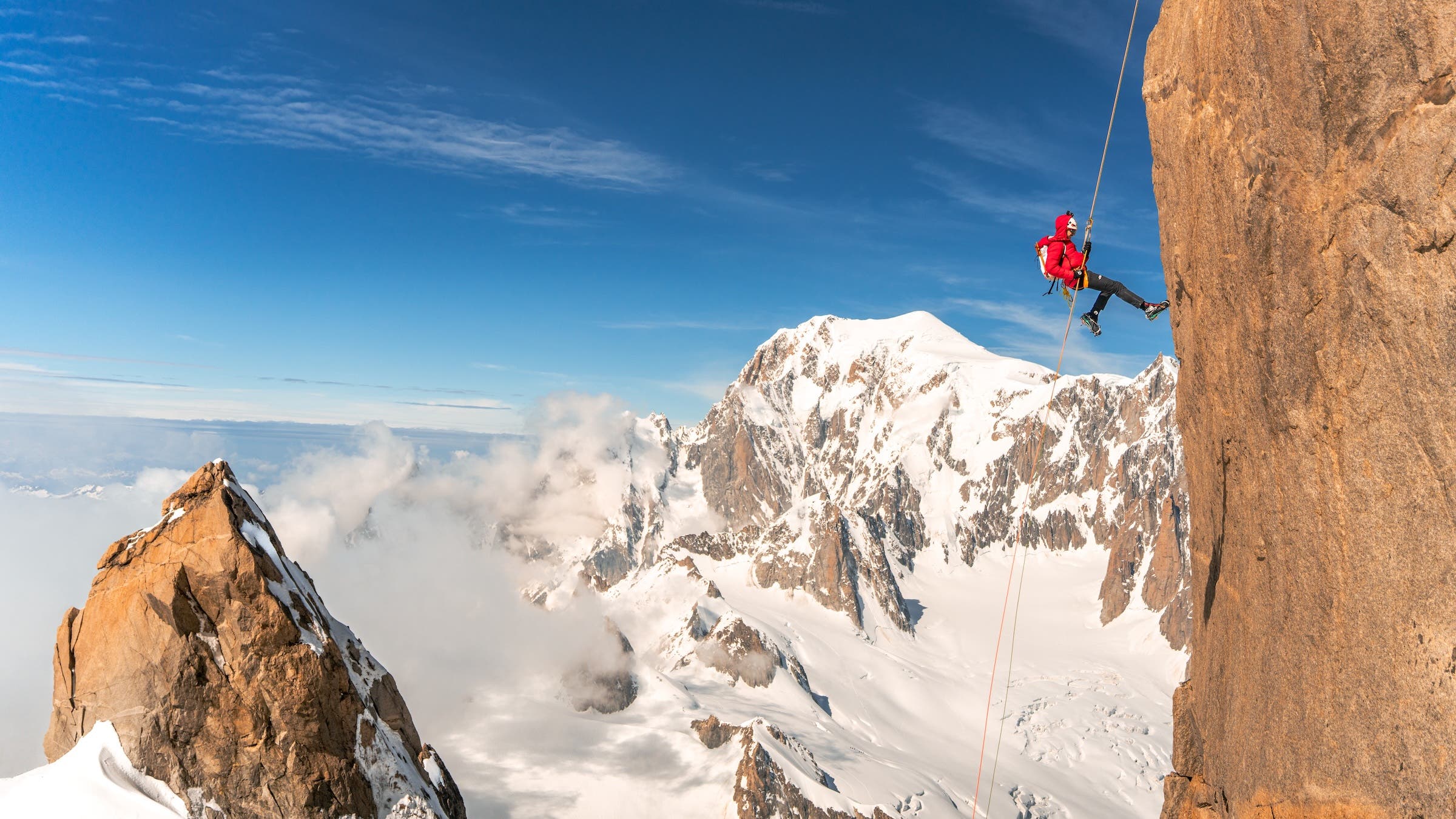
Lustenberger told Outside after skiing Robson that Pierrel’s abilities were integral to the team’s successes. “I’ve been looking at this line for ten years,” she said. “Gee and my partnership in the mountains really gave me the confidence to finally tackle it.”
“I’ve been lucky to find such a brilliant partner who pushed me forward when I needed it and was willing to be pushed by me in return,” Lustenberger said at the time.
As a solo skier, Pierrel climbed and skied the North Face of the Dru on the Mont Blanc Massif, a feat previously thought impossible, because snow almost never sticks to the near-vertical granite climbing route.
In 2021, he completed the first ski descent of the French Spur on nearby Gasherbrum I, one of the 14 peaks in the world higher than 8,000 meters (26,426 feet).
Where Is K6 and How Hard Is It to Climb?
K6, also called Baltistan Peak, is a 23,891-foot peak in the Masherbrum range, a subrange of the Karakoram in Gilgit-Baltistan, Pakistan. It lies on the Tibetan Plateau north of the main range of the Himalaya.
The Masherbrum Range lies just south of the Baltoro Glacier, famed for being home to 28,251-foot K2, the world’s second-highest mountain, and the Trango Towers, a famous climbing and skiing arena.
K6 has only been summited once, in 1970, via the Southeast ridge by Eduard Koblmüller and a team of members of the Austrian Alpine Club. Alpinist Wolfgang Axt described K6 as “possibly the most difficult 7,000-meter peak in the Karakorum.”
K6 shares a ridge with 23,100-foot Link Sar, which, in 2021, renowned mountaineer Steve Swenson dubbed “The Last Big Mountain” in our sister publication Climbing.
This is a developing story, and Outside will continue to provide updates as they become available.
Outside extends condolences to Pierrel’s friends, family, and the skiing community. He will be missed.