It is being touted as a freeskiing story that has never been told.
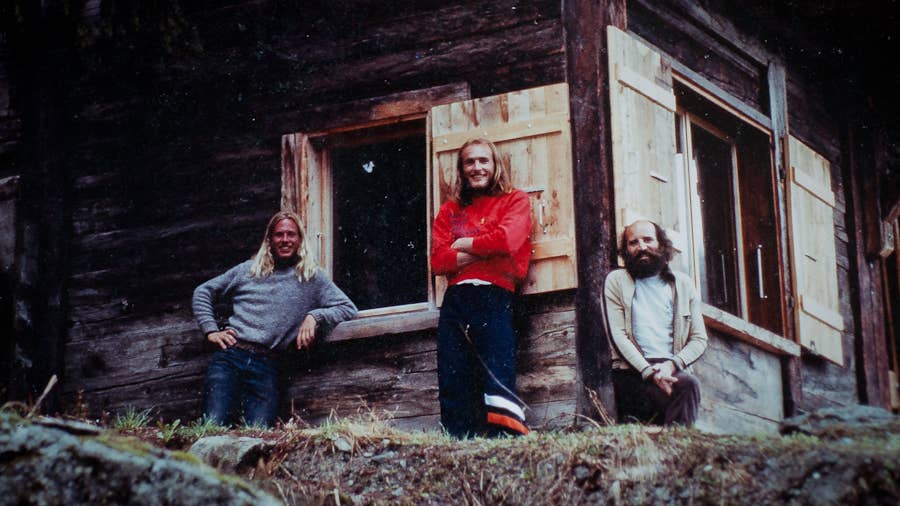
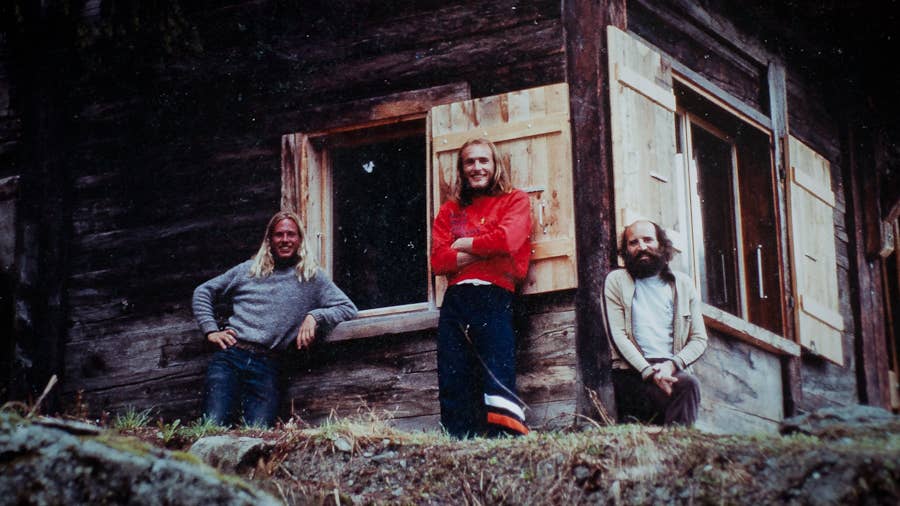
Titled Clambin, Dan Egan’s next film project turns back the clock with a colorful cast of characters that called the fabled Swiss Chalet Bellaiuva, nestled 700 feet above Verbier, Switzerland, home. For over 15 years, the rustic chalet tucked in the hamlet of Clambin afforded ski-in, ski-out access to the incredible powder stashes and expansive backcountry terrain of the resort and beyond. A movement that transformed skiing was created.
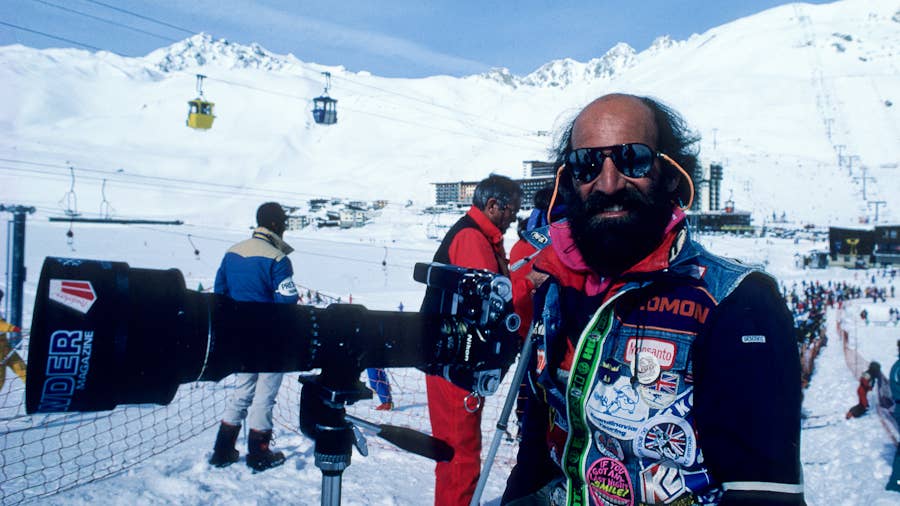
Known as “The Godfather” of freeskiing photography, Mark “Marko” Shapiro is one of a game-changing trio, along with skier turned photographer Ace Kvale, and freestyle legend and guide John Falkiner. As roommates who quickly became tight-knit friends, they vividly help Egan tell the story through their unforgettable experiences.
“There was nothing new about being ski bums, but these three guys professionalized the ski bum life, not washing dishes or being ski instructors, they took freestyle skiing into the backcountry and made it into a profession,” Egan tells POWDER.
“Clambin is about a place, but it’s also about aspirations. You’ll be challenged in the movie to find your own Clambin. Are you living your Clambin? Have you discovered your Clambin? Have you discovered that place that takes you somewhere else, that you didn’t know about in the world, and are you pursuing it?
“That’s the timeless motif, and it’s an inspirational motif that these skiers, of course, recognized. We’re talking about a couple of hippies in this cabin, in this hamlet of Clambin.”
Egan alludes to his and brother John’s globe-trotting ski adventures, working with legendary filmmaker Warren Miller to help weave the film’s narratives.
“If you look at skiers going to Kashmir, going to Russia, and all over the world, that was pretty new to have sponsored trips around the world and create media, so their influence was pretty strong,” explains the New Hampshire skier and U.S. Ski & Snowboard Hall-of-Famer.
Egan notes that the sensational images showcased in the film fueled and invigorated the commercialization of the equipment industry – first through adventurous tele skiers navigating backcountry slopes and then others evolving using Alpine Touring (AT) equipment, or Randonnee gear.
“It wasn’t just Tele that took off, but an industry around equipment. When you look at the photographs in the film, it’s beautiful,” Egan expounds. “There is a beauty to the art because of the tele and all of that afterward is connected.”
“Marko” Shapiro’s Tales of Clambin
Shapiro fondly reminisced about their time in the 1970’s and 80’s at Bellaiuva Chalet, the small Clambin community, and the ever-expanding group’s adventures, bond, and emerging business opportunities.
“First of all, we just went ahead and did what we were doing with no future or anything in our minds,” Shapiro tells POWDER. “One thing led to another, and here we are, 54 years later, um, well known.
“I come from blue collar, not a trust funder, so every penny I made, I shared with the crew, John (Falkiner) and Ace (Kvale).”
The trio would become known as “Team Clambin,” as their success blossomed alongside a distinguished group of pioneering freestyle and extreme skiing stars, along with ski models and other ski bums, who joined them on the mountain and in their friendly abode.
“John had an open door, and the whole world came – they came, and they went, and I had all of this talent to work with on the mountain,” Shapiro recalls. “Everyone chipped in and it was absolutely amazing.”
Mark Shapiro
Names like Scot Schmidt, Kit Deslauriers, Nikki-Jane Oakeshott, Lisa Nicholas, Sarah Ferguson, Heidi Rendell, John Eaves, and Glen Plake, among others, pushed limits exploring Verbier, while living at Clambin. Revered off-piste slopes such as “Stairway,” “Barry’s Bowl,” and “Hidden Valley” originated with this elite crew.
Eaves, a James Bond and Bogner films skiing stuntman, helped open bigger doors for the Clambin crew, further legitimizing their acrobatic ski stunts and alpine adventures.
Falkner had forged a friendship with local resident Marcel Michellod, the founder of Verbier’s first ski school. Over an aperitif, Michellod agreed to rent Falkner his “Chalet Bellaiuva” for the modest amount of 300 Swiss Francs per month. It quickly created history.
“It was a 20-minute walk up the hill from Verbier,” Shapiro notes, about the tiny hamlet of Clambin. “There is a restaurant across the way, Chez Dany, where we hung out a lot.
“I’m still friends with all of those guys, it was a good bunch of people.”
Mark Shapiro
New Opportunities, American Culture, and a Sublime Swiss Paradise
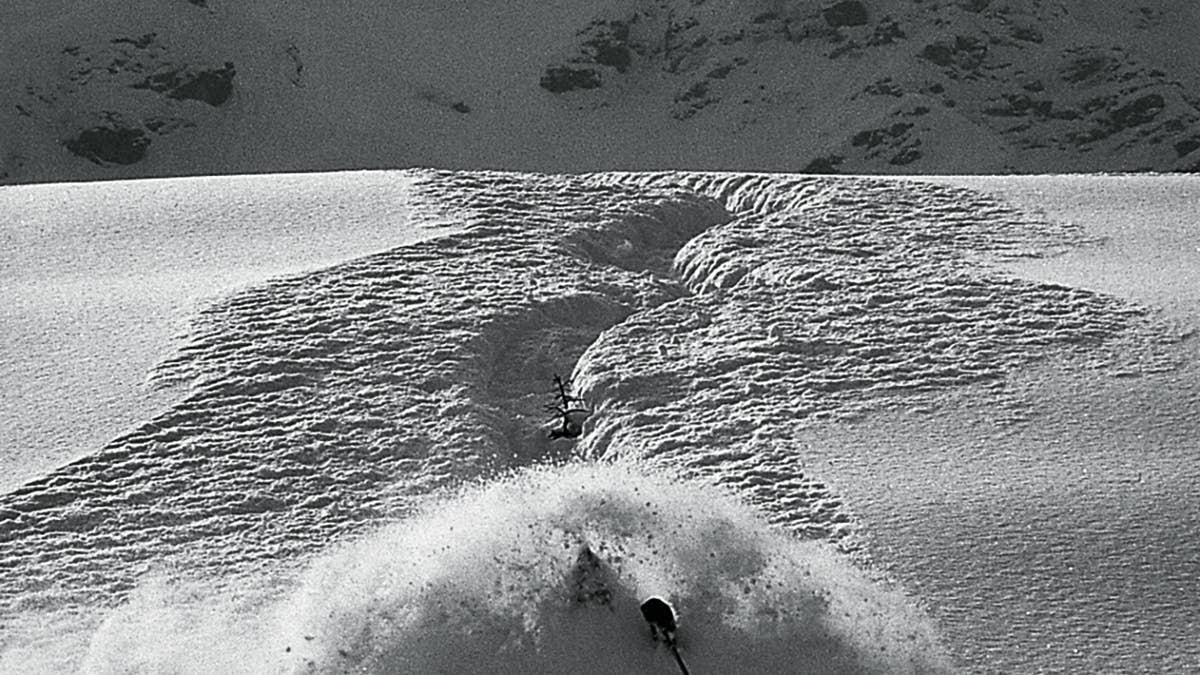
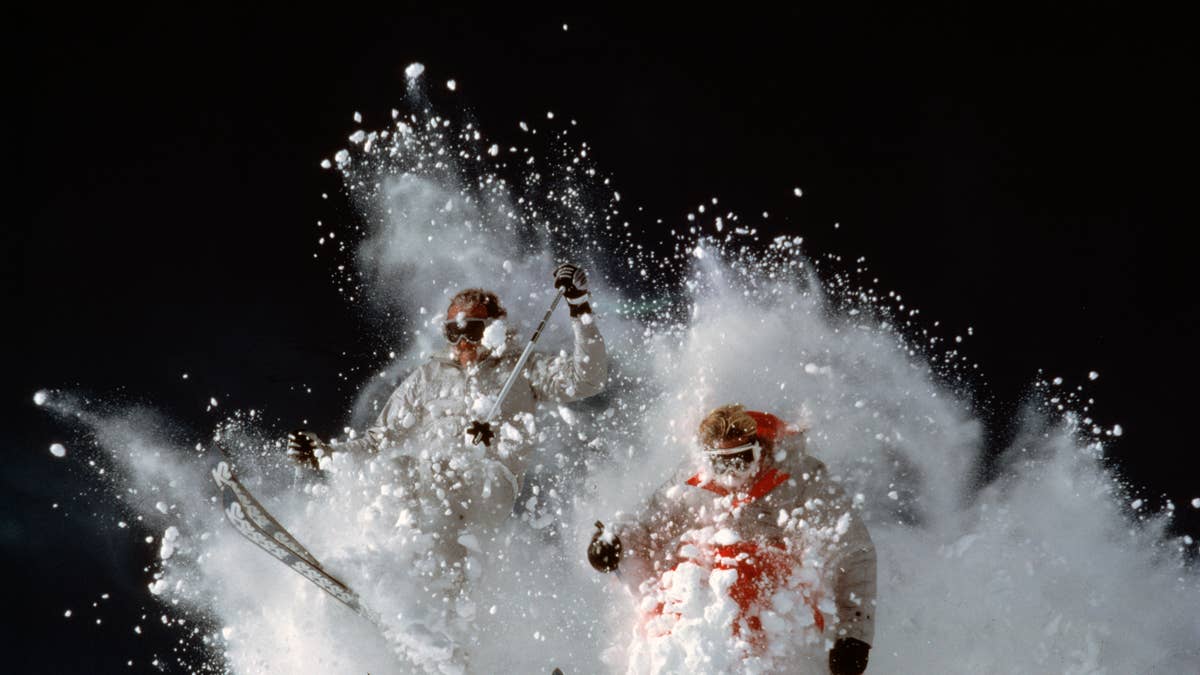
Powder skiing closely connected the international and vastly diverse Clambin friends. It produced the iconic 1984 POWDER Magazine cover depicting John and Ace blasting through a powdery paradise, shoulder-to-shoulder, the moment captured exquisitely by Shapiro.
Later, in 1988, Schmidt was caught fearlessly launching off Verbier’s cliffs by Kvale, an otherworldly photo that ignited a 40-year partnership with The North Face. Profitable fashion shoots also took place.
“It blended American culture and what was happening over there,” Egan says. “Scot Schmidt built an entire career around that iconic photograph, which became North Face Extreme.”
Mark Shapiro
Shapiro, a Canadian, now 79, still resides in Verbier. Seven of his photographs have graced the covers of POWDER Magazine. Having first arrived in Verbier in 1970, he paints a picture of skiing there over the years to follow.
“I would shoot six to seven rolls of film a day, all of us, freeriding all over the map,” Shapiro recalls. “We had the whole mountain to ourselves for years. There were a few guides, but nobody was skiing powder.”
The fun-loving group of friends was certainly not passing along digital photos via Bluetooth on their iPhones, but rather gathering in person for intimate slideshow evenings.
“I got a Kodak projector, a couple of carousels, and we’d have slideshows,” Shapiro says.
“The Kodak lab was down near Lausanne, and by then I had a car. I would drive down first thing in the morning, drop the film off, then go hang out in Lausanne. Come back at 4 o’clock, get home, go through everything, throw the rubbish out, and load up the carousel. Everybody showed up for a big meal and slideshow at John’s.”
Photo: Mark Shapiro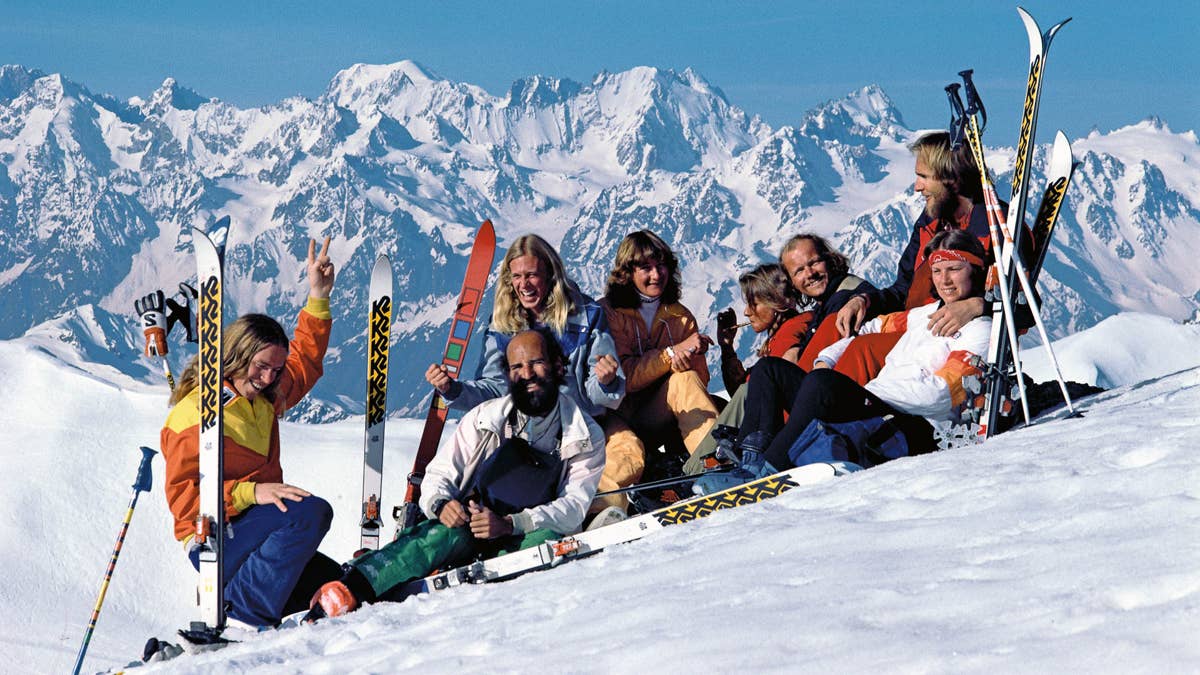
Dreams and Visions Realized at a “James Bond Level”
Egan highlights the magnitude of the Clambin movement and culture that took shape in Verbier, not a highly developed or luxurious ski resort in those days.
“You have a direct line of heritage, of lineage, back to Clambin for the birthplace of professionalism,” he says, “It’s arguable that things were happening in other places like Chamonix, but not at the James Bond level, so that really set Verbier apart and adds so much credibility to the whole thing.”
The Clambin legacy lives on, as seen in current action sports events such as the Freeride World Tour’s Extreme Verbier, the X Games, freestyle skiing at the Winter Olympics, and Red Bull stunts and events.
Egan said that the “Clambin Kids” approached him roughly four years ago about the project. The film’s narrative originated with Charlotte Percle, a filmmaker from Jackson Hole with connections to Verbier. She initially launched the project before COVID and remains closely involved.
The well-traveled executive producer/director informs that production will begin this August, with shooting continuing in 2027 and extending into 2028. The film’s launch is targeted for the fall of 2028.
“For me, stories are great, but the impact of people is a better story, and that’s what this film does,” Egan says. “This film is a universal tale because it’s going to connect today’s Red Bull athlete with yesterday.”