Powder aims to feature only the best products and services. If you buy something via one of our links, we may earn a commission.
Trends are everywhere in the outdoor industry. Ski, boot and binding designs seem to mirror each another season after season. Apparel trends are a dime a dozen. In the bike world, things are the same, with frame and suspension designs chasing performance (and fads) with similar ideology. Then there’s the hitch-mounted bike rack world, where the trends mean that we’ve been relegated to two effective methods of transport: tray racks and vertical hanging racks. Given that both systems work pretty well, I’m not complaining, merely illustrating a point here, but that product area hasn’t exactly been a bastion of innovation in recent years.
A few years ago, vertical hanging racks became a popular choice for mountain bikers looking to carry more than two bikes on their vehicles. Vancouver, BC’s North Shore Racks led the charge with their NSR series of foldable racks, and competitors like Lolo Racks, Velocirax, JB Racks and more followed suit with all kinds of designs that held bikes in place in unique ways. Most of those choices had drawbacks, like no real security on bumpy roads, scratching your bike’s fork crowns, handlebars, or frame, or they were just plain annoying to use. However, one of the latest options to join the fight is Thule’s new ReVert 4, perhaps the most refined bike rack I’ve seen yet. It’s a vertical rack with a hydraulic actuator and a carry system that only touches the rubber on your tires, meaning no more damaged bikes, extremely easy loading and unloading, and a bounce- and rattle-free ride. It is, however, very expensive.
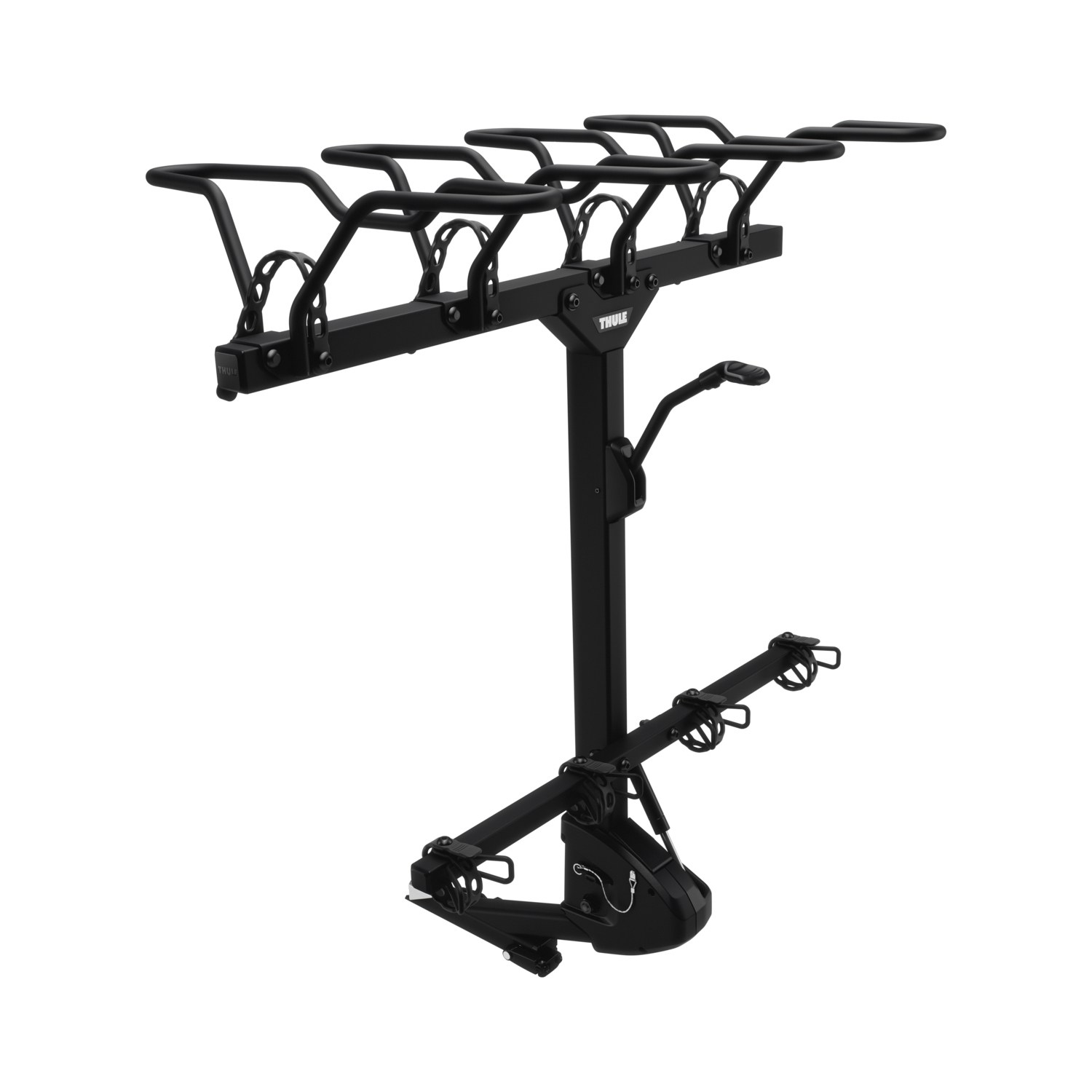
Thule ReVert 4 Specs:
- Capacity: 4 bikes, up to 55lb each
- Pivot: hydraulic lift
- Weight: 73 lbs
- Hitch Type: 2″ receiver
- Price: $1100
What are the benefits of a vertical hitch-mount bike rack?
Before I dive into my experience with the Thule ReVert 4, it’s worth addressing what the point of a rack like this anyway. If you have a truck with an empty bed, a tailgate pad might be a better option. I find it’s a bit easier to load, it’s definitely more secure, and you get sick gnar points for rolling up at the shuttle spot with 8 bikes in the back of your deleted diesel truck. If, however, you don’t have the luxury of an empty truck bed because you might have camper shell or equipment in the back (or drive an SUV instead of a truck), a vertical rack is the next best way to carry a bunch of bikes on your vehicle.
The vertical orientation makes for easy loading, offers superior scratch and bump resistance (pedals and other delicate bike bits can’t physically touch each other), and it keeps all that heavy weight closer to the rear axle of your truck. That means better handling, particularly in sketchy off-road situations. In other words, with a strong enough tongue weight capacity (definitely check this on your vehicle) you can carry more than one bike per seatbelt in your truck.
Max Ritter
Real-World Performance:
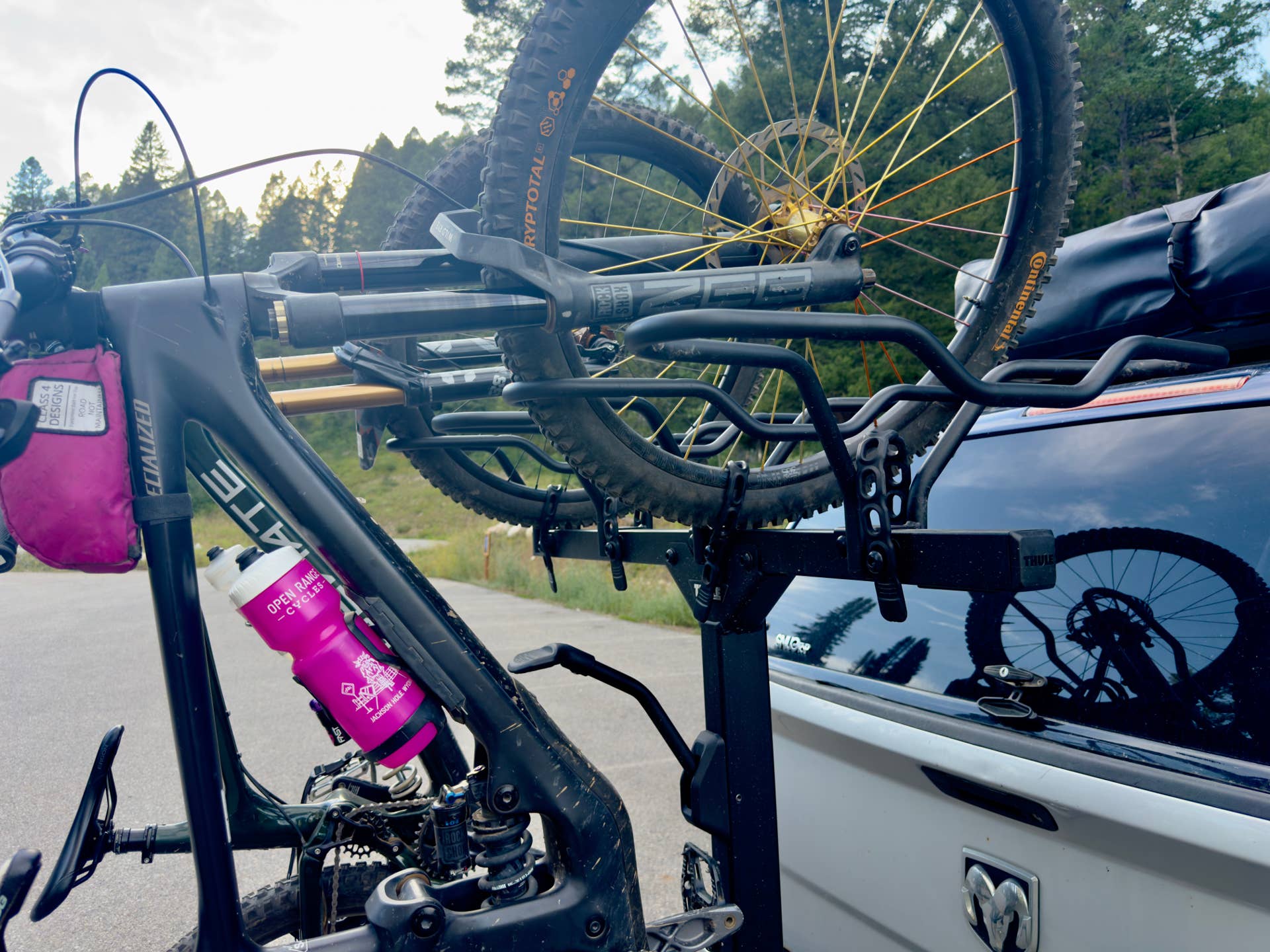
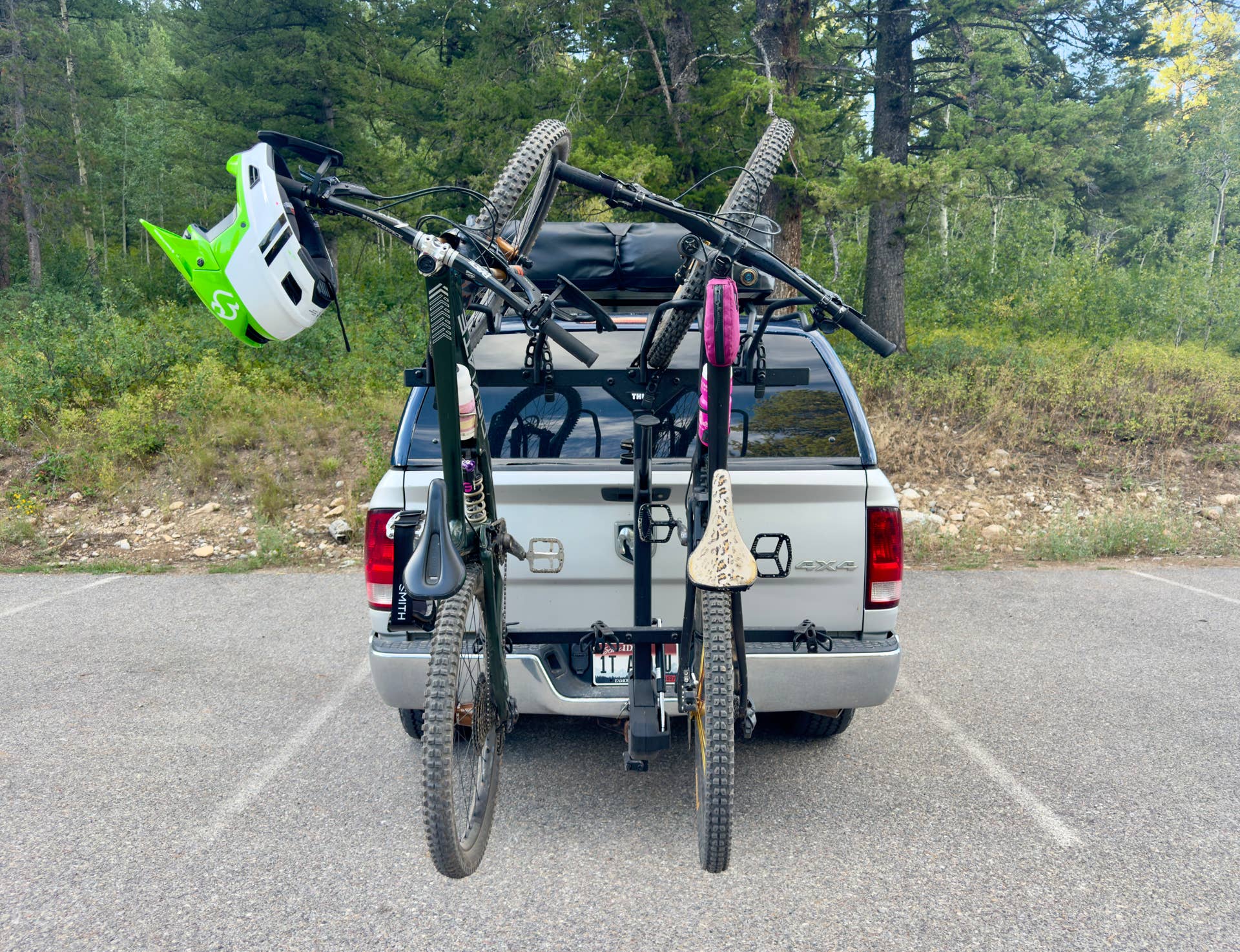
I’ve been testing the new Thule ReVert 4 this summer on the back of my Ram 1500 pickup. Over the years, I’ve personally owned and tested a ton of different bike carry systems, including even a custom-welded 6-bike vertical rack that held bikes by their handlebars, much like a LoloRack. When the ReVert 4 showed up in a box at my house, the first thing that stood out was the attention to detail, and the simple yet extremely rugged build quality. I’ve known for a while that Thule makes really nice stuff, and this rack is no exception.
Building the rack out the box is quite easy. Follow the instructions, and you can actually build it directly on your vehicle. That means you’ll never have to actually lift the entire 75-pound rack to put it on your car. I cracked a beer and assembly took me about 30 minutes.
One neat thing right of the bat is how the rack actually locks into the receiver. Instead of the usual cotter pin/bolt system, the bottom of the rack has a locking lever that threads into a wedge block to tighten the whole thing into your hitch receiver. Give it a few cranks, and that puppy is secure.
Once the ReVert was all built up, it was time to load it up and go riding. Loading bikes onto the rack is very easy. Unlock the safety pin, pull the lever, and tilt the whole rack down to lower the height of the wheel trays. When it’s empty, it actually takes a bit of force to lower the rack, but with bikes loaded on, it tilts down very easily. Once tilted, that meant I could just roll my bike onto its back wheel and push it into the wheel tray without ever lifting it off the ground. It literally couldn’t be easier. Add as many bikes as fit (the ReVert comes in 4 and 6-bike versions), strap the wheels in, and pull the lever to have the rack automatically lift back up into place. Just don’t forget to pop the safety pin back in before driving away.
While I might have done differently in my youth, I’ve since grown out of my speedy driving phase, especially on the rough roads around where I live. I can’t say that I was rallying my truck up fire roads with this thing, but I kept an eye on the rearview mirror when it was fully loaded on bumpy access roads, and the bikes didn’t move even a little bit. I tried the rack with all manner of bike combos: enduro bikes, eMTBs, dual-crown DH bikes, drop-bar gravel and road bikes, and cruiser bikes. They all fit great, though the oversized fender on my e-cruiser bike did hit the wheel tray.
From a security standpoint, the rack doesn’t come standard with any sort of built-in bike lock. It locks securely to your vehicle with an included key (it’s compatible with the Thule one-key system to match all your Thule locks). However, bikes are held to the rack with just the rubber straps. There are plenty of ways to fit a cable or chain lock securely to the ReVert rack, or you can shell out an additional $90 for a sleek integrated lock system from Thule. I used my existing cable lock, but the Thule system looks nifty.
The rack itself works flawlessly, however, I did experience a fitment issue that I only discovered a few weeks into owning it: the positioning of the rack on my hitch prevents the truck tailgate from fully folding down. I don’t see this to be a major issue with most trucks, but the oversized curved tailgate on my Ram hits the pivot mechanism on the ReVert, rendering it unable to fold flat completely. The fit is really close, and I was able to fix it by using a 2-inch negative-rise hitch adapter, but it’s worth checking on your vehicle before you buy.
Max Ritter
Who is the Thule Revert 4 best for?
Thule’s Revert 4 is undeniably pricey. Spending $1100 for a way to carry four bikes on your car might not seem worth it at first, but this is one nice piece of kit to add to your vehicle. The hydraulic actuator makes loading a breeze, it’s proven more durable than any other rack I’ve owned, and the capacity is great. In other words, it’s simple and it works, so what more could you ask for?
For me, it opened up the possibility of using my truck as a shuttle vehicle again (I run a topper and a bed drawer system year-round), making group rides much easier. It makes a huge amount of sense for a family vehicle like an SUV or minivan, and for an adventure truck or RV/Van setup where space is at a premium.