Ski resorts, it turns out, are a dime a dozen.
In the US alone, there are somewhere in the ballpark of 500 mountains (don’t ask us for an exact count), from humble little hills to sprawling mega destinations. Each one has its charms. For every resort, there’s a skier who will swear up and down that it’s heaven on Earth. After all, the best place to ski is wherever you’re skiing, right now.
But not all mountains are created equally. Some have massive vertical drops. Others have titanic lift infrastructure, with gondolas, fixed-grips, and high-speeds galore. Perhaps a resort is all about the powder. Maybe, during a visit, the best thing to do is ski in the trees.
What separates the following seven resorts is their uniqueness. And aside from one, none of those traits are conventional. Looking for mountains with ocean views? Or what about one in Africa? If so, you’re in the right place.
The 2026 POWDER Photo Annual is here! Look for a print copy on a newsstand near you, or click here to have a copy shipped directly to your front door.
Photo: Indy Pass Media Kit/Cape Smokey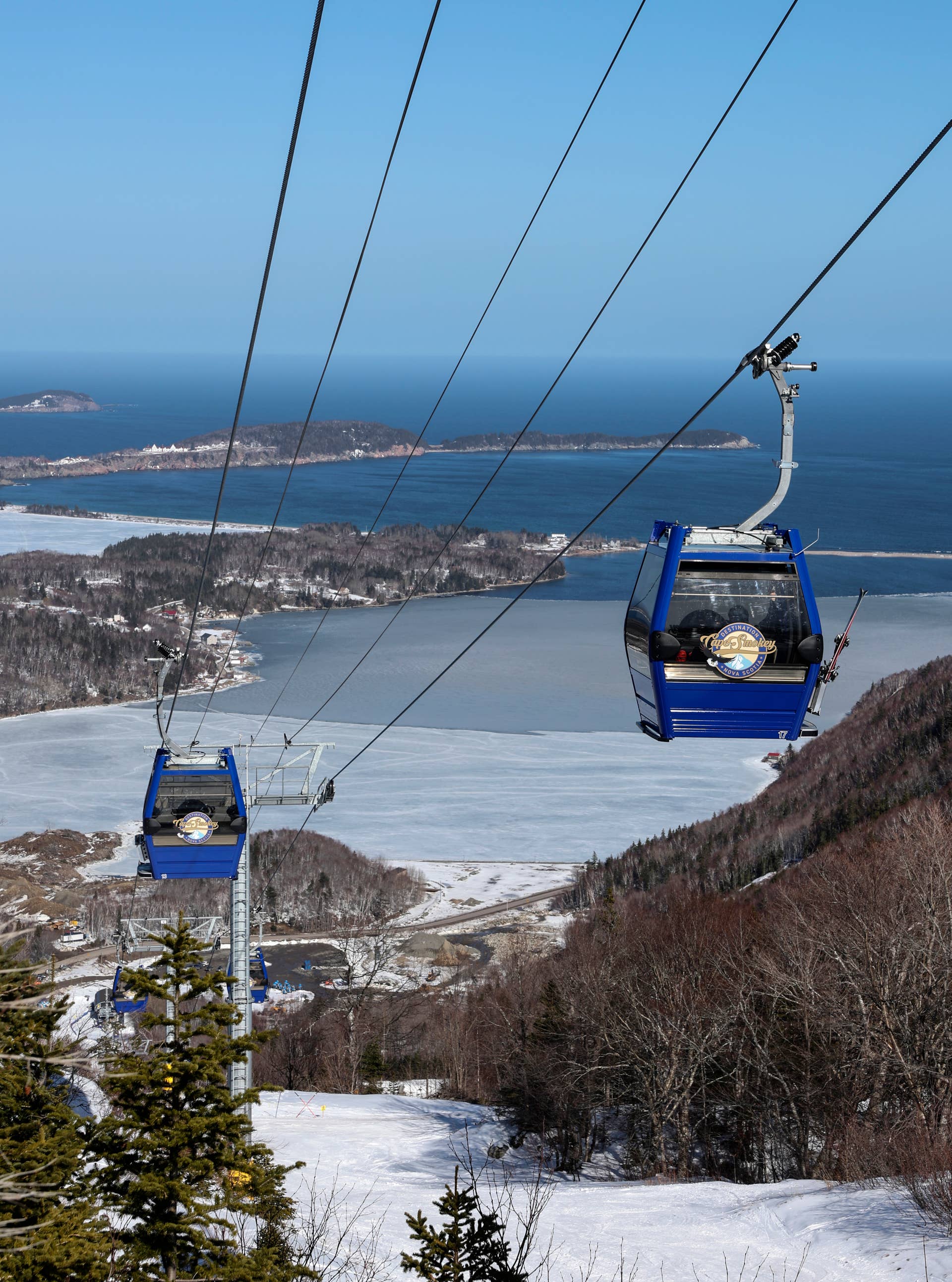
Cape Smokey, Nova Scotia
Unique trait: Oceanside resort skiing
Skiing and seafaring are, in most cases, about as disparate as it gets. One involves towering alpine peaks. The other involves low-elevation beaches.
But on the Atlantic coast of Nova Scotia, those two worlds collide at Cape Smokey. With a base elevation of only fifty feet, this is one of the lowest ski resorts on the continent. Still, snow shows up and, thanks to a gondola, you can ski it. From the top, visitors enjoy views of the ocean and, maybe if their vision is particularly good, could spot a pod of whales in the distance.
Another curiosity: rather than being a sleepy oceanside hamlet, serious development is underway at Cape Smokey, with plans to transform the base area into a glittering year-round resort.
For more collisions of sea and sky, consider the collection of ski resorts above Vancouver, British Columbia, like Grouse Mountain and Mt. Seymour (which also happen to make an appearance later in this list).
Wirestock Creators/Shutterstock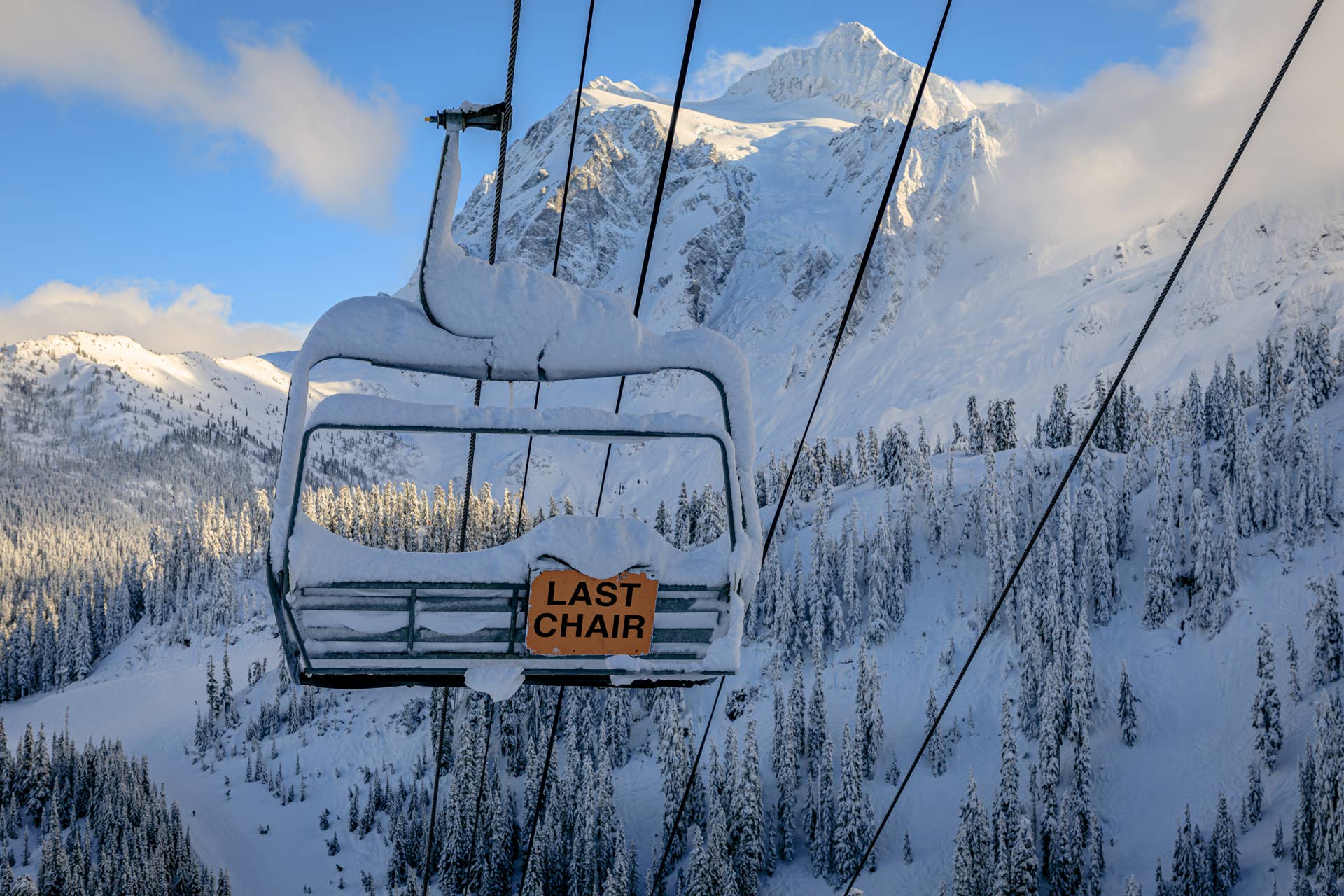
Mt. Baker Ski Area, Washington
Unique trait: More snow than you know what to do with
Mt. Baker stands out for two reasons.
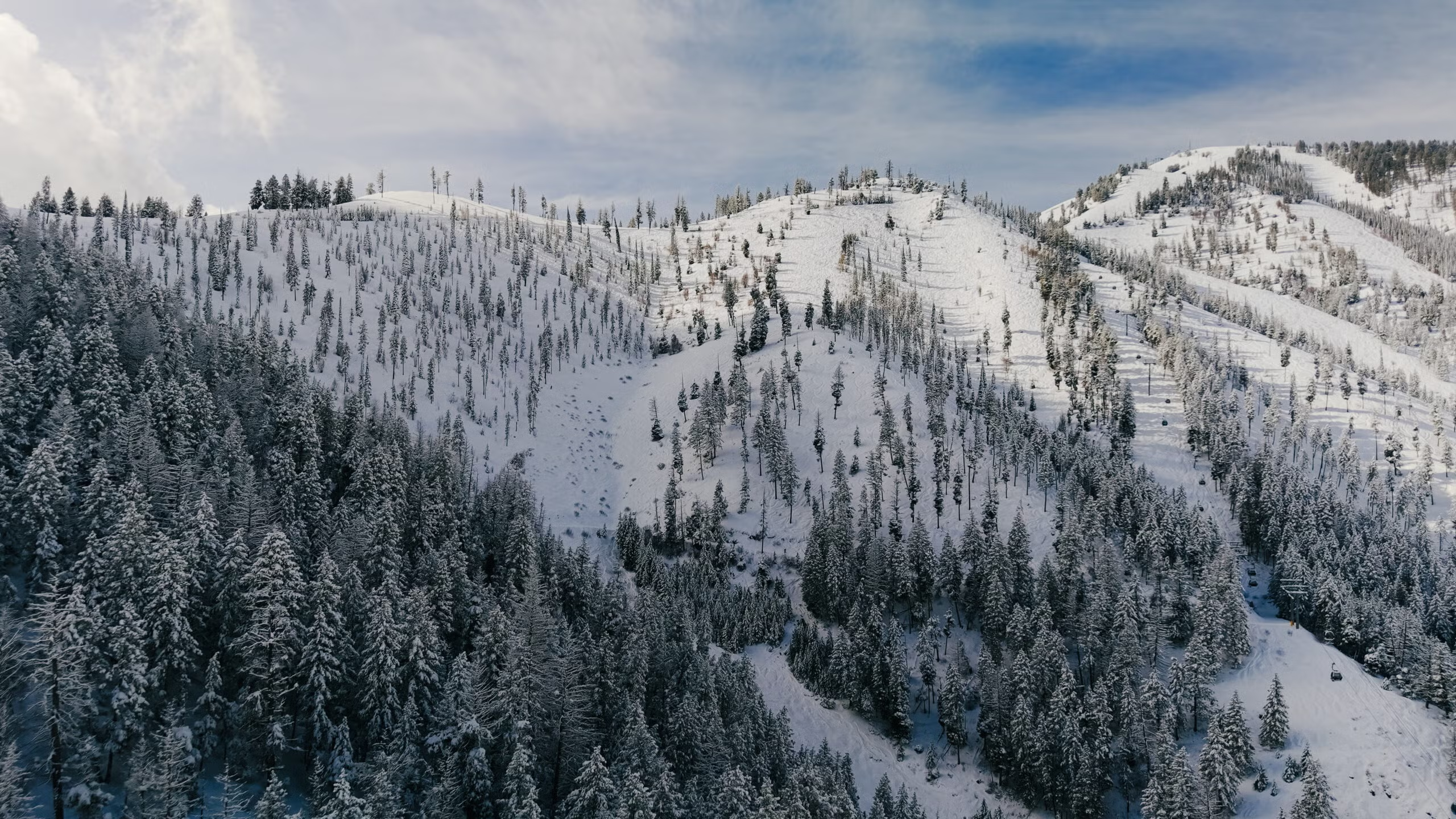
First and foremost is the snow. Perched in the North Cascades, this ski area gets a lot of powder. On average, 688 inches fall each season, more than many big names know for their snow. It’s not too surprising, then, that Mt. Baker is also home to the staggering 1,140-inch winter snowfall record, which came during the 1998-99 season. While the ski area obviously loves to tout that fact, it’s not just marketing speak or a shoddy measurement, thanks to verification from NOAA.
The other calling card of Mt. Baker is less of a calling card. Despite all the snow, the ski area often flies under the radar. Perhaps that’s because some of Washington’s other best-known resorts, Crystal Mountain and Stevens Pass, are closer to the Seattle metropolitan area. Regardless, Baker locals probably don’t mind that their record-breaking mountain doesn’t spend too much time in the headlines.
When people pine for the halcyon days of skiing, they might not know that they continue, in part, at Baker.
Joachim Clausen Hansen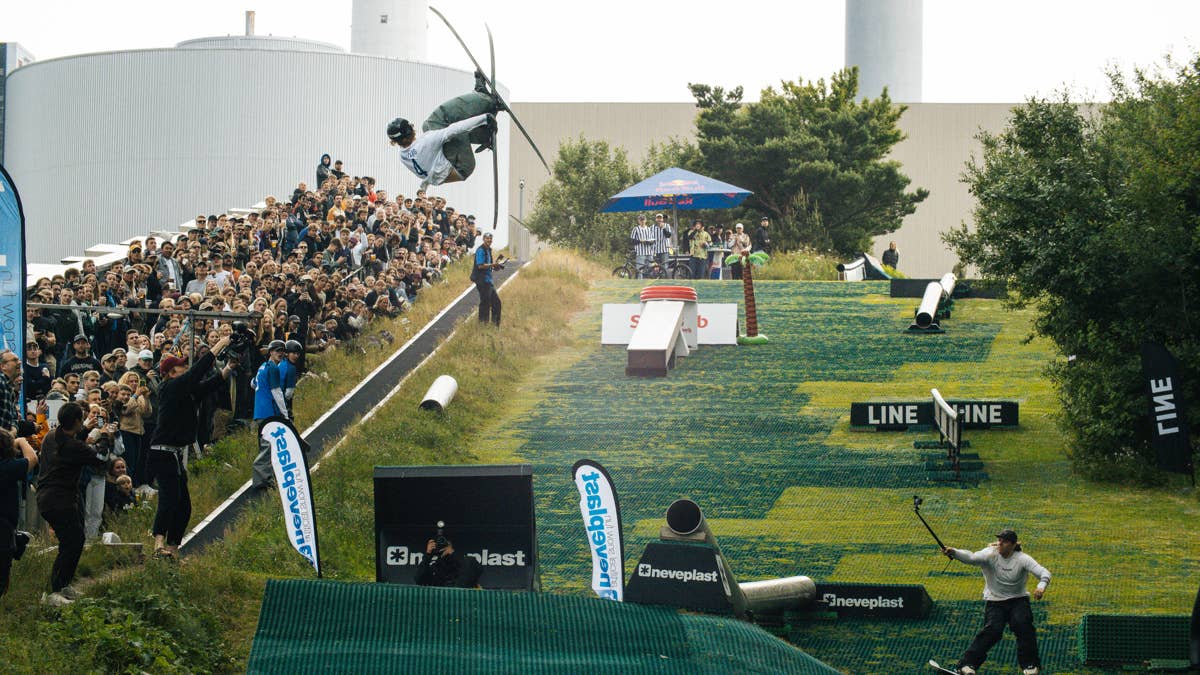
CopenHill, Denmark
Unique trait: Skiing atop a power plant in a European capital
The buzzy European hub of Copenhagen, Denmark, draws plenty of attention, from the historic architecture to the free city of Christiania. What travelers might not know is that during a visit to Copenhagen, they can add skiing to the itinerary thanks to CopenHill, a dry slope atop a waste-to-energy plant.
To cater to different skill levels, the slope varies in steepness. A slalom course and freestyle add more variety. Instead of snow, CopenHill uses Neveplast, a green substitute surface. Skiers coat their planks in silicone lubricant for a smoother ride. Still, CopenHill advises against using freshly tuned skis—the Neveplast can be rough on your edges.
Each summer, CopenHill also lights up with the arrival of the Scandinavian Team Battle, an event that pits European freestyle skiers against each other. Meanwhile, non-professionals can check out the dry slopes for about $23 an hour (rentals are available, too).
Marco Longari/AFP via Getty Images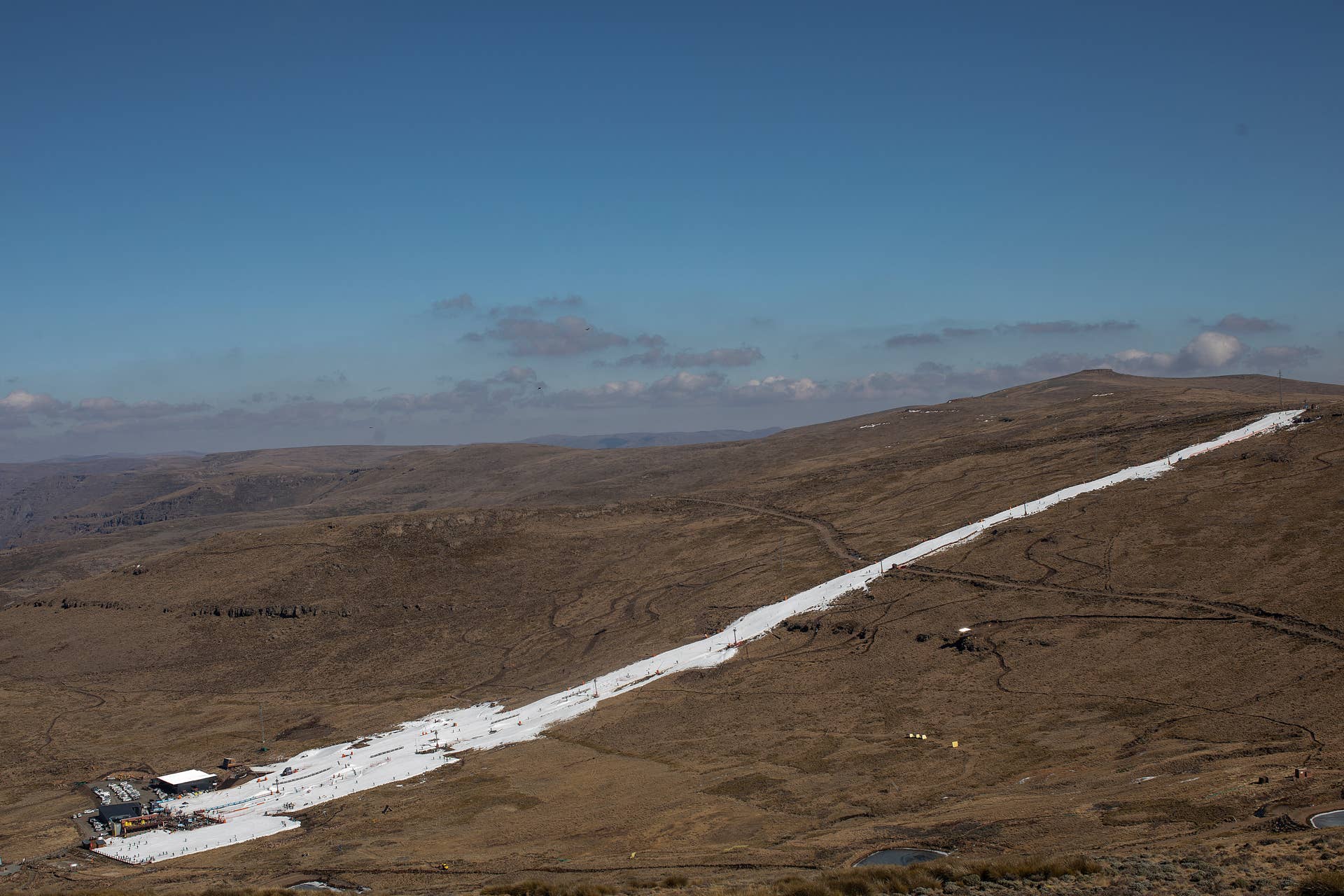
Afriski Mountain Resort, Lesotho
Unique trait: Skiing at the southern end of Africa
Bordered on all sides by South Africa and perched on a high altitude plot of land, Lesotho is home to rugged vistas, stunning waterfalls, and the historic Thaba-Bosiu Cultural Village. Alongside all that, there’s Afriski, one of the continent’s few ski resorts.
Afriski is far from a sprawling resort in the Alps. There are three small slopes, and to fill in the gaps in snowfall, the resort blows the artificial stuff. That can give Afriski a dramatic look. The main slope sometimes cuts a sharp figure against the brown and barren hills, a testament to the surprising places skiing can live when dedicated people make it happen.
Karim Sahib/AFP via Getty Images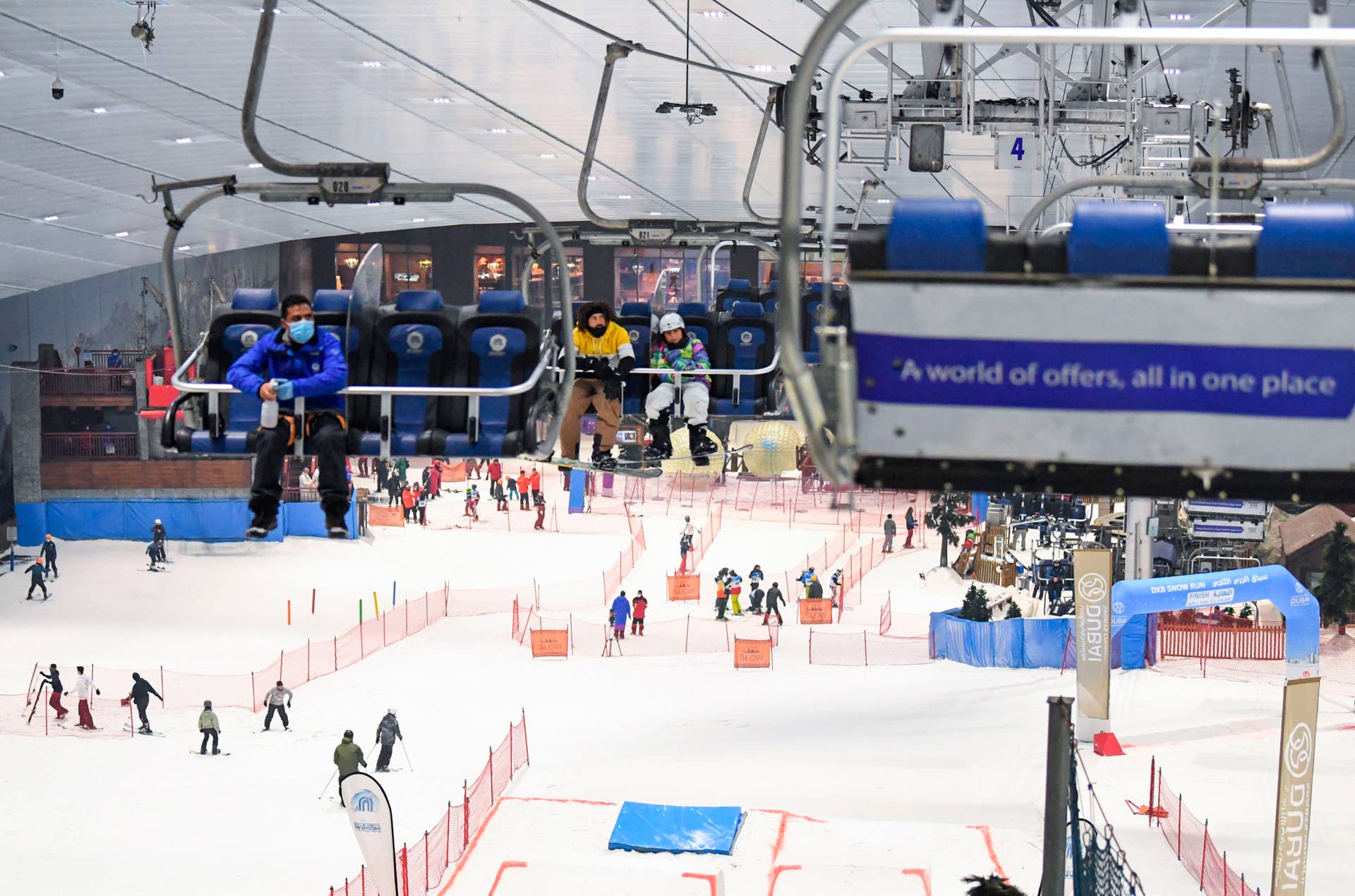
Ski Dubai, UAE
Unique trait: Indoor skiing in the middle of the desert (plus, penguins)
Dubai is complicated and limitless-seeming in equal measure. Here, enormous skyscrapers punch up from the desert floor, the world’s ultra-wealthy gather, and manmade islands float beyond sandy beaches. Given how surreal Dubai is, it makes some sense that the city also houses the Middle East’s first indoor ski resort.
Fittingly called Ski Dubai, the indoor slopes span five trails, some freestyle features, and other diversions like a zipline. Elsewhere in the Mall of Emirates, you can take a break to eat lunch at the Cheesecake Factory or pick up a new Gucci handbag. In many ways, Ski Dubai is everything skiing shouldn’t be—surrounded by walls and ostentatious stores—but that’s also a good reason to include it on this list.
To make it even more absurd, Ski Dubai has some resident penguins who probably eat better than the average ski bum. They dine on restaurant-quality fish imported from Norway and Canada.
Lars Baron/Bongarts/Getty Images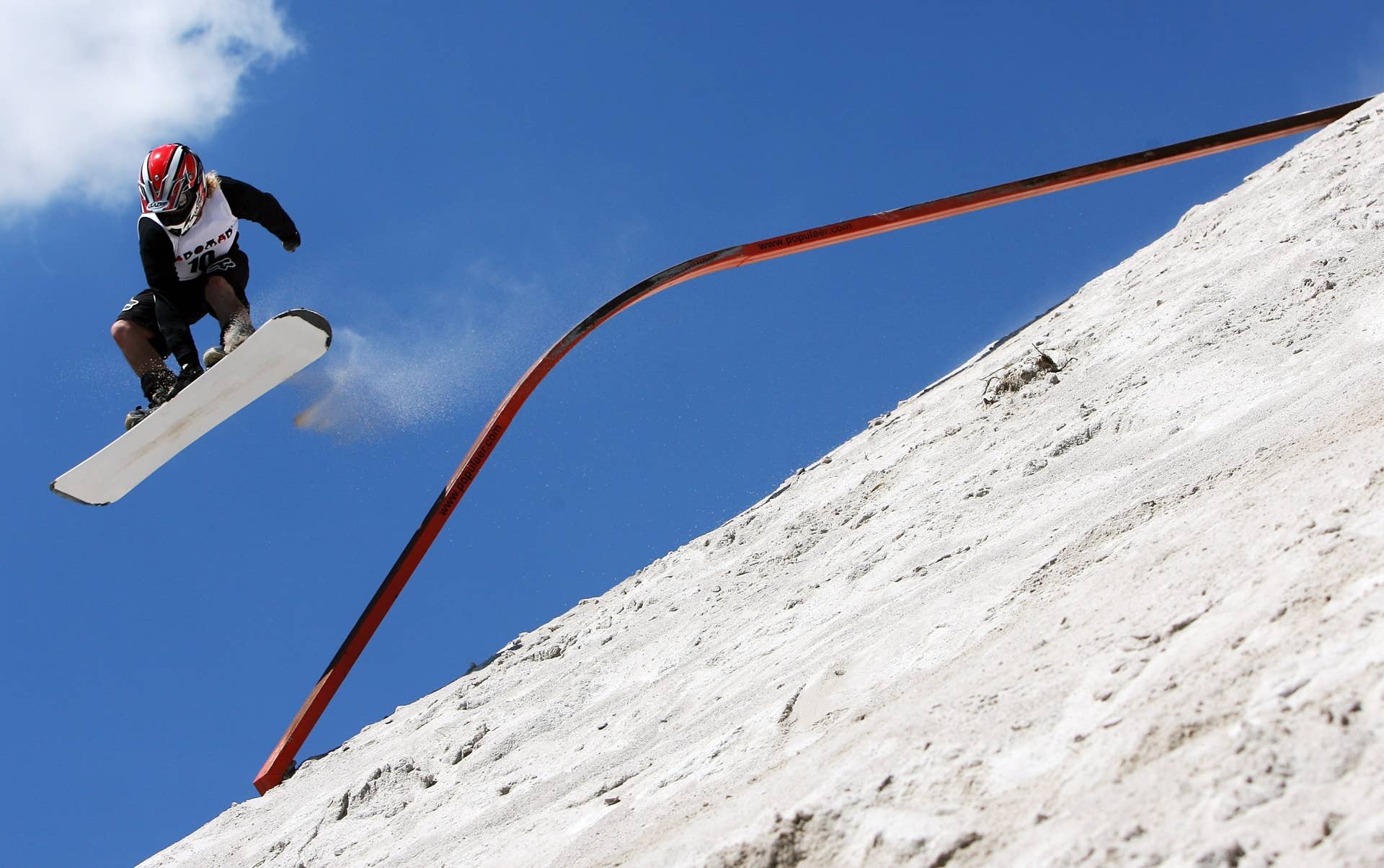
Monte Kaolino, Germany
Unique trait: Chairlift served sand skiing
In the town of Hirschau, Germany, looms a pile of quartz sand weighing around 35 million tons called Monte Kaolino. The oddity didn’t come naturally. Instead, it formed as a byproduct of kaolin mining in the area, eventually becoming an amusement park. If you’re not a materials specialist (we aren’t, either), kaolin is a soft clay used in countless products, from paper to rubber.
The Monte Kaolino attraction includes the usual resort amenities like golfing and a mountain coaster. But skiers, probably, will be most interested in the lift-served sand skiing. That came about because, in the 1960s, someone had the bright idea of skiing down it. Decades later, the sandy heap remains an unconventional ski destination.
Sliding sand looks fun, but not easy. While filming for a YouTube video about unique skiing surfaces, the professional skier Alex Hackel checked out the digs and took some tumbles. Real snow scored an “S” on a tier list he created, but, unsurprisingly, sand didn’t fare quite as well with a “B.”
Pierre Leclerc Photography/Getty Images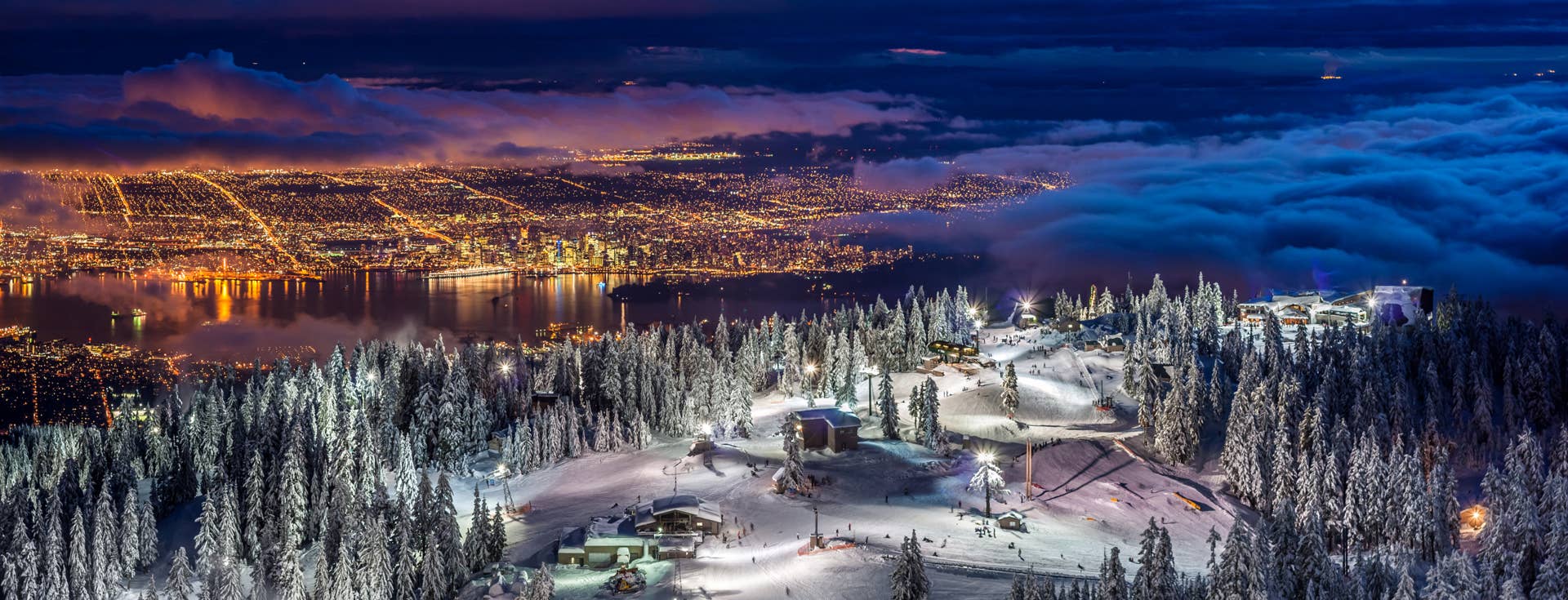
Grouse Mountain, British Columbia
Unique trait: Skiing above an urban jungle
This section could apply to any of the ski resorts above Vancouver, British Columbia: Grouse Mountain, Cypress, and Seymour. But we had to choose one and, as fate would have it, the dart hit Grouse.
Grouse Mountain’s history goes deep. By the mid-1930s, the ski resort had its first rope tow, ferrying skiers up and down the slopes. A decade or so later, it became the home of the world’s first double chairlift. The 45-person Skyride further established Grouse Mountain as the place to be.
Today, the resort lives on as a haunt for urban dwellers who don’t want to make the trek to Whistler Blackcomb. It’s a 15 to 30 minute drive from the heart of Vancouver, facilitating quick missions, regardless of the time of day: Grouse illuminates 15 of its runs at night (the resort has even stayed open for 24 hours).
Perhaps its biggest selling point, though, is the view. From the resort, the buzzy, rain-soaked city of Vancouver sprawls, abutting the Strait of Georgia, which separates the mainland from Vancouver Island. Few ski areas peer over a metropolis in the same way.