Powder aims to feature only the best products and services. If you buy something via one of our links, we may earn a commission.
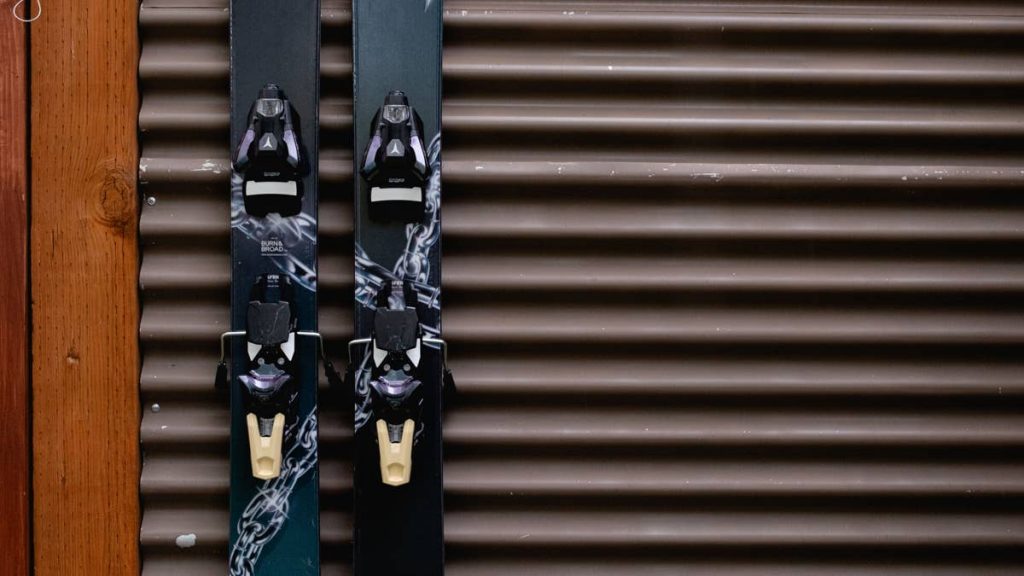
In the summer of 2024, I heard a rumor that 4FRNT’s Norwegian athlete, Stinius Skjøtskift, was working on developing a pro-model ski for the brand. Already a die-hard lover of the brand’s other skis and with high hopes that a ski designed by Skjøtskift would be as dreamy as he is, I couldn’t wait to get on a pair.
4FRNT is a brand that prides itself on being skier-driven, above all else. As a result, a chunk of their lineup (and their most popular skis, by no coincidence) are “pro models” developed closely with their athlete team. Perhaps the best example is also one of the brand’s most well-known skis, the Hoji, developed by DIY-God Eric Hjorliefson, who has long had his own collection of touring-focused skis with the brand. 4FRNT’s flagship frontside ski, the MSP, is also derived from some of the brand’s earliest products developed by their founder, Matt Sterbenz. Although Sterbenz himself has been in and out of the brand, the MSP (short for Matt Sterbenz Pro, duh) has remained a staple. Along with the Hoji series and the MSP, Utah skier Thayne Rich designed the InThayne as his contribution to 4FRNT’s lineup of pro-model skis.
Skjøtskift, who hails from Oppdal, Norway, grew up ski racing and skateboarding in his freetime, giving him an arsenal of skills that he’s translated to a powerful and technique-heavy freeride style. With the Sinister, he was hoping to make something that matched his style and could be skied in all conditions.
The result is a burly freeride ski that rewards hard-charging, creative skiers who are looking to push a ski to the outer edges of its limits and get the most out of it. The Sinister is both chock full of the innovative, playful, and high-quality DNA that other 4FRNT skis are known for, and brings something completely new to their lineup.
Izzy Lidsky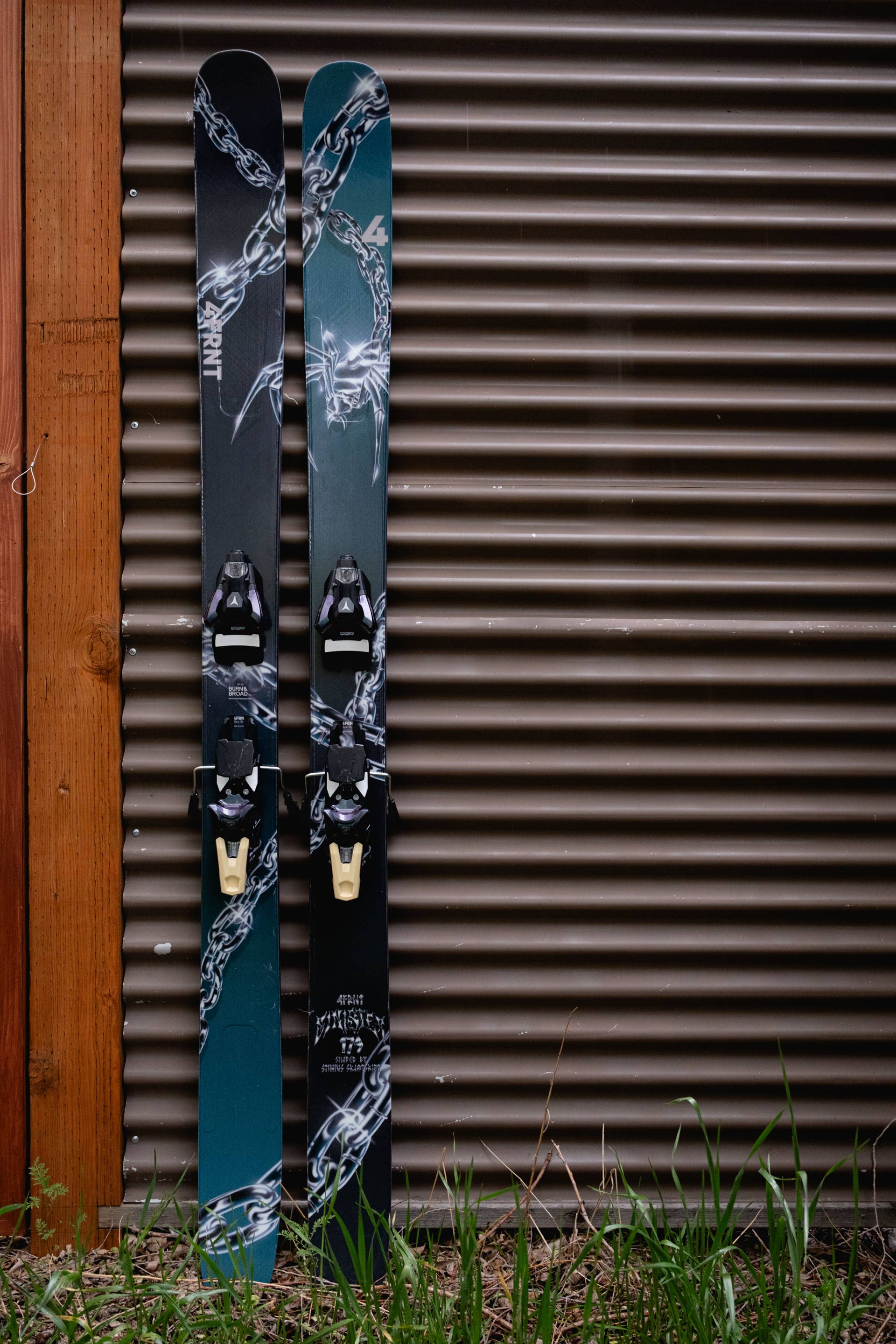
2026 4FRNT Sinister Specs
- Size skied: 179cm
- Lengths Available: 179cm, 186cm, 192cm
- Sidecut: 133- 113- 125mm
- Radius: 22m
- Profile: Camber
- Weight: 2120g
Shape, Flex, and Construction
The Sinister was designed to be a do-it-all ski, quite literally. Skjøtskift’s aim was to design something he could ski in Japan’s deep powder, take to the park, or re-live his race days carving groomers.
Interestingly, the Sinister comes in at 113mm underfoot and while there’s a lot more than just waist width that determines a ski’s purpose, skis wider than 110mm tend to fall further towards if not totally in the “powder ski” category. However, the Sinister features a traditional cambered profile (2mm of camber to be precise) in the middle of the ski, which on paper makes it a more versatile pick when it comes to hardpack and other variable snow conditions than other skis that lean towards soft snow. A 22m sidecut radius also has the Sinister falling in the “ski it fast” category, similarly to some of 4FRNT’s other skis. That long radius helps to keep them stable at high speeds, even on hardpack.
The ski also has a bit of tip and tail rocker which help it float in deeper snow and aide with the “freeride-ability” of the ski. The tails have a pretty interesting shape as well, that almost look like they want a skin attached to them. Rest assured, these heavy skis do not want you to take them touring (after all, we are talking about the brand that sells a ski with a hole in the back for skins). Rather, the blunt tail shape keeps the ski surfy in soft snow, in an almost swallowtail-like way. The Sinister is primarily a directional ski, but it’s clearly designed to ride switch, especially in pow, as well.
The Sinister uses the same hardwood core of aspen and maple that’s found in other 4FRNT freeride skis like the Hoji and Devastator. The combination keeps the ski lively and playful thanks to the lighter aspen, yet the heavier maple means it still has plenty of stability, damping and stiffness. Lovers of other 4FRNTs will also recognize the vulcanized neoprene rubber tip used in most of their skis, which helps to absorb vibration in the tip of the ski and damp it on hardpack and chunder.
Where the Sinister differs in construction from other 4FRNT skis like the Devastator, Hoji, or InThayne is in the Titanal laminate “stomp zone.” While carbon stringers and the use of maple help to stabilize and damp these other skis, the Sinisters have a full-on sheet of metal that extends from underfoot towards the tip and tail of the ski, but stops before the end. You can actually see where the Titanal laminate is under the topsheet from the ridges about halfway between the binding (when mounted at recommended) and the tip/tail of the ski. This added sheet of metal not only provides landing stability and when plowing through variable snow, but further adds to the versatility of the Sinister on hardpack. Essentially, they took the formula for the brand’s other freeride skis and all the things that make them playful yet powerful and damp, and beefed them the f*ck up to reinforce that this ski is not messing around.
Notably, the Sinister only comes in three sizes, with the shortest being a 179cm length and the longest being 192cm. Skjøtskift himself, who stands somewhere between 6’3” and 6’5” (if I had to guess from meeting him a few years ago) skis the 186cm length for the most part, but takes the 192cm on big days. Although the 179cm ski is long for someone my size, it didn’t feel like it skied longer than it is or really that it’s length contributed much to the way it handled for me.
Izzy Lidsky
On-Snow Performance
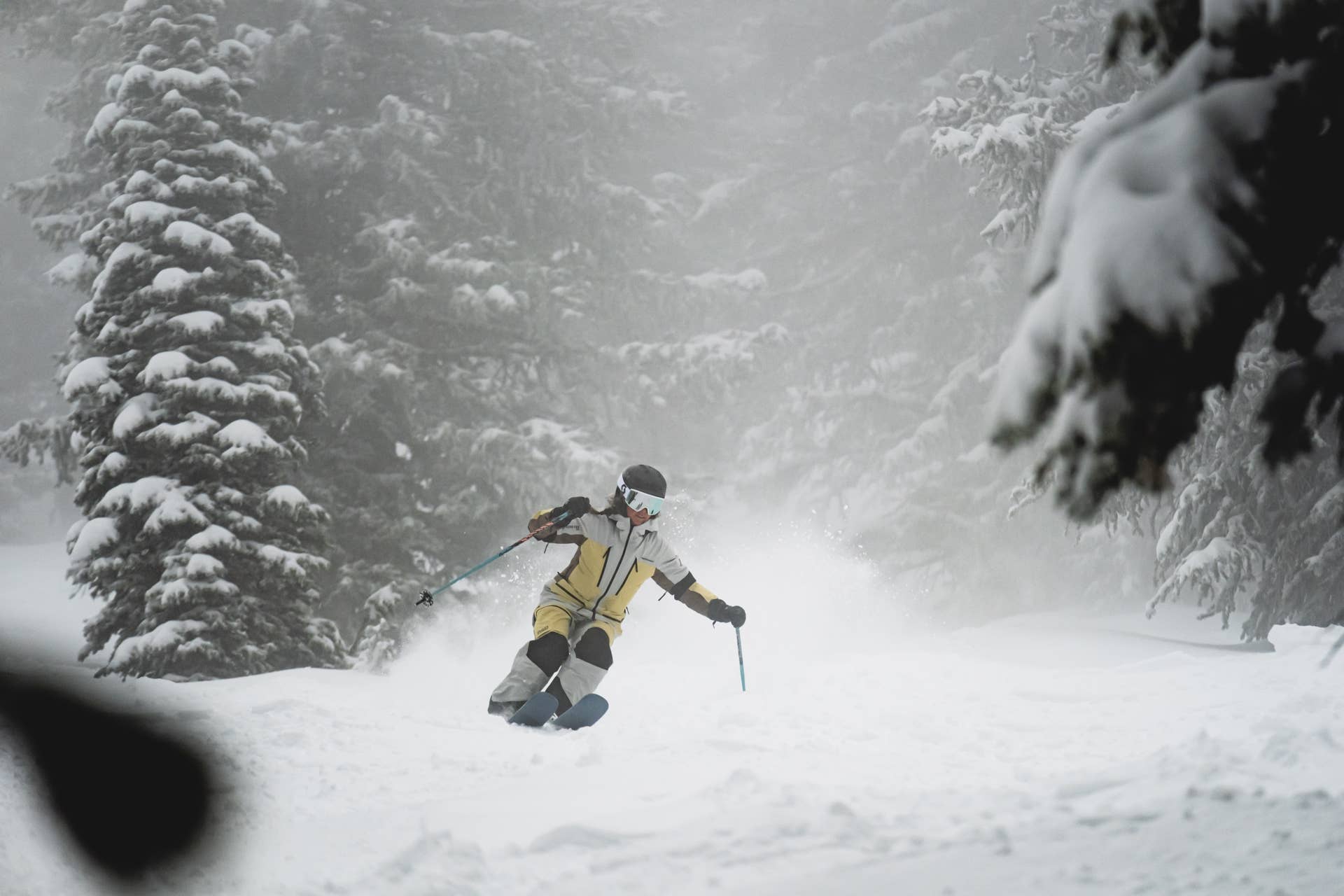
Before we get into anything else about this ski, I want to address the elephant in the room, which is that I am a 5’5”, 120lb-ish skier with a 22.5 boot testing a 179cm burly freeride ski made by a Norwegian twice my size. A ski like this is not out of my wheelhouse, but there’s no doubt that I’m putting in work to ski them. To sum it up bluntly; there were things I really enjoyed about this ski but it was so burly that I also experienced full-on ego death that left me texting our Gear Editor, Max, wondering if I just sucked at skiing, to which he replied “welcome to big boi skis, yung Izzy.”
That being said, I’m very familiar with other 4FRNT models and regularly ski the Devastator, Hoji, and Raven and I’ve also been plotting ways to get my Norwegian citizenship, so it only made sense that I be the one to test them. While the Sinister is certainly different from these other skis, it’s still a 4FRNT, so I knew that pieces of it would feel familiar and that it would be a demanding ski that would reward good technique and high speeds.
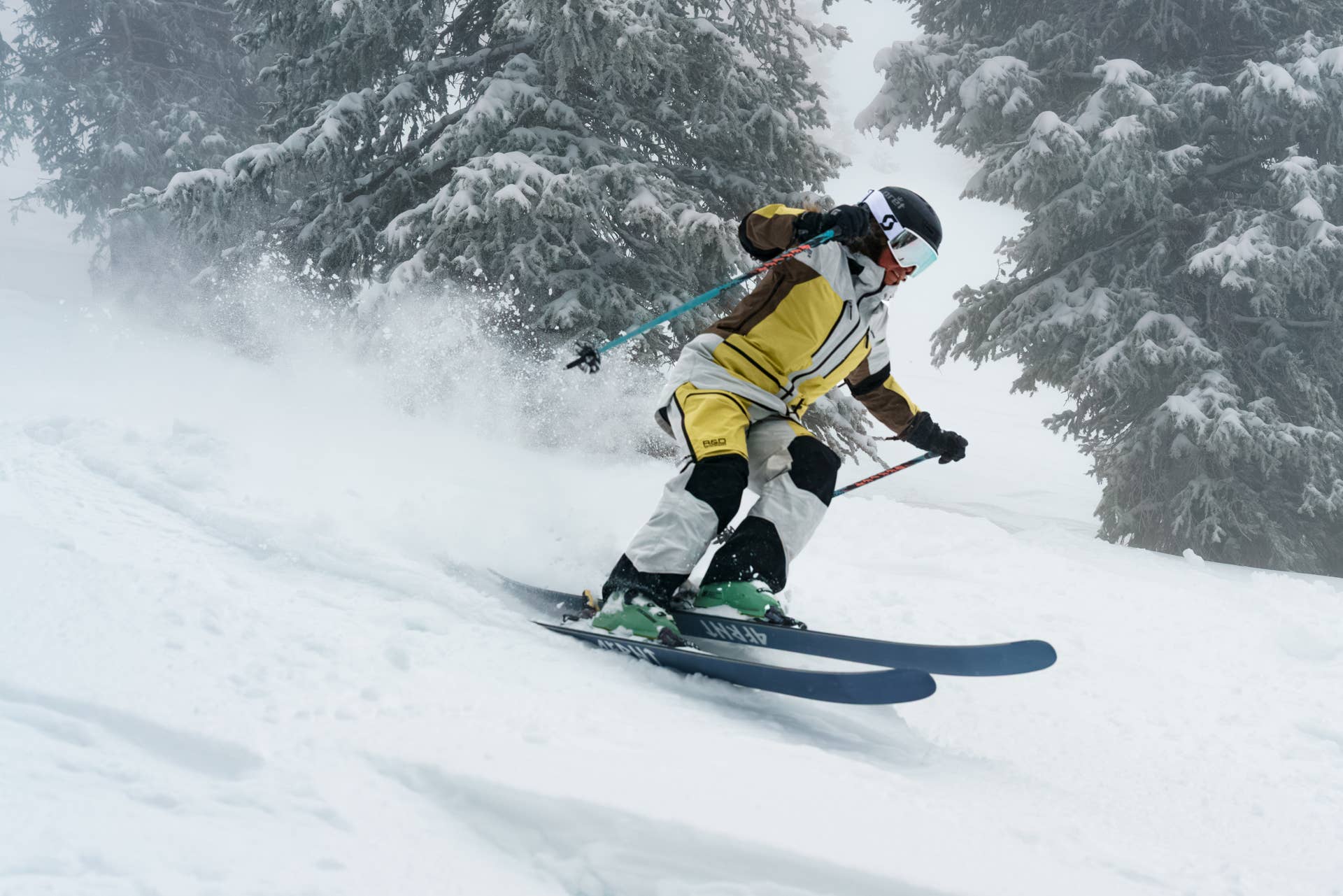
The first day I skied it was in conditions that could be called uninspiring at best; hardpack with a side of refrozen cookies, but a perfect testing ground for the performance of a ski like this on hardpack. I was right in thinking that I’d need to be aggressive and intentional with this ski, but when I was able to get it up to speed, I was impressed at how well it carved. The further over the front of the ski I was able to get my weight and the longer turn I took, the more that 22m turn radius shone, as did the ski’s cambered shape. The Sinister really locks into the end of a turn and transitions from edge to edge in a way that’s both flowy and snappy/dynamic and something I’ve truly never felt. Skiing it on groomers, in refrozen chunks and moguls, and whatever rain-crusted off piste I dared quickly silenced any doubts that this ski could be a daily driver for the right skier. However, for all that I found these things to be true, another female skier who is similar in size to me felt that the tail shape chopped her out of turns too quickly and she didn’t find the same flow with how it turns.
Thankfully, further testing of the Sinister was done in better conditions: namely powder and chalk at Mt. Bachelor and Grand Targhee. Unsurprisingly, the ski floats tremendously in powder, and especially in the heavier snow that often falls in the PNW.
Despite being such a chargy ski and having a 22m sidecut radius, I found that the Sinister turns in technical terrain quite easily and nimbly. I took it through a run that had a lot of baby trees to be dodged and had no trouble making fast, tight turns around them and through pow moguls. When given enough speed and the right feature, they had a good amount of pop to them as well and bridged the gap between “stiff ski that carves” and “playful freeride ski” well. The intention of this ski to be your one-quiver freeride ski is clear and it really does tick a lot of boxes in that category, which is tough to do.
Mark Riegel
Comparisons
My first instinct is to compare this ski to the Blizzard Rustler 11, which has a 112mm waist width, a sheet of Titanal, carves like a dream, and a ski that I’ve ridden in a 180cm length. The thing I’ve always loved about the Rustler is its unwavering support and stability. However, on the flip side, I find that it compromises on playfulness because of this. I’d also put the Rossignol Sender Free 110 in the same boat as a stable, hard-charging ski that lacks some of the playfulness of a softer ski.
The Sinister felt just as stable and carved just as well as the Rustler 11, albeit maybe with a bit more effort put in, but felt a lot more nimble when making quick turns and had more energy off-piste than either the Rustler 11 or the Sender Free 110. Despite that Titanal stomp pad, the Sinister also didn’t have the kind of shin-splint inducing slam feeling when landing from being in the air that I find the Rustler and Sender Free 110 both have, but rather stayed a bit more energetic.
I’d also compare it to the Salomon QST Blank, which has accrued a bit of a cult following from at least the POWDER staff, if not the rest of the world. The QST Blank is another 112 ski that carves remarkably well and sits in this “super versatile but still kind of a powder ski” realm. The QST notably uses no metal, but rather leans on cork and basalt for damping, which make it feel less “beefy” but still plenty heavy. While the QST Blank was a generally more approachable ski and is easier to turn and ski casually than the Sinister, I could not for the life of me get them off the ground in a 178cm length. Comparatively, the Sinister took more energy to ski generally, but it was easier to initiate its freeride side.
Mark Riegel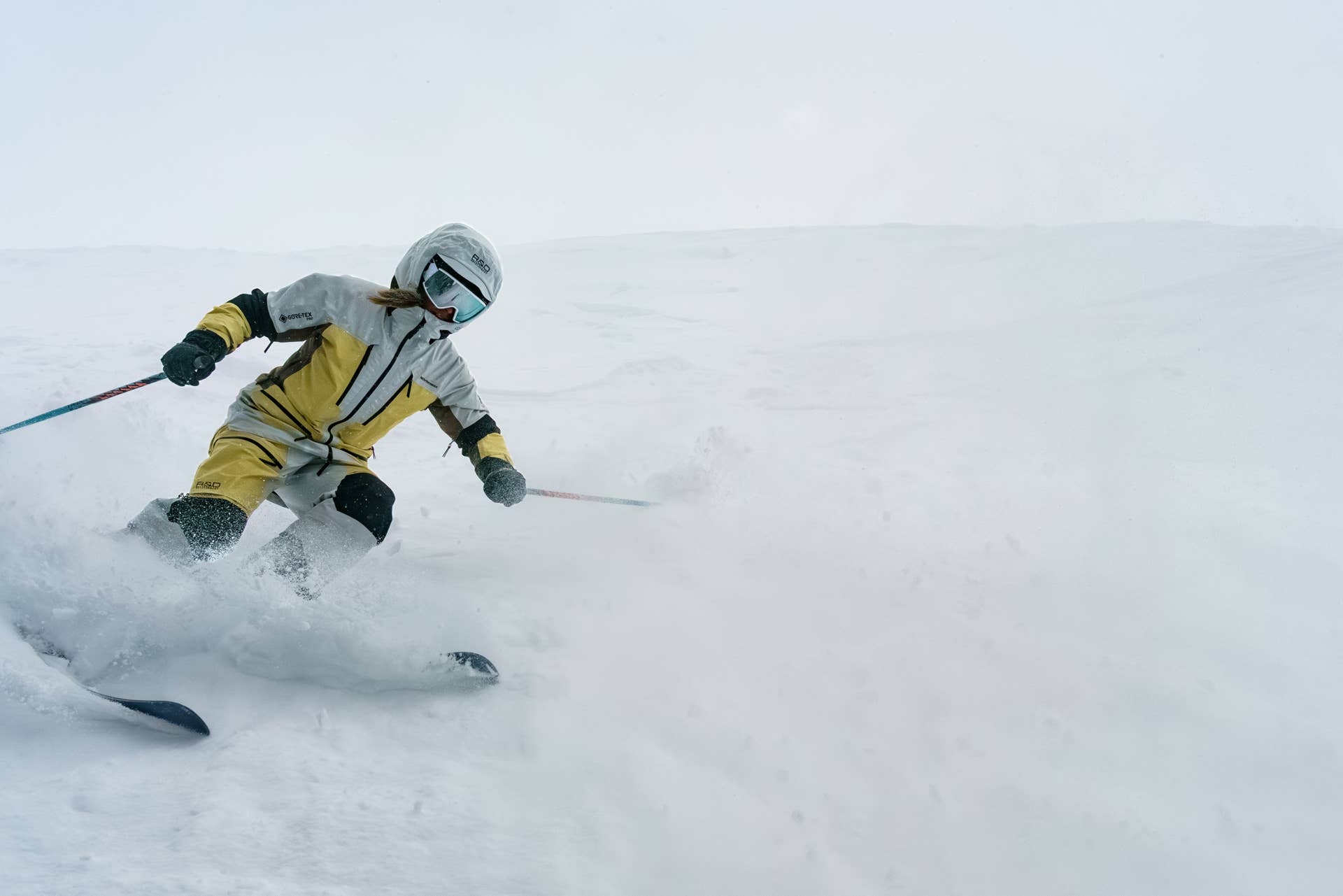
What Type of Skier is the 4FRNT Sinister Best For?
I’ll level with you; the Sinister is not for the faint of heart. With the bottom end of the ski’s sizing still just under 180cm and its super burly construction, the Sinister wants a hard-charging skier that’s admittedly probably got some more weight to them than me. However, it’s not just for anyone north of 120lbs–Skjøtskift made this thing for folks who can carve like racers, or at least pretend they can.
This ski wants someone who isn’t afraid to ski fast, throw it around, and find some big airs. Your ex-racer who fell in love with freeride and wants a one ski quiver for a mountain like Jackson Hole, Revelstoke, Mt Baker, or Alta will thrive on the Sinister as will lovers of other 4FRNT skis who want a beefed up resort rig to add to the quiver alongside their MSP 99’s and Renegades.